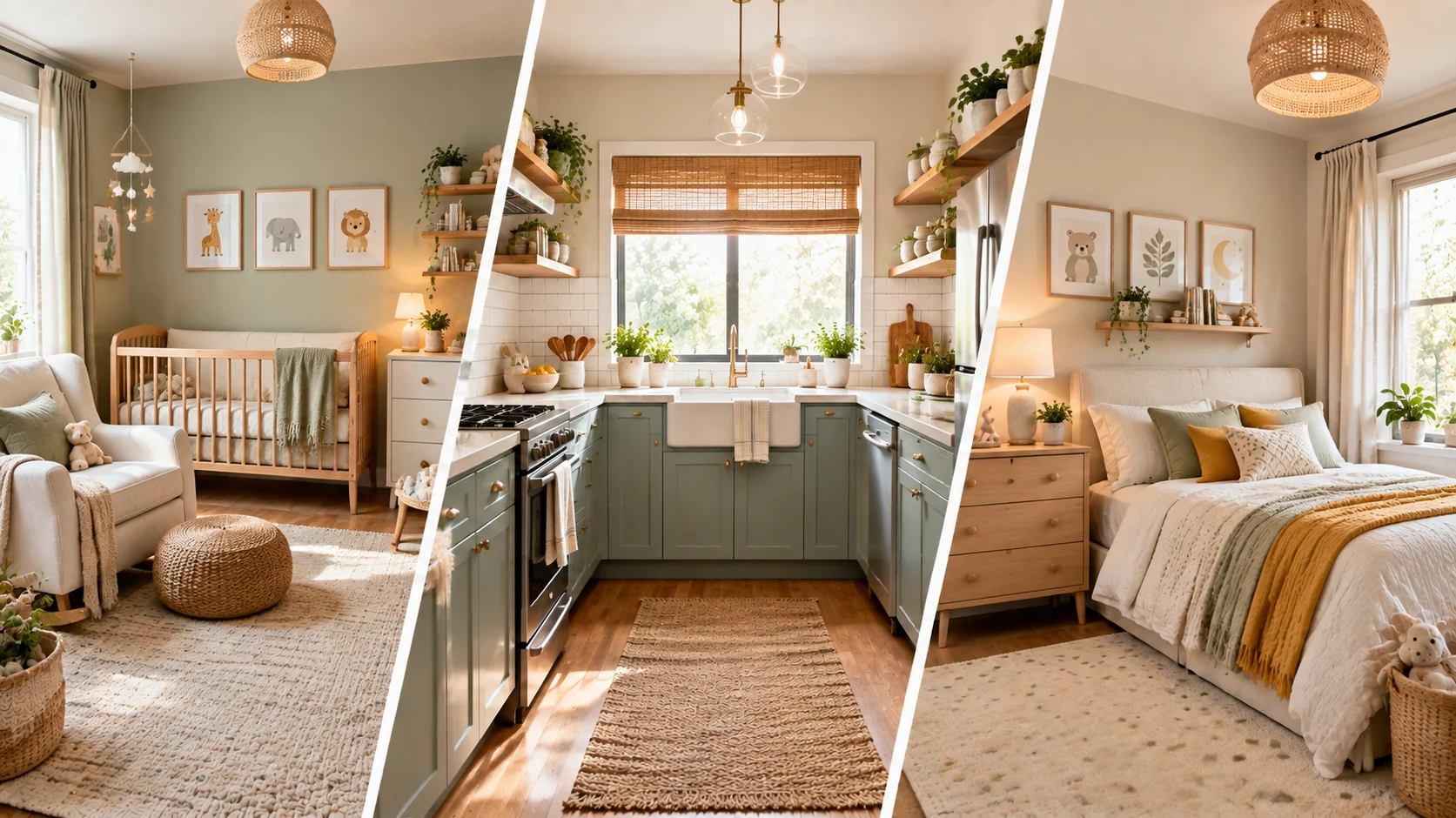
Preparing for the arrival of a baby brings excitement and anticipation, but it can also bring anxiety and stress. The best nursery decorating ideas focus on creating a nursery that feels peaceful, stylish, and easy to use. If you feel stuck, looking at pretty nurseries can give you inspiration and the right idea for your baby’s room. A thoughtful nursery decor plan can turn a new room into a cosy and special space. For every new parent, a practical and functional nursery design helps manage daily life in a less stressful and chaotic way. A well-organized baby room with the right nursery style and nursery space can support your little bundle of joy while meeting all your nursery needs.
1. Soft Neutral Nursery Design
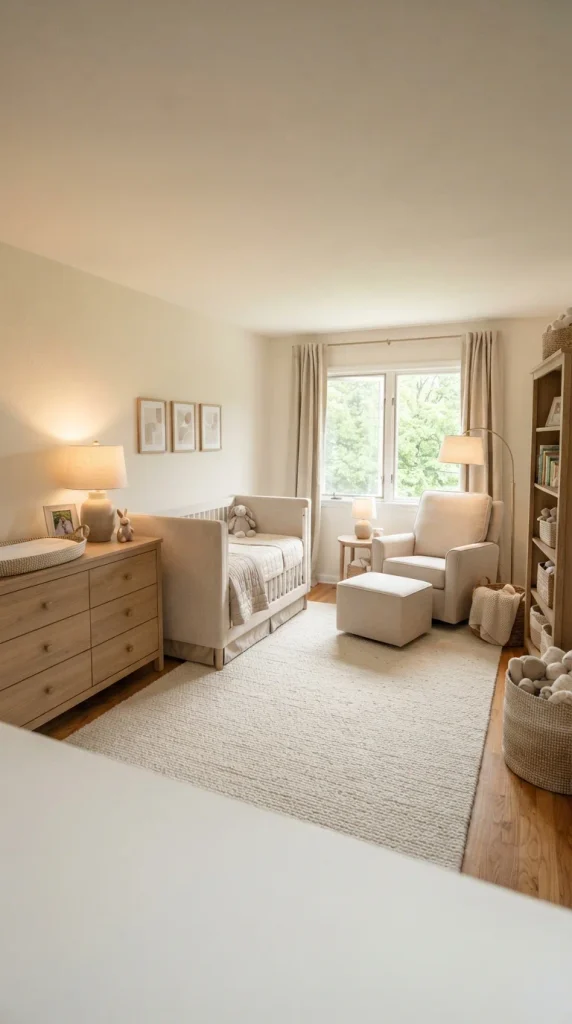
A soft neutral nursery design can make the baby’s room feel calm, warm, and welcoming. Shades like cream, beige, soft white, and light taupe create a peaceful background without making the space feel plain. Add a few warm textures through rugs, curtains, blankets, or baskets to make the room feel more comfortable. Wooden furniture can also bring a natural touch to the neutral setting. Keep the colors balanced so the nursery feels bright during the day and relaxing at night. A few simple decorative pieces can add personality without making the room look crowded. This style is also easy to update as your child grows. The result is a timeless nursery that feels cozy, clean, and peaceful.
2. Warm Wooden Nursery Accents
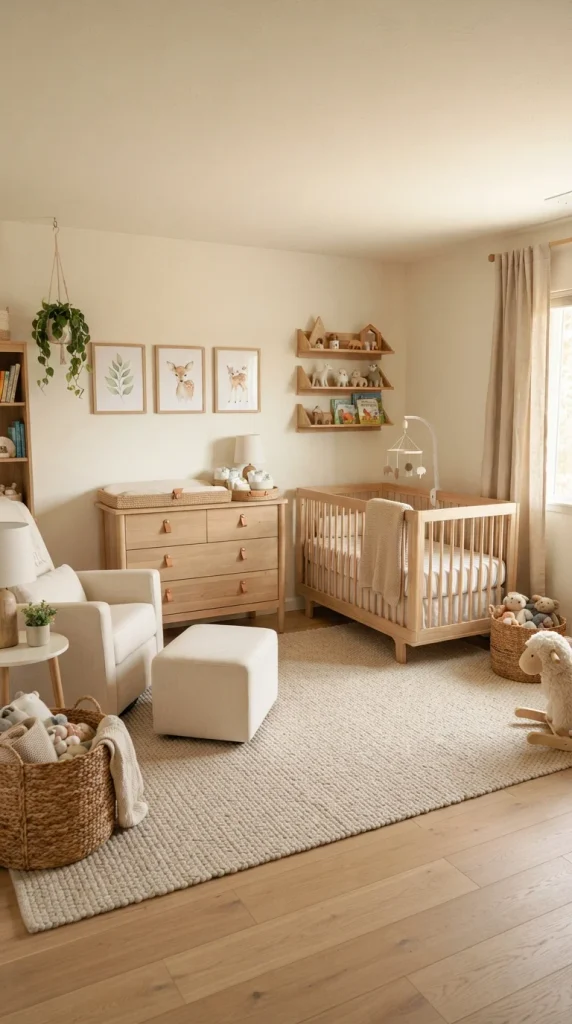
Warm wooden nursery accents can instantly make a baby room feel more inviting and natural. A wooden crib, small shelf, changing table, or storage basket can add warmth without overwhelming the space. Light wood works especially well with cream, white, beige, and soft pastel colors. I like using natural wood because it gives the nursery a simple and timeless character. Wooden picture frames and small decorative objects can also bring the different parts of the room together. Avoid using too many heavy pieces if the room is small. Instead, choose a few useful items that also add visual warmth. This approach creates a comfortable nursery that feels natural, balanced, and easy to enjoy.
3. Cozy Crib Corner Setup
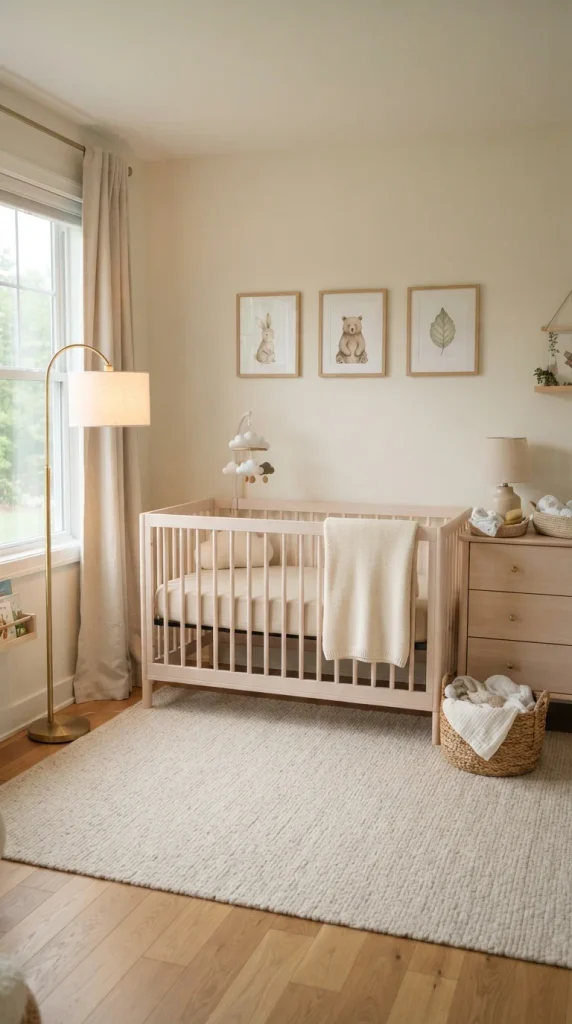
A cozy crib corner setup can become the main focus of the nursery while keeping the sleeping area peaceful. Place the crib where there is enough open space around it and keep the surrounding decoration simple. A soft rug, gentle wall art, or a small shelf nearby can make the corner feel complete. Choose colors that are soothing rather than overly bright or busy. Keep decorative items securely away from the crib and follow current safe-sleep guidance when arranging the sleeping space. The crib should remain simple and free from unnecessary loose items. A thoughtfully arranged corner can make the nursery feel organized and welcoming. It also gives the room a clear focal point without making it feel crowded.
4. Calm Nursery Color Palette

A calm nursery color palette can help create a peaceful atmosphere from the moment you enter the room. Soft beige, warm white, dusty blue, muted green, gentle pink, and light gray are popular choices for a relaxing space. You do not need to use only one shade throughout the room. Instead, combine two or three related colors for a layered appearance. Use the strongest color in small amounts through artwork, cushions, curtains, or accessories. Keeping larger surfaces lighter can help the room feel open and comfortable. Natural materials can soften the overall look even further. A thoughtful color palette makes it easier to create a nursery that feels warm without becoming visually overwhelming.
5. Dreamy Nursery Wall Decor

Dreamy nursery wall decor can add personality while keeping the room soft and peaceful. Simple prints, nature-inspired artwork, stars, clouds, animals, or delicate patterns can create a charming backdrop. A small gallery arrangement can work beautifully above a dresser or on an empty wall. Choose artwork that matches the nursery’s colors so everything feels connected. Avoid filling every wall because a little empty space can make the room feel calmer. Make sure wall decorations are securely mounted and positioned safely away from the crib. I find that simple artwork often creates more charm than a wall filled with too many decorations. The right pieces can make the nursery feel personal, warm, and thoughtfully designed.
6. Natural Texture Elements
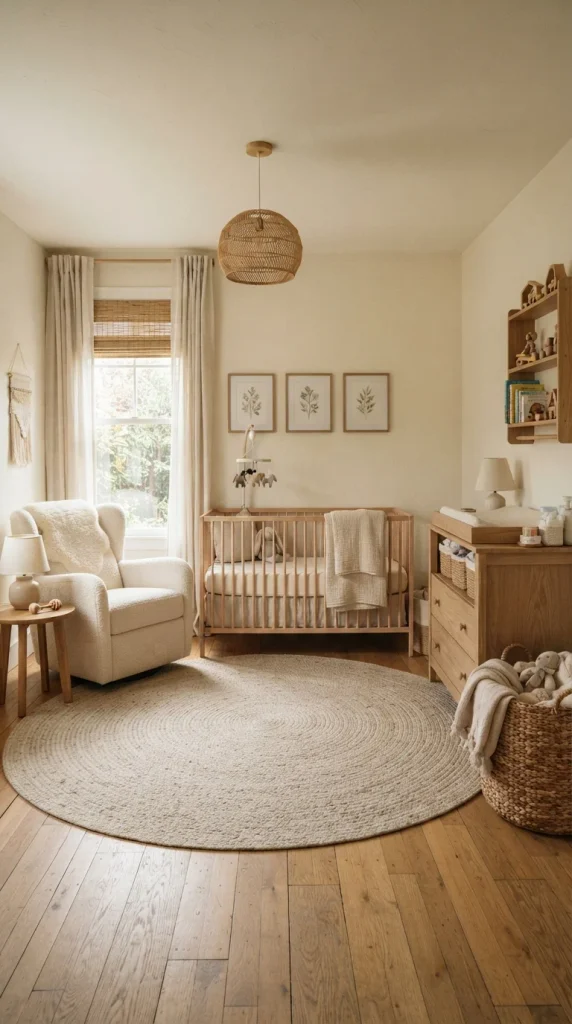
Adding natural texture elements is an easy way to make a nursery feel warmer and more comfortable. Woven baskets, cotton fabrics, linen curtains, wool-style rugs, and wooden accessories can give the room a soft layered appearance. These materials also help prevent a neutral nursery from looking flat or unfinished. Choose textures that are practical and easy to clean because baby rooms can quickly become messy. A woven basket can hold blankets while also becoming part of the decor. Soft curtains can add warmth without making the room feel heavy. When natural textures are mixed carefully, the nursery feels relaxed and lived-in. This creates a cozy environment without needing lots of decorative objects.
7. Comfortable Reading Nook
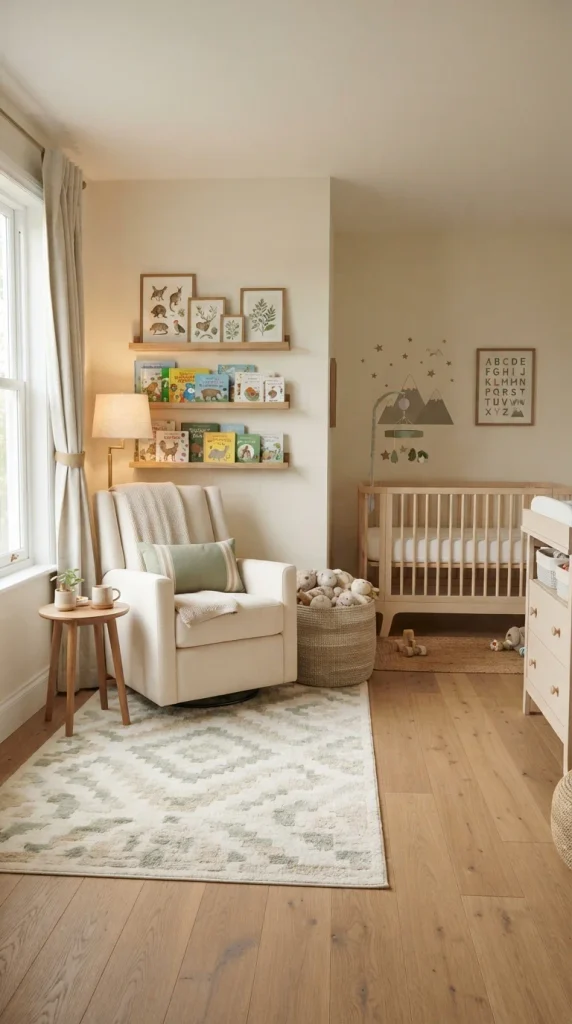
A comfortable reading nook can give parents and children a special place to enjoy quiet moments together. Start with a supportive chair or small seating area that is comfortable for longer periods. Add a soft rug, a small side table, and a few children’s books within easy reach. Keep the colors consistent with the rest of the nursery so the nook feels like part of the overall design. A nearby basket can provide simple book storage while keeping everything tidy. Soft lighting can make the corner useful during evening routines. Choose furniture that is sturdy and easy to clean for everyday use. Even a small unused corner can become a meaningful and cozy part of the nursery.
8. Stylish Nursery Storage Solutions
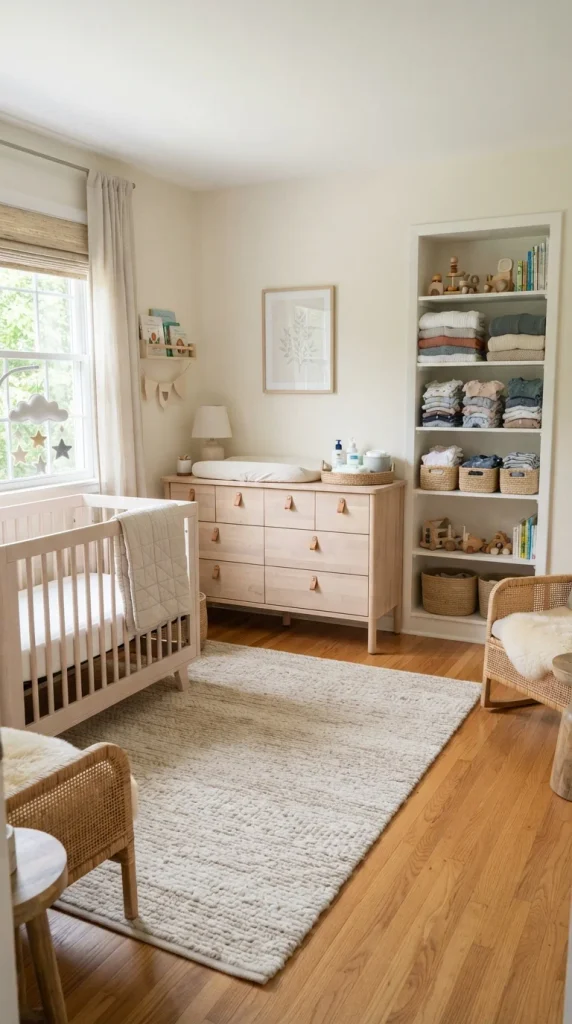
Stylish nursery storage solutions can help keep everyday baby items organized without taking away from the room’s beauty. Use baskets, drawers, shelves, and small containers to give diapers, blankets, clothing, and toys a proper place. Open shelves are useful for items you need often, while closed storage can hide things that create visual clutter. Choose storage pieces that match the nursery furniture for a more finished appearance. Labeling baskets can also make busy routines easier for new parents. Keep frequently used items within easy reach but avoid creating unsafe climbing opportunities. Good storage makes cleaning faster and keeps the room feeling peaceful. The best solutions are both attractive and genuinely useful.
9. Minimalist Baby Room Setup

A minimalist baby room setup focuses on keeping only the items that are useful, comfortable, or meaningful. Start with essential furniture and leave enough open space for easy movement around the room. Simple colors, clean shapes, and limited decoration can make the nursery feel calm and uncluttered. This does not mean the room has to feel cold or empty. Add warmth through soft fabrics, natural wood, and a few carefully chosen accessories. Keep toys and baby supplies organized so the space stays visually peaceful. A minimalist approach can also make cleaning and daily routines easier. By choosing quality over quantity, you can create a nursery that feels comfortable without becoming crowded.
10. Soft Lighting for Nursery

Soft lighting for nursery spaces can make a big difference in creating a warm and relaxing mood. Use gentle ambient lighting rather than relying only on one bright ceiling light. A dimmable lamp can be useful during evening routines because it provides enough light without making the room feel harsh. Curtains can also help control natural daylight during naps and bedtime. Choose lighting fixtures that are securely installed and keep cords safely out of reach. Warm-toned bulbs can create a softer atmosphere than very bright white lighting. You can also use a small decorative lamp to add character to a dresser or side table. A thoughtful lighting plan makes the nursery feel comfortable at different times of day.
11. Personalized Nursery Touches

Personalized nursery touches can make the room feel more special and connected to your family. A framed name, meaningful artwork, family keepsake, or handmade decoration can add character without requiring a large decorating budget. Choose a few items that have genuine meaning instead of filling the room with decorations. Soft colors and simple frames can help personal pieces blend naturally with the overall design. Handmade details can also bring warmth and make the nursery feel less like a showroom. Keep anything small or fragile securely out of reach of the baby. These personal details can become treasured memories as your child grows. A few thoughtful touches are often enough to make the room feel truly yours.
12. Elegant Nursery Furniture Choices

Choosing elegant nursery furniture is about finding pieces that look beautiful while supporting everyday needs. A comfortable crib, useful changing table, practical dresser, and supportive chair can create a strong foundation for the room. Look for simple designs that can work with different decorating styles as your child gets older. Neutral furniture is especially flexible because it pairs well with many colors and accessories. Make sure every piece is sturdy and designed appropriately for its intended use. Avoid overcrowding the room with furniture that is rarely needed. Good furniture placement should leave clear pathways for comfortable movement. When style and function work together, the nursery becomes easier to use and more enjoyable.
13. Nature Inspired Nursery Style
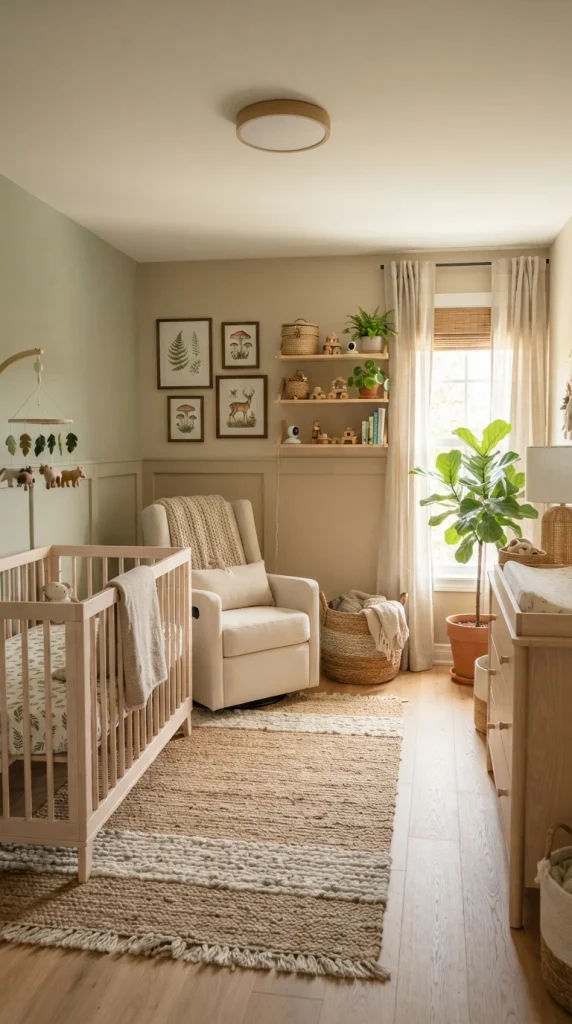
A nature inspired nursery style can create a peaceful feeling through earthy colors, natural materials, and simple botanical details. Soft green, beige, cream, and warm brown can form a relaxing color scheme. Add woodland artwork, leaf patterns, wooden accessories, or woven baskets for a gentle natural theme. You can bring in plant-inspired designs without filling the room with unnecessary objects. Natural textures can make the space feel warmer and more inviting. Keep the overall theme subtle so it remains timeless rather than overly themed. This style works well for both small and large nurseries. The result is a calm room that feels connected to the softness and beauty of nature.
14. Modern Gender Neutral Nursery

A modern gender neutral nursery can feel stylish, warm, and welcoming without relying on traditional color themes. Combine shades such as cream, beige, sage green, warm gray, or muted yellow to create a balanced look. Simple furniture and clean lines can give the room a modern appearance. Add personality through artwork, textiles, wooden details, and small decorative pieces. A neutral foundation also makes it easy to change the room as your child grows. Keep the decoration playful but avoid making every item follow the same theme. This gives the nursery a more natural and collected feeling. With the right balance, a gender-neutral room can feel both modern and deeply cozy.
15. Cozy Rocking Chair Corner
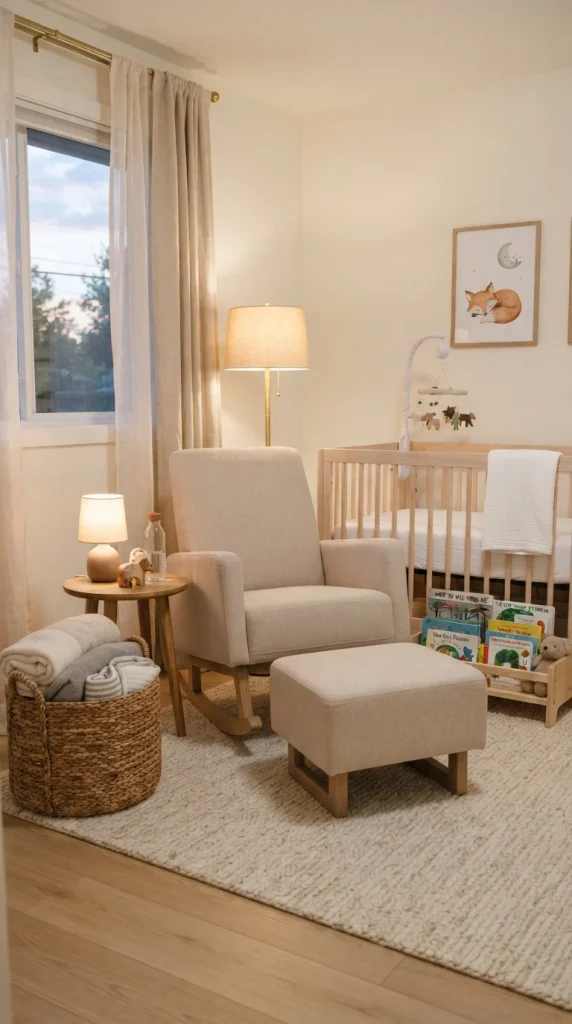
A cozy rocking chair corner can become one of the most useful areas in the nursery. Choose a chair with good support because feeding, reading, and soothing a baby can take time. Place it near a small table where you can keep a book, water bottle, or other useful items. A soft throw or washable cushion can make the chair feel more inviting. Add a floor lamp or gentle nearby lighting for evening use. Keep enough space around the chair so it can move comfortably without hitting other furniture. A small basket beside it can hold blankets or books. This simple corner can make everyday moments with your baby feel more comfortable and relaxed.
16. Beautiful Nursery Gallery Wall

A beautiful nursery gallery wall can bring color, personality, and visual interest to an otherwise simple room. Mix a few framed prints with simple illustrations, family photographs, or nature-inspired artwork. Keep the frames in similar tones if you want a more organized appearance. Arrange the pieces on the floor first to find a layout you like before putting anything on the wall. Avoid placing heavy or poorly secured items where they could become a safety concern. A gallery wall works particularly well above a dresser or on a larger empty wall. Keep some space between pieces so the arrangement does not feel crowded. A carefully planned display can become a charming feature without overwhelming the nursery.
17. Functional Changing Station
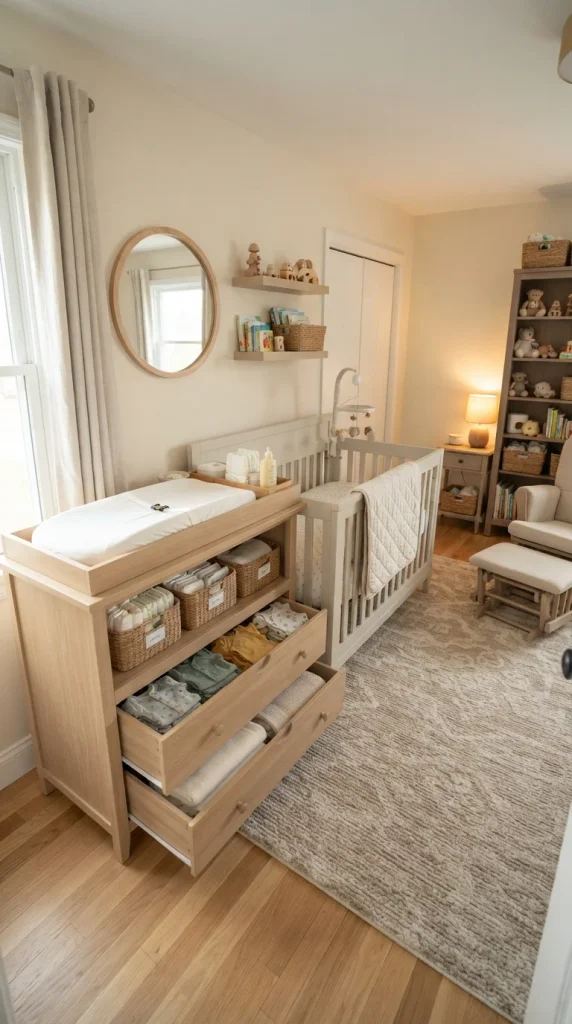
A functional changing station should make everyday routines simple and organized. Place diapers, wipes, creams, clothing, and other essentials within easy reach while keeping the surface clear and manageable. Use small baskets or drawer organizers to separate different supplies. Choose a changing area with enough storage so frequently used items do not spread around the room. Safety should always come first, so follow the manufacturer’s instructions and never leave a baby unattended on a changing surface. A clean and organized station can save time during busy moments. Matching storage containers can also help the area look neat. When practical design meets simple organization, this part of the nursery becomes much easier to use.
18. Peaceful Sleep Space Design
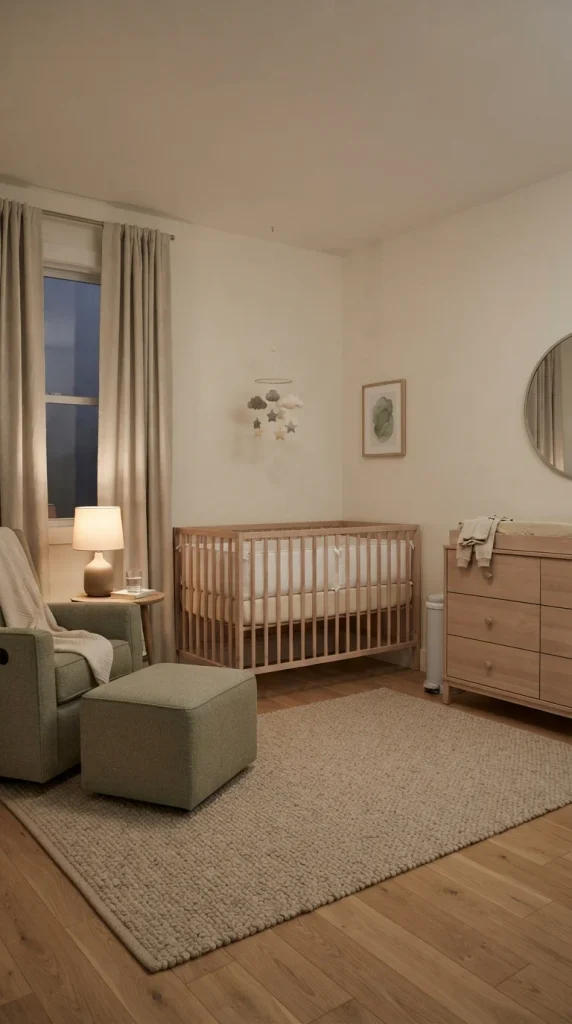
A peaceful sleep space design should focus on comfort, simplicity, and safe sleep practices. Keep the crib area uncluttered and follow current guidance for safe infant sleep rather than treating decorative items as part of the sleeping surface. Soft wall colors and gentle lighting can create a relaxing atmosphere around the crib. Blackout curtains may help control daylight, while a consistent bedtime routine can make the space feel familiar. Keep the room comfortable without making it excessively warm. Simple decoration around the sleeping area can provide visual interest while keeping the crib itself clear. The goal is to create a calm environment that supports restful routines. A peaceful design can also make nighttime care feel more organized for parents.
19. Charming Nursery Shelf Decor
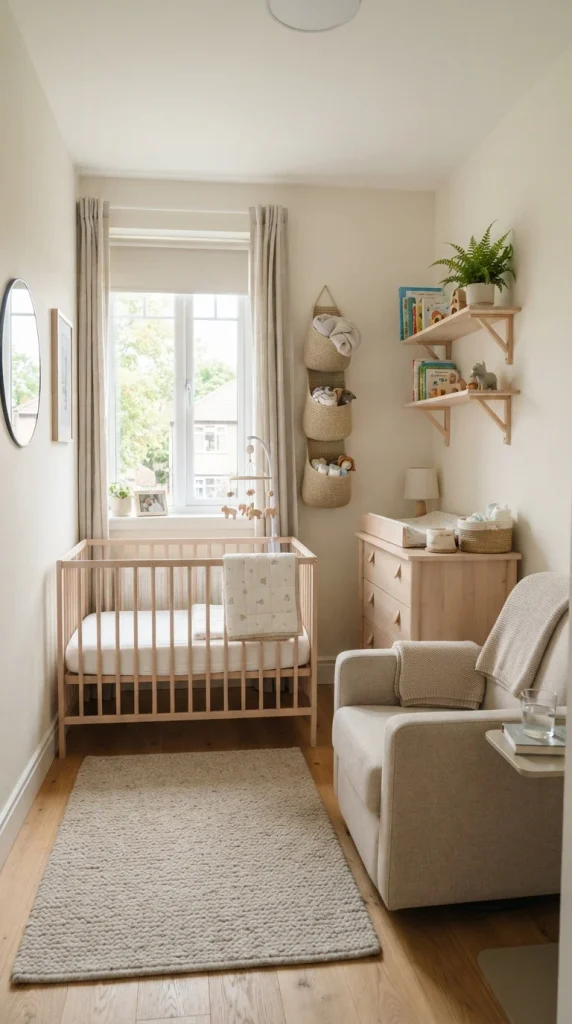
Charming nursery shelf decor can add personality while providing a useful place for small items. Use shelves for lightweight books, framed artwork, soft decorative pieces, or attractive storage baskets. Keep the arrangement simple and leave some empty space so the display does not look crowded. Choose colors and materials that connect with the rest of the nursery. Avoid placing small objects where a growing child could easily reach them. Secure shelves properly to the wall and follow appropriate safety guidance. Rotating a few decorations from time to time can keep the room feeling fresh. A well-arranged shelf can provide a stylish detail without taking up valuable floor space.
20. Small Nursery Space Ideas

Small nursery space ideas can help you create a comfortable room without making it feel cramped. Choose furniture that fits the scale of the room and avoid pieces that serve little purpose. Use vertical storage, wall shelves, baskets, and drawers to make better use of available space. Light colors can help the room feel more open, while mirrors can add brightness when positioned safely. Keep the floor as clear as possible so movement remains easy. A compact changing station or multifunctional dresser can also save valuable space. Use decoration selectively instead of covering every available surface. With thoughtful planning, even a small nursery can feel warm, organized, and comfortable.
21. Timeless Cozy Baby Room
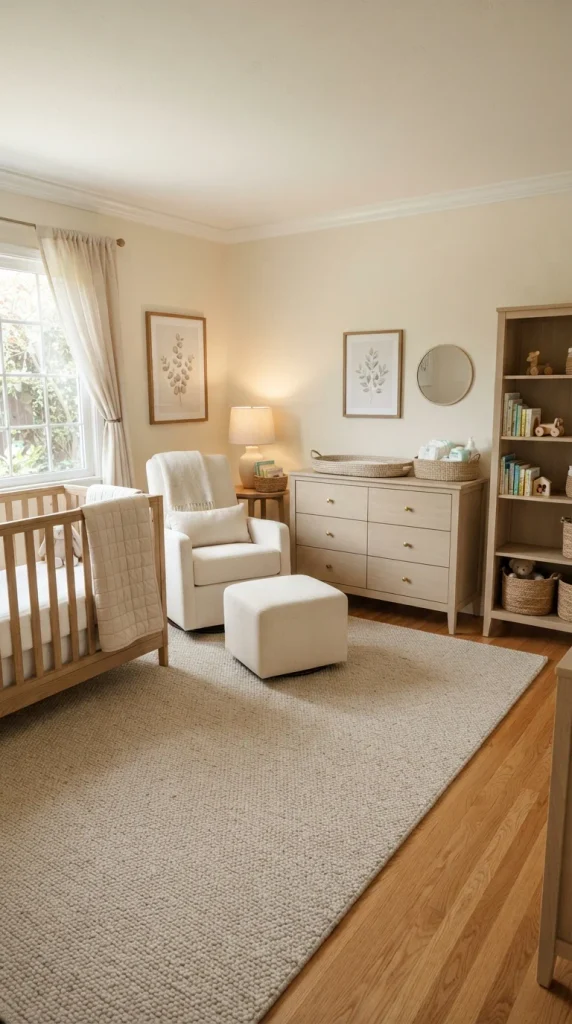
A timeless cozy baby room combines comfort, practical furniture, and simple decoration that can grow with your child. Choose neutral foundations and add personality through artwork, textiles, and accessories that can easily be changed later. Natural wood, soft fabrics, warm lighting, and gentle colors can create a welcoming atmosphere without following a short-lived trend. Keep everyday supplies organized so the room remains easy to use. Leave enough open space for movement and future changes. Personal details can make the room feel special without making the design too specific. I find that the most successful nurseries balance beauty with real family routines. This creates a baby room that feels peaceful today and remains useful as your child grows.
Conclusion
The best nursery decor ideas are not about filling every corner with decoration. A warm nursery comes from choosing calming colors, comfortable furniture, useful storage, soft textures, and personal details that make the room feel welcoming. Keep safety and everyday routines in mind while creating a space that feels peaceful for both baby and parents. With a few thoughtful choices, even a small room can become a cozy and practical place to enjoy those early years.
Frequently Asked Questions
What colors work best for a cozy nursery?
Soft neutrals, warm whites, beige, muted green, dusty blue, and gentle gray are good choices. They create a calm background and can easily work with different furniture and accessories.
How can I decorate a small nursery without making it feel crowded?
Choose compact furniture, use vertical storage, keep the floor open, and avoid too many decorative items. Light colors and simple layouts can also make the room feel more spacious.
How can I create a nursery on a small budget?
Start with essential furniture and add inexpensive details such as baskets, simple artwork, washable textiles, and handmade decorations. You do not need to decorate every wall to create a beautiful nursery.
What materials are good for nursery decor?
Natural wood, cotton, linen, woven fibers, and washable fabrics can add warmth and texture. Choose materials that are durable, easy to clean, and suitable for their intended use.
Where should nursery wall decor be placed?
Wall art can work above a dresser, beside a reading corner, or on an empty accent wall. Keep decorations securely mounted and away from areas where a baby could reach or pull them down.
How do I make a nursery feel cozy without using too much decor?
Focus on soft lighting, warm colors, comfortable textiles, natural materials, and a few meaningful accessories. Leaving some empty space can actually make the room feel calmer and more comfortable.
What should I prioritize when decorating a nursery?
Prioritize safe sleep arrangements, practical furniture, easy storage, comfortable lighting, and clear movement around the room. Once these basics are handled, add decorative details that reflect your preferred style.