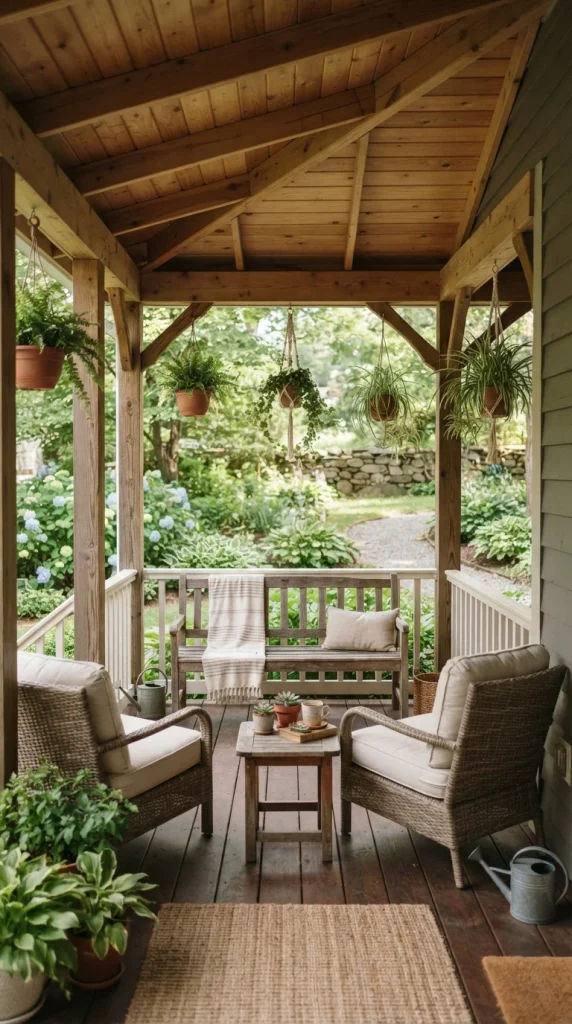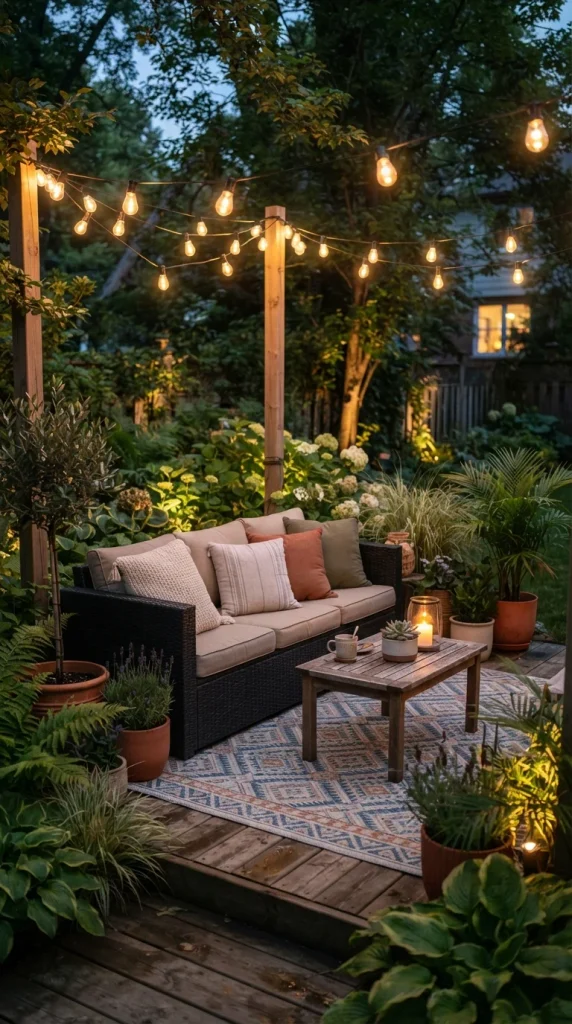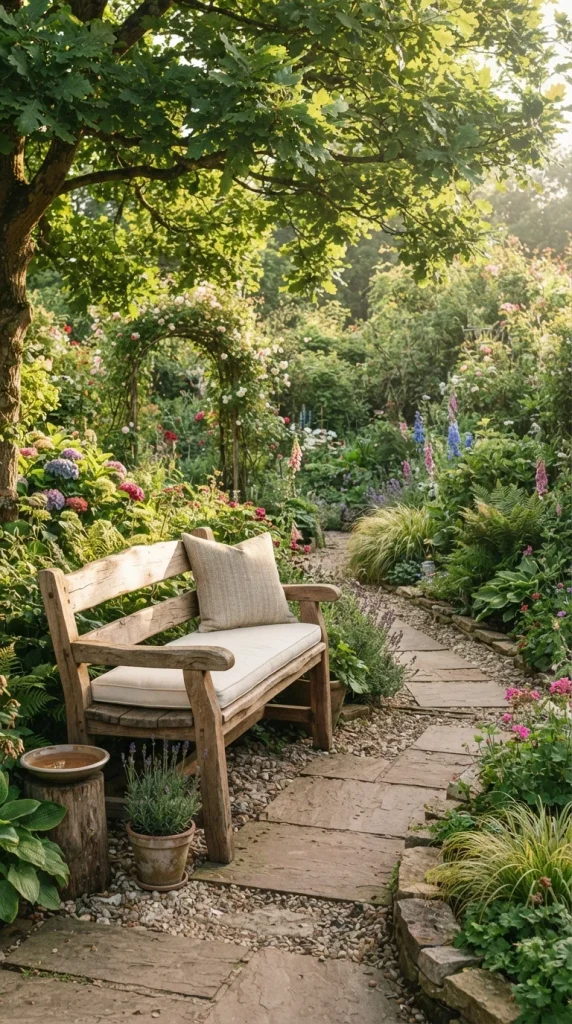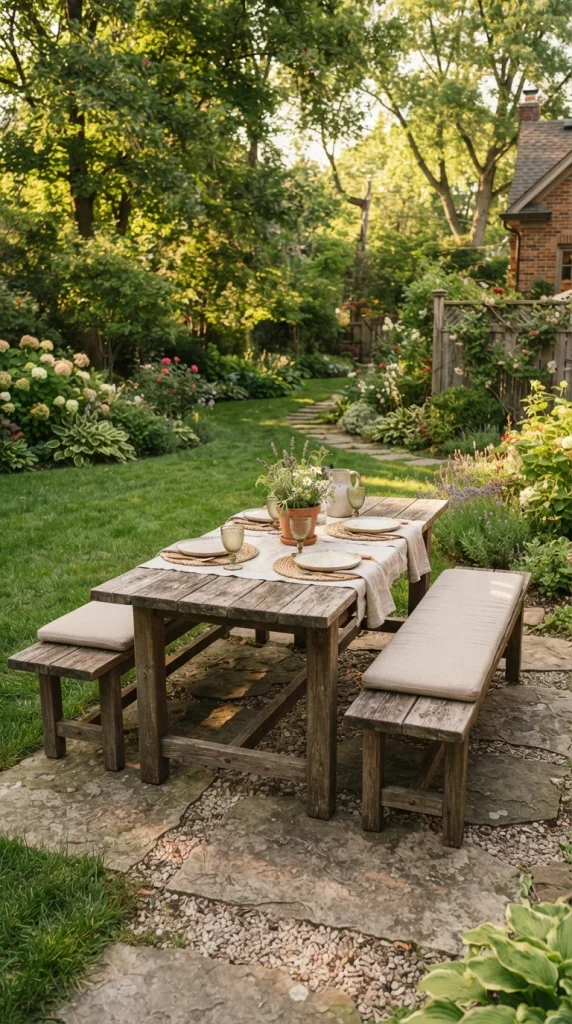
Outdoor Living

  • 21 Front Yard Landscaping Ideas to Create a Beautiful and Welcoming Home

    21 Front Yard Landscaping Ideas to Create a Beautiful and Welcoming Home

    Front yard landscaping is a great way to improve your home’s curb appeal and create a beautiful first impression. From colorful flower beds and lush green lawns to stone pathways and stylish garden borders, the right front yard landscaping ideas can make any home look more welcoming. Whether you have a small front yard or…


  • 21 Pool and Outdoor Toy Ideas for Fun and Playful Backyard Days

    21 Pool and Outdoor Toy Ideas for Fun and Playful Backyard Days

    Summer is the perfect time to enjoy the outdoors, and the right pool and outdoor toys can make every backyard day more exciting. From fun pool floats and water slides to outdoor games and creative play equipment, there are plenty of ways to keep kids entertained. These outdoor toys for kids encourage active play, creativity,…


  • 21 Concrete Patio Makeover Ideas for a Stylish and Cozy Outdoor Space

    21 Concrete Patio Makeover Ideas for a Stylish and Cozy Outdoor Space

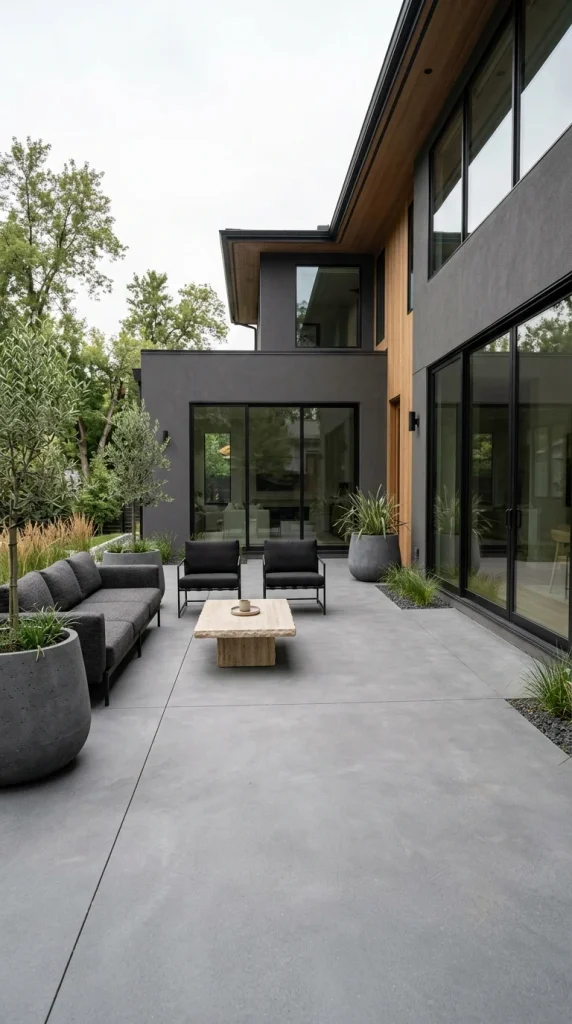
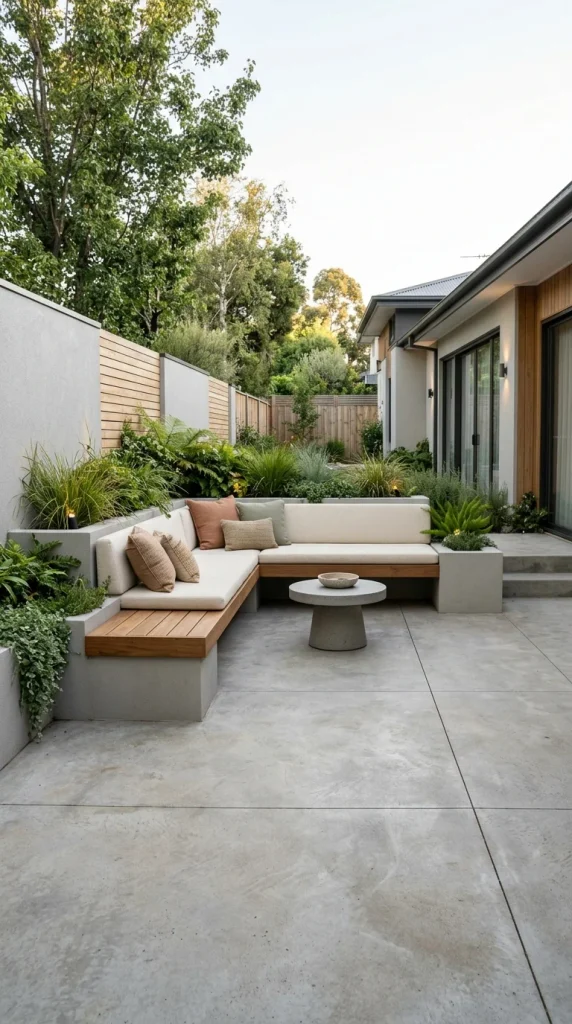
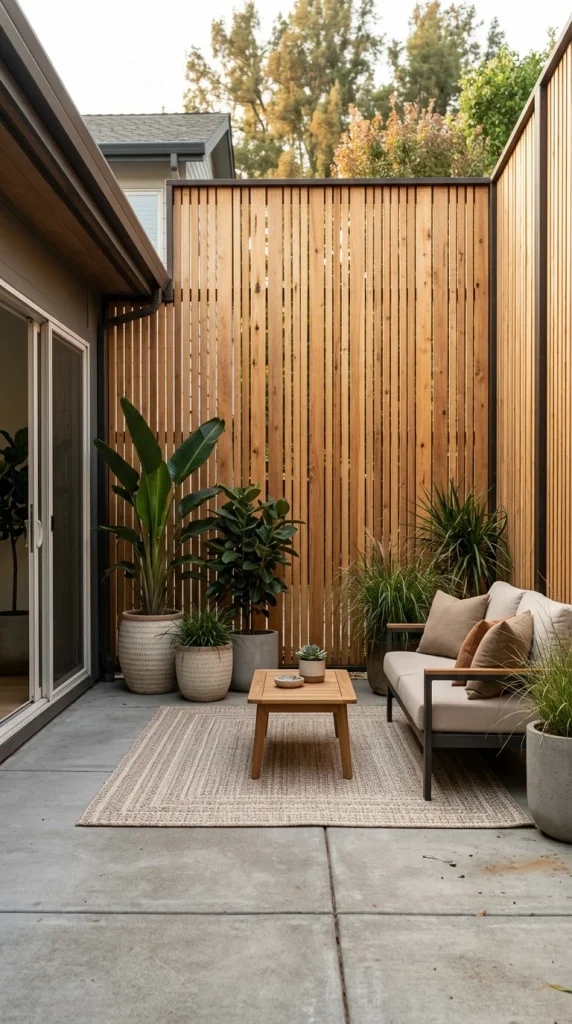
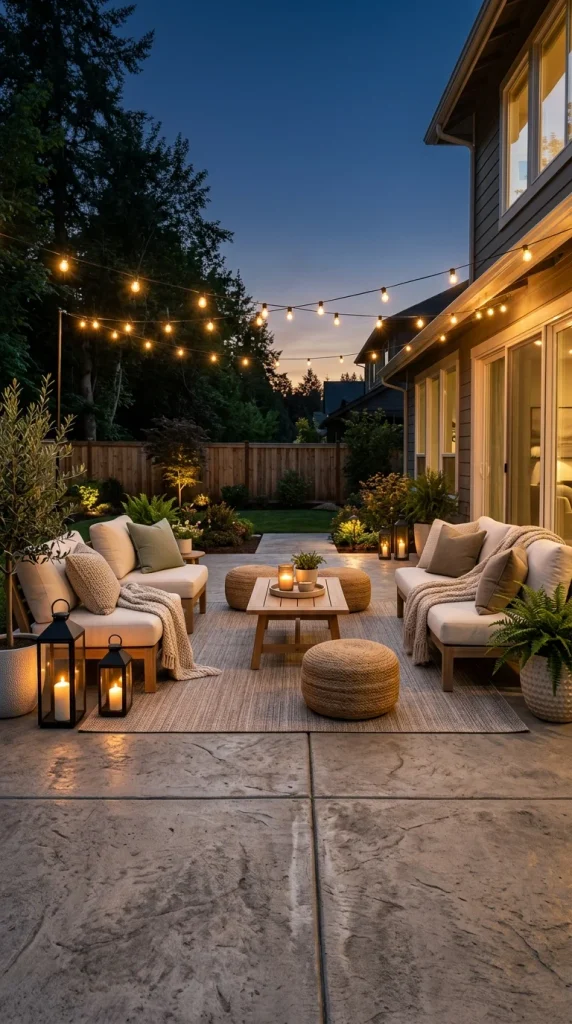
    A concrete patio can become a beautiful and inviting outdoor retreat with a few creative updates. These concrete patio makeover ideas will help you transform a plain, dull surface into a stylish and cozy space for relaxing, entertaining, or enjoying fresh air. From outdoor rugs and patio furniture to decorative planters, string lights, and concrete…


  • 25 Front Yard Flower Bed Ideas to Boost Your Home’s Curb Appeal

    25 Front Yard Flower Bed Ideas to Boost Your Home’s Curb Appeal

    A beautiful front yard can instantly make your home feel more welcoming, and front yard flower beds are an easy way to add color and charm. From simple flower beds for the front yard to layered designs with shrubs, edging, and seasonal blooms, there are many styles to explore. Front yard flower bed ideas can…


  • 21 Outdoor Patio Makeover Ideas to Create a Cozy and Stylish Outdoor Space

    21 Outdoor Patio Makeover Ideas to Create a Cozy and Stylish Outdoor Space

    Your patio can become a beautiful extension of your home with a few simple and thoughtful updates. These outdoor patio makeover ideas can help turn a plain area into a cozy and stylish outdoor retreat. From comfortable patio furniture and outdoor rugs to greenery, lighting, and decorative accents, small changes can create a big impact.…


  • 21 Cozy Porch Decor Ideas for a Beautiful and Welcoming Home

    21 Cozy Porch Decor Ideas for a Beautiful and Welcoming Home

    Your porch is the first part of your home guests see, so it should feel warm and welcoming. These cozy porch decor ideas offer simple ways to refresh your entrance with plants, rugs, seating, and seasonal accents. Whether your style is modern or classic, these front porch decor ideas can help create a beautiful and…


  • 21 Backyard Pool Landscaping Ideas for a Beautiful Outdoor Space

    21 Backyard Pool Landscaping Ideas for a Beautiful Outdoor Space

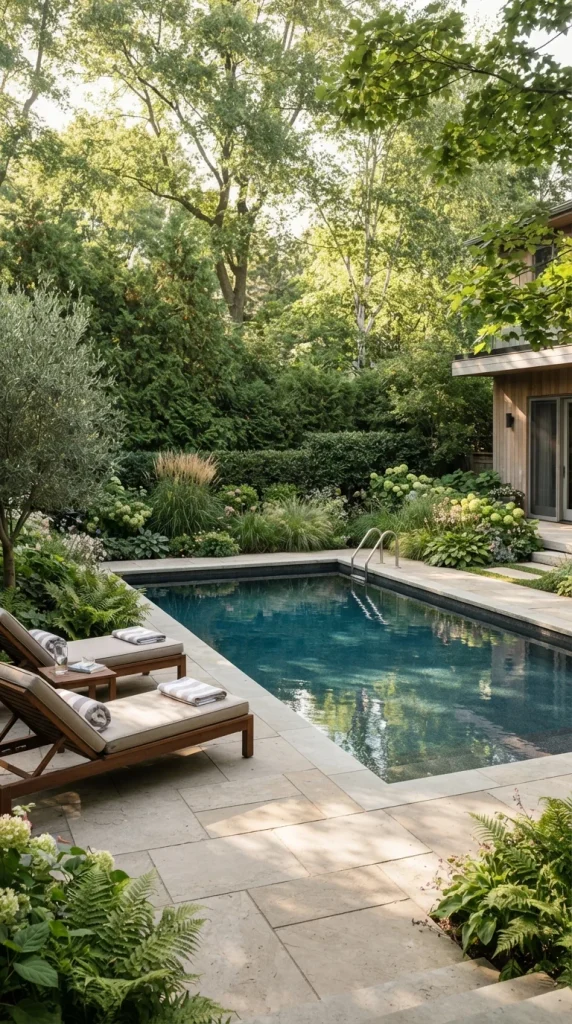
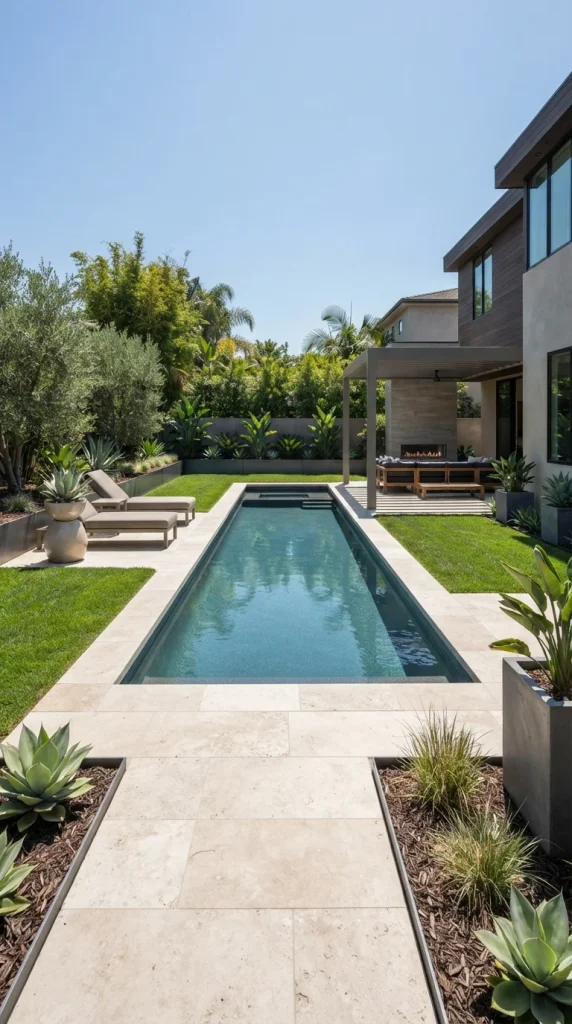
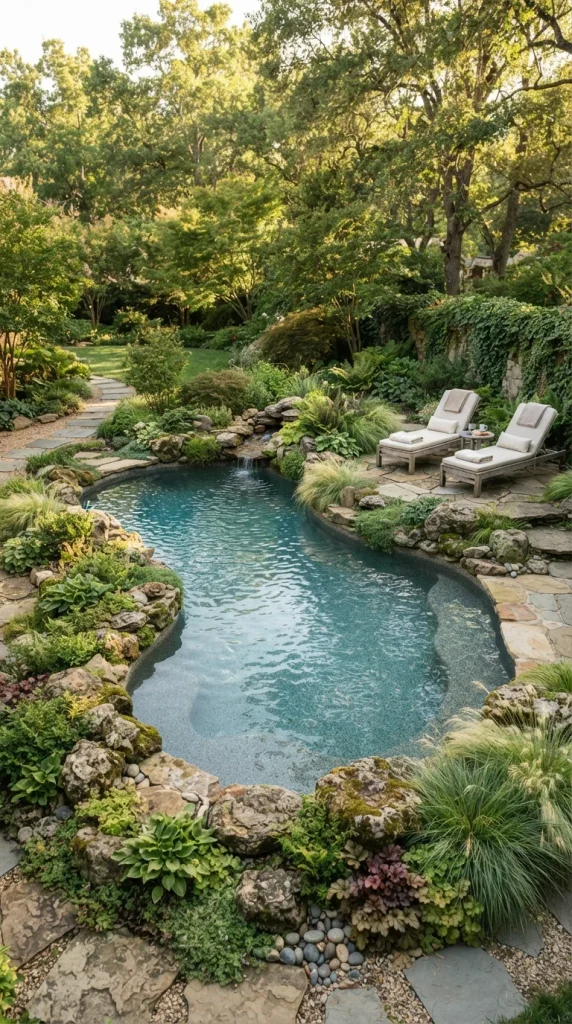
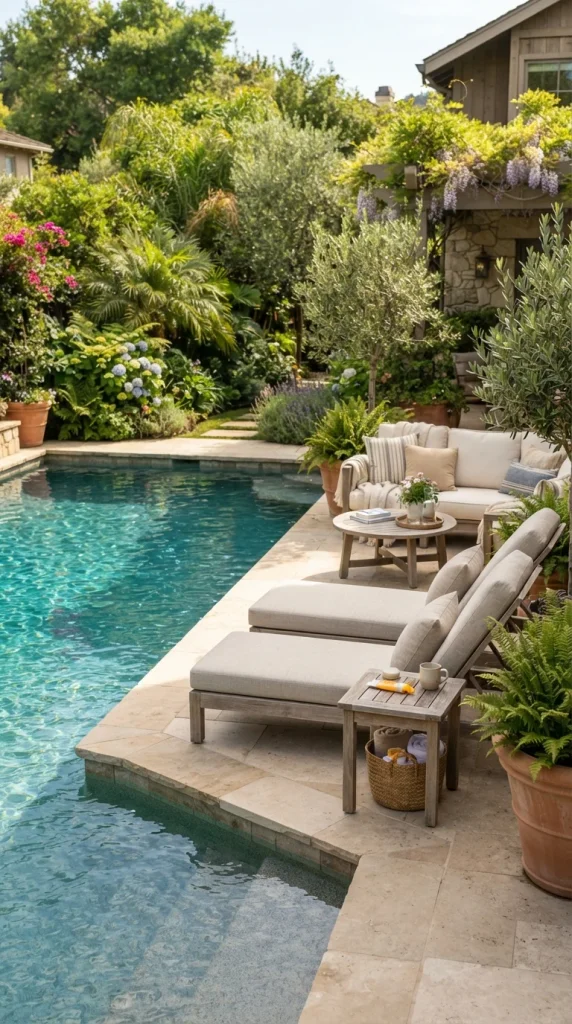
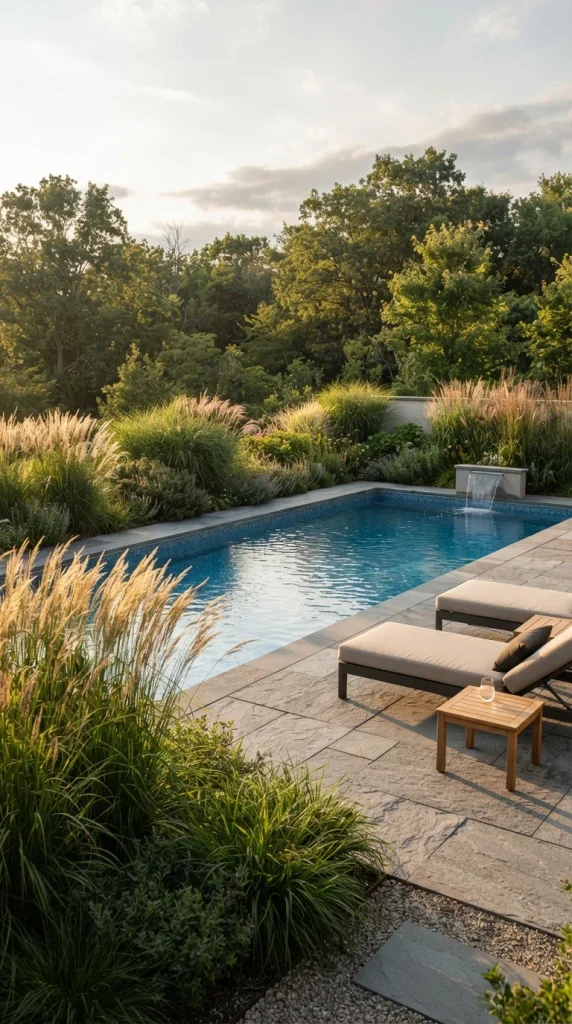
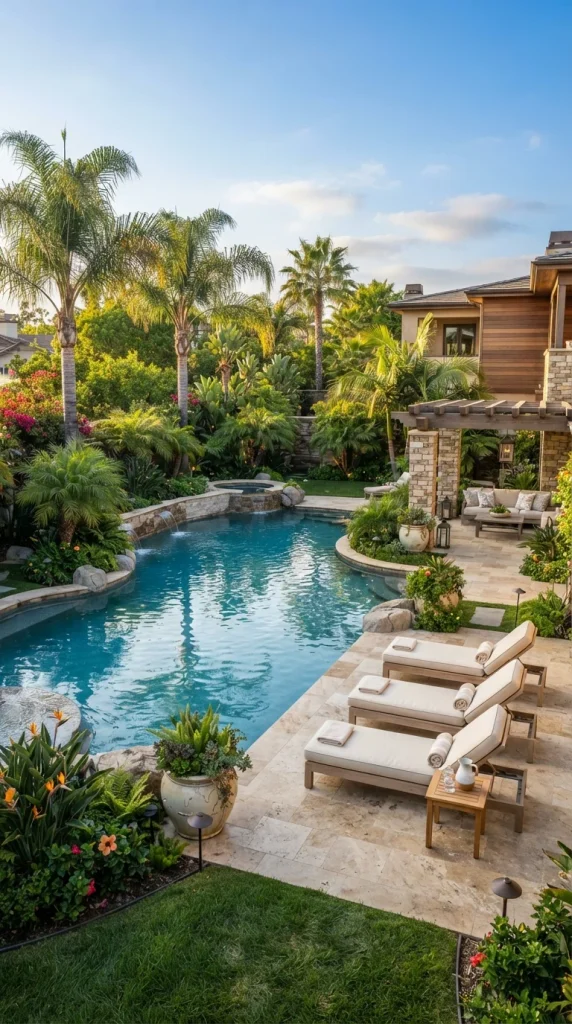
    A well-planned backyard pool landscaping can turn a simple pool area into a beautiful outdoor retreat. From lush greenery and tropical plants to stylish poolside seating, the right landscaping ideas can make your backyard feel more inviting. You can add privacy with tall plants, create a cozy atmosphere with outdoor lighting, or define the space…


  • 23 DIY Small Garden Ideas to Make the Most of Your Outdoor Space

    23 DIY Small Garden Ideas to Make the Most of Your Outdoor Space

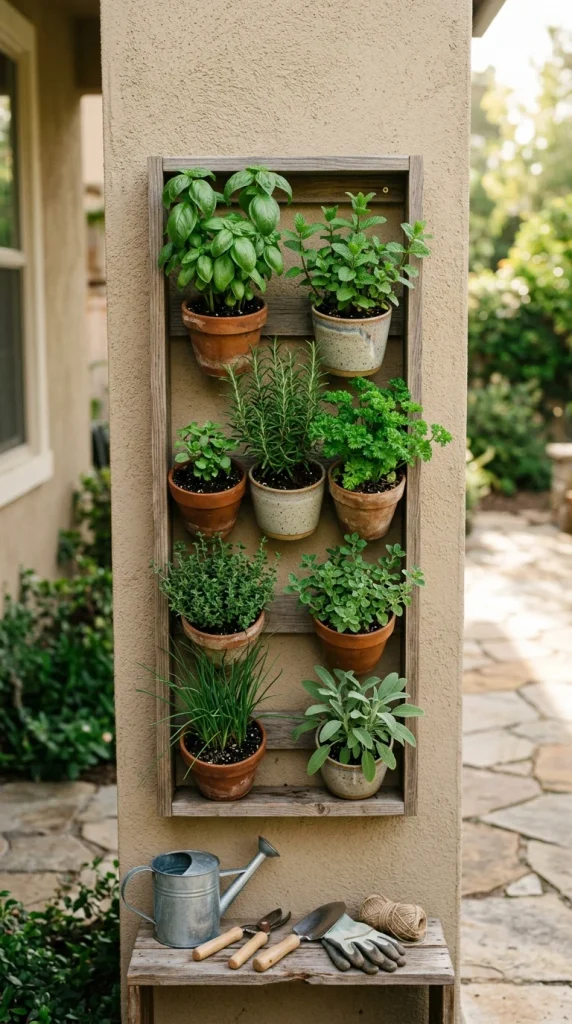
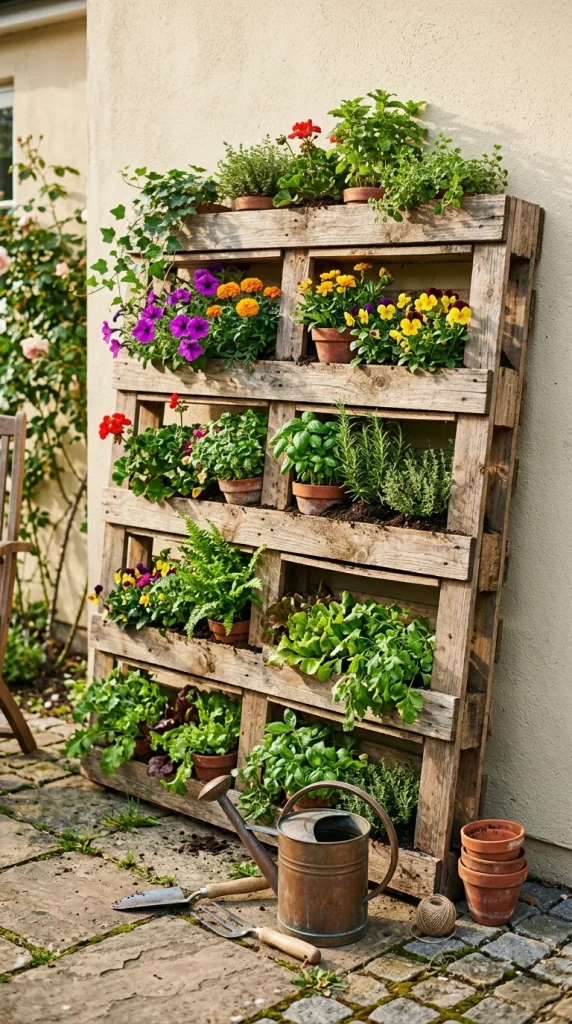
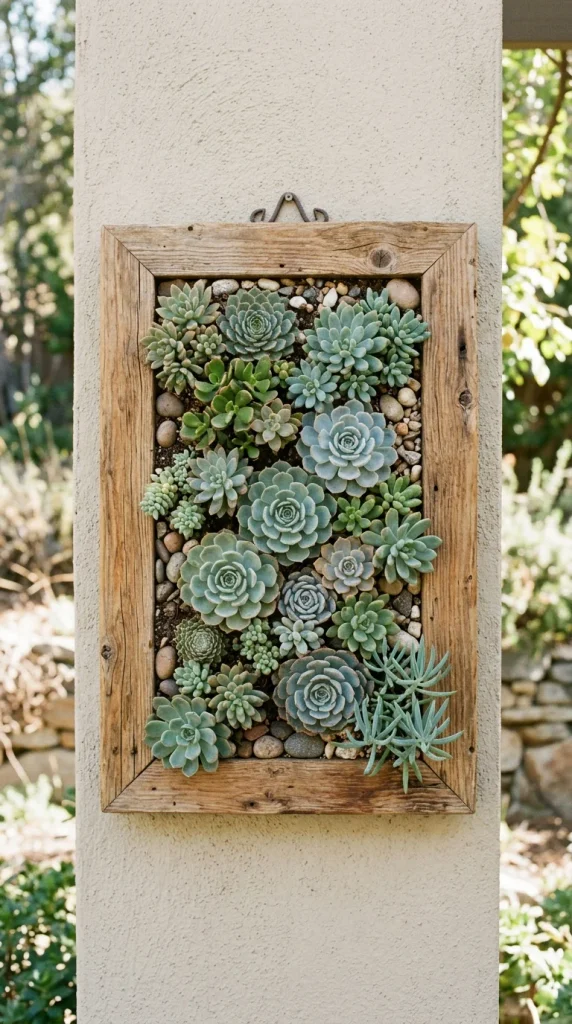
    Small spaces can still become beautiful, inviting gardens with a little creativity and the right DIY projects. Whether you have a tiny backyard, balcony, patio, or unused corner, there are plenty of simple ways to add greenery without taking up too much room. From vertical planters and compact herb gardens to creative containers and cozy…


  • 21 Artificial Turf Landscaping Ideas for a Beautiful, Low-Maintenance Yard

    21 Artificial Turf Landscaping Ideas for a Beautiful, Low-Maintenance Yard

    Artificial turf landscaping is an easy way to create a beautiful, green yard without the constant mowing, watering, and upkeep required by natural grass. It works well in modern backyards, patios, small gardens, play areas, and other outdoor spaces. With the right design, artificial turf can look natural while creating a clean and polished appearance.…


  • 22 Budget-Friendly Outdoor Seating Ideas for a Cozy Backyard

    22 Budget-Friendly Outdoor Seating Ideas for a Cozy Backyard

    Create a cozy backyard oasis with affordable outdoor seating, soft cushions, pillows, and simple outdoor furniture for comfort and relaxation. A small patio, deck, lawn, or balcony can become a welcoming outdoor lounge with smart space-saving seating and weather-resistant materials. Choose comfortable seating and durable materials that suit your climate, seating style, and maintenance needs.…


Create a beautiful and inviting outdoor space with practical outdoor living ideas for patios, porches, balconies, decks, gardens, backyards, and outdoor kitchens. Explore landscaping inspiration, outdoor furniture, lighting, fire pits, pool areas, garden design, exterior colors, and entertaining ideas for enjoying your home beyond its walls.

  • 21 Front Yard Landscaping Ideas to Create a Beautiful and Welcoming Home

    21 Front Yard Landscaping Ideas to Create a Beautiful and Welcoming Home

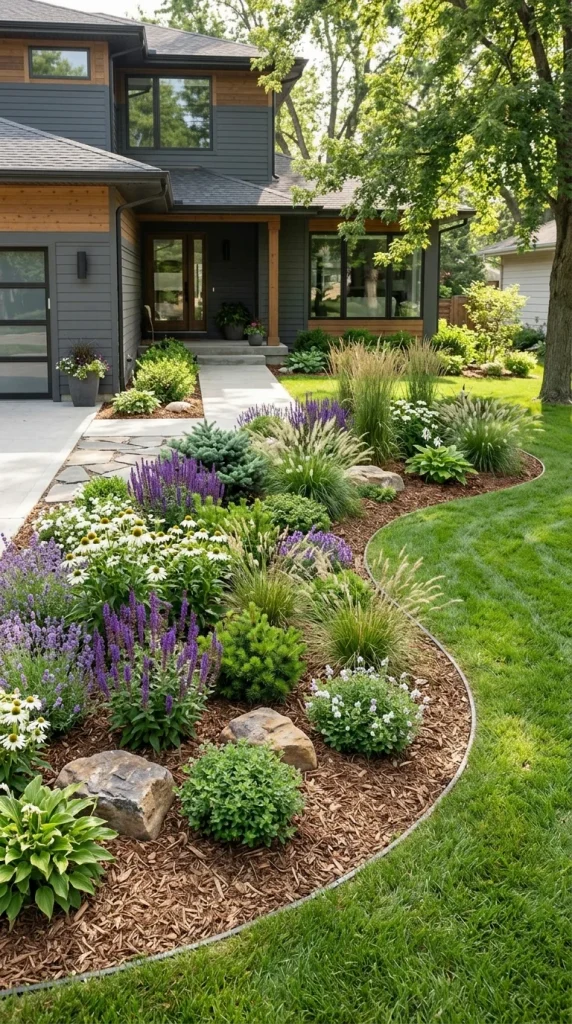
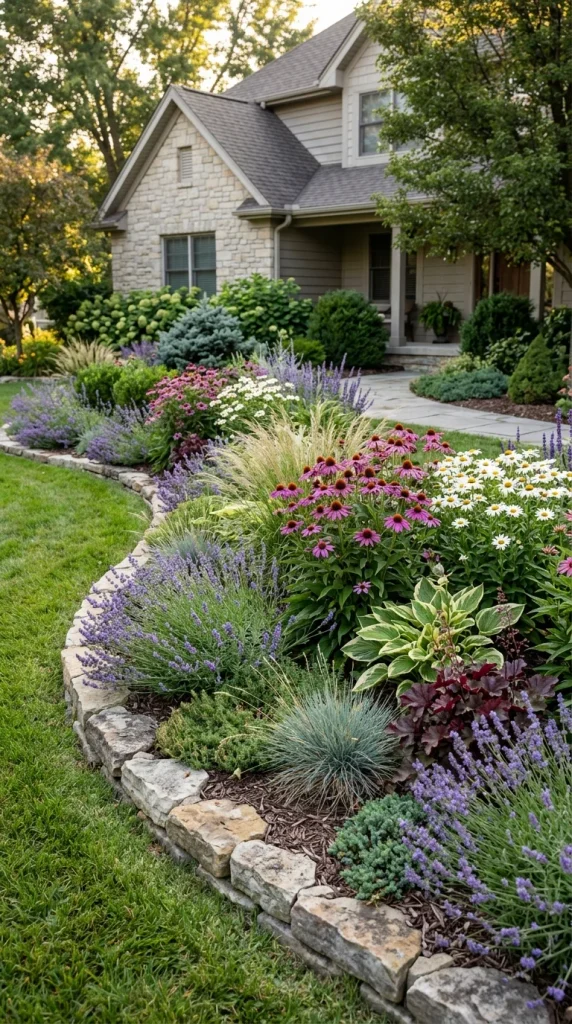
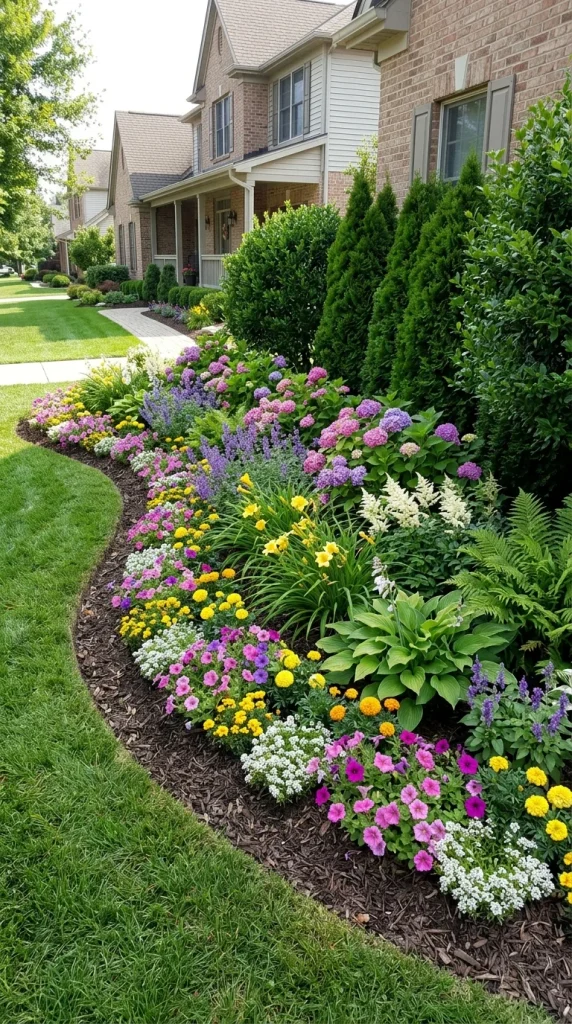
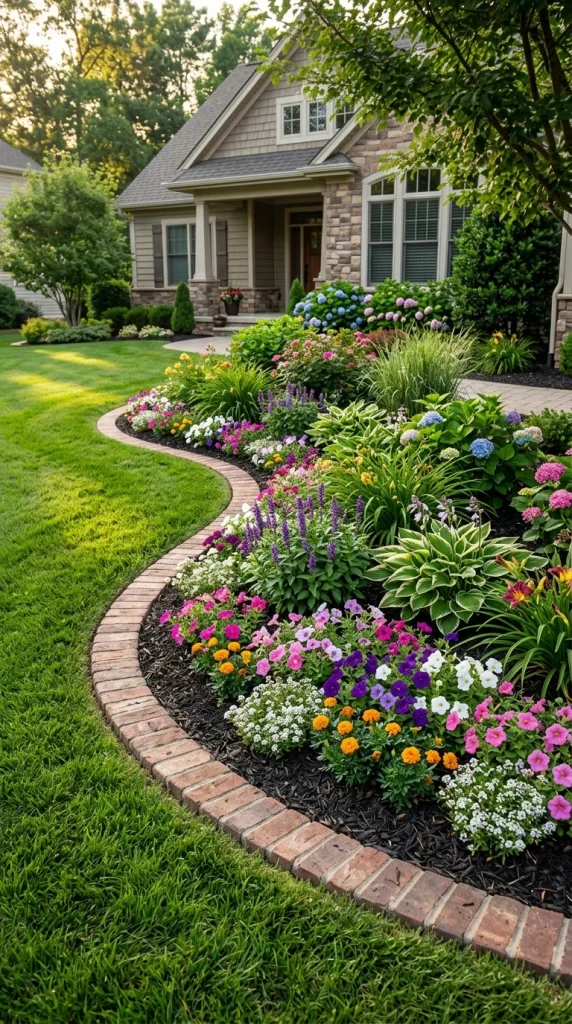
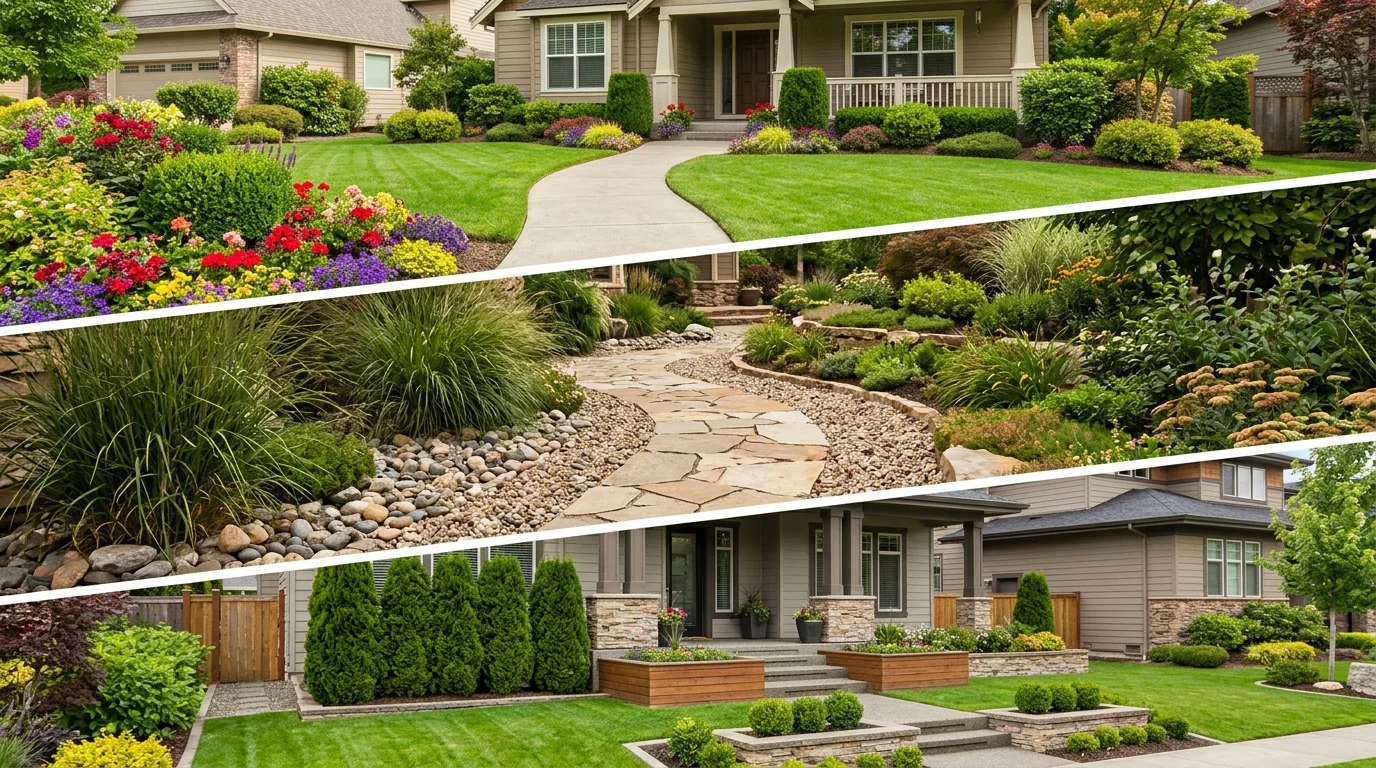
    Front yard landscaping is a great way to improve your home’s curb appeal and create a beautiful first impression. From colorful flower beds and lush green lawns to stone pathways and stylish garden borders, the right front yard landscaping ideas can make any home look more welcoming. Whether you have a small front yard or a large outdoor space, simple landscaping designs can add charm, beauty, and value to your property. Explore these 21 front yard landscaping ideas to create an attractive, inviting, and well-organized outdoor space.

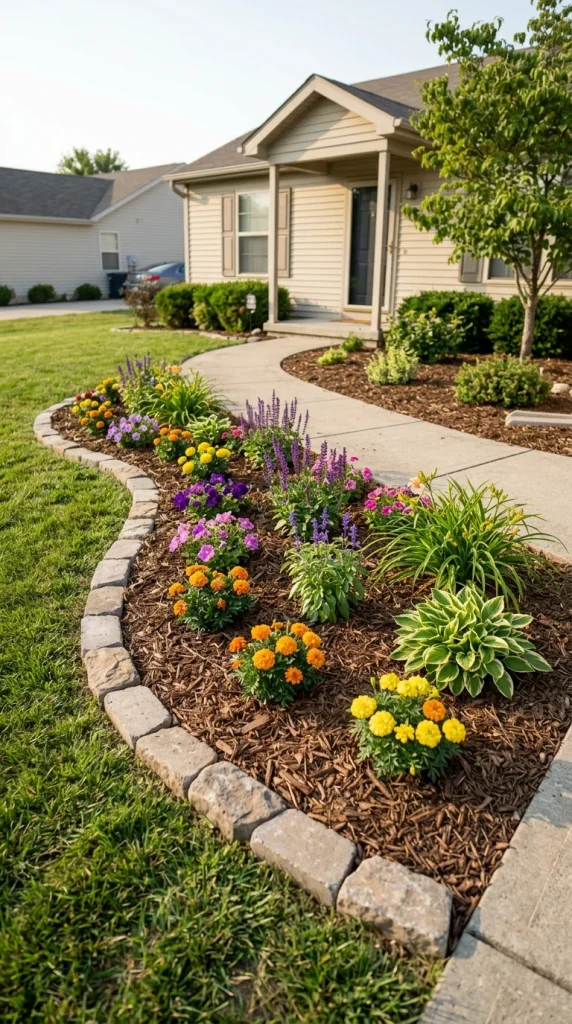
    1. Colorful Flower Beds
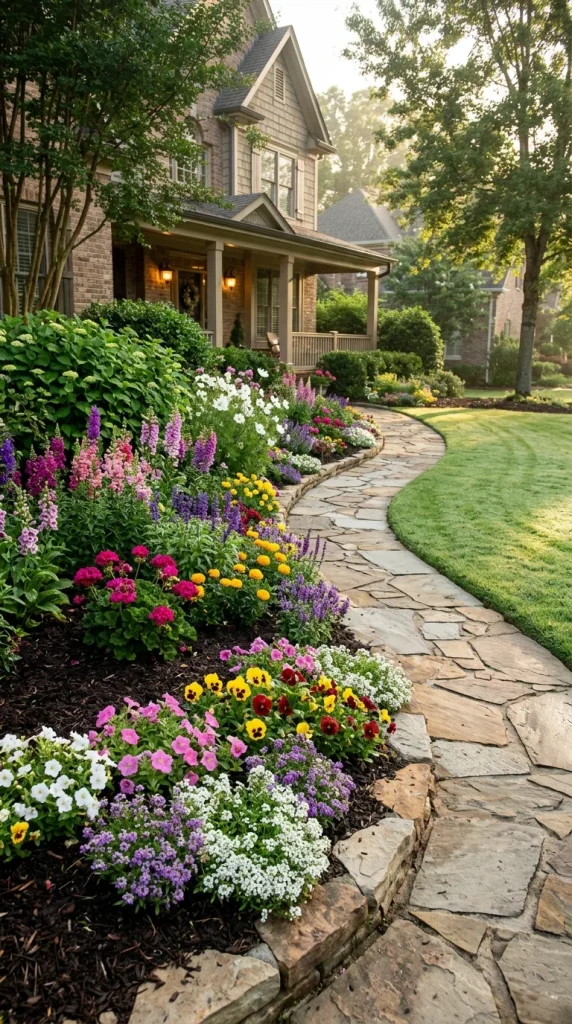
    Colorful flower beds can make your front yard look bright, cheerful, and welcoming. Choose flowers in different colors that complement your home’s exterior. Arrange taller plants at the back and shorter flowers near the front for a neat appearance. Add fresh mulch to keep the soil healthy and give the flower beds a finished look.

    2. Lush Green Lawns

    A lush green lawn creates a fresh and beautiful look for your front yard. Keep the grass trimmed and water it according to your local weather and soil conditions. You can add a few small plants or flowers along the edges to make the lawn more attractive. Regular lawn care helps your outdoor space look clean and well-maintained.

    3. Stone Garden Pathways
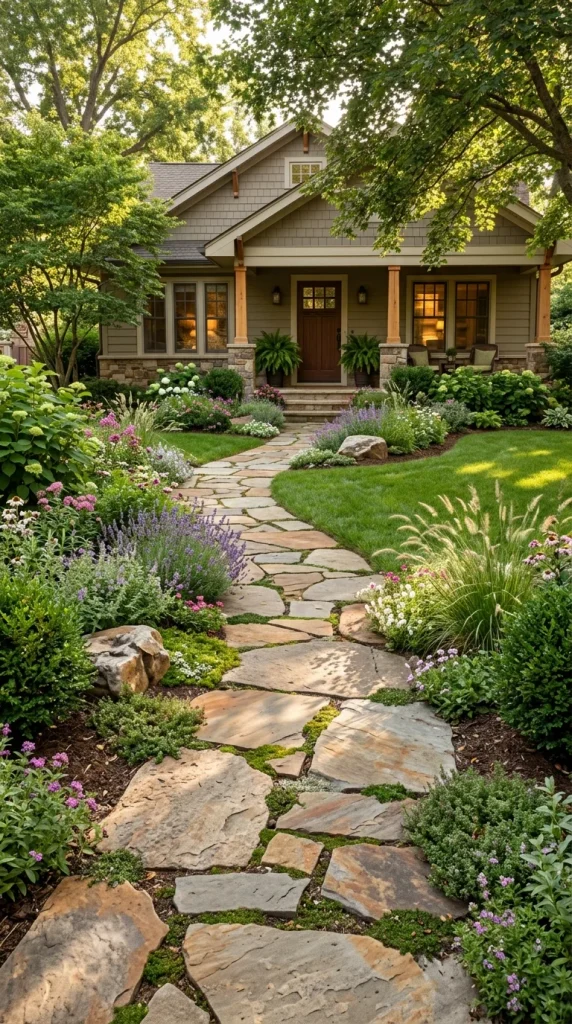
    Stone garden pathways add charm and function to your front yard landscaping. Use natural stone pavers to create a clear walkway from the driveway or sidewalk to your front door. Choose stones that match your home’s style and outdoor colors. Adding low-growing plants along the edges can make the pathway feel more natural and inviting.

    4. Modern Gravel Gardens
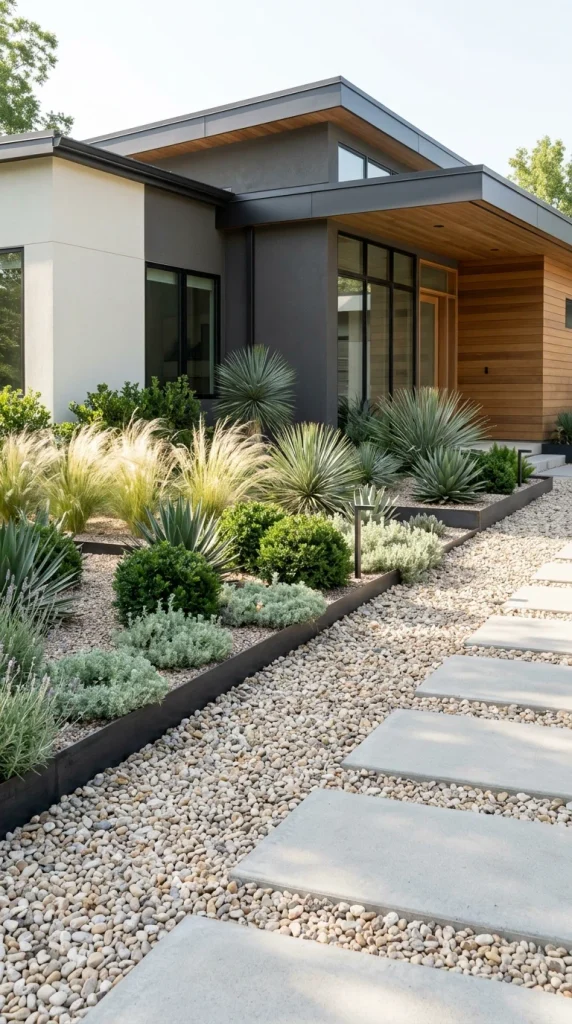
    Modern gravel gardens are a stylish choice for homeowners who want simple and low-maintenance landscaping. Use decorative gravel in neutral shades such as white, gray, or beige to create a clean outdoor design. Add ornamental grasses, small shrubs, or drought-tolerant plants for extra texture. A weed barrier beneath the gravel can help reduce unwanted growth and keep the area tidy.

    5. Charming Garden Borders

    Garden borders help define your front yard and create a neat, organized appearance. You can use bricks, natural stones, or metal edging to separate flower beds from the lawn. Plant colorful flowers and small shrubs along the borders to add beauty and texture. Choose materials that complement your home’s exterior for a balanced landscaping design.

    6. Small Tree Landscaping
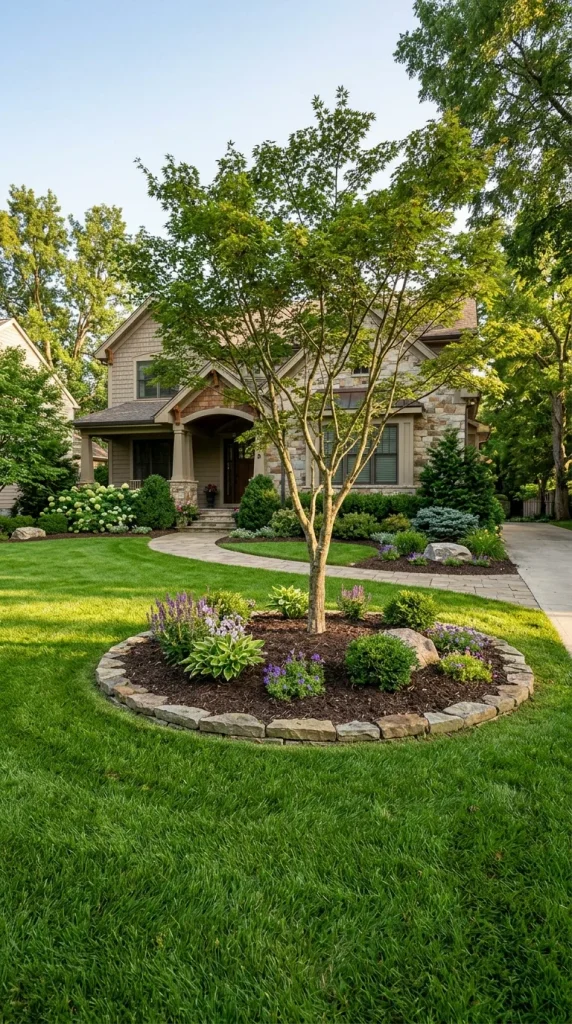
    Small trees can add height, shade, and natural beauty to your front yard without taking up too much space. Choose varieties that suit your local climate and will fit comfortably when fully grown. Place them where their roots and branches will not interfere with walkways, foundations, or overhead wires. Surrounding the trees with flowers or decorative mulch can create an attractive focal point.

    7. Elegant Front Walkways

    An elegant front walkway makes your home feel more welcoming and provides a practical route to the entrance. Choose concrete pavers, brick, or natural stone to match your home’s architectural style. Keep the path wide enough for comfortable walking and make sure the surface is safe and even. Adding small plants or outdoor lights along the walkway can improve its appearance.

    8. Decorative Rock Gardens

    Decorative rock gardens bring natural texture and visual interest to front yard landscaping. Combine rocks of different sizes with ornamental grasses, succulents, or other plants suited to your climate. Arrange the stones in natural-looking groups rather than spreading them randomly across the yard. This design works especially well in areas where maintaining a traditional lawn would require too much water or effort.

    9. Symmetrical Garden Designs
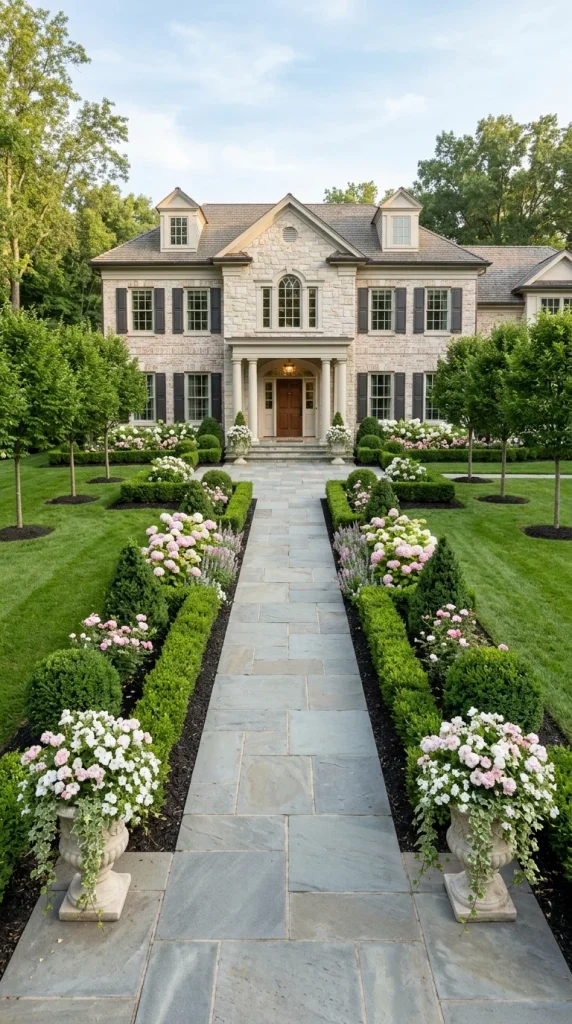
    Symmetrical garden designs create a balanced and elegant look around your front entrance. Place matching planters, shrubs, or flower beds on both sides of the front door or walkway. Keep the plants trimmed to maintain a clean and organized appearance. This landscaping style works particularly well with traditional homes and entrances that benefit from a formal design.

    10. Cottage Style Gardens

    Cottage-style gardens bring a relaxed and charming feeling to your front yard. Plant a mix of colorful flowers, leafy greenery, and small shrubs to create a natural, layered appearance. Choose plants with different heights and flowering seasons to keep the garden interesting throughout the year. A simple stone pathway or wooden garden gate can complete this welcoming look.

    11. Low Maintenance Landscaping
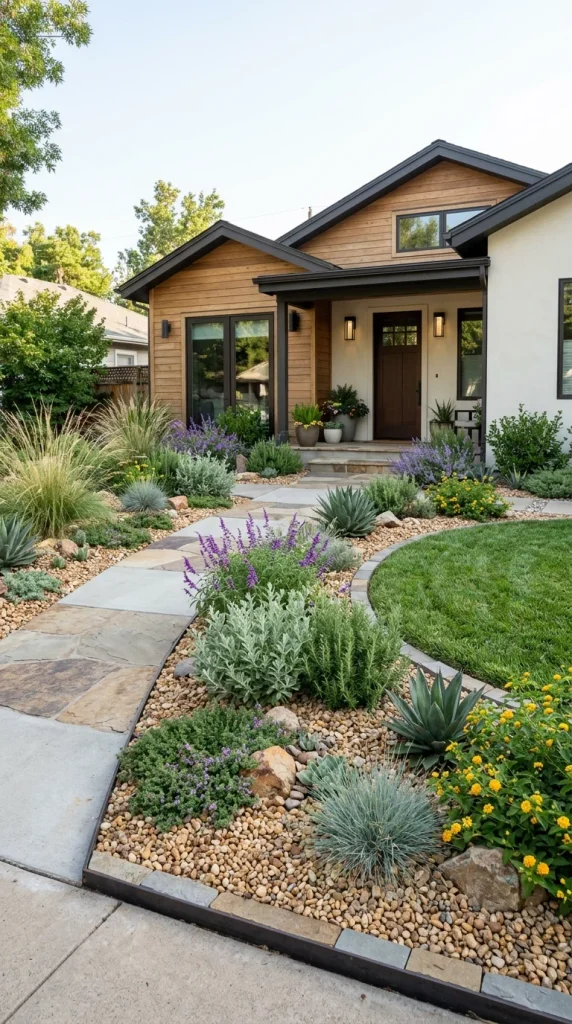
    Low-maintenance landscaping is ideal for homeowners who want a beautiful yard without spending hours on upkeep. Choose hardy plants that grow well in your local climate and require less frequent watering. Use mulch or suitable ground covers to reduce weeds and protect the soil. Combining these plants with gravel pathways and clearly defined borders creates an attractive yard that is easier to manage.

    12. Layered Planting Designs
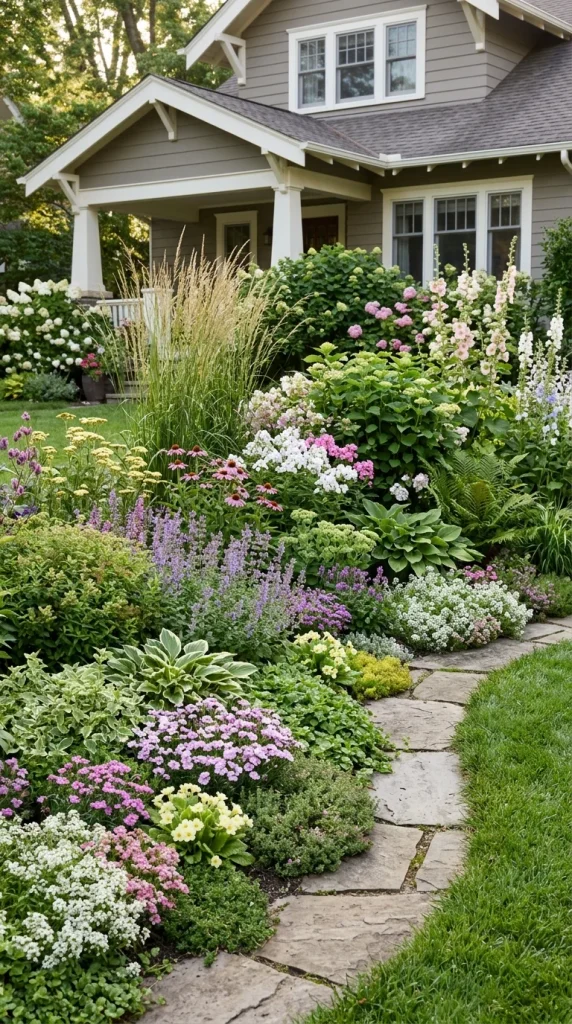
    Layered planting designs make your front yard look fuller and more visually interesting. Place taller shrubs or ornamental grasses at the back, medium-sized plants in the middle, and shorter flowers near the front. Choose plants with complementary colors, leaf shapes, and growing needs. This arrangement creates depth while allowing each plant to remain visible and receive enough sunlight.

    13. Beautiful Shrub Borders
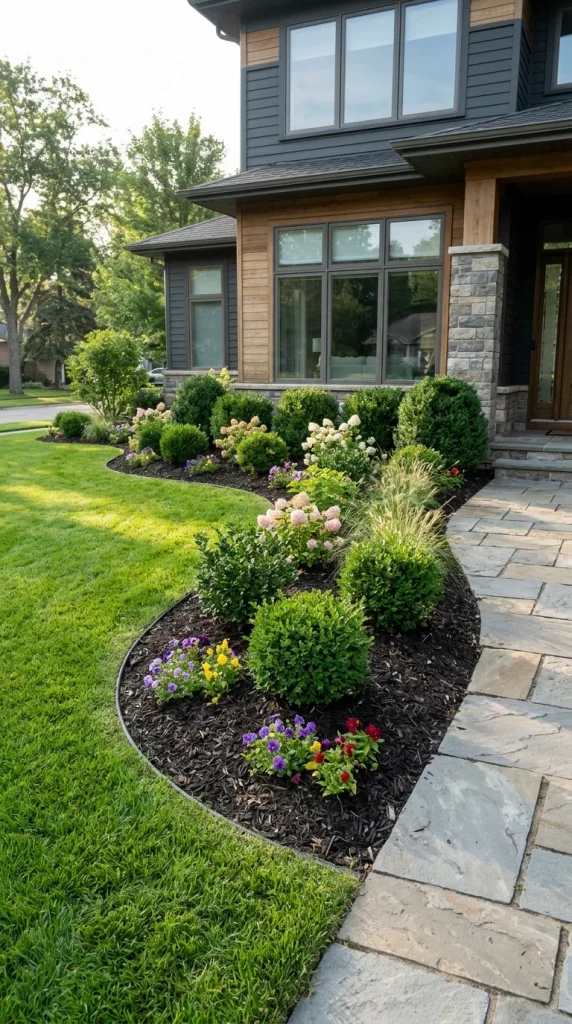
    Shrub borders add greenery, structure, and a polished appearance to your front yard. Plant compact shrubs along the foundation of your home, beside walkways, or around flower beds. Mix different leaf textures and plant heights to create a more natural design. Leave enough room for mature growth so the shrubs do not block windows, doors, or outdoor access.

    14. Welcoming Porch Gardens
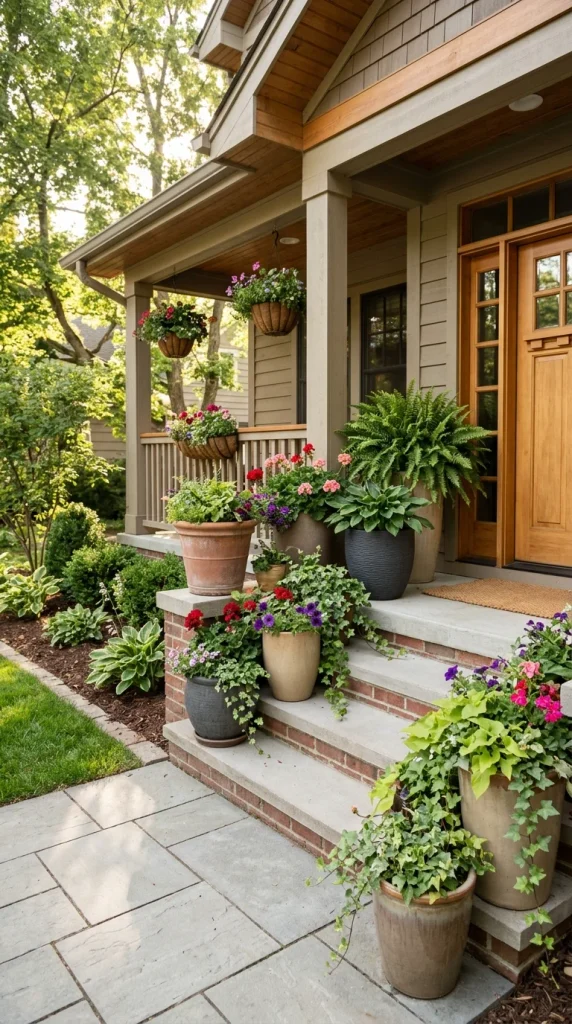
    A porch garden can make your front entrance feel warm and inviting. Place attractive planters beside the steps or near the front door, using flowers and greenery that suit the available sunlight. Combine different planter heights to add interest without overcrowding the entrance. Keep the steps and walkway clear so your porch remains comfortable and easy to access.

    15. Raised Flower Planters

    Raised flower planters are a practical way to add color and structure to your front yard. Choose wooden, brick, or stone planters that complement your home’s exterior. Fill them with suitable soil and plant flowers, compact shrubs, or seasonal greenery. Raised beds can also make gardening easier by providing better control over soil conditions and helping define outdoor spaces.

    16. Curved Garden Edges

    Curved garden edges give your front yard a soft and natural appearance. Use gentle curves to shape flower beds around the lawn, trees, or front walkway. Define the edges with bricks, stones, or flexible landscape edging to keep the design neat. Planting colorful flowers and low-growing greenery along these curves can make the entire yard feel more welcoming.

    17. Evergreen Foundation Plants

    Evergreen foundation plants provide year-round greenery and help connect your home with the surrounding landscape. Choose compact evergreen shrubs that suit your climate and will not grow too large for the available space. Arrange them along the front of your house, leaving enough room around windows and exterior walls. Mixing evergreens with seasonal flowers adds color while keeping the overall design attractive throughout the year.

    18. Rustic Wooden Planters
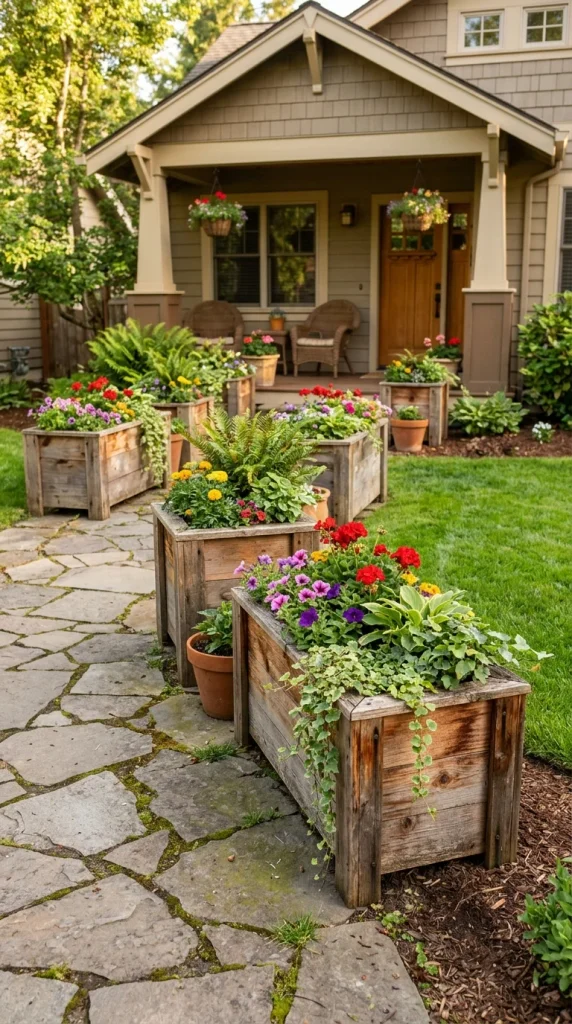
    Rustic wooden planters bring warmth and a natural touch to front yard landscaping. Place them near your porch, along the walkway, or beside the entrance to create welcoming focal points. Fill them with colorful flowers, trailing greenery, or small ornamental plants that suit the location. Choose weather-resistant wood or a suitable protective finish to help the planters last longer outdoors.

    19. Water Feature Gardens

    Water feature gardens can create a peaceful and attractive focal point in your front yard. A small fountain or compact water feature works well beside a garden pathway or within a decorative planting bed. Surround it with stones, ornamental grasses, and moisture-tolerant plants suited to the location. Choose a size that fits your space and plan for safe installation, regular cleaning, and easy maintenance.

    20. Tropical Front Gardens

    Tropical front gardens create a lush and vibrant look with bold leaves and rich greenery. Choose tropical plants that can thrive in your local climate, such as suitable palms, elephant ears, or other large-leaf varieties. Arrange plants at different heights to create depth and a natural appearance. In cooler climates, use cold-hardy alternatives or grow sensitive plants in containers that can be moved indoors.

    21. Minimalist Modern Landscaping
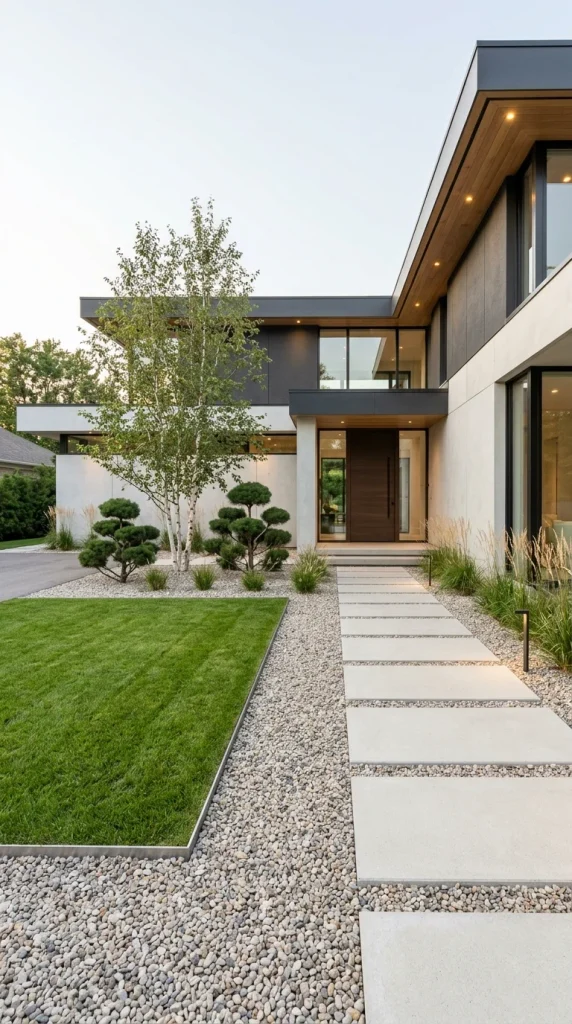
    Minimalist modern landscaping focuses on clean lines, simple materials, and carefully chosen plants. Use a limited color palette with gravel, concrete pavers, and a few well-placed shrubs or ornamental grasses. Keep the lawn and garden borders neat to maintain an uncluttered appearance. This style works especially well for contemporary homes and homeowners who prefer a simple outdoor space.

    Conclusion

    Beautiful front yard landscaping can make your home more welcoming while improving its curb appeal. From colorful flower beds and stone pathways to low-maintenance gardens and modern designs, there are plenty of ways to create an outdoor space that suits your home and budget. Choose plants that grow well in your local climate, use practical materials, and keep the layout balanced. With thoughtful planning and regular care, your front yard can remain attractive and inviting throughout the year.

    Frequently Asked Questions

    1. How can I landscape my front yard on a budget?

    Start with affordable improvements such as adding mulch, planting seasonal flowers, creating simple garden borders, and refreshing existing plants. You can also use gravel or reuse suitable stones to define pathways and garden beds. Focus on one area at a time to spread out the cost.

    2. What are the best front yard landscaping ideas for small spaces?

    Small front yards benefit from vertical planting, compact shrubs, narrow flower beds, and simple walkways. Choose plants that will not outgrow the available space and avoid filling every corner with decorations. A clear layout can make a small yard feel more open.

    3. Which plants are best for front yard landscaping?

    The best plants depend on your climate, soil, sunlight, and available space. Evergreen shrubs, native plants, ornamental grasses, and seasonal flowers are popular options. Choose varieties suited to your local conditions to make gardening easier and reduce maintenance.

    4. How can I make my front yard look more expensive?

    Use a coordinated color palette, neatly trimmed plants, attractive edging, and a well-defined walkway. Matching planters and balanced planting around the entrance can also create a polished appearance. Keeping the lawn, driveway, and garden beds clean makes a noticeable difference.

    5. What materials are best for front yard landscaping?

    Popular materials include natural stone, brick, concrete pavers, decorative gravel, mulch, and weather-resistant wood. Select materials that complement your home’s exterior and suit your budget. For pathways, choose durable, slip-resistant surfaces that remain safe in wet weather.

    6. How do I choose the right front yard landscaping design?

    Consider your home’s architectural style, the size of your yard, your budget, and the amount of maintenance you can manage. Look at how sunlight and drainage affect different areas before choosing plants. A simple plan with a few coordinated features often looks better than an overcrowded design.

    7. How can I maintain my front yard landscaping throughout the year?

    Regularly remove weeds, trim plants when needed, and check that your garden receives appropriate water. Refresh mulch when necessary and remove dead leaves or damaged branches. Adjust seasonal planting and watering according to your local weather to keep your front yard healthy and attractive.
  • 21 Pool and Outdoor Toy Ideas for Fun and Playful Backyard Days

    21 Pool and Outdoor Toy Ideas for Fun and Playful Backyard Days

    Summer is the perfect time to enjoy the outdoors, and the right pool and outdoor toys can make every backyard day more exciting. From fun pool floats and water slides to outdoor games and creative play equipment, there are plenty of ways to keep kids entertained. These outdoor toys for kids encourage active play, creativity, and quality family time. Whether you have a swimming pool, a small backyard, or a spacious garden, these ideas can help you create a fun and playful outdoor space. Discover these 21 pool and outdoor toy ideas to make your summer days more enjoyable and memorable.

    1. Colorful Pool Floats for Relaxing Summer Fun

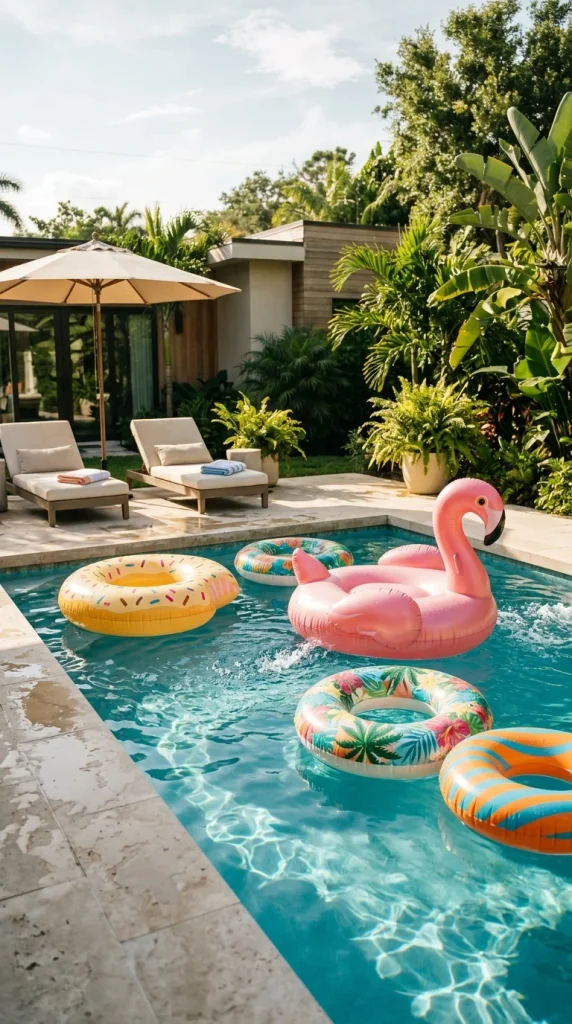
    Colorful pool floats are a fun way to make swimming pools more exciting for kids and families. They come in many shapes, such as flamingos, donuts, animals, and bright rings. Choose floats that suit your pool size and the age of the children using them. Always supervise children around water, even when they use floats. These playful accessories can add color and fun to your summer pool days.

    2. Inflatable Water Slides for Backyard Adventures

    Inflatable water slides can turn an ordinary backyard into a fun place for summer play. Many designs include a small splash pool at the bottom, making them enjoyable for active kids. Choose a slide that fits your available outdoor space and follow the manufacturer’s setup instructions. Place it on a suitable, level surface and use the recommended water supply. Adult supervision is important to help children enjoy water play safely.

    3. Splash Pads for Toddlers and Young Kids

    Splash pads are a great option for families who want water fun without a traditional swimming pool. These toys spray water through small fountains, giving children a refreshing place to play on warm days. Many models connect easily to a garden hose and are simple to set up. Choose a splash pad with a nonslip surface and enough room for children to move around. Always supervise young children while they play.

    4. Water Blasters for Exciting Outdoor Games

    Water blasters are simple outdoor toys that make summer games more active and entertaining. Children can use them to play friendly water battles in the backyard or around a designated splash area. They are available in different sizes, making it easy to find options for various ages. Choose lightweight designs that are comfortable for small hands to hold. Set clear play rules so everyone can enjoy the game without spraying faces or creating slippery hazards.

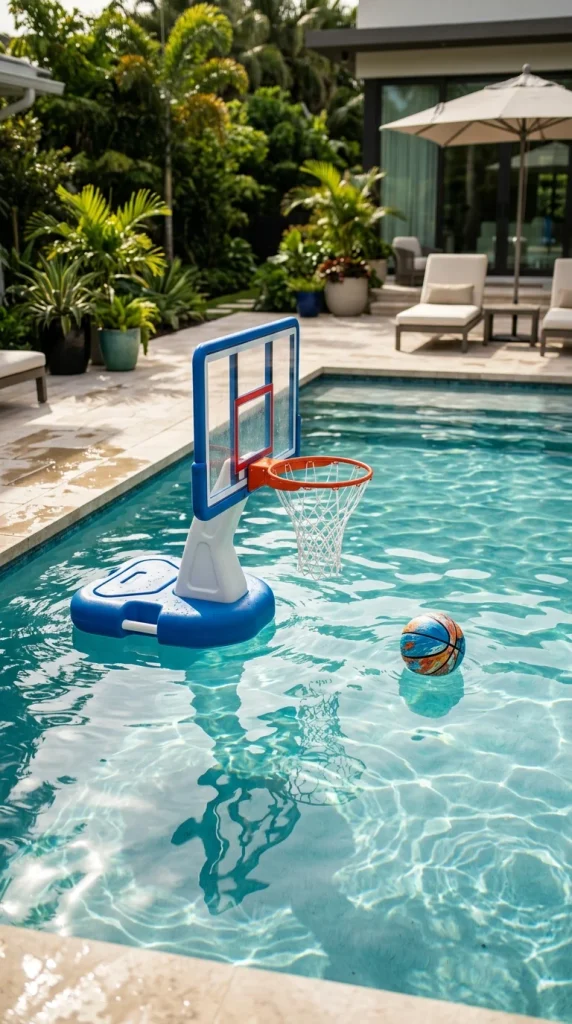
    5. Floating Pool Basketball Hoops

    Floating pool basketball hoops bring a playful sports activity to swimming time. Kids can take turns throwing soft balls into the hoop while practicing their aim and coordination. These toys are available in inflatable and more durable designs for different pool sizes. Choose a model that floats steadily and uses a suitable ball for water play. Keep the game in a designated area and make sure children are supervised throughout the activity.

    6. Pool Diving Toys for Underwater Fun

    Pool diving toys can make swimming activities more interesting for children who are comfortable in the water. Popular options include brightly colored rings, sinking sticks, and small dive-friendly toys. Their bright colors make them easier to spot when collecting them from the pool floor. Choose age-appropriate toys and use them only in water that is suitable for the child’s swimming ability. Never encourage children to dive into shallow water, and always provide close adult supervision.

    7. Inflatable Pool Volleyball Sets

    Inflatable pool volleyball sets are a fun choice for family games and friendly summer competitions. The floating net creates a simple activity that encourages teamwork and movement in the water. Most sets come with an inflatable volleyball and can be removed when the game is finished. Choose a set that fits your pool and leaves enough space for comfortable movement. Keep the play gentle and supervise children to help prevent collisions.

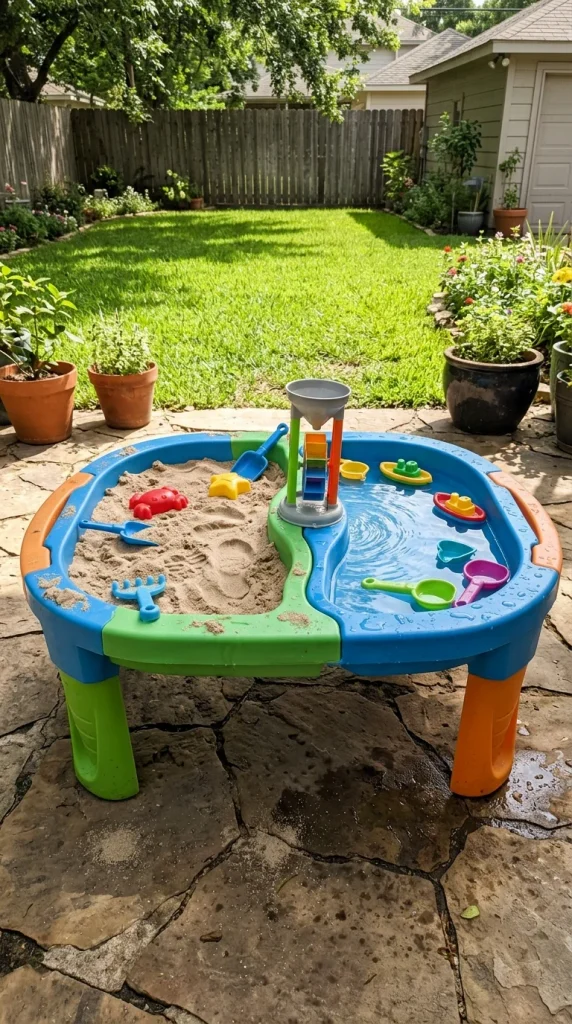
    8. Water Tables for Sensory Play

    Water tables offer a fun way for younger children to explore water through scooping, pouring, and floating toys. Many designs include small channels, spinning wheels, cups, and miniature boats. They are especially useful for patios and backyards where a large pool is not practical. Choose a sturdy table at a comfortable height for your child. Empty the water after play and store the table properly to keep the area clean and safe.

    9. Backyard Sprinklers for Cooling Off

    Backyard sprinklers provide a simple way to enjoy water play without installing a swimming pool. Some models spray water in gentle arcs, while others spin or create playful patterns. Connect the sprinkler to a garden hose and place it in an open area with enough room to move around. Choose a design that suits your water pressure and outdoor space. Check the ground regularly because wet grass and paving can become slippery during play.

    10. Inflatable Kiddie Pools for Small Spaces

    Inflatable kiddie pools are a convenient choice for families with limited outdoor space. They can fit in many small yards and patios, offering children a place to splash and cool off. Look for a model made from durable material with a size suitable for your available area. Set it up on a flat surface away from sharp objects and follow the manufacturer’s filling instructions. Always supervise children closely and empty the pool immediately after use.

    11. Outdoor Bubble Machines for Kids

    Outdoor bubble machines add a playful touch to backyard parties and everyday activities. They create streams of bubbles that children can chase, catch, and pop while enjoying fresh air. Many machines are easy to operate and come in compact designs for patios or lawns. Choose a model with a stable base and use the recommended bubble solution. Keep the solution away from children’s eyes and clean any spills promptly to reduce slipping.

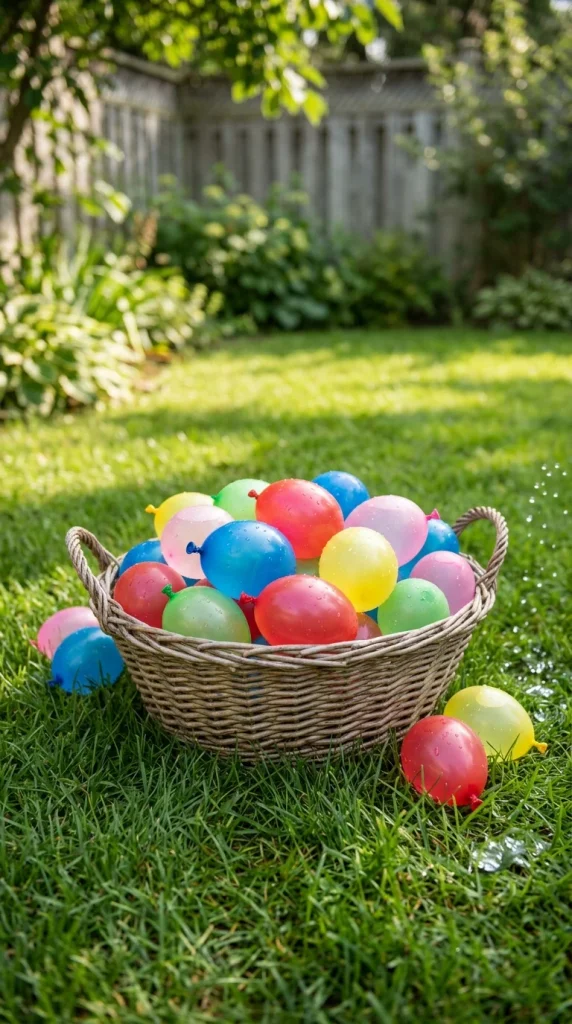
    12. Water Balloon Toss Games

    Water balloon toss games are an easy way to bring laughter and friendly competition to outdoor play. Children can stand a short distance apart and gently toss filled balloons to one another. As the distance increases, the game becomes more challenging and exciting. Choose a grassy area with plenty of room and avoid throwing balloons at people’s faces. Pick up all broken balloon pieces immediately, as they can pose a choking hazard to young children and animals.

    13. Kids’ Outdoor Climbing Sets

    Outdoor climbing sets help children enjoy active play while practicing balance and coordination. Depending on the design, they may include climbing walls, small ladders, ropes, or climbing frames. Choose equipment that matches your child’s age, size, and abilities. Install the set according to the manufacturer’s instructions and use appropriate impact-absorbing ground cover. Regularly inspect the equipment for loose parts, damage, or sharp edges, and supervise children while they play.

    14. Backyard Trampolines for Active Play

    Backyard trampolines can provide an energetic activity for children who enjoy jumping and movement. They come in different sizes, so families can choose an option that suits their garden. Look for a model with a sturdy frame, safety enclosure, and clear weight limits. Place it on level ground with the recommended safety clearance around it. Follow the manufacturer’s safety guidance, allow only one jumper at a time, and supervise children during use.

    15. Sand and Water Play Tables

    Sand and water play tables combine two popular activities in one convenient outdoor toy. Children can build little sandcastles, pour water, make pretend rivers, and explore different textures. Many tables have separate sections for sand and water, helping keep activities organized. Choose a durable design with smooth edges and removable containers for easier cleaning. Cover the sand when it is not being used and empty the water after each play session.

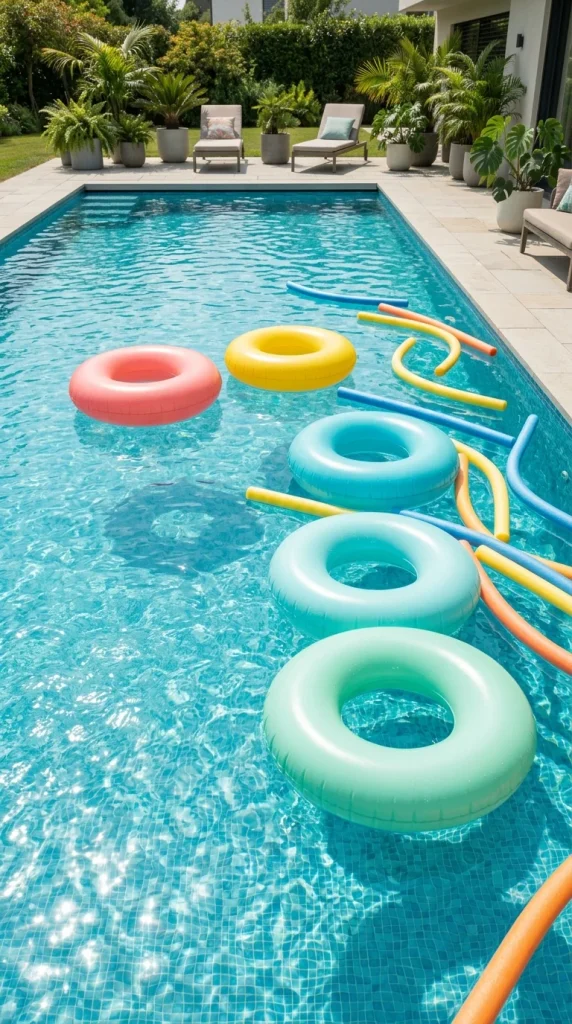
    16. Floating Pool Rings and Noodles

    Floating pool rings and pool noodles are classic accessories for fun summer water activities. They come in bright colors and are easy to carry, store, and share with family members. Children can use them for simple games and supervised water play according to their swimming abilities. Choose durable products that are suitable for the user’s age and follow all safety instructions. Remember that pool rings and noodles are toys, not life-saving devices or substitutes for proper flotation equipment.

    17. Outdoor Bowling Sets for Family Fun

    Outdoor bowling sets are a great choice for children who enjoy games that involve aiming and rolling. Most sets include lightweight pins and a ball that can be used on grass, patios, or other suitable surfaces. Set up the pins in an open area and let children take turns trying to knock them down. Choose sturdy, age-appropriate pieces that are easy to handle. This simple game can encourage coordination and friendly competition without requiring much space.

    18. Ride-On Toys for Backyard Adventures

    Ride-on toys let young children enjoy pretend adventures while moving around the backyard. Popular choices include small cars, scooters, and ride-on animals designed for different age groups. Select a toy that supports your child’s size and abilities, with a stable design and suitable safety features. Use it on a flat, clear surface away from pools, steps, and vehicle areas. Follow the manufacturer’s recommendations and provide the necessary protective gear for the type of toy.

    19. Giant Lawn Games for All Ages

    Giant lawn games can turn a simple backyard gathering into an entertaining family activity. Oversized versions of familiar games, such as ring toss, four-in-a-row, and lawn bowling, are easy to enjoy together. They encourage children and adults to participate without needing complicated equipment. Choose lightweight, weather-resistant materials that are easy to store between uses. Set up the games on a flat patch of grass with enough space for everyone to move safely.

    20. Toy Boats for Pool and Water Play

    Toy boats are a simple way to encourage imaginative play around a shallow water area. Children can float small sailboats, paddle boats, or battery-free toy boats and create their own little adventures. They work well in water tables, suitable kiddie pools, and other supervised play areas. Choose boats made from durable, child-safe materials without small detachable parts for younger children. Rinse and dry them after use, and never allow children to play with toy boats in open water.

    21. Outdoor Playhouses for Imaginative Fun

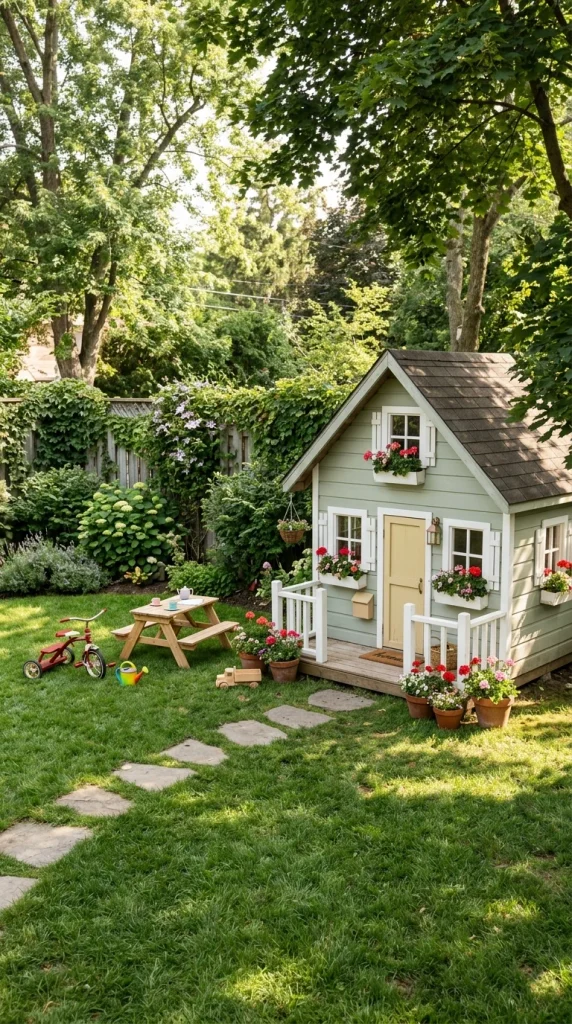
    Outdoor playhouses create a special place where children can enjoy pretend games and creative activities. They can turn a small backyard corner into a pretend shop, home, clubhouse, or reading spot. Playhouses are available in plastic, wood, and other materials to suit different spaces and budgets. Choose a stable design with smooth edges, proper ventilation, and an age-appropriate entrance. Place it on level ground and check it regularly to keep the play area comfortable and well maintained.

    Conclusion

    Pool and outdoor toys can make summer days more enjoyable by encouraging active play, creativity, and family time. From colorful pool floats and splash pads to lawn games and outdoor playhouses, there are options for different ages, budgets, and backyard sizes. Choose toys that fit your available space, are made from suitable materials, and match your children’s abilities. With proper supervision and regular care, these outdoor toys can help create happy memories throughout the summer.

    Frequently Asked Questions

    1. What are the best pool and outdoor toys for kids?

    Some popular choices include splash pads, water tables, pool floats, water blasters, toy boats, and outdoor lawn games. The best option depends on your child’s age, interests, swimming ability, and available play space.

    2. What are some affordable pool and outdoor toys?

    Water balloons, bubble machines, toy boats, pool noodles, and simple outdoor bowling sets can be budget-friendly options. Compare durability and age recommendations before buying, so the toy offers good value over time.

    3. Which outdoor toys are best for small backyards?

    Splash pads, compact water tables, small inflatable pools, bubble machines, and lightweight lawn games work well in limited spaces. Foldable or easy-to-store toys are especially helpful when you need to keep your backyard clear.

    4. How can I choose safe pool toys for young children?

    Choose age-appropriate toys made from durable materials and follow the manufacturer’s safety instructions. Closely supervise children around any amount of water, and never rely on inflatable toys or pool floats to prevent drowning.

    5. What materials are best for outdoor toys?

    Weather-resistant plastic, sturdy outdoor fabrics, and properly treated wood can work well, depending on the toy. Look for smooth edges, strong construction, and materials that are easy to clean and maintain.

    6. How do I store pool and outdoor toys after summer?

    Rinse toys when needed, allow them to dry completely, and store them in a clean, dry place. Deflate inflatable items according to the manufacturer’s instructions and keep small parts in labeled containers away from young children.

    7. How can I keep outdoor toys organized in my backyard?

    Use outdoor storage bins, ventilated baskets, or shelves in a covered area to keep toys organized. Store water toys separately from lawn games, and empty and dry water-play equipment before putting it away to help prevent mold and unwanted standing water.

  • 21 Concrete Patio Makeover Ideas for a Stylish and Cozy Outdoor Space

    21 Concrete Patio Makeover Ideas for a Stylish and Cozy Outdoor Space

    A concrete patio can become a beautiful and inviting outdoor retreat with a few creative updates. These concrete patio makeover ideas will help you transform a plain, dull surface into a stylish and cozy space for relaxing, entertaining, or enjoying fresh air. From outdoor rugs and patio furniture to decorative planters, string lights, and concrete staining, there are many ways to refresh your backyard. Whether you prefer a modern look or a warm, rustic style, these backyard concrete patio ideas offer inspiration for every budget. Explore these 21 concrete patio makeover ideas to create an outdoor living space you will love.

    1. Concrete Patio with Cozy Outdoor Rugs

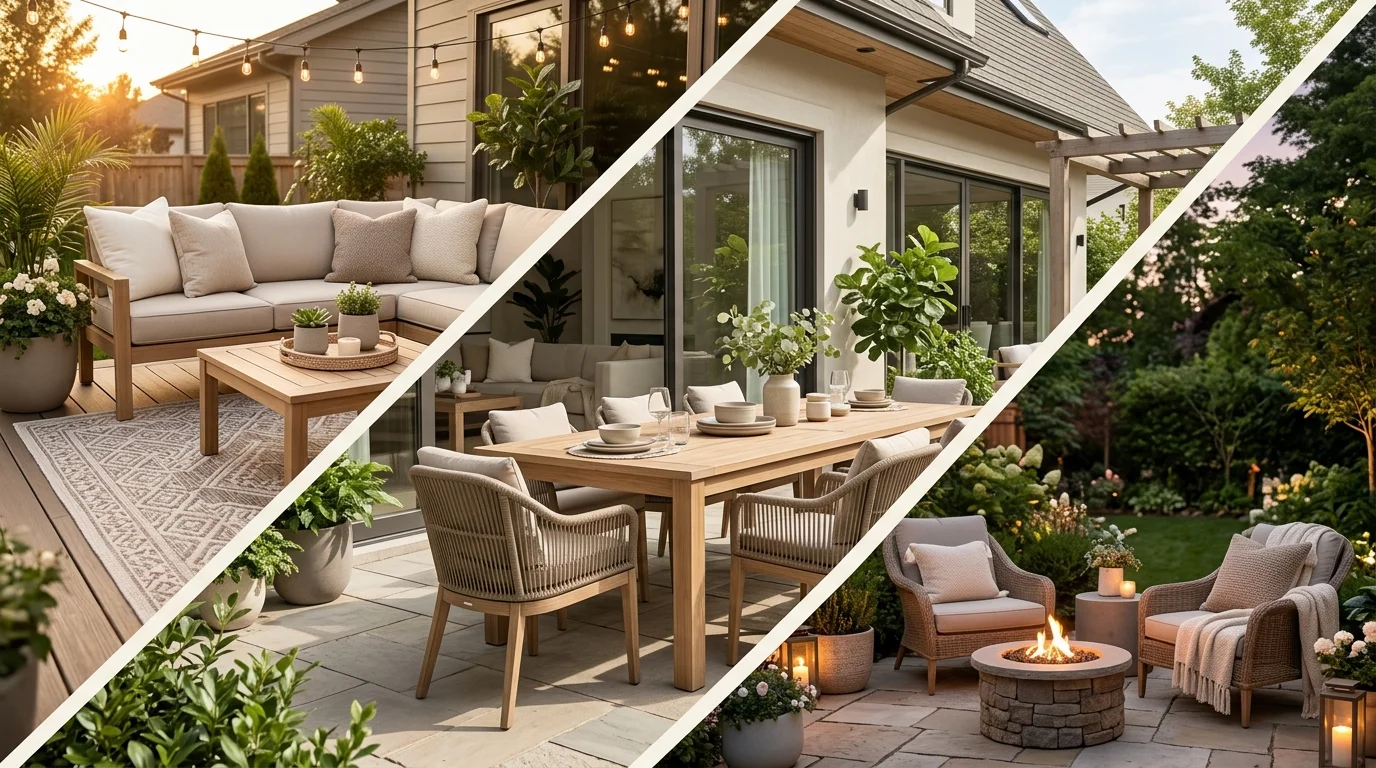
    An outdoor rug is an easy way to make a plain concrete patio feel warmer and more comfortable. Choose a weather-resistant rug in neutral colors, soft patterns, or natural textures to match your outdoor furniture. Add a few cushions and a small table to create a relaxing seating area. This simple update can make your patio feel like an extension of your indoor living space.

    2. Stained Concrete Patio Makeover

    Staining your concrete patio is a great way to give it a fresh and polished appearance. You can choose earthy brown, warm gray, or soft beige shades to complement your home’s exterior. Concrete stain adds color while allowing the natural texture of the surface to remain visible. Make sure the patio is properly cleaned and prepared before applying a suitable outdoor concrete stain.

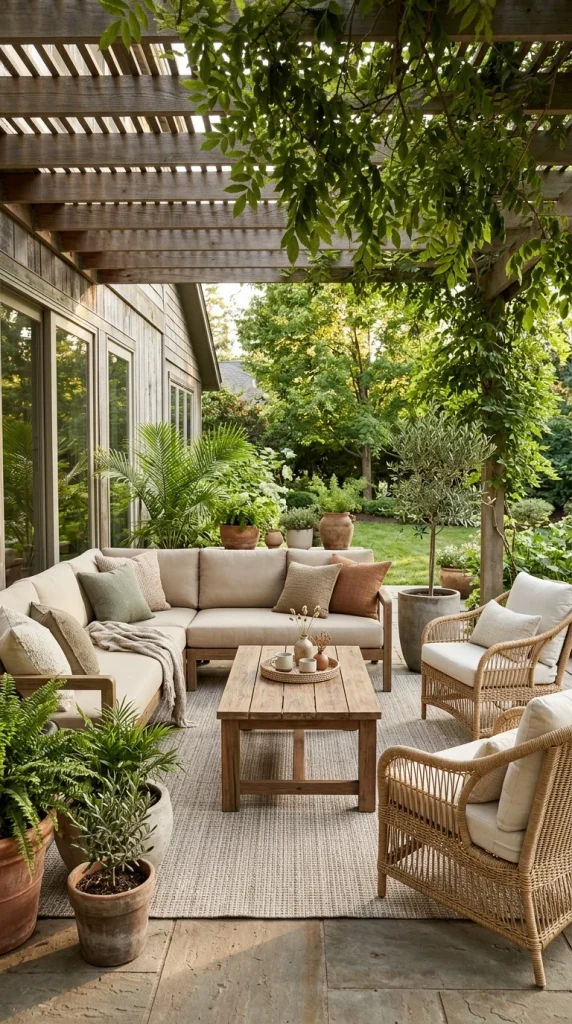
    3. Concrete Patio with Stylish Outdoor Furniture

    Comfortable outdoor furniture can completely change the look and feel of a concrete patio. Choose weather-resistant sofas, lounge chairs, or a simple conversation set that fits your available space. Neutral cushions and a wooden coffee table can add warmth without making the area feel crowded. Arrange the furniture to encourage conversation and leave enough room to walk around comfortably.

    4. Painted Concrete Patio Design

    Painting your concrete patio is an affordable way to refresh an old or dull surface. Light gray, beige, and soft terracotta can create a welcoming background for outdoor furniture and greenery. Use paint specifically designed for exterior concrete and follow the manufacturer’s preparation instructions. A well-chosen color can help your patio look cleaner, brighter, and more coordinated.

    5. Concrete Patio with String Lights

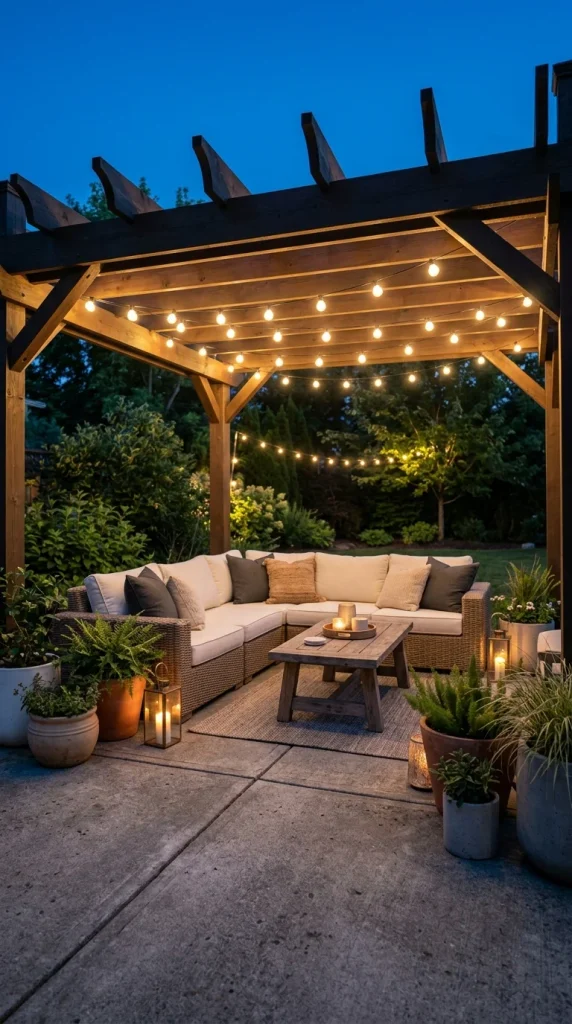
    String lights can make a concrete patio feel magical and inviting after sunset. Hang weather-rated lights across a pergola, between suitable outdoor supports, or along a covered seating area. Their warm glow creates a relaxing atmosphere for family dinners and evening conversations. Pair the lights with comfortable chairs and a few lanterns to complete the cozy outdoor setting.

    6. Concrete Patio with Potted Plants and Greenery

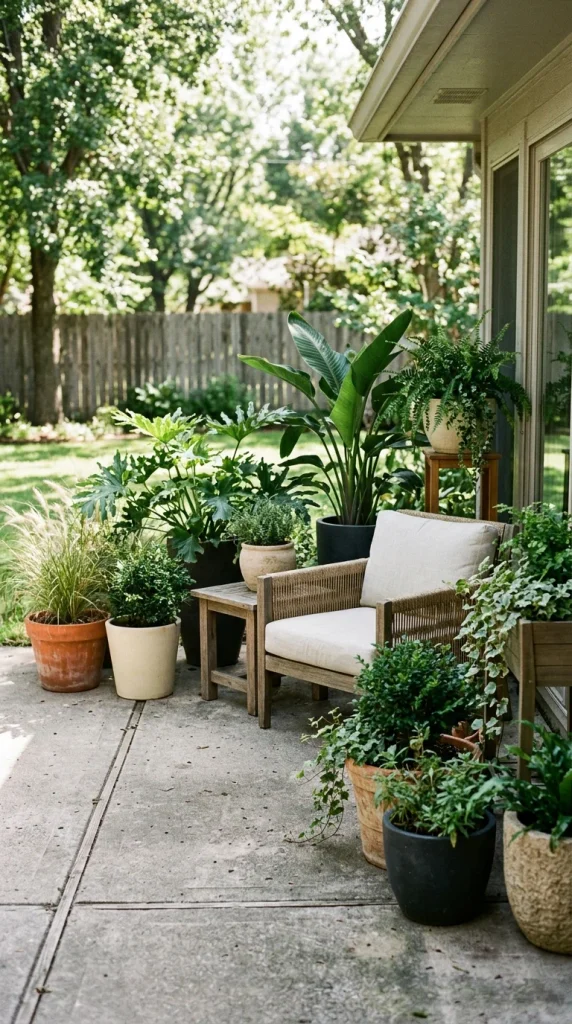
    Adding potted plants is a simple way to soften the hard appearance of a concrete patio. Use a mix of large planters, smaller pots, and leafy greenery to bring natural color and texture into the space. Place taller plants near empty corners and smaller pots beside seating areas. Choose plants that suit your local climate and the amount of sunlight your patio receives.

    7. Stamped Concrete Patio Makeover

    Stamped concrete can give a plain patio the appearance of stone, brick, or other decorative materials. It is a useful option if you want a more detailed design without installing individual paving stones. Choose a pattern and color that complement your home’s exterior for a balanced look. If your existing patio is already poured, consult a concrete professional about suitable resurfacing options before choosing this makeover.

    8. Concrete Patio with a Wooden Pergola

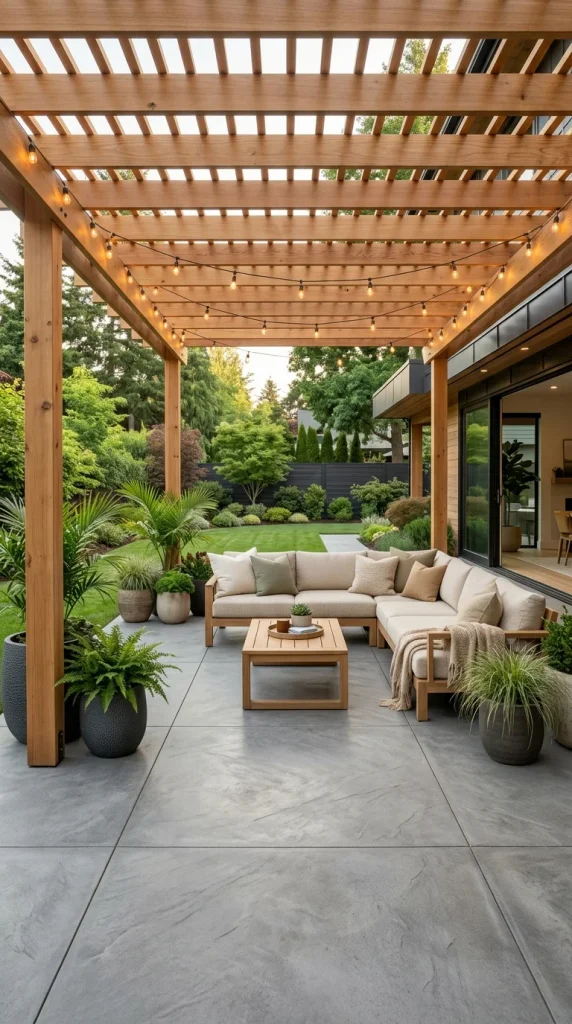
    A wooden pergola can add structure, shade, and character to a concrete patio. Its natural finish creates a beautiful contrast with the smooth gray surface and helps define a comfortable seating area. Add outdoor curtains, climbing plants, or simple string lights to make the space feel more inviting. Consider the available sunlight and secure the pergola properly to suit your home’s outdoor conditions.

    9. Modern Minimalist Concrete Patio

    A minimalist concrete patio is ideal if you prefer a clean and uncluttered outdoor space. Keep the concrete in a natural gray shade and pair it with simple furniture in black, white, or warm beige. Add one or two large planters to introduce greenery without overwhelming the design. Keeping decorations limited and purposeful helps the patio feel open, modern, and easy to maintain.

    10. Concrete Patio with a Fire Pit

    A fire pit can turn your concrete patio into a comfortable gathering place for cool evenings. Arrange weather-resistant chairs around the fire pit and add cushions or blankets for extra comfort. Choose a fire pit suitable for your patio and follow its required clearances from walls, furniture, roofs, and other flammable materials. With thoughtful placement, this setup creates a welcoming spot for relaxing and spending time with family.

    11. Concrete Patio with Gravel Borders

    Gravel borders can add texture and visual interest to an otherwise plain concrete patio. Use decorative gravel in a natural shade to create a neat transition between the concrete and surrounding garden. You can add ornamental grasses, small shrubs, or stepping stones to make the edges look more attractive. Proper edging and drainage will help keep the gravel in place and prevent it from spreading onto the patio.

    12. Concrete Patio with Built-In Seating

    Built-in seating is a practical choice for making the most of your concrete patio. A simple bench along one side can provide extra seating without taking up the space needed for several individual chairs. Add weather-resistant cushions and a few pillows to make the bench more comfortable and attractive. You can also include planters beside the seating to create a cozy and organized outdoor corner.

    13. Concrete Patio with Outdoor Dining Area

    An outdoor dining area makes your concrete patio more useful for everyday meals and special gatherings. Choose a table that fits the space and leaves enough room for chairs to move easily. Weather-resistant furniture and a simple centerpiece of flowers or greenery can create a welcoming setting. If your patio receives strong afternoon sunlight, consider adding an umbrella or pergola for comfortable dining.

    14. Concrete Patio with Decorative Planters

    Decorative planters can bring color and personality to a concrete patio without requiring major changes. Mix different planter sizes and finishes while keeping a consistent color palette for a coordinated look. Place them near the entrance, along patio edges, or beside outdoor seating to highlight important areas. Choose pots with proper drainage and use plants that can thrive in your patio’s sunlight and weather conditions.

    15. Concrete Patio with a Privacy Screen

    A privacy screen can make your concrete patio feel more peaceful and secluded. Wooden slats, outdoor screens, or tall planters can help separate your seating area from neighboring views. Choose a design that complements your home’s exterior while still allowing enough airflow and light. This idea works especially well for small backyards where you want a comfortable place to relax without feeling exposed.

    16. Concrete Patio with a Vertical Garden

    A vertical garden is a smart way to introduce greenery when your concrete patio has limited floor space. Wall-mounted planters or a freestanding garden frame can display herbs, trailing plants, and decorative foliage. The greenery softens the concrete surface and adds a fresh, natural feeling to the area. Choose a sturdy support system and protect nearby walls from moisture to keep the garden attractive and practical.

    17. Concrete Patio with a Black and White Color Scheme

    A black and white color scheme can give your concrete patio a crisp and modern appearance. Pair charcoal or black furniture with white cushions, light-colored accessories, and a few green plants for contrast. If you want to add patterns, consider striped outdoor pillows or a geometric rug. Keeping the main colors simple makes it easier to create a stylish space that feels organized rather than busy.

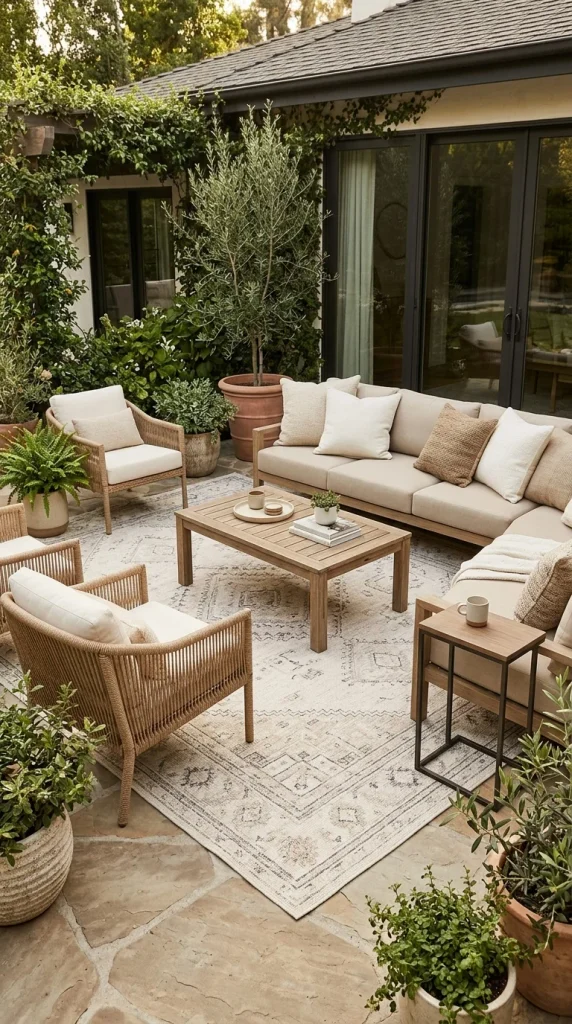
    18. Concrete Patio with a Cozy Lounge Area

    Create a relaxing lounge area by arranging comfortable seating around a low coffee table on your concrete patio. Soft cushions, a weather-resistant rug, and woven accessories can make the hard surface feel warmer and more welcoming. Keep a small side table nearby for drinks, books, or snacks. This setup is perfect for reading, enjoying your morning coffee, or relaxing outdoors at the end of the day.

    19. Concrete Patio with Stepping Stones and Landscaping

    Stepping stones and thoughtful landscaping can help connect your concrete patio with the rest of your backyard. Add a simple stone path leading toward a garden, lawn, or outdoor seating area to create a more complete design. Low-growing plants and ornamental grasses can soften the edges and add natural texture. Plan the path carefully so it provides a safe, convenient route without creating uneven walking surfaces.

    20. Concrete Patio with a DIY Outdoor Bar

    A DIY outdoor bar can make your concrete patio a fun place to entertain friends and family. A compact wooden counter with a few stools is often enough to create a useful serving area. Add weather-resistant storage for cups and serving items, along with small planters for a decorative touch. Position the bar where it will not block walkways, doors, or access to your main seating area.

    21. Concrete Patio with Warm Lighting and Cozy Accessories

    Warm lighting and cozy accessories can make a concrete patio feel comfortable throughout the evening. Place outdoor lanterns near seating areas and use weather-rated LED lights to highlight the space without creating harsh glare. Add soft cushions, woven poufs, and a textured outdoor rug to bring warmth to the concrete surface. Choose accessories designed for outdoor use so they can handle changing weather and remain attractive over time.

    Conclusion

    A concrete patio makeover does not have to be expensive or complicated to make a difference. Simple updates such as outdoor rugs, fresh concrete colors, stylish furniture, potted plants, and warm lighting can transform a plain surface into a cozy outdoor retreat. Choose the ideas that suit your budget, available space, and personal style. With a little planning, you can create a beautiful concrete patio that is comfortable, practical, and perfect for enjoying time outdoors.

    Frequently Asked Questions

    1. How can I make a concrete patio look better on a budget?

    Start with affordable changes such as outdoor rugs, secondhand furniture, potted plants, and string lights. Cleaning the concrete and rearranging existing furniture can also improve its appearance without requiring a large investment.

    2. What is the easiest way to update an old concrete patio?

    Thoroughly clean the surface first to remove dirt, stains, and loose debris. Depending on its condition, you can then add outdoor furniture, use a concrete-compatible stain or paint, or cover part of the surface with a weather-resistant rug.

    3. What colors work best for a concrete patio makeover?

    Warm gray, beige, taupe, and soft brown are versatile choices that complement many outdoor styles. Charcoal and black create a modern look, while terracotta adds warmth. Choose colors that work well with your home’s exterior and patio furniture.

    4. Can I makeover a small concrete patio?

    Yes, a small concrete patio can look stylish with a few carefully selected pieces. Use compact furniture, vertical planters, folding chairs, and light-colored accessories to keep the space open. Avoid oversized furniture that blocks walkways.

    5. Is it better to paint or stain a concrete patio?

    Paint offers a wide range of colors and can create a more uniform finish, while stain generally adds color while allowing more of the concrete’s natural texture to show. The best option depends on the surface condition, desired appearance, and maintenance requirements.

    6. How can I make a concrete patio more comfortable?

    Add supportive outdoor seating, weather-resistant cushions, a suitable outdoor rug, and shade from an umbrella or pergola. Plants and warm lighting can also make the patio feel more inviting for relaxing and entertaining.

    7. How do I maintain a concrete patio after a makeover?

    Sweep the patio regularly and wash away dirt with a suitable cleaner and water. Remove stains promptly, keep nearby drains clear, and inspect painted or stained surfaces for wear. Follow the product manufacturer’s instructions when resealing or refreshing the finish.

  • 25 Front Yard Flower Bed Ideas to Boost Your Home’s Curb Appeal

    25 Front Yard Flower Bed Ideas to Boost Your Home’s Curb Appeal

    A beautiful front yard can instantly make your home feel more welcoming, and front yard flower beds are an easy way to add color and charm. From simple flower beds for the front yard to layered designs with shrubs, edging, and seasonal blooms, there are many styles to explore. Front yard flower bed ideas can work for large lawns, small spaces, walkways, and entryways alike. With the right flowers and layout, you can create colorful landscaping that improves your home’s curb appeal. Whether you prefer a modern, cottage-style, or low-maintenance look, these 25 front yard flower bed ideas can help you create a beautiful outdoor space.

    1. Classic Cottage Front Yard Flower Bed

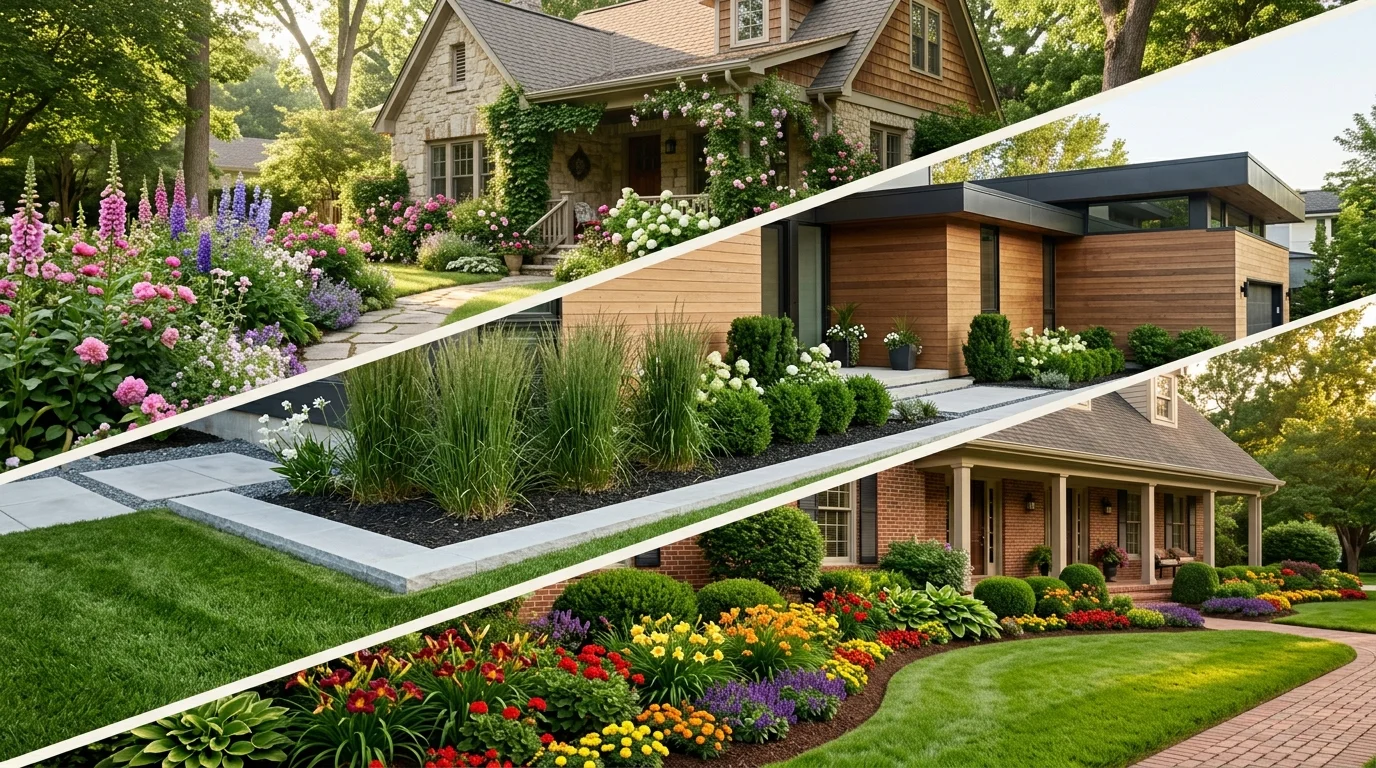
    A classic cottage flower bed brings a soft and welcoming feeling to the front yard. Use a mix of colorful flowers, leafy plants, and a few small shrubs for a natural look. Let the plants grow in relaxed layers instead of keeping everything perfectly even. This style works especially well around porches, walkways, and traditional homes. Choose flowers that bloom at different times to keep the bed attractive through the seasons.

    2. Colorful Mixed Flower Bed

    A colorful mixed flower bed can make your front yard feel cheerful and full of life. Combine flowers in different heights, shapes, and colors to create an interesting display. Place taller plants toward the back and shorter blooms near the edge for a balanced arrangement. Soft pinks, purples, yellows, and whites can work beautifully together. Keep the color palette connected to your home’s exterior for a polished appearance.

    3. Low-Maintenance Front Yard Flower Bed

    A low-maintenance flower bed is perfect if you want beautiful landscaping without spending hours caring for it. Choose hardy plants that can handle your local growing conditions and need less frequent attention. Adding mulch around the plants can help retain moisture and reduce unwanted weeds. Keep the design simple with a few dependable plant varieties. This creates an attractive front yard while making regular maintenance easier.

    4. Curved Flower Bed Along the Lawn

    Curved flower beds can make a front yard feel softer and more naturally designed. Instead of using straight lines, create a gentle curve that follows the shape of your lawn or home. Fill the bed with flowers, grasses, and greenery in different heights for added depth. A clean border will help separate the planting area from the grass. This simple layout can give even a basic yard a more finished look.

    5. Flower Bed Around a Front Yard Tree

    The space around a front yard tree can become a beautiful focal point with the right flower bed. Use shade-tolerant plants if the tree creates a lot of shade throughout the day. Keep the planting arrangement low so the tree remains the main feature. A simple border and a layer of mulch can make the area look neat and organized. Avoid piling soil or mulch directly against the tree trunk.

    6. Raised Front Yard Flower Bed

    Raised flower beds add structure and definition to a front yard while making the plants easier to notice. You can build the bed with stone, brick, wood, or another suitable landscape material. Fill it with a combination of colorful flowers and green foliage for contrast. Raised beds are especially useful when you want to separate flowers from grass or walkways. Keep the shape and materials consistent with the style of your home.

    7. Flower Bed Along the Front Walkway

    Adding flowers along the front walkway creates a welcoming path toward your entrance. Choose plants that stay low enough to keep the walkway clear and easy to use. Repeating the same flowers on both sides can create a balanced and organized appearance. You can mix flowers with small shrubs or ornamental grasses for more texture. Leave enough space between the plants and path so the area does not feel crowded.

    8. Modern Minimalist Flower Bed

    A modern flower bed looks best when the design is clean, simple, and carefully arranged. Choose a limited number of plant types instead of filling the space with too many colors. Green grasses, white flowers, and neatly shaped shrubs can create a calm and contemporary appearance. Simple stone or concrete edging can give the bed a crisp finish. This style works particularly well with modern homes and simple exterior designs.

    9. Flower Bed Around the Front Porch

    A flower bed around the front porch can make your home’s entrance feel warm and inviting. Place plants along the edges of the porch without blocking steps, doors, or windows. Mix flowers with greenery to create a balanced display that does not look overly busy. You can repeat colors from your front door or porch decorations for a connected look. Keep taller plants toward the back and smaller flowers near the front.

    10. White and Green Flower Bed

    White flowers paired with green foliage create a fresh and elegant front yard display. This simple color combination works with many home exterior styles and does not feel overwhelming. Use different leaf shapes and flower heights to add visual interest without adding many colors. White blooms can also brighten darker areas around an entrance or porch. A clean border or layer of natural mulch can complete the look.

    11. Perennial Flower Bed for Year-Round Beauty

    Perennial flowers are a practical choice for homeowners who want plants that return and grow again in suitable conditions. Combine different varieties so the flower bed has changing colors and textures throughout the growing season. Add evergreen shrubs or foliage plants to provide structure when fewer flowers are blooming. Choose plants according to your climate, soil, and available sunlight. This approach can create a lasting front yard landscape with less seasonal replanting.

    12. Rustic Rock and Flower Bed

    A rustic rock and flower bed combines natural materials with colorful plants for a relaxed outdoor look. Place decorative stones around flowers and greenery to create texture and define the planting area. Choose plants with different heights so the rocks do not make the design look flat. Natural stone colors usually work well with both bright and soft flower shades. This style is a good option for homeowners who want a simple and earthy front yard.

    13. Layered Flower Bed With Shrubs

    Layering flowers with shrubs gives a front yard flower bed more depth and structure. Place taller shrubs or plants at the back, medium-height flowers in the middle, and smaller blooms along the front edge. This arrangement helps every plant remain visible instead of allowing taller plants to hide shorter ones. Mix different textures to keep the bed interesting. Repeating a few plants throughout the design can also make the landscape feel more cohesive.

    14. Small Front Yard Flower Bed

    Even a small front yard can have an attractive flower bed with a thoughtful layout. Use compact plants and keep the design proportional to the available space. A narrow bed along the house, walkway, or fence can add plenty of color without taking over the yard. Light-colored flowers and simple greenery can make the area feel open and fresh. Avoid overcrowding the space so the plants have room to grow.

    15. Symmetrical Flower Beds by the Entrance

    Symmetrical flower beds create a balanced and formal appearance around the front entrance. Place matching or similar plants on both sides of the walkway, steps, or doorway. Repeating the same colors and plant shapes can make the entrance feel organized and intentional. You can add small shrubs or flowers of different heights while keeping both sides visually similar. This design works particularly well with traditional and classic home exteriors.
    16. Cottage Garden Flower Bed

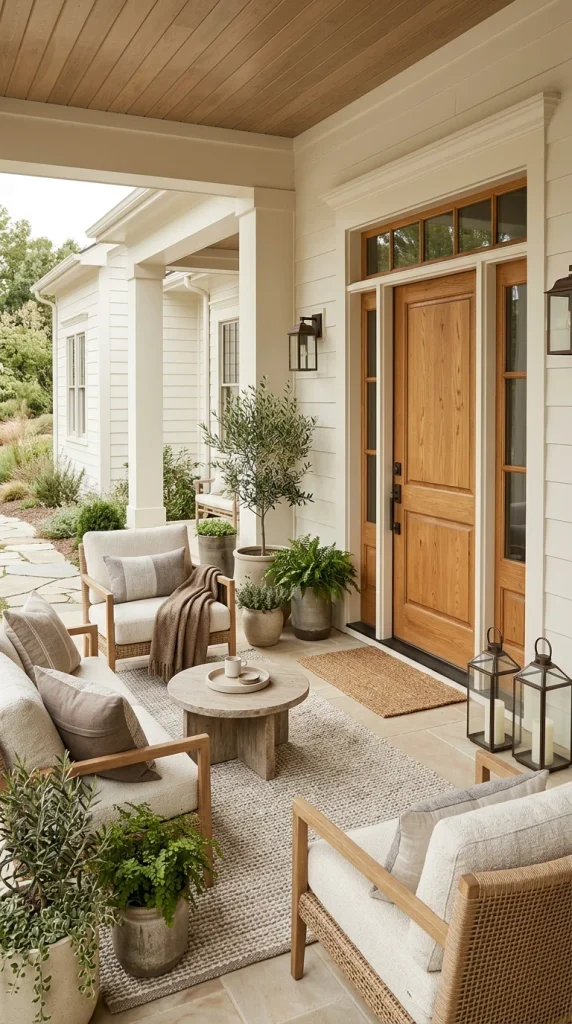
    A cottage garden flower bed brings a relaxed, colorful, and slightly informal look to the front yard. Combine flowering plants with herbs, leafy greenery, and small shrubs for a natural arrangement. Instead of keeping every plant in a strict line, allow some flowers to create a fuller appearance. Soft colors can create a romantic feel, while brighter blooms give the space more energy. A simple border can keep the abundant planting looking neat.

    17. Bright Seasonal Flower Bed

    A seasonal flower bed is an easy way to refresh your front yard throughout the year. Choose flowers that perform well during the season you want to highlight, then combine them with dependable greenery. Bright colors can create a cheerful focal point near the entrance or driveway. You can change seasonal flowers while keeping the basic bed structure the same. This allows your landscaping to look fresh without completely redesigning the yard.

    18. Flower Bed With Decorative Edging

    Decorative edging can give a flower bed a clean and finished appearance. Use materials such as stone, brick, metal, or simple landscape borders to separate flowers from the lawn. The edging should complement your home’s exterior rather than compete with the plants. A clear border also makes mowing and general yard maintenance easier. Keep the shape consistent with the overall layout of your front yard.

    19. Budget-Friendly Front Yard Flower Bed

    You do not need a large budget to create an attractive front yard flower bed. Start with a small planting area and choose easy-to-grow flowers that suit your local conditions. Repeating a few plant varieties can create a fuller look without requiring many different purchases. Natural mulch and simple edging can also improve the appearance without adding much cost. Build the flower bed gradually as your budget and gardening experience grow.

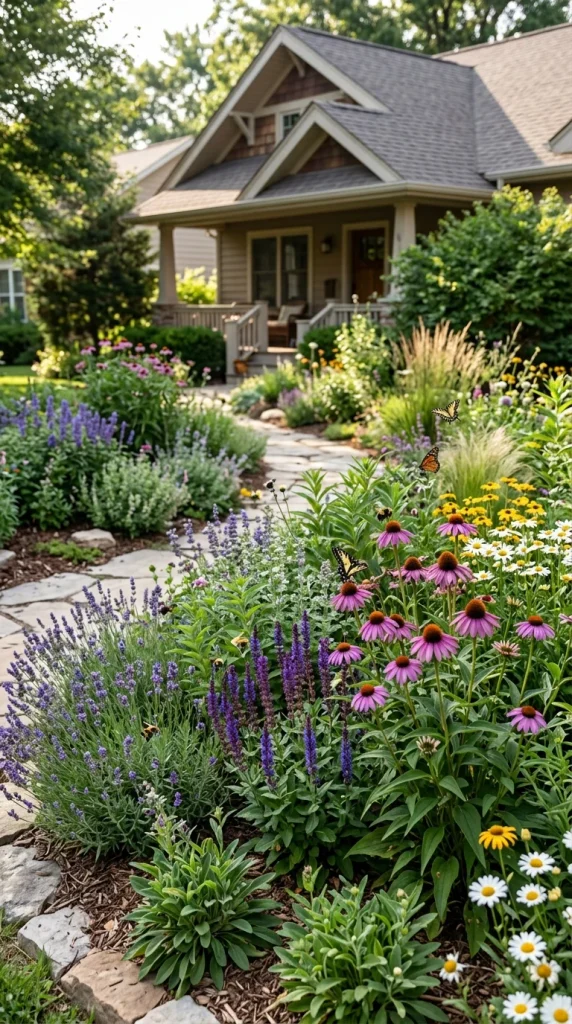
    20. Pollinator-Friendly Flower Bed

    A pollinator-friendly flower bed can add beauty while providing a useful planting space for bees, butterflies, and other beneficial insects. Choose a variety of suitable flowering plants that provide nectar and pollen during different parts of the growing season. Avoid making the design too uniform, as a mix of flowers and foliage creates a more useful habitat. Place the bed where it receives the amount of sunlight your chosen plants need. This can make your front yard both colorful and lively.

    21. Layered Colorful Flower Bed for Curb Appeal

    A layered colorful flower bed can become a strong focal point in your front yard. Use taller plants toward the back, medium-height flowers in the center, and low-growing blooms along the front edge. Choose a few complementary colors instead of mixing too many shades together. Adding greenery between colorful blooms can help the design feel balanced. With clear layers and good spacing, the flower bed can give your home an attractive boost in curb appeal.

    Conclusion

    Front yard flower beds can completely change the look and feel of your home’s exterior. Whether you prefer colorful blooms, simple greenery, raised beds, or low-maintenance plants, the key is choosing a design that fits your space and home style. Good spacing, clear edging, suitable plants, and thoughtful color choices can make the landscape look polished and welcoming. With these front yard flower bed ideas, you can create a beautiful outdoor space that adds charm and curb appeal.

    Frequently Asked Questions

    1. What are the best flowers for front yard flower beds?

    The best flowers depend on your climate, sunlight, and soil conditions. Choose plants that naturally grow well in your area and match the amount of care you can provide. Mixing different heights and bloom times can make the flower bed look attractive for longer.

    2. How can I create a front yard flower bed on a budget?

    Start with a small planting area and use a few affordable, reliable plant varieties. You can also use natural mulch and simple edging rather than expensive landscaping materials. Expanding the flower bed over time can help spread out the cost.

    3. How do I make a small front yard flower bed look bigger?

    Keep the design simple and avoid overcrowding the planting area. Use plants with different heights, repeat similar colors, and leave some open space around the bed. Light-colored flowers can also help create a brighter and more open appearance.

    4. What should I put around a front yard flower bed?

    Mulch, decorative stones, brick, or landscape edging can help define the flower bed. Choose a material that works with your home’s exterior and surrounding landscaping. A clear border can also make mowing and maintenance easier.

    5. How should I arrange plants in a front yard flower bed?

    Place taller plants toward the back, medium-height plants in the middle, and shorter flowers near the front edge. This layered arrangement allows each plant to remain visible. Repeat a few plants or colors throughout the bed for a more connected look.

    6. How can I make front yard flower beds low maintenance?

    Choose hardy plants that suit your local climate and the amount of sunlight available. Group plants with similar watering needs together and add mulch to help retain moisture and reduce weeds. Avoid using too many different plant varieties if you want easier maintenance.

    7. Where is the best place to put a flower bed in the front yard?

    Flower beds work well along walkways, around porches, beside driveways, near trees, or along the front of the house. Consider sunlight, drainage, visibility, and access before choosing the location. Keep pathways and entrances clear so the landscaping remains practical as well as beautiful.

  • 21 Outdoor Patio Makeover Ideas to Create a Cozy and Stylish Outdoor Space

    21 Outdoor Patio Makeover Ideas to Create a Cozy and Stylish Outdoor Space

    Your patio can become a beautiful extension of your home with a few simple and thoughtful updates. These outdoor patio makeover ideas can help turn a plain area into a cozy and stylish outdoor retreat. From comfortable patio furniture and outdoor rugs to greenery, lighting, and decorative accents, small changes can create a big impact. Whether you are planning a small patio makeover or a complete backyard refresh, there are plenty of ways to improve the space. Use these patio decorating ideas to create an inviting outdoor living area for relaxing, dining, and entertaining.

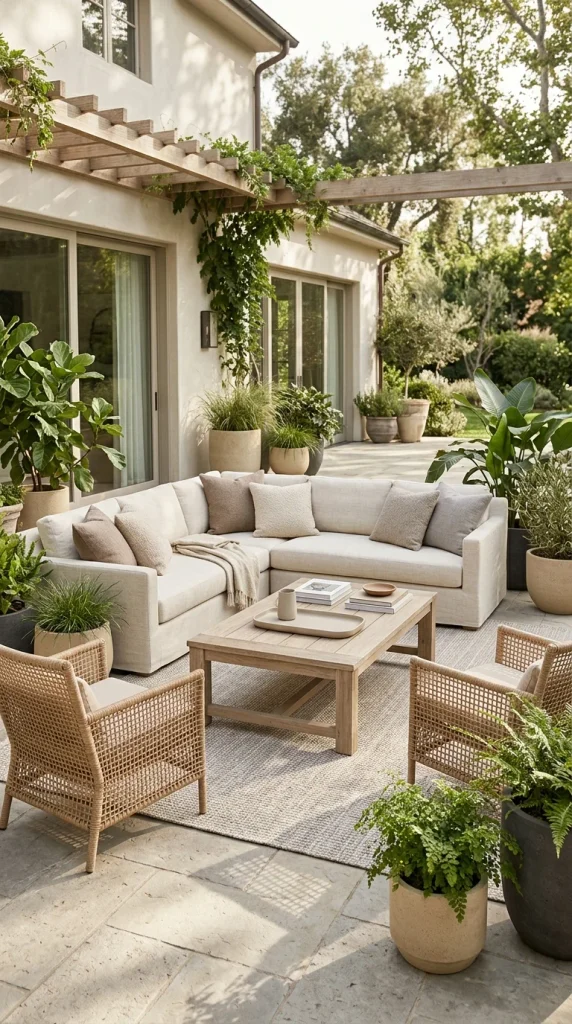
    1. Cozy Seating Area

    A comfortable seating area can instantly make your patio feel more welcoming. Choose weather-resistant chairs, a small sofa, or cushioned benches that fit the size of your space. Add soft pillows and a throw for extra comfort and warmth. Arrange the furniture so people can easily talk and enjoy the outdoor view.

    2. Outdoor Area Rug

    An outdoor rug can give your patio a finished and cozy appearance while defining the seating area. Choose a durable material that can handle moisture, sunlight, and everyday use. Neutral patterns work well for a calm look, while colorful designs can add personality. Make sure the rug is large enough to sit comfortably under the main furniture.

    3. String Light Ambiance

    String lights are an easy way to create a warm atmosphere after sunset. Hang them across the patio, along a railing, or above a seating area for a soft glow. They can make simple furniture feel more inviting without requiring a major makeover. Choose warm white bulbs for a relaxed and comfortable outdoor setting.

    4. Potted Plant Display

    Plants can bring natural beauty and fresh color to an outdoor patio. Place potted plants around seating areas, corners, steps, or empty walls to make the space feel more lively. Mix different pot sizes and plant heights for a layered look. Choose plants that suit your local weather and the amount of sunlight your patio receives.

    5. Stylish Outdoor Dining

    Turn your patio into a useful dining space with a comfortable outdoor table and chairs. Choose a table size that leaves enough room for people to walk around easily. Add simple table decor, such as a centerpiece, lanterns, or potted herbs. This setup makes the patio perfect for casual family meals and outdoor gatherings.

    6. Built-In Bench Seating

    Built-in bench seating is a smart choice when you want comfortable seating without using too much floor space. A wooden or painted bench can fit neatly along a wall or patio edge. Add weather-resistant cushions and pillows to make it more inviting. It can also provide a practical seating solution for larger gatherings.

    7. Cozy Fire Pit Corner

    A fire pit can become a natural gathering point on a spacious patio. Place comfortable chairs around it while keeping enough distance for safe movement. Add outdoor cushions, blankets, and a small side table to create a relaxed setting. Always choose a fire pit that suits your patio size and follow local safety requirements.

    8. Modern Patio Furniture

    Modern furniture can give an outdoor patio a clean and updated appearance. Look for simple shapes, durable materials, and colors that complement your home’s exterior. A sofa, lounge chairs, and a compact coffee table can create a balanced arrangement. Keep the furniture practical so the patio remains comfortable and easy to use.

    9. Boho Patio Styling

    Boho styling can make a patio feel relaxed, warm, and full of personality. Combine natural materials such as wood, rattan, woven textures, and soft fabrics. Add patterned pillows, plants, lanterns, and neutral tones for an effortless look. Keep the arrangement casual rather than overly matched to create a comfortable retreat.

    10. Outdoor Privacy Screen

    A privacy screen can make your patio feel more peaceful, especially when it is close to neighbors. Wooden slats, lattice panels, outdoor curtains, or tall plants can create a comfortable sense of separation. Choose a design that matches the style of your home and patio furniture. A well-placed screen can also help define the outdoor living area.

    11. Colorful Patio Accents

    Adding a few colorful accents can completely refresh a simple patio. Use colorful cushions, outdoor rugs, planters, or small decorative pieces to bring personality into the space. You do not need many colors to make an impact. Choose two or three shades that work well together for a balanced and cheerful look.

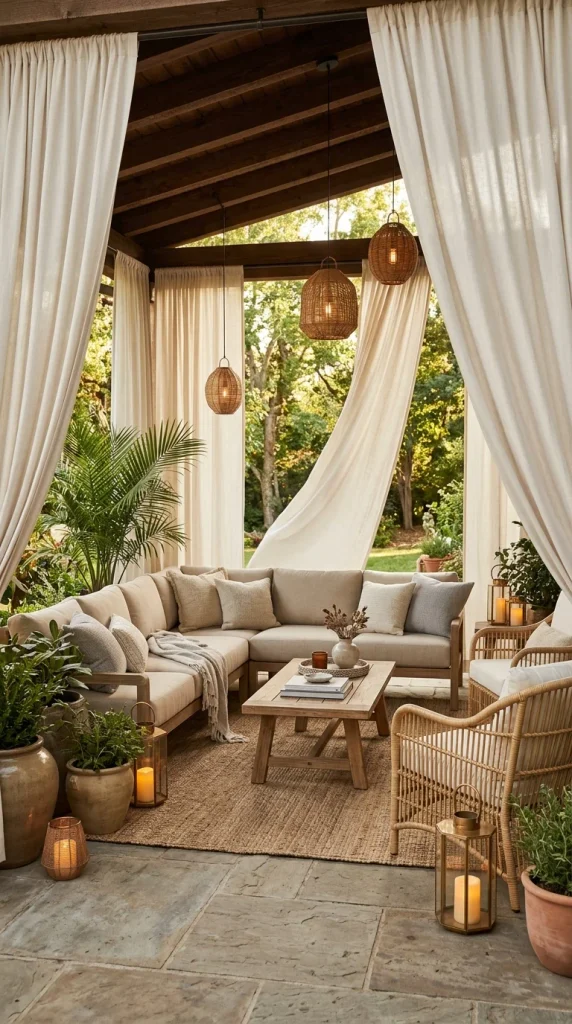
    12. Covered Patio Retreat

    A covered patio can provide shade and make outdoor living more comfortable during bright or changing weather. Add comfortable furniture underneath the covered area and use soft lighting to make it inviting. Outdoor curtains can provide extra shade and privacy when needed. Keep the decor simple so the space remains open and relaxing.

    13. Natural Wood Details

    Natural wood can add warmth and texture to an outdoor patio makeover. Consider wooden furniture, planters, privacy screens, or decorative wall details. Pair the wood with neutral cushions and greenery for a calm, natural appearance. Choose properly treated outdoor wood so it can better handle moisture and changing weather.

    14. Vertical Garden Wall

    A vertical garden is a useful way to add greenery when floor space is limited. Use wall-mounted planters, hanging pots, or a simple trellis to create a green focal point. Mix different plants to add texture and visual interest. This idea can make even a small patio feel fresher without taking up valuable seating space.

    15. Outdoor Coffee Table

    An outdoor coffee table can make a patio seating area more practical and complete. Choose a weather-resistant table that provides enough space for drinks, books, snacks, or small decorations. Wood, metal, and weather-resistant composite materials can all work well outdoors. Keep the table proportional to your seating so the area does not feel crowded.

    16. Neutral Patio Decor

    Neutral colors can create a peaceful and timeless patio that feels easy to maintain and update. Use shades such as cream, beige, taupe, soft gray, and natural brown throughout the furniture and accessories. Add plants or subtle patterns to prevent the space from looking flat. This style works especially well for a calm and sophisticated outdoor retreat.

    17. Small Space Seating

    Even a small patio can feel comfortable with carefully chosen furniture. Use compact chairs, a small loveseat, or a narrow bench instead of oversized pieces. Folding furniture can also provide flexibility when you need extra floor space. Keep pathways clear and use vertical decor to make the area feel open and organized.

    18. DIY Patio Planters

    DIY planters can add a personal touch to your patio without requiring a large budget. Repurpose suitable containers, wooden boxes, or simple pots to create attractive plant displays. Paint or decorate them in colors that complement your outdoor furniture. Group several planters together to create an attractive focal point in an empty corner.

    19. Outdoor Curtain Styling

    Outdoor curtains can soften a patio while adding shade and privacy. Hang them around a covered seating area or along an outdoor structure to create a cozy room-like feeling. Light neutral curtains can keep the space bright and airy. Choose outdoor-rated fabric that is designed to handle moisture and sunlight.

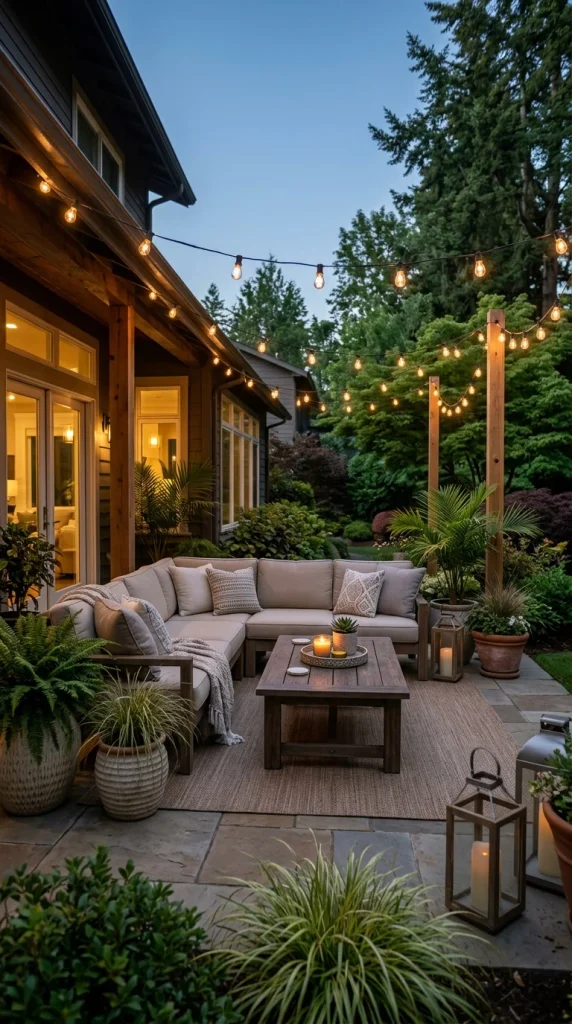
    20. Cozy Evening Retreat

    Create a relaxing evening retreat by combining comfortable seating, soft lighting, and a few warm accessories. Add lanterns or string lights around the seating area to create a gentle glow. Keep blankets nearby for cooler evenings and use a small table for drinks. The result is a patio that feels inviting long after the sun goes down.

    21. Fresh Patio Makeover

    A fresh patio makeover does not always require replacing everything. Start by cleaning the space, rearranging existing furniture, and removing unnecessary clutter. Then add a few updated pieces such as cushions, plants, lighting, or an outdoor rug. Small changes can give an older patio a completely refreshed and more welcoming appearance.

    Conclusion

    A beautiful outdoor patio makeover can make your home feel more connected to the outdoors without requiring complicated changes. Comfortable furniture, warm lighting, greenery, rugs, and practical layouts can transform even a simple patio into a welcoming retreat. Focus on pieces that suit your space, lifestyle, and budget. With a few thoughtful updates, your patio can become a cozy place for relaxing, dining, and spending time with family and friends.

    Frequently Asked Questions

    1. How can I make my outdoor patio look better on a budget?

    Start with affordable changes such as rearranging furniture, adding outdoor cushions, plants, string lights, and an outdoor rug. Cleaning and decluttering the patio can also make a noticeable difference without spending much money.

    2. How do I make a small patio feel cozy?

    Choose compact furniture and avoid filling every corner. Use vertical planters, a small outdoor rug, soft lighting, and a few comfortable accessories to create a cozy atmosphere without making the patio feel crowded.

    3. What colors work best for an outdoor patio makeover?

    Neutral shades such as beige, cream, taupe, gray, and natural wood tones create a timeless look. You can add small touches of green, blue, terracotta, or another favorite color through pillows, rugs, and planters.

    4. What materials are best for outdoor patio furniture?

    Weather-resistant materials such as treated wood, powder-coated metal, aluminum, and outdoor-rated synthetic materials are practical choices. Look for furniture designed specifically for outdoor use and follow the care instructions.

    5. Where should I place furniture on a patio?

    Arrange furniture around the main purpose of the space, such as conversation, dining, or relaxing. Keep comfortable walking paths between furniture pieces and avoid blocking doors, stairs, or important access points.

    6. How can I add privacy to my outdoor patio?

    Outdoor curtains, privacy screens, lattice panels, tall plants, and trellises can help create a more private patio. Choose an option that provides enough coverage while still allowing airflow and natural light.

    7. How can I make my patio comfortable for evening use?

    Use warm outdoor lighting such as string lights, lanterns, or suitable wall lights. Add comfortable cushions and blankets, and arrange seating around a table or focal point so the patio remains practical and inviting after dark.

  • 21 Cozy Porch Decor Ideas for a Beautiful and Welcoming Home

    21 Cozy Porch Decor Ideas for a Beautiful and Welcoming Home

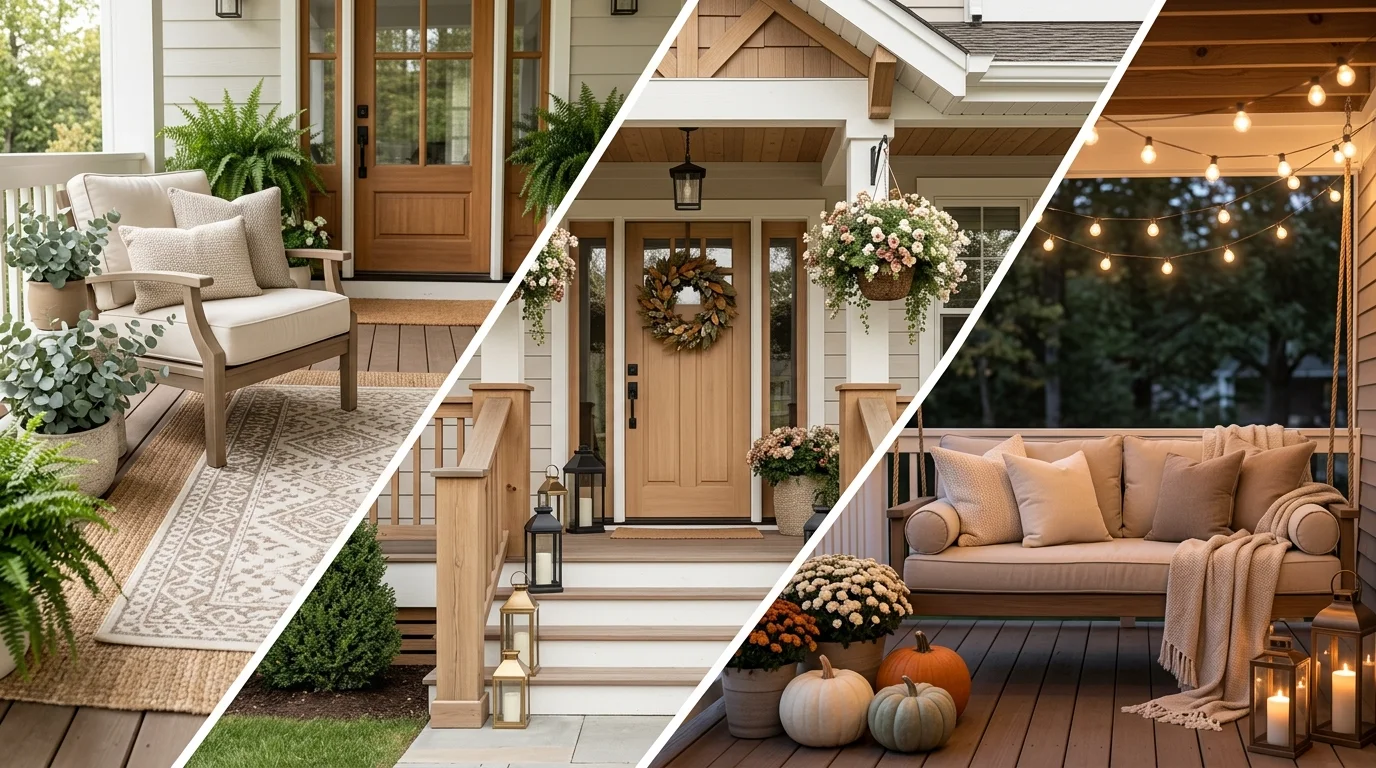
    Your porch is the first part of your home guests see, so it should feel warm and welcoming. These cozy porch decor ideas offer simple ways to refresh your entrance with plants, rugs, seating, and seasonal accents. Whether your style is modern or classic, these front porch decor ideas can help create a beautiful and inviting outdoor entryway.

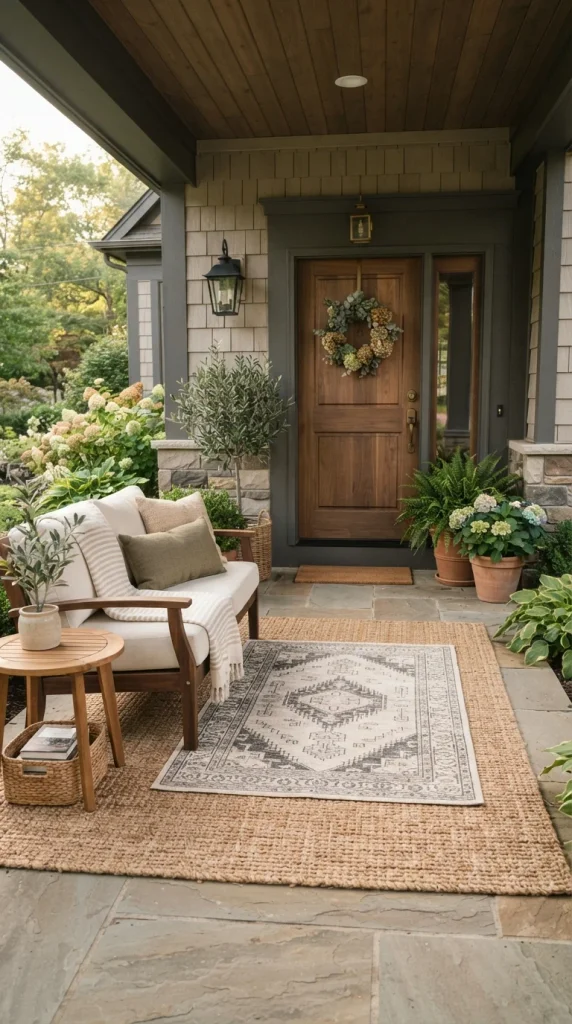
    1. Layered Outdoor Rugs

    Layering outdoor rugs can make your porch feel cozy and inviting. Start with a larger neutral rug and place a smaller patterned rug on top for extra style. Choose weather-resistant materials that can handle outdoor use. This simple combination also helps define the seating or entry area.

    2. Comfortable Porch Seating

    Comfortable seating can quickly turn an empty porch into a relaxing place to sit. Add a cushioned bench, outdoor chairs, or a small loveseat depending on your available space. Choose fabrics made for outdoor use so they are easier to maintain. A few soft pillows can make the seating feel even more welcoming.

    3. Hanging Flower Baskets

    Hanging flower baskets add color and natural beauty without taking up valuable floor space. Place them near the front door or along the porch roof where they can be easily seen. Choose flowers that suit your climate and the amount of sunlight your porch receives. Matching baskets can also give the space a balanced look.

    4. Warm String Lights

    String lights create a soft and cozy atmosphere, especially in the evening. You can hang them along the porch ceiling, railing, or around columns. Choose outdoor-rated lights for better durability and safety. Warm white bulbs work especially well with natural and neutral porch decor.

    5. Cozy Throw Pillows

    Throw pillows are an easy way to add comfort and personality to porch seating. Choose outdoor pillows in simple patterns, warm colors, or seasonal designs. Mixing two or three complementary styles can create a layered appearance without looking crowded. Store them indoors during harsh weather to keep them looking fresh.

    6. Seasonal Front Door Wreath

    A seasonal wreath can make your entrance feel more welcoming throughout the year. Use greenery and soft colors for spring, bright flowers for summer, or warm leaves and berries for fall. For winter, evergreen branches and simple decorative accents create a cozy look. Keep the wreath size proportional to your door for a polished appearance.

    7. Potted Greenery

    Potted plants can bring life and freshness to almost any porch. Place larger planters beside the door and use smaller pots on steps, tables, or shelves. Choose plants based on the sunlight and weather conditions your porch receives. Simple ceramic, terracotta, or woven planters can also complement your overall decor.

    8. Classic Porch Swing

    A porch swing can become both a beautiful focal point and a comfortable place to relax. Add a weather-resistant cushion and a few pillows for extra comfort. Keep the surrounding area fairly open so the swing does not make the porch feel cramped. A simple wooden swing works beautifully with both traditional and modern homes.

    9. Welcoming Entryway Sign

    A small decorative sign can give your porch a personal and friendly touch. Choose a simple wooden, metal, or painted sign that complements your home’s exterior. Avoid using too many signs or decorative messages, as one well-placed piece can have more impact. Position it near the door where it adds interest without blocking the entry.

    10. Natural Wood Accents

    Natural wood can make a porch feel warmer and more connected to the outdoors. Try wooden planters, a small bench, a side table, or decorative trays. The natural texture works especially well with greenery, woven materials, and neutral colors. Use finishes designed for outdoor conditions to help protect the wood.

    11. Lanterns for Soft Lighting

    Lanterns provide a simple way to add warm lighting and decorative charm. Place a pair near the front door or use smaller lanterns around seating areas. Battery-operated or solar options can make outdoor placement easier. Choose finishes such as black, bronze, or natural wood to coordinate with your existing porch style.

    12. Cozy Outdoor Curtains

    Outdoor curtains can give a porch a softer and more private feeling. Hang them around an open seating area to create a relaxed retreat. Light-colored fabrics can keep the space feeling bright, while slightly darker shades can create a more intimate look. Choose outdoor fabric that is designed to resist moisture and fading.

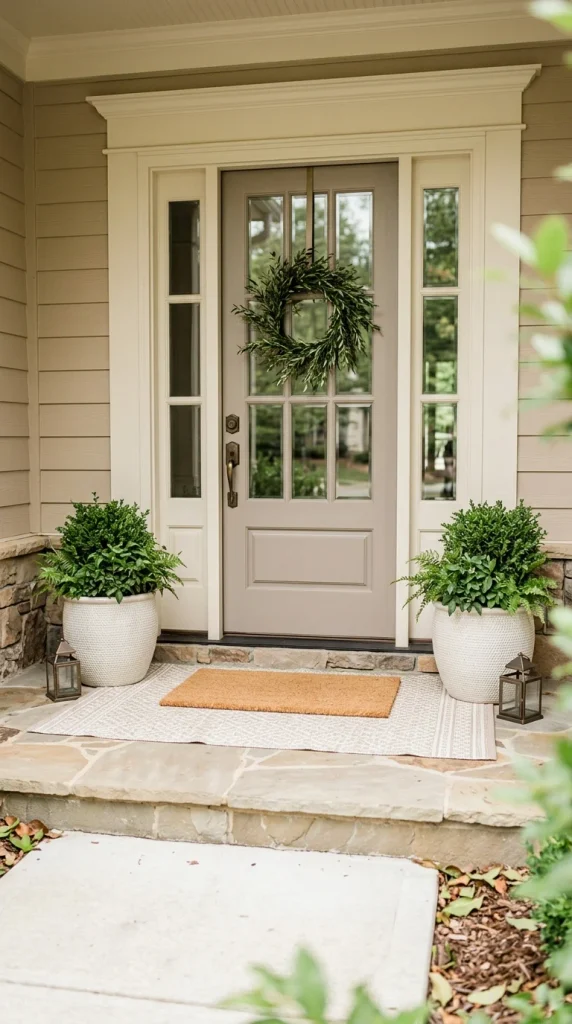
    13. Decorative Door Planters

    Door planters are an easy way to frame your entrance with greenery and seasonal color. Use matching planters on both sides of the door for a balanced appearance. Tall plants can add height, while smaller flowers can create a softer look. Make sure the planters leave enough room for the door to open comfortably.

    14. Small Bistro Seating

    Small bistro seating is perfect when you want a cozy sitting area without using much space. A compact table with two chairs can create a charming spot for morning coffee or quiet evenings. Choose foldable or lightweight furniture if you need flexibility. Keep the colors simple so the small area does not feel visually crowded.

    15. Rustic Farmhouse Details

    Rustic farmhouse details can give a porch a warm and comfortable character. Consider adding a wooden bench, woven basket, galvanized planter, or simple vintage-style accessory. Keep the materials natural and avoid filling the space with too many rustic pieces. A few carefully chosen details can create a relaxed farmhouse feel.

    16. Neutral Porch Color Palette

    A neutral color palette can make your porch feel calm, timeless, and welcoming. Shades such as cream, beige, taupe, soft gray, and natural brown work well together. Add small touches of greenery or muted colors for visual interest. Keeping the main furniture and larger pieces neutral also makes seasonal decorating easier.

    17. Vintage Porch Accessories

    Vintage-inspired accessories can add character and charm to a simple porch. Look for an old-style lantern, decorative chair, weathered planter, or small metal table. Choose pieces that complement your home’s existing style rather than making the porch feel like a collection of unrelated objects. One or two vintage accents can create plenty of personality.

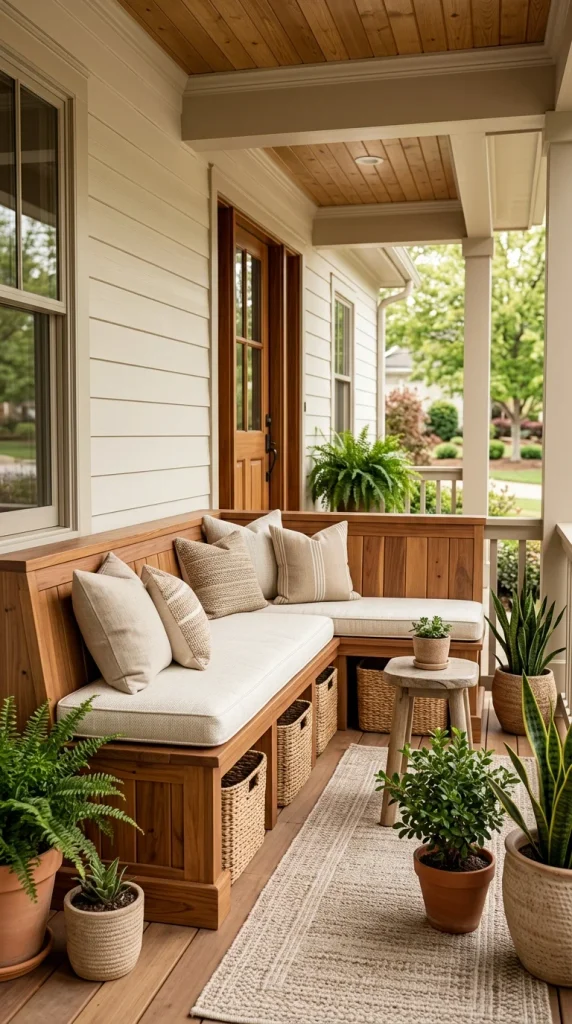
    18. Built-In Bench Seating

    A built-in bench can provide practical seating while making good use of the available porch space. Add a comfortable outdoor cushion and a few pillows to soften its appearance. You can also use baskets underneath the bench for storing outdoor accessories. This option works particularly well on wider porches where permanent seating makes sense.

    19. Seasonal Porch Decorations

    Changing a few decorations with the seasons can keep your porch feeling fresh throughout the year. Use flowers and light colors in spring, greenery in summer, warm tones in fall, and simple evergreen accents in winter. Focus on changing smaller accessories rather than replacing large furniture pieces. This makes seasonal decorating easier and more affordable.

    20. Simple Doormat Styling

    A stylish doormat can make a small but noticeable difference at the front entrance. Place a durable doormat over a larger outdoor rug for a layered and finished look. Choose a simple design that coordinates with your door and surrounding decor. Make sure the mat is practical enough to handle regular foot traffic and outdoor dirt.

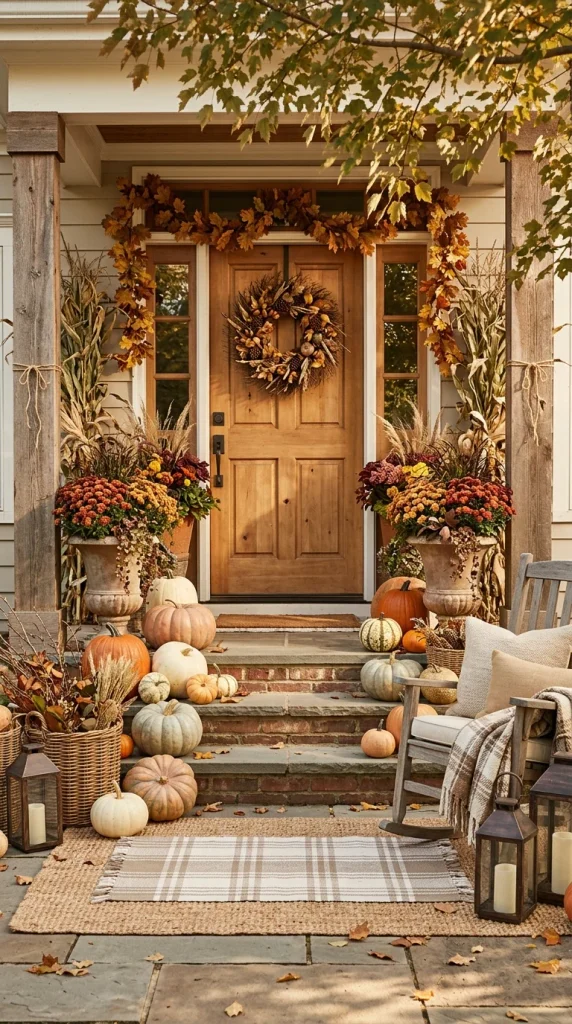
    21. Cozy Fall Porch Display

    A cozy fall porch display can bring warmth and seasonal charm to your home’s entrance. Use pumpkins, autumn foliage, baskets, lanterns, and warm-toned textiles to create a welcoming arrangement. Vary the heights of your decorations so the display looks natural and balanced. Keep a clear walkway so the porch remains attractive as well as practical.

    Conclusion

    The right porch decor ideas can make your entrance feel comfortable, stylish, and welcoming without requiring a major makeover. Simple touches like layered rugs, cozy seating, greenery, warm lighting, and seasonal accents can transform the space. Choose pieces that suit your porch size, home style, and everyday needs. With a few thoughtful changes, your porch can become a beautiful extension of your home.

    Frequently Asked Questions

    What are the best porch decor ideas on a budget?

    Start with affordable changes such as a new doormat, outdoor pillows, potted plants, lanterns, or a simple wreath. These small updates can refresh the porch without replacing larger furniture.

    How can I decorate a small porch?

    Use space-saving pieces such as a narrow bench, small bistro chairs, hanging baskets, wall-mounted decorations, and vertical planters. Keep the walkway open and avoid using too many large accessories.

    What colors work best for cozy porch decor?

    Warm neutrals such as cream, beige, taupe, brown, and soft gray create a comfortable base. You can add muted green, terracotta, navy, or seasonal colors for extra personality.

    What materials are best for outdoor porch furniture?

    Look for weather-resistant materials such as treated wood, metal, resin, and outdoor-rated fabrics. The best choice depends on your local weather and how much protection your porch provides.

    How do I make my front porch look more welcoming?

    Focus on the entrance first by adding a clean doormat, attractive planters, a seasonal wreath, and warm lighting. Comfortable seating and a few decorative accents can make the rest of the porch feel more inviting.

    How can I decorate a porch for different seasons?

    Keep your main furniture and larger pieces simple, then change smaller accessories throughout the year. Wreaths, pillows, flowers, planters, and seasonal decorations are easy items to switch.

    How do I keep porch decor from looking cluttered?

    Choose a few useful and attractive pieces instead of filling every empty area. Keep the main walkway clear, repeat a few colors or materials, and leave some open space around your furniture and decorations.

  • 21 Backyard Pool Landscaping Ideas for a Beautiful Outdoor Space

    21 Backyard Pool Landscaping Ideas for a Beautiful Outdoor Space

    A well-planned backyard pool landscaping can turn a simple pool area into a beautiful outdoor retreat. From lush greenery and tropical plants to stylish poolside seating, the right landscaping ideas can make your backyard feel more inviting. You can add privacy with tall plants, create a cozy atmosphere with outdoor lighting, or define the space with stone pathways and garden borders. Whether you have a small pool or a large backyard, thoughtful pool landscaping can improve both style and comfort. These 21 Backyard Pool Landscaping Ideas will help you create a relaxing, beautiful outdoor space that feels perfect for summer days and evening gatherings.

    1. Tropical Plants Around the Pool

    Tropical plants can make your backyard pool feel like a relaxing vacation spot. Choose plants with large green leaves and place them around the pool edges for a lush look. Palms, bird of paradise, and other warm-weather plants can add height and texture. Keep plants a safe distance from the water to reduce leaves and debris in the pool.

    2. Lush Poolside Garden

    A lush garden can soften the hard surfaces around a swimming pool and make the space feel more natural. Mix shrubs, flowering plants, and greenery in garden beds around the pool area. Use plants with different heights to create depth without blocking the view. A simple garden design can make the entire backyard feel more inviting.

    3. Stone Pool Deck Landscaping

    Stone is a beautiful choice for creating a durable and stylish pool deck. Natural stone can give the backyard an earthy appearance while providing a strong surface around the pool. Choose materials with a suitable non-slip finish for wet areas. Add a few plants or simple planters to soften the stone and create balance.

    4. Poolside Privacy Plants

    Privacy plants can help create a more peaceful and private pool area. Tall shrubs, hedges, ornamental grasses, or suitable trees can form a natural screen around the backyard. Place them where they block unwanted views without making the pool feel closed in. Evergreen plants can provide useful privacy throughout much of the year.

    5. Modern Pool Landscaping

    Modern pool landscaping works well with clean lines, simple plants, and uncluttered spaces. Use geometric planting beds, large planters, and neutral-colored materials for a polished appearance. Keep the plant selection limited to a few complementary varieties. Comfortable outdoor furniture can complete the sleek and relaxing look.

    6. Natural Rock Pool Border

    A natural rock border can give your pool area a relaxed and organic feel. Arrange stones of different sizes around selected sections of the pool rather than making the design look too uniform. Add low-growing plants between the rocks for extra texture. This approach works especially well when you want your backyard to feel connected to nature.

    7. Palm Trees Around the Pool

    Palm trees instantly bring a tropical feeling to a backyard pool. Their tall shape can add height while creating a beautiful backdrop around the pool area. Place palms carefully so falling leaves do not create too much pool maintenance. Combine them with low plants and comfortable seating for a balanced resort-style setting.

    8. Cozy Poolside Seating Area

    A comfortable seating area can make your pool useful even when nobody is swimming. Add weather-resistant lounge chairs, a small outdoor sofa, or cushioned chairs near the pool. Keep enough space between the furniture and pool edge for easy movement. A nearby side table can provide a convenient place for drinks, towels, or outdoor accessories.

    9. Pool Landscaping with Ornamental Grasses

    Ornamental grasses add movement and softness to a pool landscape. Their fine leaves can contrast nicely with concrete, stone, or tile surfaces. Use them in groups along the edges of the backyard or near seating areas. Choose varieties that suit your climate and do not become too large for the available space.

    10. Flower Beds Around the Pool

    Flower beds can bring color and seasonal interest to your backyard pool area. Choose flowers that complement the colors of your pool deck, furniture, and surrounding plants. Keep flower beds slightly away from the water to help reduce petals and soil entering the pool. A mix of flowers and green foliage can create a cheerful but balanced appearance.

    11. Small Backyard Pool Landscaping

    Small backyards can still have beautiful pool landscaping with careful planning. Use compact plants, narrow garden beds, and space-saving furniture around the pool. Avoid filling every open area with decorations because an uncluttered layout can make the space feel larger. Light-colored materials and simple greenery can also create a more open appearance.

    12. Poolside Pergola Retreat

    A pergola can create a shaded and comfortable area beside the pool. Place outdoor seating underneath it to create a dedicated spot for relaxing after swimming. You can keep the structure simple or add climbing plants for a softer appearance. A pergola also helps divide the backyard into useful areas without making the space feel crowded.

    13. Mediterranean Pool Landscaping

    Mediterranean-inspired landscaping can give a pool area a warm and timeless character. Use materials such as natural stone, terracotta, and warm-toned finishes with plants suited to the local climate. Olive-style trees, herbs, and simple shrubs can add texture and charm. Keep the design relaxed rather than overly formal for an inviting outdoor atmosphere.

    14. Pool Landscaping with Stepping Stones

    Stepping stones can create an attractive path through your backyard pool landscape. Place them between the pool, garden areas, seating zones, or other outdoor spaces. Leave comfortable and even spacing between each stone for easy walking. Natural stone or concrete stepping stones can both work well depending on the overall style of your backyard.

    15. Outdoor Lighting Around the Pool

    Outdoor lighting can make your pool area feel welcoming after sunset while helping define important walking areas. Use soft lighting along pathways, garden beds, and selected poolside areas. Avoid harsh lights that create glare around the water. Well-placed lighting can highlight plants and landscaping features while creating a warm evening atmosphere.

    16. Poolside Planters and Pots

    Planters are an easy way to add greenery without creating permanent garden beds. Large pots can frame the pool area, define seating spaces, or add height to empty corners. Choose weather-resistant containers that complement your outdoor furniture and pool deck. Grouping a few planters together can create more visual impact than spreading many small pots around.

    17. Desert-Inspired Pool Landscaping

    Desert-inspired landscaping is a practical choice for creating a clean and low-water outdoor space. Use suitable drought-tolerant plants, decorative rocks, gravel, and simple hardscaping to create texture. Plants with different shapes can make the landscape interesting without requiring a large garden. This style can give the pool area a modern and natural appearance.

    18. Pool Landscaping with a Water Feature

    A water feature can become an attractive focal point in a backyard pool area. A small waterfall, fountain, or decorative spillway can add movement and a relaxing sound. Choose a design that fits the size and style of your pool rather than overwhelming the space. Keep the surrounding landscaping simple so the water feature remains a clear highlight.

    19. Wooden Deck Pool Landscaping

    A wooden deck can add warmth and a natural look to your pool surroundings. Use outdoor-rated materials designed for moisture and regular exposure to the weather. Add comfortable seating and a few large planters to make the deck feel more inviting. Make sure the decking material and finish are appropriate for a wet poolside environment.

    20. Low-Maintenance Pool Landscaping

    Low-maintenance landscaping can make it easier to enjoy your pool without spending too much time caring for the surrounding garden. Choose hardy plants, simple planting areas, and durable outdoor materials. Avoid plants that drop large amounts of leaves directly into the pool. A simple landscape with fewer carefully chosen elements can still look stylish and complete.

    21. Resort-Style Backyard Pool Oasis

    A resort-style pool oasis combines comfortable seating, beautiful greenery, relaxing lighting, and attractive materials. Use lounge chairs, large planters, layered plants, and a shaded area to create a vacation-like atmosphere. Keep the colors coordinated so the backyard feels calm rather than busy. With thoughtful placement, even a regular backyard pool can become a relaxing outdoor retreat.

    Conclusion

    Beautiful backyard pool landscaping is about creating a space that feels comfortable, practical, and inviting. The right combination of plants, seating, pathways, lighting, and durable materials can completely improve the pool area. Whether your backyard is large or small, focus on a layout that gives you enough room to move and relax. With thoughtful choices, your pool can become a beautiful outdoor space for everyday enjoyment and gatherings.

    Frequently Asked Questions

    1. How can I landscape my backyard pool on a budget?

    Start with a few high-impact improvements instead of changing everything at once. Add affordable planters, low-maintenance plants, simple outdoor lighting, and comfortable seating. Using gravel, mulch, or selected hardscaping can also create a finished look without a large landscaping budget.

    2. What plants are best for backyard pool landscaping?

    Choose plants that suit your climate and do not create excessive leaves, berries, or messy debris around the pool. Palms, ornamental grasses, shrubs, and suitable tropical or drought-tolerant plants can work well. Always check the mature size of a plant before placing it near the pool.

    3. How do I landscape a small backyard with a pool?

    Keep the design simple and use the available space carefully. Choose compact plants, narrow planting beds, vertical greenery, and furniture that does not take up too much room. Leaving some open areas around the pool can make a small backyard feel larger.

    4. What materials work best around a swimming pool?

    Popular choices include natural stone, concrete, tile, and suitable outdoor decking materials. The most important factors are durability, comfort, and slip resistance when the surface becomes wet. Choose a material that also complements the style of your home and backyard.

    5. How can I add privacy around my backyard pool?

    Tall shrubs, hedges, ornamental grasses, and carefully placed trees can create natural privacy. You can also use a pergola or other suitable outdoor structure near seating areas. Place privacy features strategically so they provide screening without making the pool area feel enclosed.

    6. What colors look best for a landscaped pool area?

    Natural colors such as green, beige, cream, brown, gray, and soft earthy tones create a calm poolside atmosphere. You can add small amounts of brighter color through flowers, cushions, or planters. Keeping the main materials neutral makes it easier to change seasonal accents.

    7. How can I make my pool area feel more relaxing?

    Create separate areas for swimming, lounging, and entertaining without overcrowding the backyard. Comfortable seating, soft outdoor lighting, greenery, and a little shade can make the space much more enjoyable. Keep the overall design coordinated so the pool area feels peaceful and organized.

  • 23 DIY Small Garden Ideas to Make the Most of Your Outdoor Space

    23 DIY Small Garden Ideas to Make the Most of Your Outdoor Space

    Small spaces can still become beautiful, inviting gardens with a little creativity and the right DIY projects. Whether you have a tiny backyard, balcony, patio, or unused corner, there are plenty of simple ways to add greenery without taking up too much room. From vertical planters and compact herb gardens to creative containers and cozy seating areas, these ideas make every inch count. Here are 23 DIY small garden ideas to help you transform your outdoor space into a charming and functional retreat.

    1. DIY Vertical Herb Garden

    A vertical herb garden is a smart way to grow fresh herbs when floor space is limited. Use a wooden board, wall planter, or hanging pockets to keep herbs organized. You can grow basil, mint, parsley, and other favorite herbs in small containers. Place the garden somewhere that receives enough sunlight. It adds greenery while keeping useful herbs close at hand.

    2. DIY Hanging Planter Garden

    Hanging planters are perfect for adding plants without using valuable floor space. You can make them from baskets, small pots, or other sturdy containers. Hang several planters at different heights to create a layered look. Choose trailing plants to make the arrangement feel fuller and more natural. This idea works especially well on balconies, patios, and small porches.

    3. DIY Wooden Pallet Garden

    An old wooden pallet can be turned into a charming vertical garden with a little creativity. Attach small pots or planting boxes to the pallet and fill them with flowers or herbs. Lean it against a wall or secure it properly in a suitable location. Paint or stain the wood if you want a more finished appearance. It is an affordable way to bring more plants into a small outdoor space.

    4. DIY Tiered Plant Stand

    A tiered plant stand allows you to display several plants in a small footprint. You can make one using wooden boards, old shelves, or a simple ladder. Place smaller plants on the upper levels and larger ones toward the bottom. Mixing different leaf shapes can make the display more interesting. Keep the stand where each plant can receive the light it needs.

    5. DIY Small Raised Garden Bed

    A small raised garden bed can make growing vegetables and flowers easier in a limited backyard. Build a simple frame from untreated garden-friendly wood and fill it with suitable soil. Keep the bed narrow enough so you can reach the plants comfortably. Grow compact vegetables, herbs, or seasonal flowers according to your space. A raised bed also gives the garden a neat and organized appearance.

    6. DIY Balcony Container Garden

    Containers make it easy to create a garden even when you only have a small balcony. Use pots, planters, or sturdy boxes to grow flowers, herbs, and compact vegetables. Arrange them along the edges so the center remains open for movement. Choose containers that have drainage holes to help prevent soggy soil. With the right plant choices, a small balcony can feel fresh and inviting.

    7. DIY Window Box Garden

    A window box is a simple way to add plants to a small outdoor area without taking up floor space. Fill it with colorful flowers, herbs, or compact greenery that suits the amount of sunlight available. Choose a box that is strong enough for the soil and plants when fully watered. Make sure it is securely attached before adding plants. A well-planted window box can make even a small home exterior feel more welcoming.

    8. DIY Vertical Succulent Garden

    Succulents are a great choice for a small vertical garden because many varieties stay compact. Use a shallow planter, wooden frame, or wall-mounted display to arrange them creatively. Combine different shapes and textures for a more interesting appearance. Use well-draining soil and avoid watering too frequently. Place the display in a bright location that suits the needs of your chosen succulents.

    9. DIY Wooden Crate Planters

    Wooden crates can be turned into attractive planters with very little effort. Line the inside properly, add drainage, and fill them with suitable potting soil. Stack several crates to create height or use them separately around the garden. They work well for flowers, herbs, and smaller vegetable plants. Their simple wooden look also adds a warm, natural touch to outdoor spaces.

    10. DIY Recycled Bottle Garden

    Empty plastic bottles can be reused as small planters instead of being thrown away. Cut and prepare the bottles carefully, add drainage holes, and fill them with soil. Hang them on a wall or arrange them on a sturdy shelf. They are suitable for small herbs, flowers, and other compact plants. This project is inexpensive and can help turn unused materials into useful garden containers.

    11. DIY Corner Garden

    An unused corner can become a beautiful garden feature with a few carefully chosen plants. Place a narrow plant stand, tall pots, or a small trellis in the corner to use the vertical space. Choose plants with different heights to make the area feel fuller. Avoid overcrowding the space so it remains easy to maintain. This is a simple way to turn an overlooked area into a pleasant garden spot.

    12. DIY Garden Trellis

    A DIY trellis gives climbing plants a place to grow upward instead of spreading across the ground. You can make one from wooden strips, bamboo, or other sturdy garden materials. Grow suitable vines or climbing flowers along the structure. Position it against a wall or at the back of a small garden bed. Besides saving space, a trellis can also add height and visual interest.

    13. DIY Hanging Gutter Garden

    Old rain gutters can be reused as narrow planters for a creative space-saving garden. Mount them securely along a wall, fence, or railing and add proper drainage. They are useful for growing shallow-rooted herbs, flowers, and small plants. Keep enough space between each gutter for healthy growth and maintenance. This idea makes use of vertical surfaces while keeping the garden neat.

    14. DIY Mini Vegetable Garden

    You do not need a large backyard to grow some of your own vegetables. Use containers, small raised beds, or compact planting boxes for suitable vegetables. Lettuce, radishes, herbs, and other space-friendly crops can work well depending on your climate. Give each plant enough room, sunlight, and water for healthy growth. A mini vegetable garden can be both practical and rewarding.

    15. DIY Colorful Container Garden

    A collection of colorful containers can make a small garden feel cheerful and lively. Paint plain pots in complementary shades or choose containers that already match your outdoor style. Mix flowers with leafy plants to create contrast and texture. Arrange the pots at different heights to avoid a flat appearance. Keep the color palette coordinated so the garden still feels calm and organized.

    16. DIY Ladder Plant Stand

    An old wooden ladder can become a useful display for plants in a small outdoor area. Place pots on each step to create several planting levels without using much floor space. Choose lightweight containers that fit securely on the ladder. You can mix flowers, herbs, and decorative plants for variety. Make sure the ladder is stable before using it as a plant stand.

    17. DIY Small Flower Bed

    A small flower bed can bring plenty of color to even a limited outdoor space. Choose a compact area along a wall, pathway, or garden border. Combine plants with different heights and blooming times for a more attractive display. Avoid selecting too many varieties if the space is very small. A simple, well-planned flower bed can become a beautiful focal point.

    18. DIY Cinder Block Planter Garden

    Cinder blocks can be arranged into simple planters without requiring complicated construction. Stack them securely and use the openings to hold suitable small plants. Combine a few blocks with wooden boards to create a compact garden display. Their clean shape works well in modern and simple outdoor spaces. Check that the structure is stable before adding soil and plants.

    19. DIY Wall-Mounted Planter Garden

    A wall-mounted planter garden makes use of vertical space that might otherwise remain empty. Attach suitable planters securely to an exterior wall or sturdy fence. Use a mixture of trailing, leafy, or flowering plants to create a natural display. Keep the arrangement simple enough to water and maintain easily. This idea is especially useful for patios, balconies, and narrow garden areas.

    20. DIY Compact Herb Garden

    A compact herb garden can provide fresh ingredients while taking up very little room. Use small pots, a narrow planter box, or a tiered stand to organize the herbs. Labeling each container can make it easier to identify and care for different plants. Place the garden somewhere with suitable sunlight and easy access. Keeping herbs close to the kitchen can also make everyday cooking more convenient.

    21. DIY Fairy Garden

    A small fairy garden can add a playful and charming touch to a compact outdoor space. Use a shallow container or a small garden corner as the base. Add miniature plants, stones, tiny paths, and simple decorative pieces to create a little scene. Keep the design uncluttered so the small details remain visible. It can be a fun DIY project for both adults and children.

    22. DIY Stone Garden Path

    A small stone path can give your garden structure while making the space easier to walk through. Use flat stones or other suitable outdoor materials to create a simple pathway. Keep the path narrow and gently shaped so it does not take over the garden. Leave enough space between plants for easy maintenance. Even a short path can make a small outdoor area feel more thoughtfully designed.

    23. DIY Cozy Garden Seating Area

    A small seating area can turn your garden into a comfortable place to relax. Use a compact bench, small chairs, or a simple outdoor seat that fits the available space. Surround the seating with potted plants or greenery without blocking the walkway. Add a small outdoor cushion or simple accessories for extra comfort. The goal is to create a peaceful corner without making the garden feel crowded.

    Conclusion

    Small outdoor spaces can become beautiful and useful with thoughtful DIY garden ideas. Vertical planters, hanging containers, raised beds, and compact plant displays help you use every available corner without overcrowding it. Choose plants and materials that suit your space, sunlight, and maintenance routine. With a little creativity, even the smallest outdoor area can become a fresh and inviting garden.

    Frequently Asked Questions

    1. How can I make a small garden look bigger?

    Use vertical planters, hanging baskets, and plants with different heights to draw the eye upward. Keeping pathways clear and avoiding too many decorations can also make the space feel more open.

    2. What are the best DIY garden ideas for very small spaces?

    Vertical gardens, hanging planters, window boxes, wall-mounted planters, and tiered stands are useful choices. They provide room for plants without taking up much floor space.

    3. How can I create a small garden on a budget?

    Reuse items such as wooden crates, old containers, pallets, bottles, and ladders as planters or garden displays. Start with a few plants and add more gradually as your garden develops.

    4. Which plants work well in a small DIY garden?

    Compact herbs, succulents, small flowers, leafy plants, and space-friendly vegetables can work well. The best choices depend on your local climate, available sunlight, and the size of your containers.

    5. How do I choose the right location for a small garden?

    First, check how much sunlight the area receives during the day. Place sun-loving plants in brighter locations and choose shade-tolerant plants for areas with less direct light.

    6. What materials are good for DIY garden planters?

    Wooden crates, suitable pots, containers, baskets, gutters, and sturdy recycled items can all be useful. Whatever you choose, make sure it is safe for outdoor use and allows proper drainage.

    7. How do I keep a small DIY garden from looking cluttered?

    Choose a simple arrangement and repeat a few similar materials or colors throughout the space. Use vertical areas when possible and leave enough open space for walking, watering, and caring for your plants.

  • 21 Artificial Turf Landscaping Ideas for a Beautiful, Low-Maintenance Yard

    21 Artificial Turf Landscaping Ideas for a Beautiful, Low-Maintenance Yard

    Artificial turf landscaping is an easy way to create a beautiful, green yard without the constant mowing, watering, and upkeep required by natural grass. It works well in modern backyards, patios, small gardens, play areas, and other outdoor spaces. With the right design, artificial turf can look natural while creating a clean and polished appearance. From simple lawn makeovers to creative landscaping features, these ideas can help you transform your outdoor space. Explore these 21 artificial turf landscaping ideas for a beautiful, low-maintenance yard.

    1. Modern Artificial Turf Front Yard

    A modern artificial turf front yard creates a neat and welcoming first impression. Use clean turf areas with simple pathways, stone borders, or decorative gravel for a polished look. Add a few low-maintenance plants or planters to bring natural texture and color. This design works especially well for homes with a contemporary exterior.

    2. Artificial Turf Backyard Lawn

    Artificial turf can turn an ordinary backyard into a fresh and comfortable outdoor space. It provides a consistently green surface for relaxing, entertaining, or spending time with family. Pair the turf with a patio, outdoor furniture, or garden beds to create separate areas. A simple border around the lawn can also give the yard a more finished appearance.

    3. Turf Patio with Paved Borders

    Combining artificial turf with paving stones creates an attractive contrast between soft greenery and hard surfaces. Place turf between or around paved areas to add warmth to a patio design. Neutral-colored pavers work particularly well with green turf and modern outdoor furniture. This idea is ideal for creating a stylish space without making the yard feel too busy.

    4. Small Artificial Grass Garden

    Artificial turf is a practical choice for small gardens where maintaining natural grass can be difficult. A compact patch of turf can make the space feel greener and more open. Add a few planters, decorative stones, or small shrubs around the edges for extra interest. Keep the design simple so the small area remains clean and spacious.

    5. Artificial Turf Around a Fire Pit

    Create a cozy outdoor gathering area by placing artificial turf around a defined fire pit space. Use stone, brick, or pavers around the fire pit to create a clear and practical boundary. Comfortable outdoor chairs can complete the setup and make the area inviting. Always follow the turf manufacturer’s safety recommendations around heat and open flames.

    6. Turf and Stone Landscaping

    Artificial turf and decorative stone make a simple combination for a modern, low-maintenance yard. Use stones around the edges of the turf or create separate sections between green areas. The different textures add visual interest without requiring many plants. This style is especially useful for homeowners who prefer a clean and structured landscape.

    7. Artificial Grass Poolside Design

    Artificial grass can give a pool area a soft, green appearance while creating a comfortable transition between the pool and other outdoor surfaces. Combine the turf with paving, lounge chairs, and simple planters for a relaxed setting. Choose a quality turf designed for outdoor use and proper drainage. Keeping the area uncluttered can make the poolside space feel larger and more inviting.

    8. Turf Walkway with Stepping Stones

    Create an attractive garden path by combining artificial turf with stepping stones. Place the stones at comfortable walking distances and surround them with green turf for a natural-looking effect. You can add small plants or gravel along the edges to define the walkway. This idea adds character while making different parts of the yard feel connected.

    9. Artificial Turf Pet-Friendly Yard

    Artificial turf can create a tidy outdoor area for homes with pets. Choose pet-friendly turf with good drainage and a surface that is easy to clean. Leave enough open space for pets to move around while adding a shaded corner or simple seating area. Regular cleaning and maintenance will help keep the space fresh and comfortable.

    10. Cozy Turf Seating Area

    Turn a section of your yard into a relaxing seating area by placing outdoor furniture directly beside or around artificial turf. Add comfortable chairs, a small table, and a few planters to create a welcoming atmosphere. The green surface helps soften hard patios and decking. Keep the furniture layout open so the area remains easy to use and move around.

    11. Artificial Grass Rooftop Garden

    Artificial grass can bring a fresh garden feel to a rooftop or terrace without the weight and upkeep of a traditional lawn. Use turf to define a central relaxing area and surround it with lightweight planters. Add outdoor seating and subtle lighting to make the space more comfortable. Always check that the rooftop is suitable for the planned landscaping materials.

    12. Turf and Gravel Landscape

    Pairing artificial turf with gravel creates a modern landscape with plenty of texture. Use turf for the main green sections and gravel to create borders, pathways, or decorative areas. This combination reduces the need for regular lawn care while keeping the design visually interesting. A few carefully placed plants can add softness without making maintenance difficult.

    13. Artificial Turf Play Area

    Artificial turf can provide a clean and comfortable surface for a children’s outdoor play area. Create an open section of turf where kids can play, then add safe play equipment or outdoor toys around it. Avoid sharp decorative materials near the main play space. A little shade from a tree, canopy, or suitable outdoor structure can make the area more enjoyable.

    14. Minimalist Turf Courtyard

    A minimalist courtyard can look beautiful with a simple rectangle of artificial turf surrounded by paving or stone. Keep the color palette neutral and use only a few carefully chosen plants or decorative features. Clean lines and uncluttered spaces make this design feel modern and peaceful. It is especially suitable for smaller urban yards and enclosed outdoor areas.

    15. Turf Garden with Raised Planters

    Raised planters can add height and structure to an artificial turf landscape. Place them along the edge of the turf to create a defined garden border without taking away too much lawn space. Fill them with flowers, herbs, or suitable greenery for seasonal color. The combination of green turf and raised planting areas creates a balanced and organized yard.

    16. Artificial Grass Around a Deck

    Adding artificial turf around a deck can soften the transition between the deck and the rest of the yard. Use the turf to create a green frame around the wooden or composite decking. Add outdoor chairs, planters, or a small dining set to make the area more functional. This combination works well for both compact yards and larger entertaining spaces.

    17. Turf and Wooden Pathway

    A wooden pathway can add warmth and natural texture to an artificial turf landscape. Place wooden stepping boards or a simple walkway across the turf to connect different outdoor areas. The contrast between green grass and warm wood creates a relaxed appearance. Add a few plants along the route to make the pathway feel more integrated with the garden.

    18. Artificial Turf Outdoor Dining Area

    Create a comfortable outdoor dining space by surrounding a patio or dining area with artificial turf. The green surface adds a garden-like feeling while keeping the overall design neat. Choose weather-resistant furniture and leave enough space around the table for easy movement. Simple planters or soft outdoor lighting can make the dining area feel more inviting.

    19. Tropical Garden with Artificial Turf

    Artificial turf can provide a green foundation for a tropical-inspired outdoor space. Surround the turf with palms, leafy plants, planters, and natural-looking decorative features. Use different plant heights to create depth while keeping the turf as the main open area. This design can create a relaxing garden atmosphere without requiring a large natural lawn.

    20. Artificial Turf Putting Green

    A small artificial putting green is a fun way to add a recreational feature to your backyard. Designate a section of the yard for the green and use surrounding turf, gravel, or planting areas to frame it. Choose turf specifically designed for putting if you want a suitable playing surface. Keep the layout simple so the area remains practical and easy to maintain.

    21. Layered Turf and Flower Bed Landscape

    Create a more natural-looking yard by combining artificial turf with layered flower beds. Place colorful plants and shrubs around the outer edges while keeping the center open with green turf. Different heights and textures can make the landscape feel fuller and more interesting. This approach gives you the appearance of a lush garden while keeping the main lawn area simple to care for.

    Conclusion

    Artificial turf landscaping can make your yard look green, organized, and inviting while reducing many of the regular tasks associated with natural grass. Whether you have a small garden, spacious backyard, patio, or pool area, turf can be combined with stone, paving, plants, wood, and outdoor furniture to create a design that suits your space. With the right layout and proper installation, these ideas can help you enjoy a beautiful, low-maintenance yard throughout the year.

    Frequently Asked Questions

    1. Is artificial turf good for landscaping?

    Yes, artificial turf can be a practical landscaping option for areas where you want a consistently green appearance with less mowing and watering. It can be used in yards, patios, gardens, play areas, and other outdoor spaces.

    2. How much does artificial turf landscaping cost?

    The cost depends on the turf quality, area size, ground preparation, installation method, and additional landscaping materials. Paving, drainage work, edging, and plants can also affect the overall price.

    3. Can artificial turf be used in a small yard?

    Yes, artificial turf works particularly well in small yards. A simple turf section combined with stepping stones, planters, or decorative gravel can make a compact space look clean and more spacious.

    4. What looks good with artificial turf?

    Artificial turf pairs well with natural stone, paving, wood, gravel, raised planters, and outdoor furniture. Combining different textures can make the landscape look more natural and visually balanced.

    5. What color should artificial turf be?

    A natural-looking mix of green shades usually looks more realistic than a single bright green color. Choose a turf color that complements your home’s exterior, surrounding plants, and other landscaping materials.

    6. Can artificial turf be used around a pool?

    Yes, artificial turf can be used around pool areas when the product is suitable for outdoor use and has proper drainage. Leave appropriate hard-surface areas around the pool and follow the manufacturer’s installation recommendations.

    7. How do you maintain an artificial turf yard?

    Artificial turf generally needs simple maintenance such as removing leaves and debris, rinsing the surface when needed, and cleaning spills or pet waste promptly. Regularly checking the edges and drainage areas can also help keep the landscape looking neat.

  • 22 Budget-Friendly Outdoor Seating Ideas for a Cozy Backyard

    22 Budget-Friendly Outdoor Seating Ideas for a Cozy Backyard

    Create a cozy backyard oasis with affordable outdoor seating, soft cushions, pillows, and simple outdoor furniture for comfort and relaxation. A small patio, deck, lawn, or balcony can become a welcoming outdoor lounge with smart space-saving seating and weather-resistant materials. Choose comfortable seating and durable materials that suit your climate, seating style, and maintenance needs. Whether you enjoy casual family lounging, alfresco dining, or poolside entertaining, thoughtful seating arrangements can create a stylish outdoor living space for hosting and entertaining.

    1. DIY Wooden Bench Seating

    A simple wooden bench is an affordable way to add useful seating to your backyard. Choose basic wood and give it a natural or painted finish. Add a few cushions for extra comfort. Place it along a wall, fence, or garden area to save space.

    2. Cozy Pallet Sofa

    Wooden pallets can be turned into a comfortable outdoor sofa without spending much. Stack and secure the pallets, then add a thick seat cushion and soft pillows. This idea works well on patios and decks. Choose weather-resistant fabric for easier care.

    3. Simple Adirondack Chairs

    Adirondack chairs offer a classic look without needing a large seating arrangement. You can find affordable versions or build simple wooden ones yourself. Place two chairs together for a cozy conversation spot. Add small cushions for extra comfort.

    4. Small Bistro Seating Set

    A small bistro set is perfect when you have limited outdoor space. A compact table with two chairs can create a charming spot for morning coffee or evening drinks. Choose folding furniture if you want to store it easily. It works especially well on balconies and small patios.

    5. Outdoor Floor Cushion Seating

    Large outdoor floor cushions are an inexpensive way to create relaxed seating. Arrange several cushions around a low table for a casual gathering area. Choose washable and weather-resistant covers for practical use. This setup is also easy to move when needed.

    6. DIY Cinder Block Bench

    Cinder blocks and wooden boards can create a sturdy outdoor bench on a small budget. The blocks provide a strong base while the wood creates the seat. Add cushions to make it softer and more inviting. It is a simple choice for patios, gardens, and backyard corners.

    7. Repurposed Wooden Crate Seating

    Old wooden crates can be reused to create creative outdoor seating. Stack sturdy crates securely and add a wooden top or cushion for a comfortable seat. You can also use the open spaces for storing garden items. A fresh coat of paint can give the setup a polished look.

    8. Cozy Outdoor Sectional

    An outdoor sectional can make a backyard feel like an extension of the living room. Look for affordable modular pieces that can be arranged in different ways. Add cushions and pillows for a softer appearance. Keep the layout simple so there is still enough room to move around.

    9. Hanging Egg Chair

    A hanging egg chair creates a cozy place to relax without requiring several pieces of furniture. Its compact shape works well in a quiet backyard corner. Add a soft cushion and small pillow for comfort. Place it under shade when possible to make relaxing more enjoyable.

    10. Compact Folding Chairs

    Folding chairs are practical when you need flexible outdoor seating. They can be opened when guests arrive and stored away when they are not needed. Choose sturdy designs made for outdoor use. A few colorful cushions can make them feel warmer and more comfortable.

    11. Built-In Corner Bench

    A corner bench can turn an unused backyard area into useful seating. Building along two sides helps make the most of limited space. Add cushions and pillows to create a comfortable place for relaxing. The space underneath can also provide convenient storage.

    12. DIY Pallet Lounge

    A pallet lounge is an easy project for creating a casual backyard retreat. Arrange sturdy pallets as a low base and cover them with comfortable cushions. Add a few pillows for a relaxed look. Place the lounge in a shaded area for a comfortable afternoon resting spot.

    13. Rattan Chair and Table Set

    A simple rattan chair and table set can bring warmth and texture to a backyard. You do not need a large set to create a welcoming seating area. Two chairs with a small table are enough for coffee or conversation. Choose outdoor-rated materials for better durability.

    14. Outdoor Pouf Seating

    Outdoor poufs provide flexible seating without taking up much room. They can work as extra seats, footrests, or casual lounge pieces. Choose sturdy covers that can handle outdoor conditions. Move them around the backyard whenever you need additional seating.

    15. Fire Pit Chair Arrangement

    Arrange affordable outdoor chairs around a fire pit to create a warm gathering area. Keep enough distance between the chairs and fire for safe use. Add cushions that can be removed when the area is not being used. This setup is especially inviting for evening conversations.

    16. Covered Porch Seating

    A covered porch is an ideal place for simple and affordable seating. Add a small bench, a couple of chairs, or a compact sofa depending on the available space. Soft cushions can make the area feel more welcoming. A covered location also helps protect furniture from direct weather.

    17. String-Light Lounge Area

    String lights can make a basic seating area feel cozy without requiring expensive decor. Hang them above a small sofa, chairs, or bench to create a warm evening atmosphere. Keep the furniture simple and comfortable. Add a few cushions to complete the relaxed look.

    18. DIY Garden Bench

    A garden bench can provide a peaceful place to sit while enjoying plants and flowers. A basic wooden design is often enough to create a charming seating spot. Place it beneath a tree or beside a garden path. Add one or two cushions for simple comfort.

    19. Small Balcony Seating Nook

    Even a tiny balcony can become a comfortable seating nook with the right furniture. Use one or two compact chairs with a small table to save floor space. Folding pieces are useful when the balcony needs to serve different purposes. Add cushions for color and comfort.

    20. Picnic-Style Outdoor Seating

    A picnic-style setup is simple, affordable, and useful for casual gatherings. Use a sturdy outdoor table with benches or inexpensive chairs around it. This arrangement gives everyone a comfortable place to eat and talk. It works particularly well for family meals and backyard gatherings.

    21. Cozy Daybed Lounge

    A simple outdoor daybed can create a relaxing place for reading, resting, or enjoying fresh air. Look for affordable frames or repurpose a sturdy platform with proper outdoor cushions. Add soft pillows for a welcoming feel. Place it in a shaded corner for extra comfort.

    22. Budget-Friendly Patio Sofa Setup

    A basic patio sofa can become the main seating piece without requiring a large budget. Choose a simple frame and improve its appearance with comfortable cushions and pillows. Add a small side table for drinks or accessories. Keep the surrounding decor simple to create a cozy and organized backyard.

    Conclusion

    Creating a cozy backyard does not require expensive furniture or complicated designs. Simple benches, pallets, cushions, folding chairs, and repurposed materials can provide comfortable seating while keeping costs low. Focus on pieces that suit your space, weather, and daily needs. With thoughtful placement and a few cozy touches, even a small backyard can become a welcoming place to relax and gather.

    Frequently Asked Questions

    1. What is the cheapest outdoor seating option?

    Pallet seating, DIY wooden benches, cinder block benches, and repurposed furniture are some of the most affordable options. Add outdoor cushions to make simple materials more comfortable.

    2. How can I create outdoor seating in a small backyard?

    Choose compact furniture such as folding chairs, a small bistro set, corner benches, or outdoor poufs. Use corners and walls efficiently to keep the center of the backyard open.

    3. What colors work well for outdoor seating?

    Neutral shades such as beige, cream, gray, and brown create a timeless look. You can add cushions or pillows in green, blue, terracotta, or other warm colors for personality.

    4. What materials are best for budget outdoor furniture?

    Wood, metal, treated pallets, rattan, and weather-resistant plastic can all work well. Choose materials based on your local weather and how much maintenance you want to do.

    5. How can I make cheap outdoor seating look expensive?

    Keep the furniture arrangement neat and add quality-looking cushions, pillows, and simple outdoor lighting. Matching fabrics and a limited color palette can also make the space look more polished.

    6. Where should I place outdoor seating in a backyard?

    Place seating where it is useful and comfortable, such as near a garden, under shade, beside a fire pit, or around an outdoor dining area. Leave enough walking space between furniture pieces.

    7. How can I protect budget outdoor seating?

    Use weather-resistant covers, cushions, and materials whenever possible. Store removable cushions indoors during bad weather and clean furniture regularly to help it last longer.