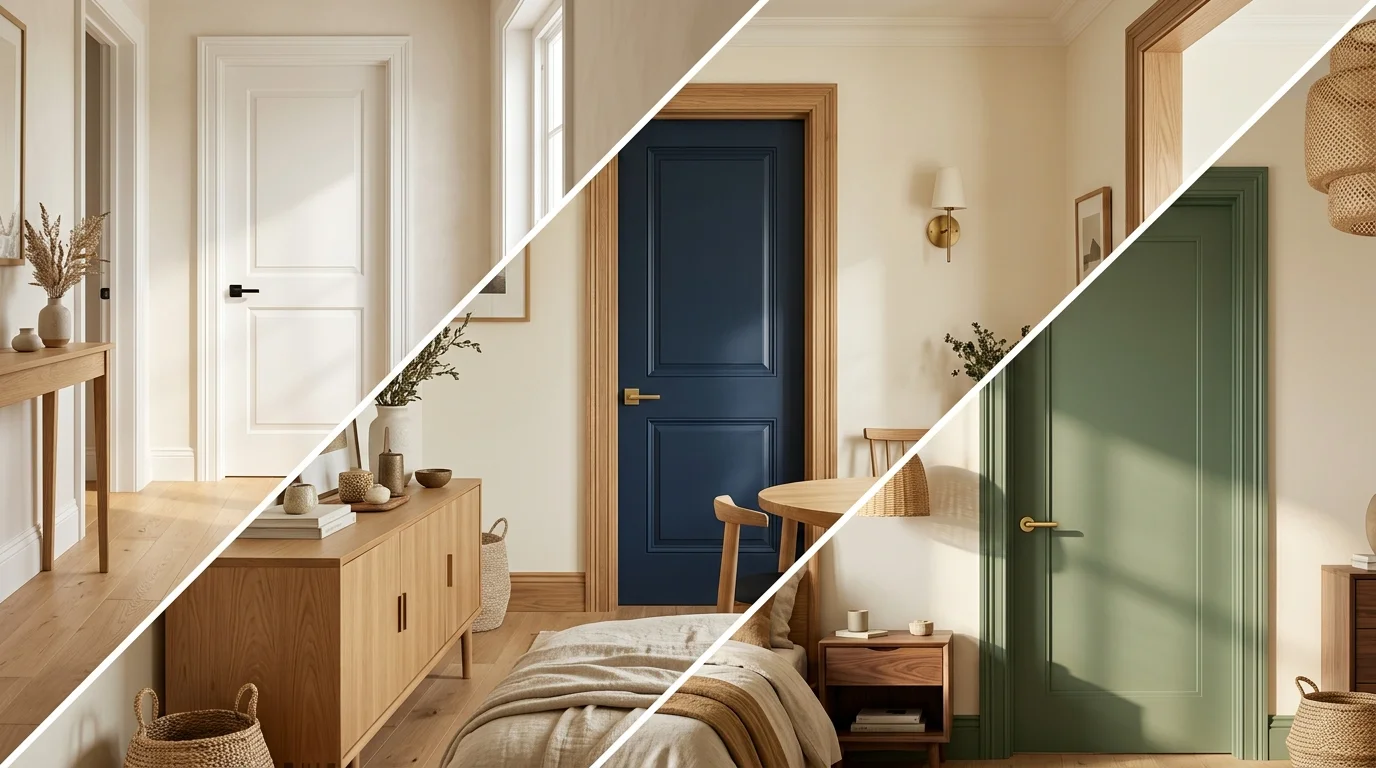
Interior doors can be more than simple passages between rooms—they can add personality and style to your home. Choosing the right interior door colors can create a polished look, highlight your decor, and make each space feel more inviting. From soft neutral shades to bold and dark interior door colors, there are many options to explore. These interior door paint colors can complement white walls, warm wood tones, modern furniture, or colorful accents. Whether you want a timeless update or a fresh modern look, these interior door color ideas will help you find the perfect shade for your home.
1. Classic Crisp White
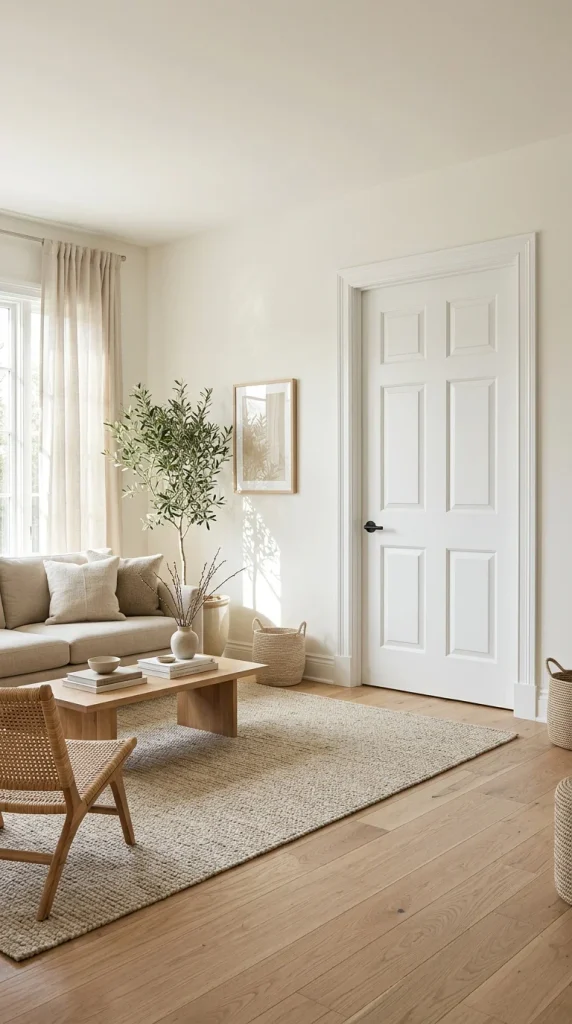
White interior doors are a timeless choice that works with almost any decorating style. They make rooms feel clean, bright, and open without adding visual heaviness. Crisp white doors look especially beautiful with neutral walls, natural wood, and simple furniture. They are also easy to coordinate when your home has different room styles.
2. Warm Cream
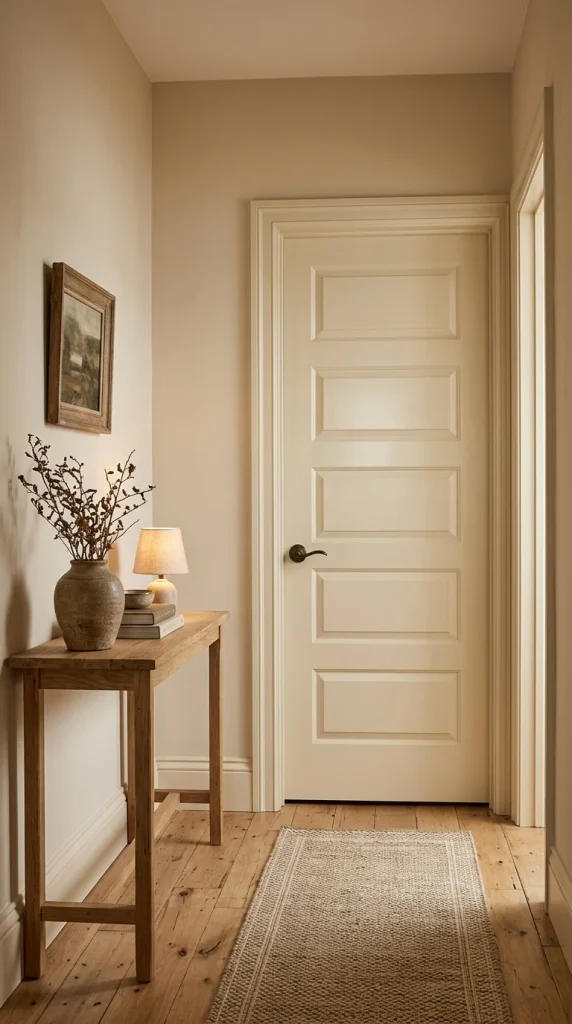
Warm cream doors bring a softer and cozier feel than bright white. This shade works beautifully with beige walls, warm wood floors, and traditional or farmhouse decor. Cream interior door colors can make a home feel welcoming without looking too formal. Choose a warm undertone for a comfortable and balanced look.
3. Soft Greige
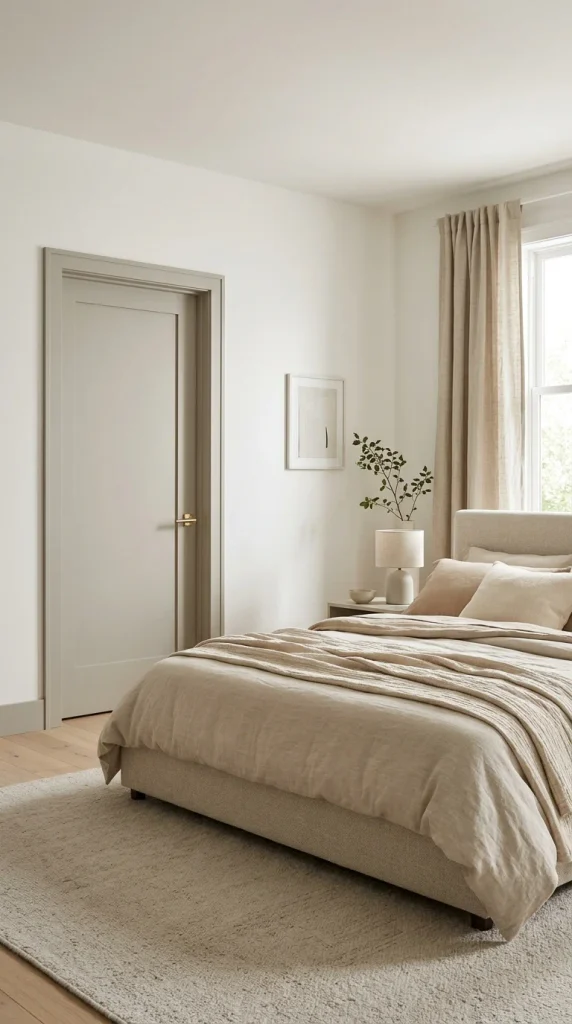
Soft greige combines the warmth of beige with the modern feel of gray. It is a versatile choice for homeowners who want something more interesting than white but still neutral. Greige doors pair well with cream walls, natural textures, and modern furniture. They can create a calm and sophisticated flow throughout the home.
4. Light Beige
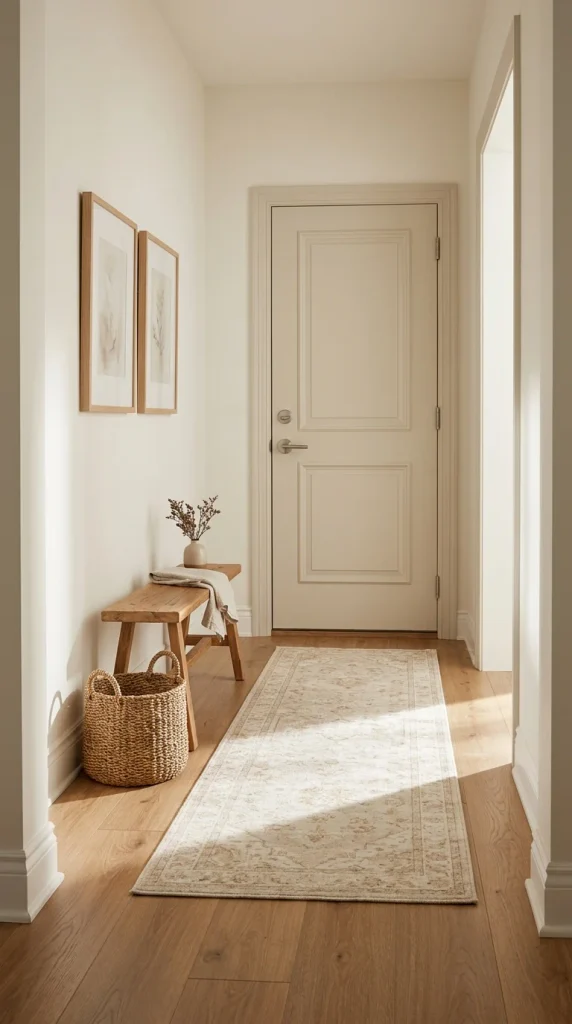
Light beige is a gentle interior door paint color that adds warmth without becoming too noticeable. It works well in bedrooms, hallways, living rooms, and other spaces with neutral decor. Pair it with white trim for a subtle contrast or use similar warm tones throughout the room. This shade is especially useful for creating a relaxed and timeless atmosphere.
5. Elegant Taupe

Taupe gives interior doors a refined look while keeping the overall room soft and inviting. Its mix of gray and brown works beautifully with wood, cream, white, and earthy colors. Taupe doors are a great choice for modern, transitional, and classic interiors. They add depth without feeling too bold or dramatic.
6. Charcoal Gray
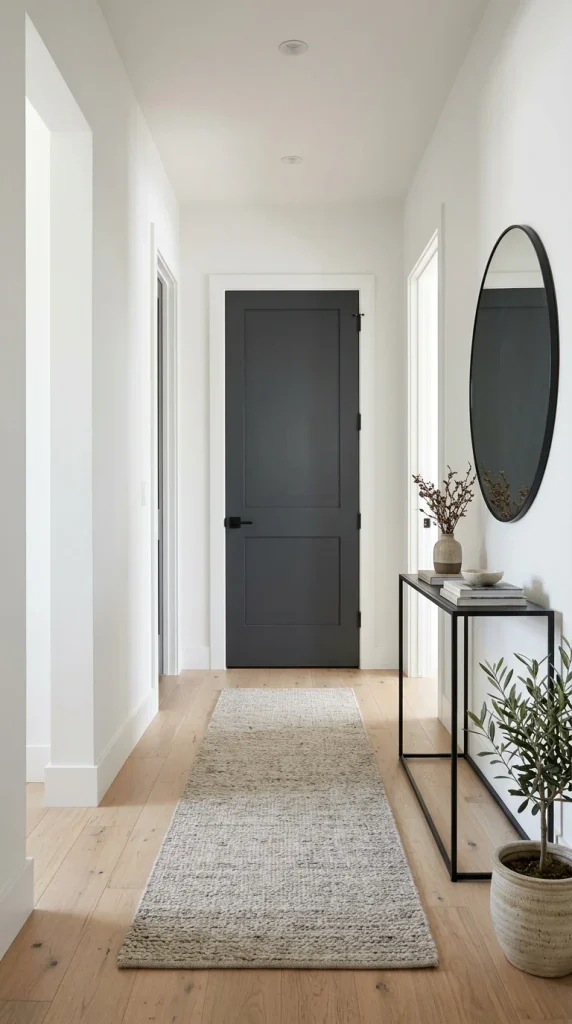
Charcoal gray doors can give a room a strong and stylish focal point. This deeper shade looks beautiful against white, light beige, and soft gray walls. It works particularly well in modern and contemporary homes where a little contrast is needed. Use charcoal on selected doors when you want a sophisticated look without choosing pure black.
7. Deep Black

Black interior doors create instant contrast and can make simple spaces feel more polished. They look especially striking with white walls, light flooring, brass hardware, and natural wood accents. For a balanced look, repeat small black details elsewhere in the room. A matte finish can give the doors a modern and elegant appearance.
8. Navy Blue
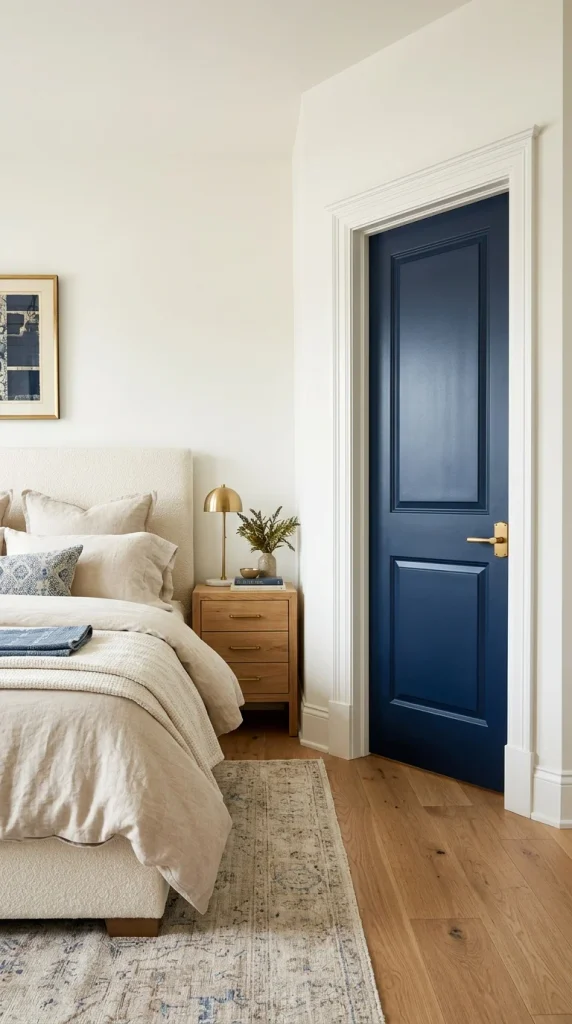
Navy blue is one of the best interior door colors for adding personality while keeping a classic feel. Its deep tone works well with white walls, warm wood, brass hardware, and soft neutral furnishings. Navy doors can look beautiful in bedrooms, offices, laundry rooms, and hallways. They bring color into the space without feeling overly bright.
9. Dusty Blue
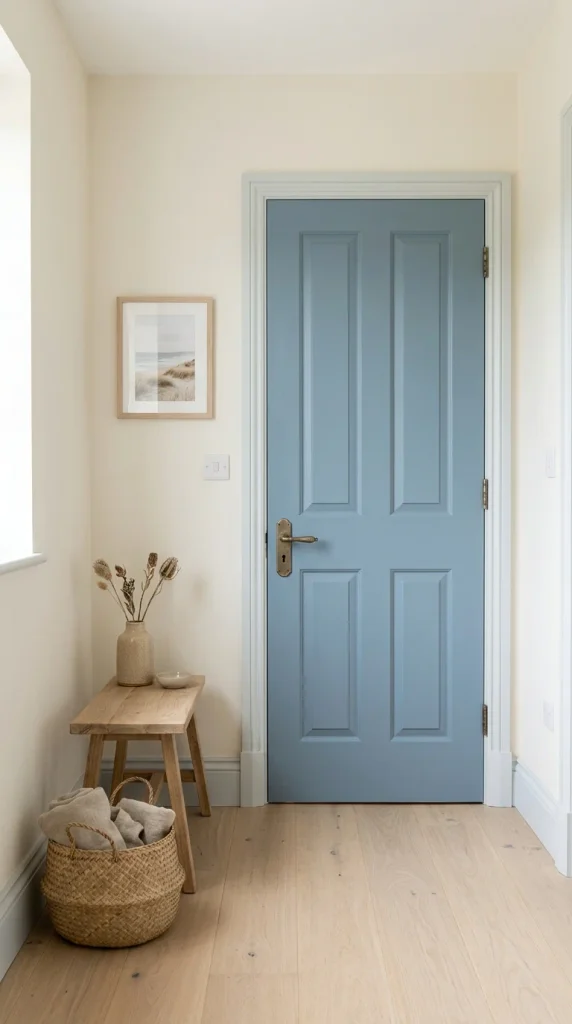
Dusty blue offers a softer alternative to dark navy and works beautifully in relaxed interiors. Its muted appearance creates a calm feeling that suits bedrooms, bathrooms, and cozy living spaces. Pair it with white trim, light wood, and cream accessories for a fresh look. This color is also easy to blend with other soft neutral shades.
10. Sage Green
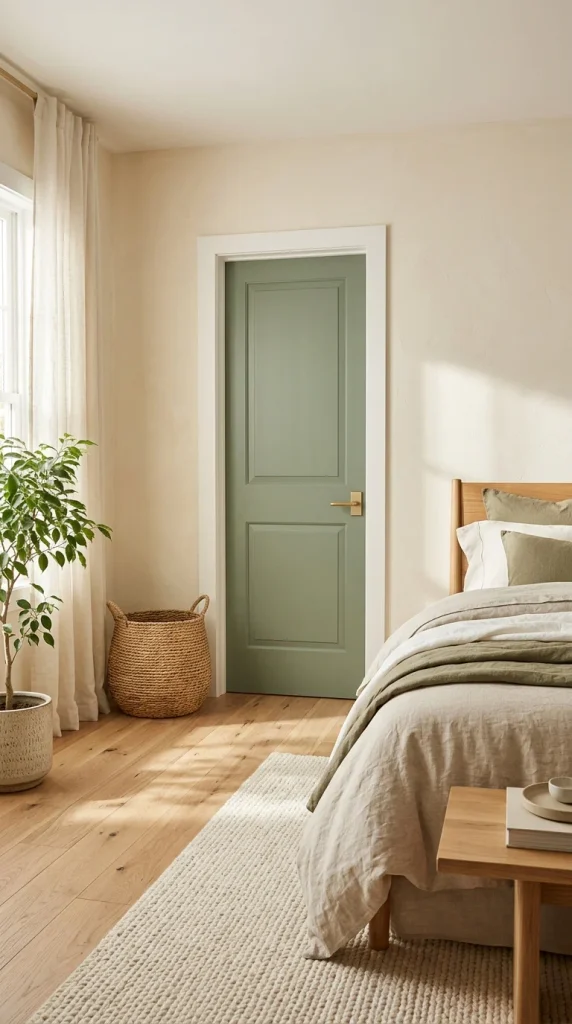
Sage green doors bring a natural and peaceful feeling into the home. This soft green works especially well with warm whites, beige walls, natural wood, and woven textures. It can add color while still feeling subtle and timeless. Sage is a lovely choice for bedrooms, kitchens, home offices, and cottage-inspired spaces.
11. Olive Green
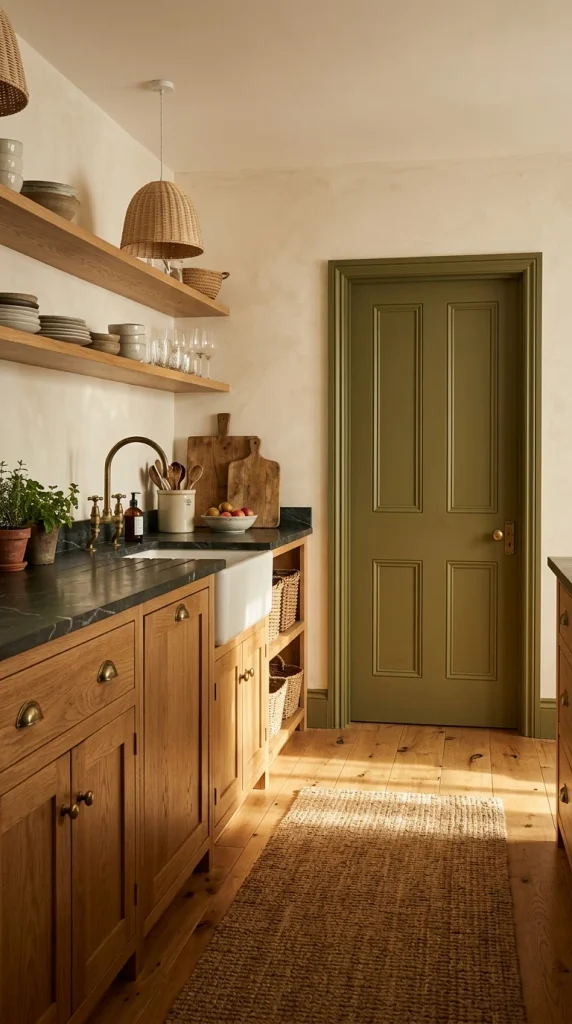
Olive green gives interior doors a richer and earthier appearance. It works beautifully with cream, tan, brown, brass, and natural wood finishes. This shade is ideal when you want a warm color that feels grounded rather than bright. Use it on one or two doors to create a stylish accent without overwhelming the room.
12. Forest Green
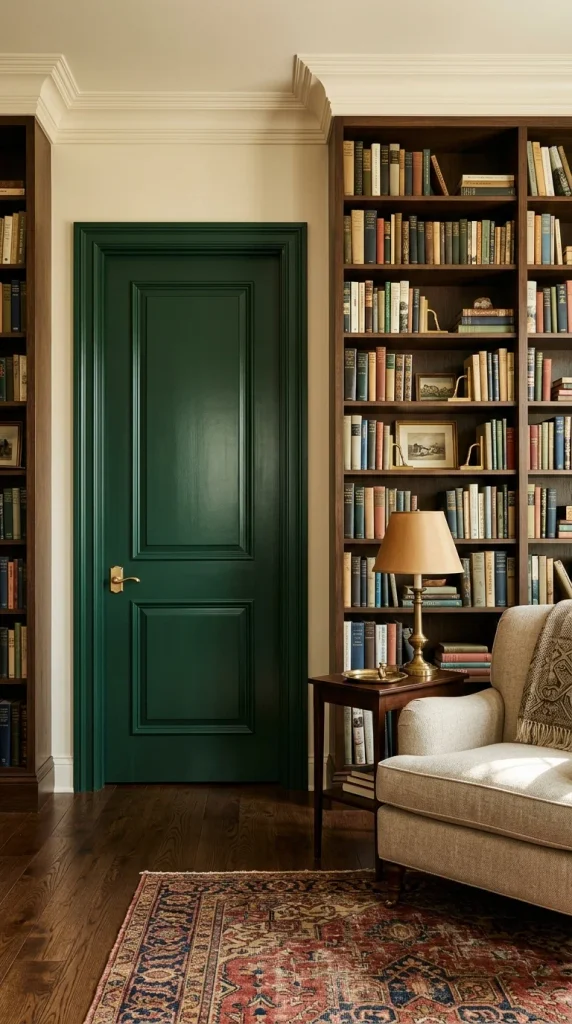
Forest green creates a dramatic yet natural look that works well in traditional and modern homes. Its deep tone can make a plain doorway feel like an intentional design feature. Pair it with warm white walls, wood flooring, and simple brass or black hardware. Forest green is especially attractive on doors leading to offices, studies, or bedrooms.
13. Muted Terracotta
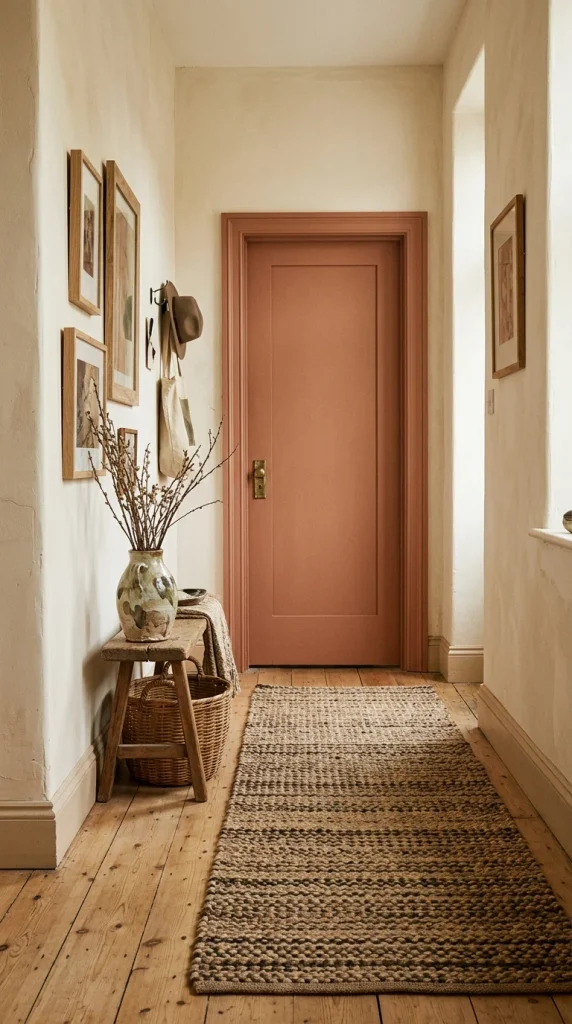
Muted terracotta adds warmth and personality through a soft earthy color. It works nicely with cream walls, natural wood, beige furniture, and handmade decor. Unlike brighter orange tones, muted terracotta feels comfortable and sophisticated. It can be a beautiful choice for a kitchen, hallway, or creative space that needs a warm accent.
14. Warm Rust
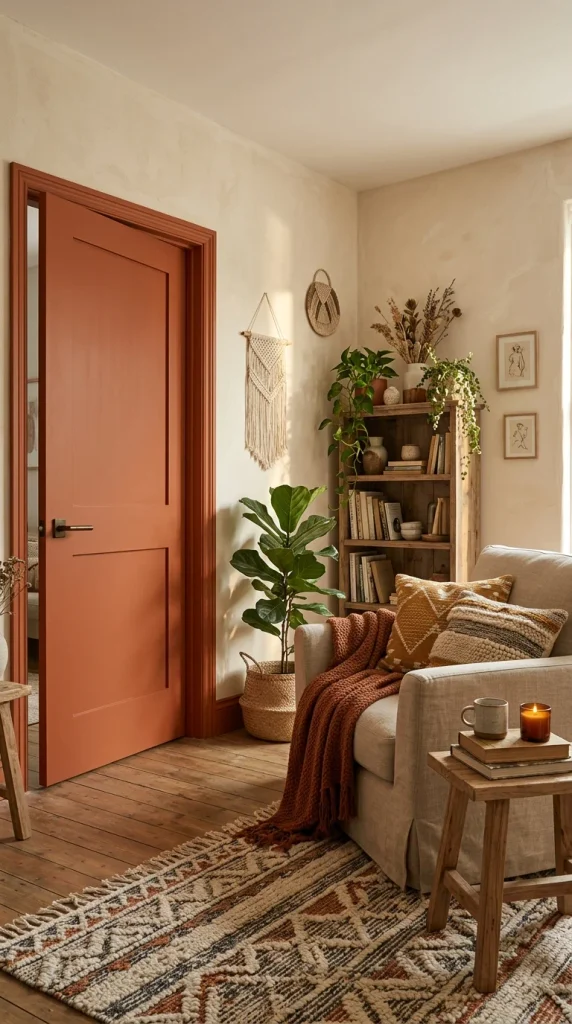
Warm rust is a bold but welcoming color that can give interior doors a cozy character. It pairs naturally with cream, tan, brown, olive, and other earthy shades. This color works especially well in homes with rustic, eclectic, or bohemian decor. Use it on a statement door when you want the room to feel warm and expressive.
15. Soft Blush Pink
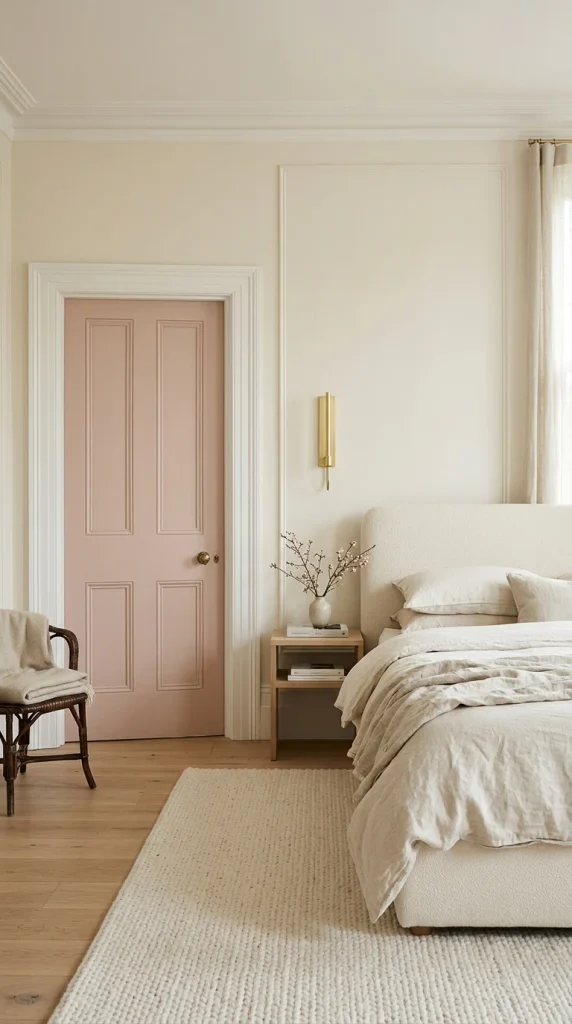
Soft blush pink can add a delicate touch of color without making a room feel overly bright. It works beautifully with white, cream, light gray, natural wood, and gold or brass accents. Blush doors are especially charming in bedrooms, dressing areas, and creative spaces. Choose a muted pink for a more grown-up and sophisticated appearance.
16. Deep Burgundy
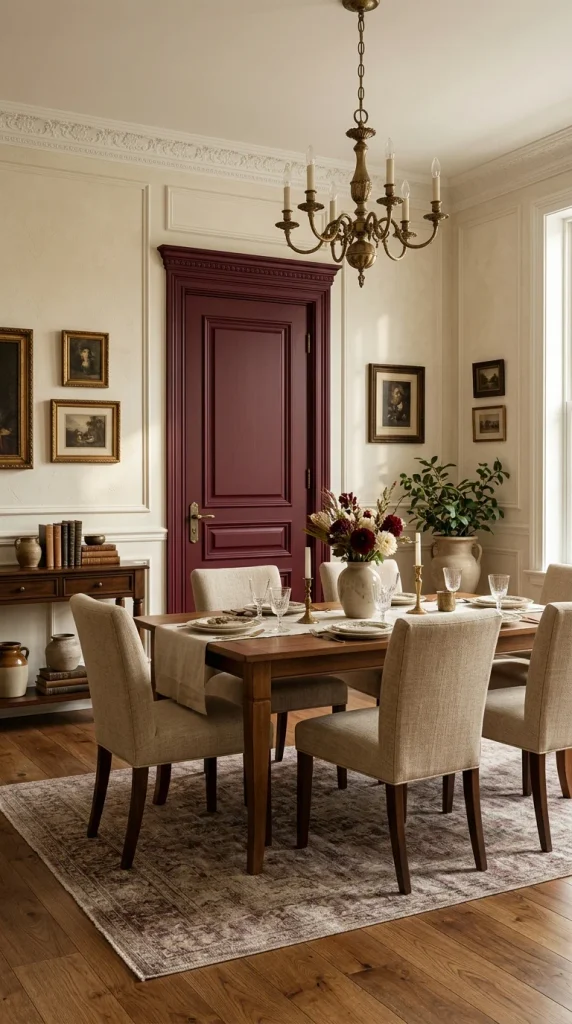
Deep burgundy gives interior doors a rich and dramatic appearance. Its warm red tone works well with cream, beige, dark wood, and antique-inspired finishes. Burgundy can make a doorway feel elegant and intentional, especially in dining rooms or traditional spaces. Because it is strong, using it on one feature door can create enough impact.
17. Moody Chocolate Brown
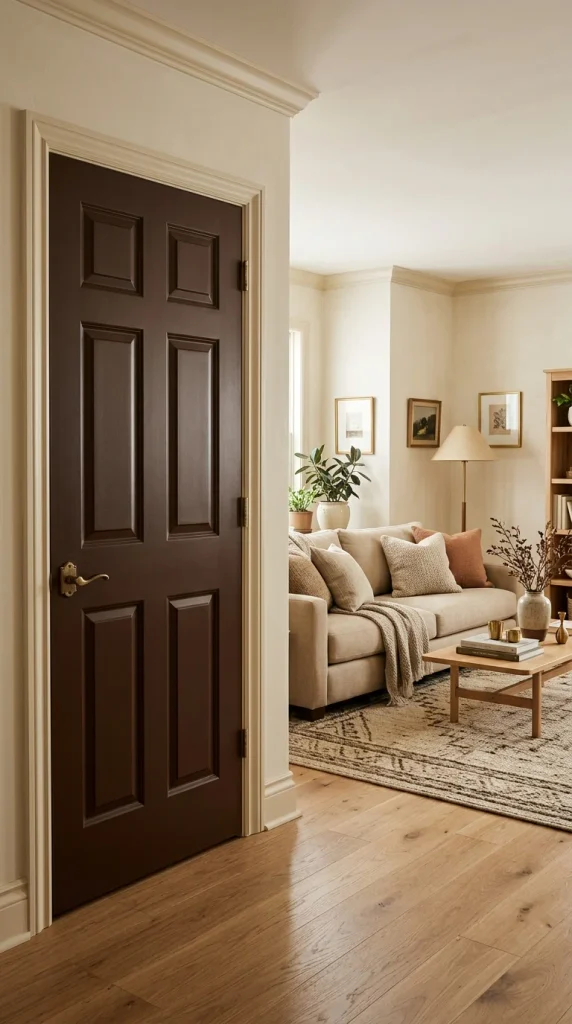
Chocolate brown doors bring warmth and depth to rooms while creating a connection with natural wood tones. This color works beautifully with cream walls, beige fabrics, warm lighting, and brass hardware. It is a good alternative to black when you want a darker door with a softer feeling. The result can feel cozy, classic, and inviting.
18. Natural Wood Stain

Natural wood doors add warmth, texture, and character without relying on painted color. Light oak can create an airy look, while medium or darker stains offer a richer appearance. Wood doors work well with neutral walls, modern spaces, farmhouse interiors, and organic decor. Choose a stain that complements the existing flooring and furniture for a connected look.
19. Two-Tone Painted Doors

Two-tone doors offer a creative way to combine two complementary shades. You can use a neutral color with a deeper accent or pair two soft tones for a subtle effect. This approach can make a plain door feel more custom and decorative. Keep the colors connected to the room’s existing palette so the door feels intentional rather than distracting.
20. Bold Emerald Green
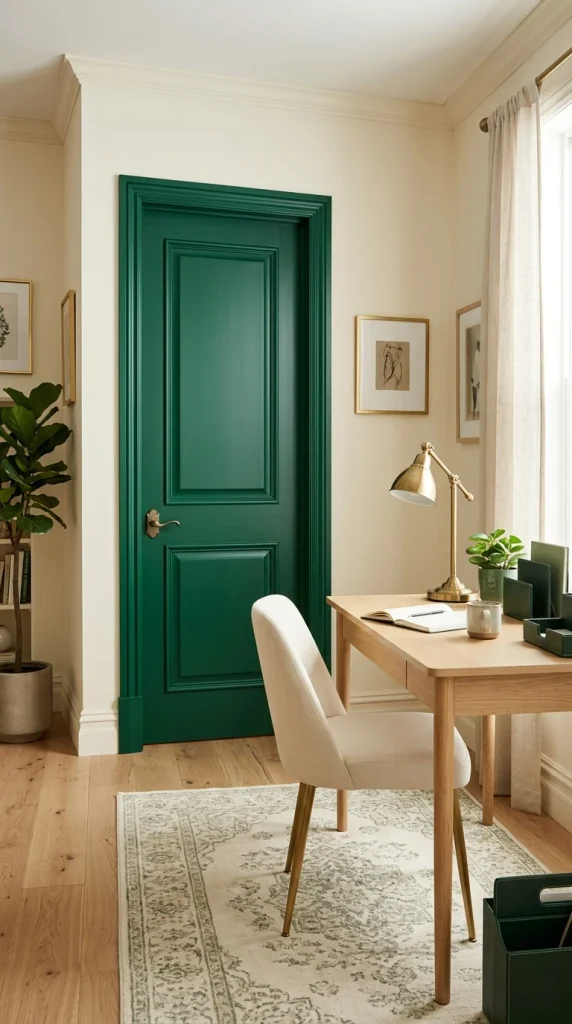
Emerald green is a lively choice for homeowners who want their interior doors to stand out. Its rich color looks beautiful with warm white, cream, brass, and natural wood. An emerald door can become a memorable focal point in an otherwise neutral room. Use it where you want a strong dose of personality, such as a study, entryway, or bedroom.
21. Classic Dark Gray
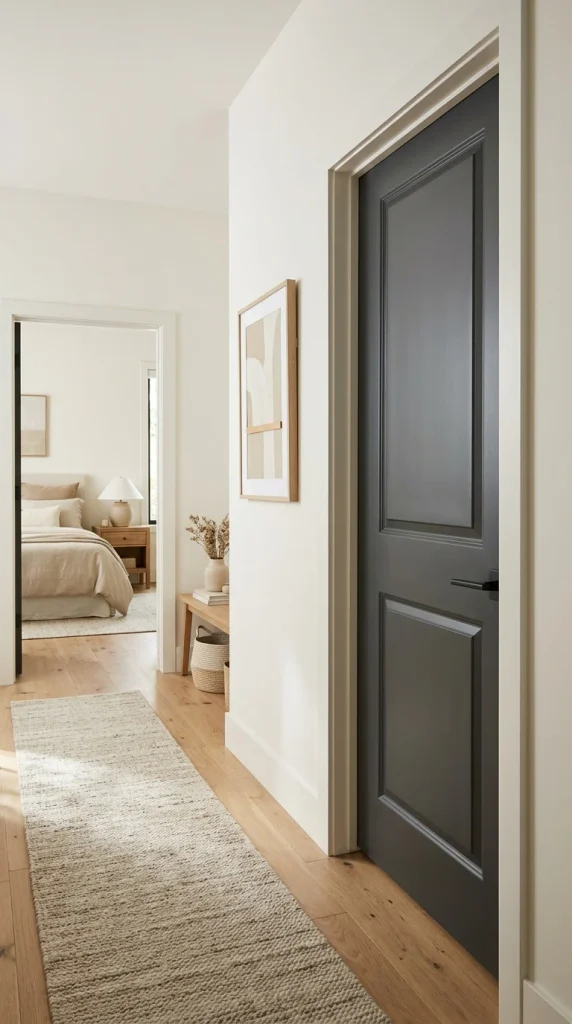
Classic dark gray offers the drama of a deep color while remaining slightly softer than black. It works with many interior styles and can easily complement white walls, wood flooring, and neutral furniture. Dark gray doors are especially useful when you want contrast without making the room feel too heavy. Use matching hardware and trim to create a clean, finished appearance.
Conclusion
The right interior door colors can make a noticeable difference in how your home feels and looks. Neutral shades create a calm and timeless style, while darker or brighter colors can add contrast and personality. Consider your wall color, flooring, furniture, and natural light before choosing a door paint color. With the right shade, even a simple interior door can become a beautiful part of your home’s design.
Frequently Asked Questions
1. What is the most popular color for interior doors?
White remains one of the most popular choices because it is bright, timeless, and easy to match with different decor styles. However, gray, greige, black, navy, and soft green are also popular for homeowners who want more character.
2. Should interior doors match the walls?
Interior doors do not have to match the walls. Matching colors can create a seamless appearance, while contrasting colors can make the doors stand out as a design feature. Choose based on the overall style and amount of contrast you want.
3. What interior door colors work best with white walls?
Almost any shade can work with white walls. Black, charcoal, navy, sage green, natural wood, and warm gray create attractive contrast, while cream and beige offer a softer and more subtle appearance.
4. Are dark interior doors a good idea for small rooms?
Yes, dark doors can work in small rooms when used thoughtfully. They can add definition without making the entire space feel dark. Keep the surrounding walls, ceiling, and larger furniture pieces light to maintain an open feeling.
5. What is the best finish for painted interior doors?
A satin or semi-gloss finish is usually practical for interior doors because it is easier to clean and more resistant to everyday wear. A matte finish can look elegant, but it may require more care in busy areas.
6. Should interior doors match the trim?
They can match, but they do not have to. Matching doors and trim create a classic, coordinated look, while contrasting the door with the trim can make the doorway more noticeable and modern.
7. How can I choose the right interior door color?
Start by looking at the existing wall color, flooring, furniture, and hardware in the room. Choose a shade that complements these elements rather than competing with them. Testing a small paint sample in different lighting is also helpful before painting the entire door.