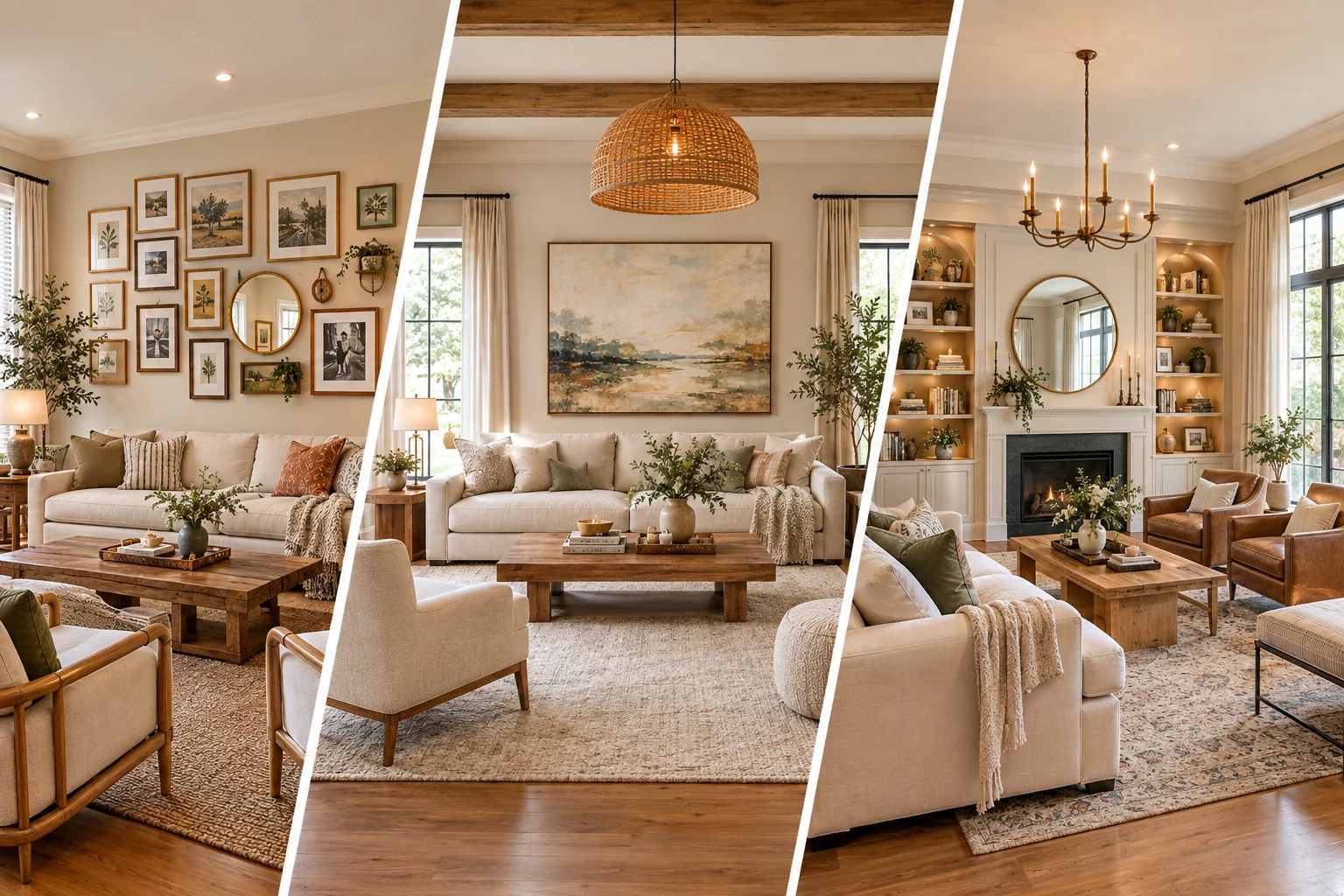
A blank wall can quickly become a beautiful focal point with simple, thoughtful wall decor. Start with your sofa, interior style, and room decor, then choose pieces that reflect your personality and personal style. Framed artwork, mirrors, floating shelves, gallery walls, and botanical decor can add warmth, texture, and visual appeal without making the room feel crowded. For extra character, try wallpaper, wainscoting, architectural details, or accent lighting to create depth. I find that mixing artwork, photography, decorative baskets, greenery, and vintage signage gives a living room a relaxed and collected look. Keep color, patterns, and visual balance in mind so every piece feels connected. With the right wall arrangements and decorative elements, even a boring wall can become a welcoming part of your home interior.
1. Gallery Wall Displays
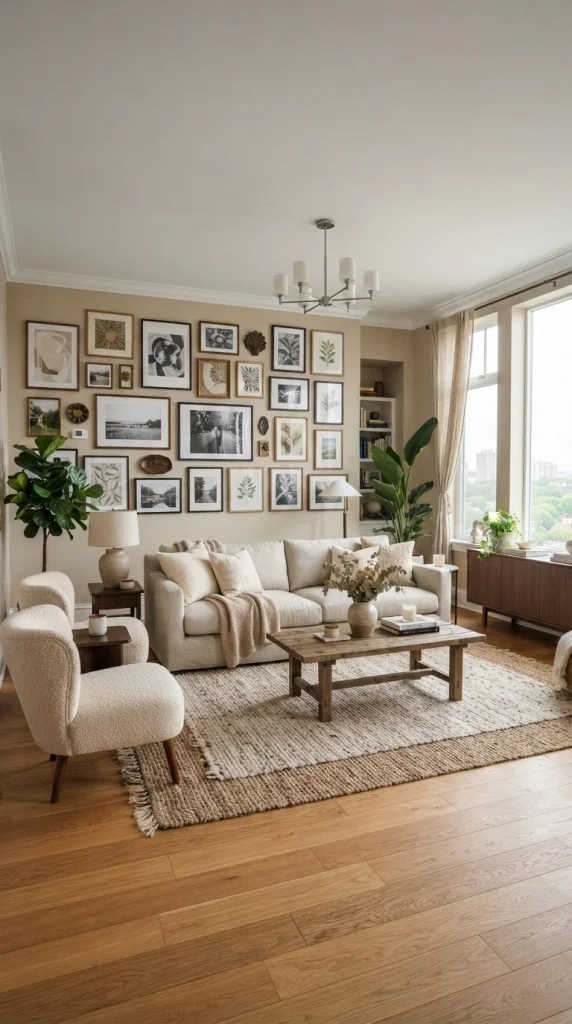
A gallery wall is an easy way to give a blank living room wall a personal touch. Mix framed artwork, family photos, prints, and small decorative pieces for a collected look. Keep a similar color theme so the display feels connected. You can use matching frames for a clean and modern style. Different frame shapes can create a more relaxed and creative look. Leave equal spacing between pieces to keep the arrangement neat. Place the center of the gallery near eye level for comfortable viewing. This simple setup can quickly turn an empty wall into a beautiful focal point.
2. Oversized Statement Artwork
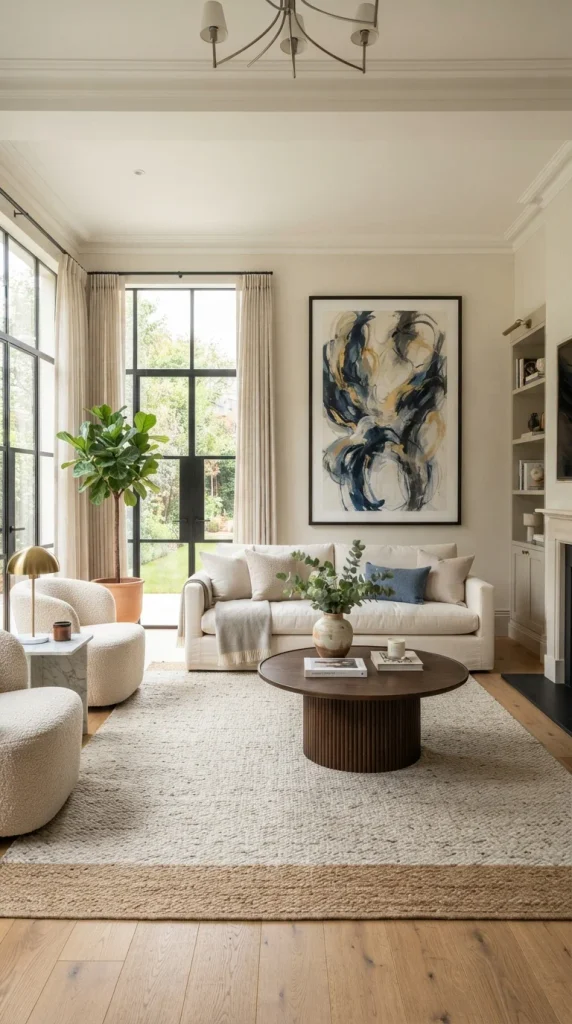
Large artwork can make a strong impact without needing many decorations. Choose one piece that fits the colors and mood of your living room. An oversized painting works especially well above a sofa or console table. Keep the surrounding wall fairly simple so the artwork remains the main feature. Soft landscapes can create a calm feeling, while abstract designs can add a modern touch. Make sure the artwork is wide enough to relate visually to the furniture below it. A properly sized frame can also make the room feel more polished. This approach is simple, stylish, and easy to update.
3. Floating Shelf Styling
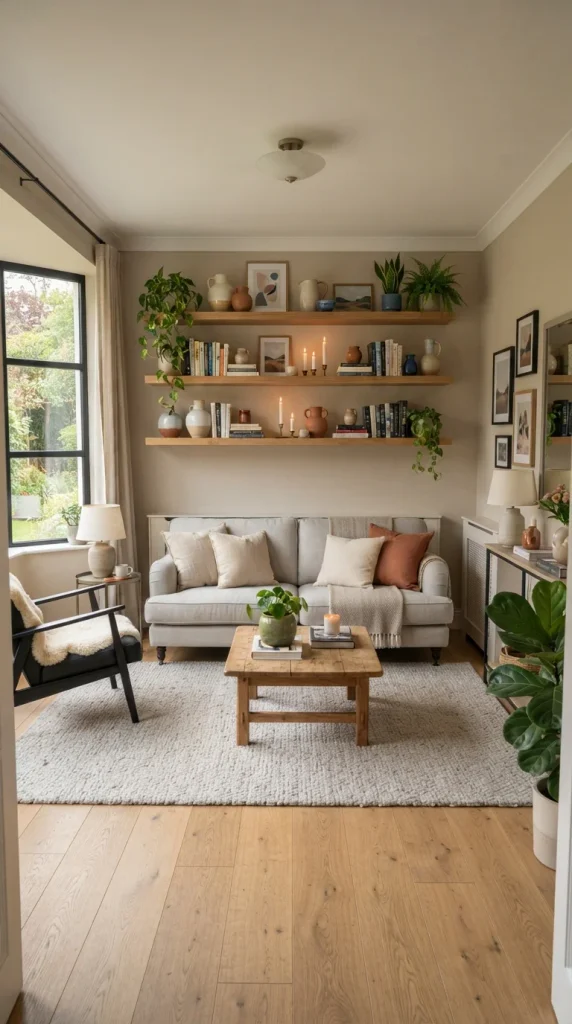
Floating shelves offer both decoration and useful display space. Use them to show books, small artwork, vases, candles, and personal accessories. Keep some empty space between objects so the shelves do not look crowded. Mixing different heights creates a more natural arrangement. Wooden shelves can add warmth, while simple white shelves suit a modern room. Try placing two or three shelves in a balanced vertical arrangement. Change the displayed pieces with the seasons if you enjoy refreshing your decor. This makes a blank wall useful while keeping the room attractive.
4. Large Living Room Mirrors
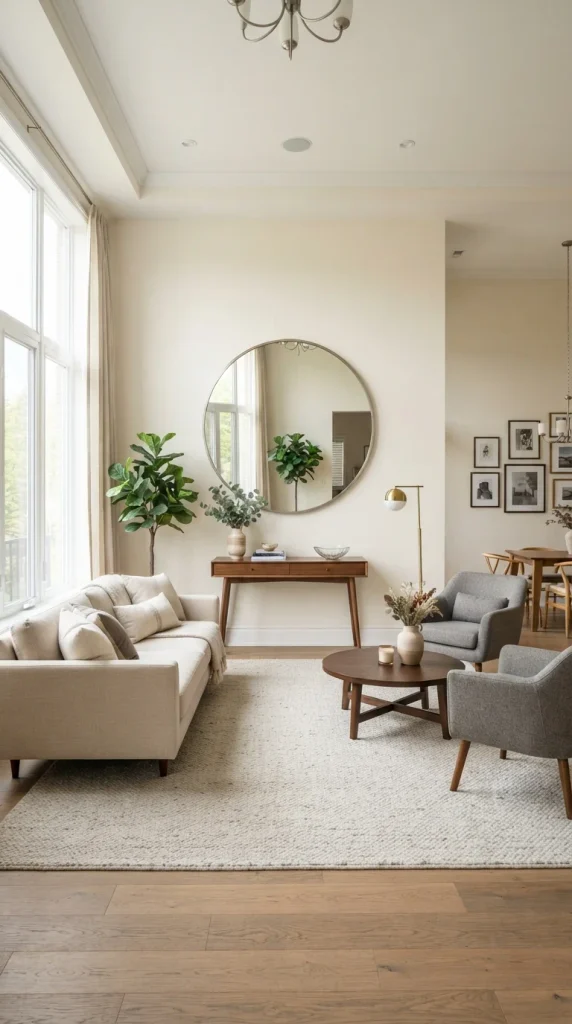
A large mirror can make a living room feel brighter and more open. Place it where it can reflect natural light or an attractive part of the room. A round mirror can soften a room filled with straight furniture lines. A rectangular mirror can create a more structured and traditional look. Choose a frame that works with your existing furniture and finishes. Avoid placing the mirror where it reflects clutter or an unattractive view. One well-positioned mirror can often replace several smaller decorations. It adds both practical function and visual interest to the wall.
5. Cozy Family Photo Wall
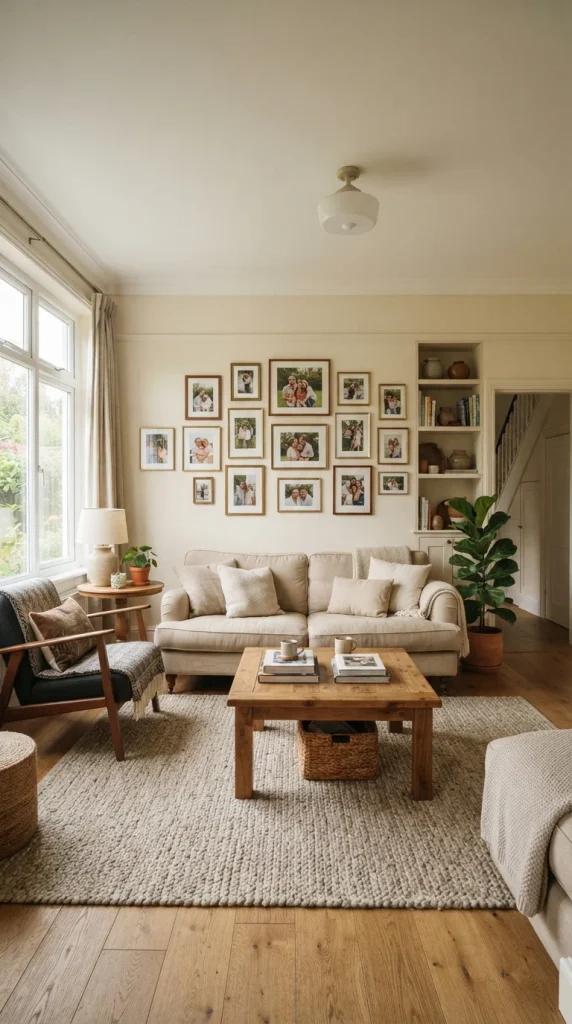
A family photo wall can make the living room feel warm and personal. Choose photographs that share similar tones for a more organized appearance. Black-and-white pictures work especially well with simple modern frames. You can also mix travel photos, family moments, and meaningful memories. Arrange the frames before hanging them to find a layout you like. Keep the display connected to the furniture beneath it. Avoid using too many photographs if the wall is small. A thoughtful collection can turn an empty wall into a meaningful part of the home.
6. Modern Abstract Wall Art
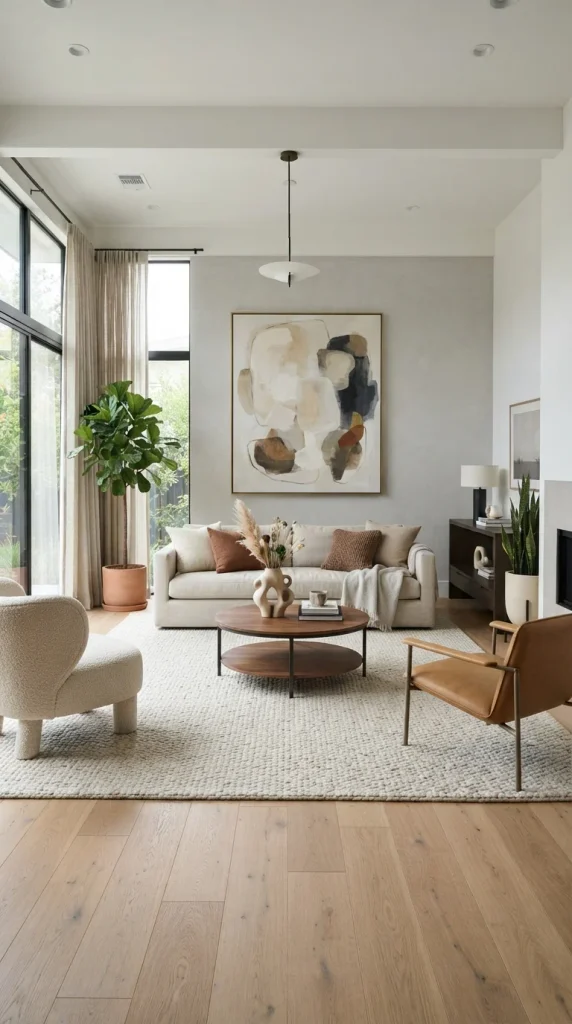
Abstract wall art can bring color, movement, and personality to a simple living room. Choose artwork that repeats one or two colors already found in the space. Soft neutral artwork works well in calm interiors, while stronger colors can create a bold accent. Large abstract pieces can stand alone above a sofa or cabinet. Smaller pieces can be grouped into a balanced arrangement. Consider the shapes of your furniture when choosing the artwork. Simple frames can keep the overall look clean and modern. The goal is to create interest without making the wall feel too busy.
7. Textured Accent Wall
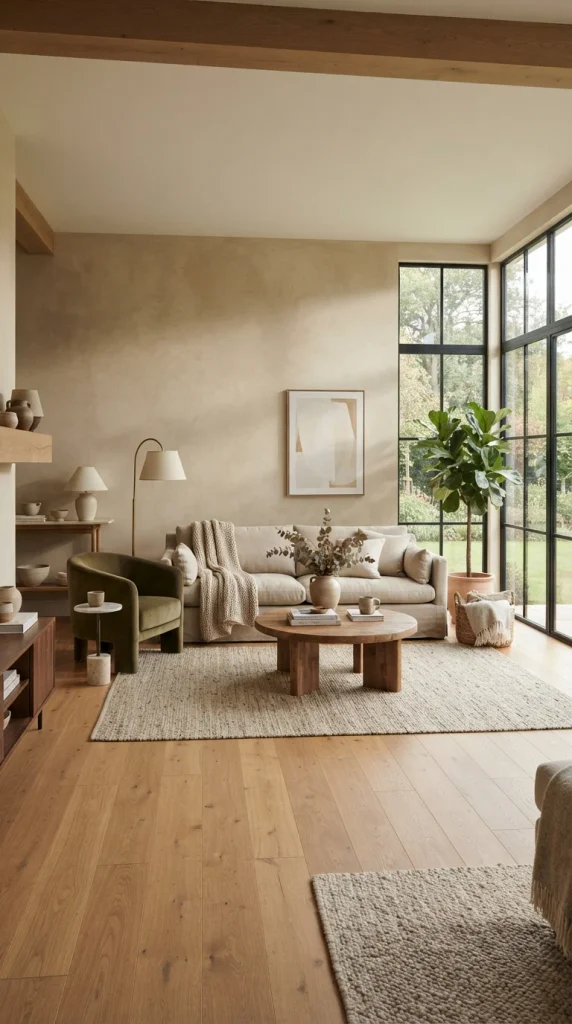
A textured accent wall can add depth without relying on many decorative objects. Wood panels, limewash finishes, plaster effects, or subtle wall treatments can change the feel of the room. Choose one wall as the main feature instead of applying texture everywhere. Neutral colors are useful when you want the texture to remain subtle. A darker shade can create a stronger focal point behind a sofa or television. Keep other decorations simple so the wall remains easy to appreciate. Good lighting can highlight the texture throughout the day. This is a useful option when you want the wall itself to become the artwork.
8. Elegant Wall Paneling
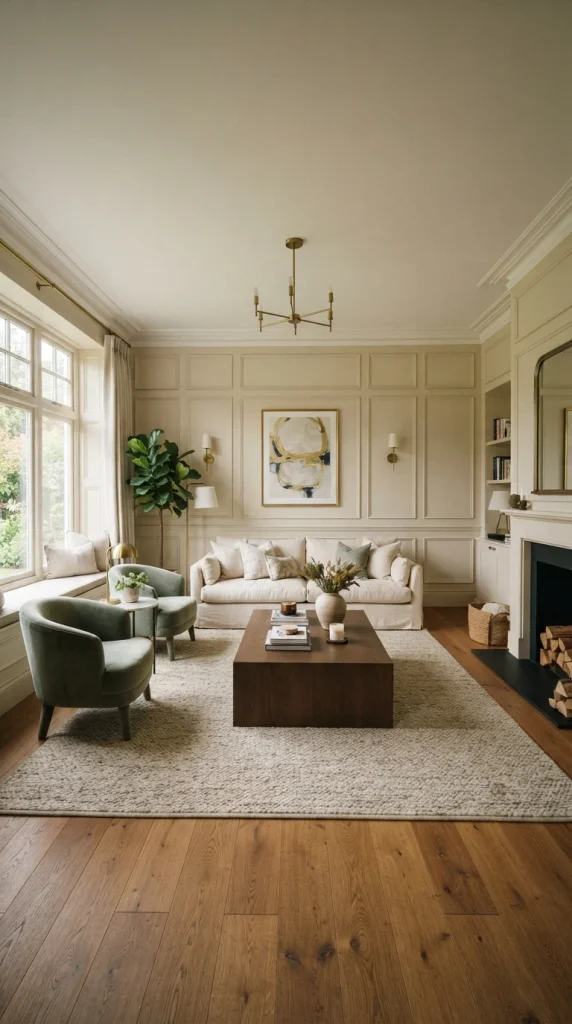
Wall paneling can give a living room a more finished and architectural appearance. Simple rectangular panels work well with both classic and modern interiors. Paint the panels the same color as the wall for a subtle effect. For more contrast, choose a slightly darker or lighter shade. Paneling looks especially attractive behind a sofa, fireplace, or television. Keep the surrounding accessories simple to avoid competing with the pattern. Proper spacing helps the wall feel balanced and intentional. This treatment can make an ordinary wall look more detailed and sophisticated.
9. Decorative Wall Baskets
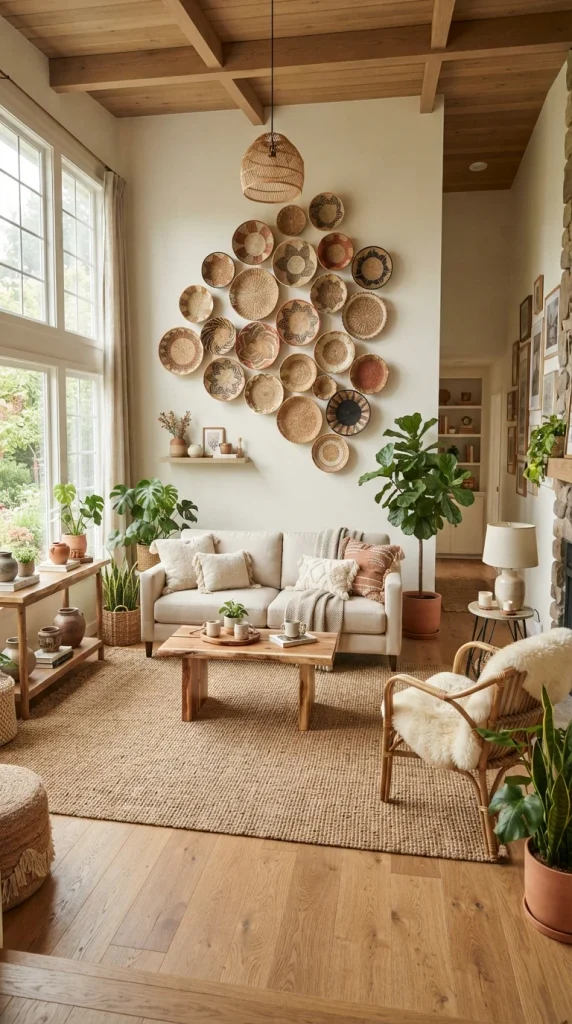
Decorative baskets bring natural texture and warmth to a living room wall. Choose baskets in different sizes and arrange them as a loose collection. Neutral woven materials work well with coastal, boho, rustic, and relaxed interiors. You can keep the colors similar while varying the shapes for visual interest. Place the largest basket near the center and build outward with smaller pieces. Make sure the arrangement feels balanced rather than perfectly symmetrical. Baskets are lightweight and can be easier to change than permanent wall treatments. They are a simple way to add character to an empty wall.
10. Botanical Wall Displays
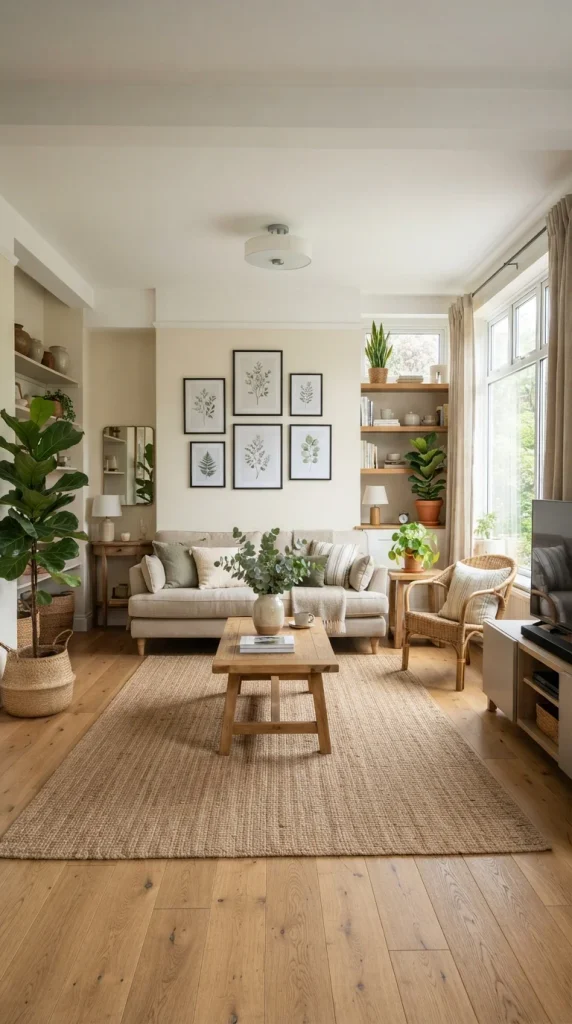
Botanical displays can bring a fresh and natural feeling into the living room. Use framed botanical prints, preserved leaves, or carefully placed artificial greenery. Choose plants or artwork that match the amount of natural light in the space. Green tones work beautifully with wood, cream, beige, and other natural colors. A vertical arrangement can make a low wall feel taller. Keep the display simple so the greenery does not overwhelm the room. You can also place small plants on nearby shelves to connect the wall with the rest of the decor. This creates a calm and welcoming atmosphere.
11. Statement Wall Clock
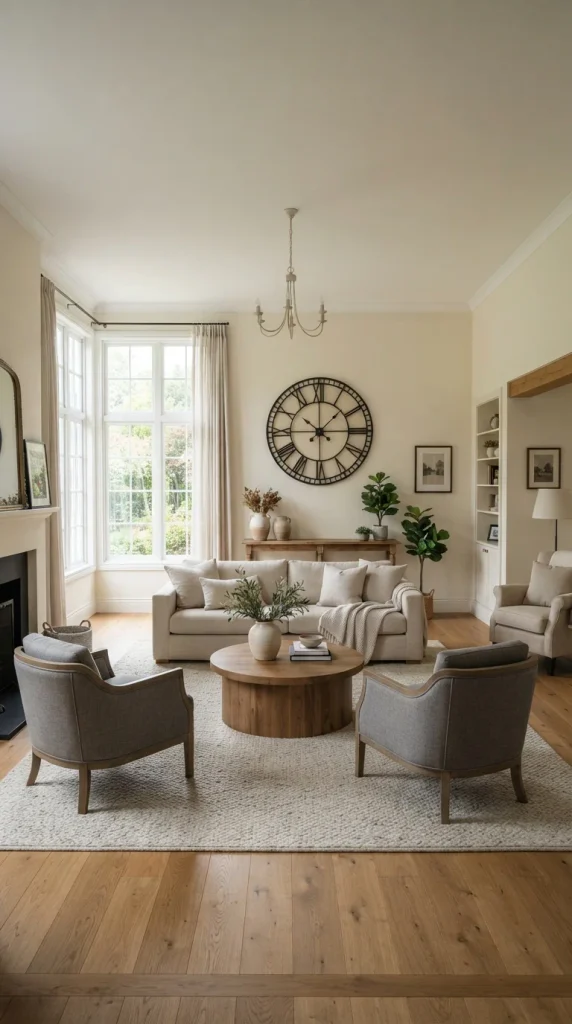
A large wall clock can act as both useful decor and a strong focal point. Choose a design that matches the furniture and overall style of your living room. Wooden clocks add warmth, while metal designs can create a more modern appearance. A large clock works well above a console, sofa, or empty section of wall. Make sure the numbers and hands are easy to see from across the room. Avoid surrounding it with too many small objects. Giving the clock enough space allows its shape to stand out. It is a practical choice for a wall that needs one strong feature.
12. Vintage Artwork Collection
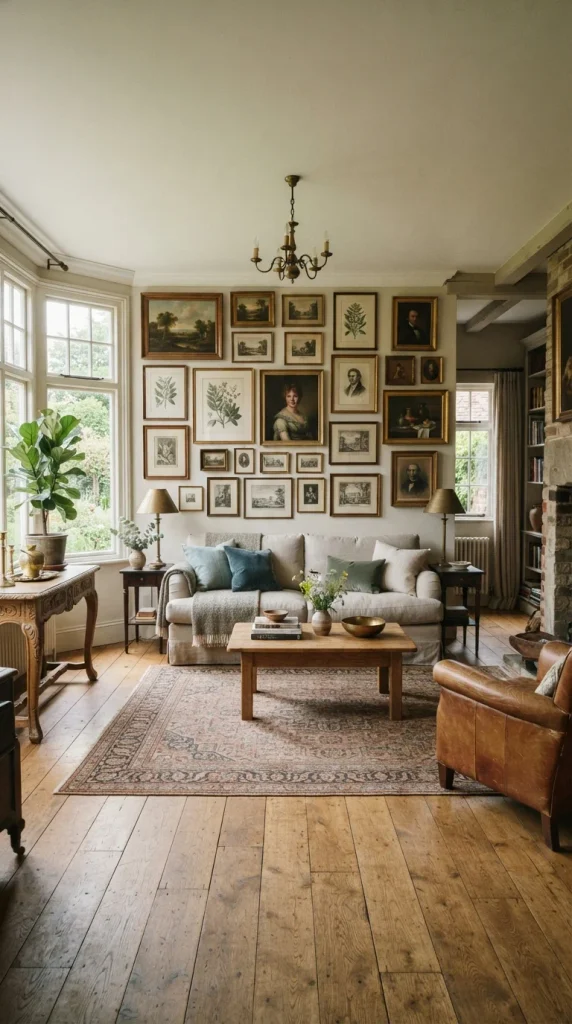
Vintage artwork can give a living room a sense of history and personality. Look for old-style paintings, botanical prints, maps, or decorative signs that suit your space. You do not need every piece to match perfectly. Similar colors or frame finishes can help different pieces feel connected. Mix larger and smaller artwork to create a relaxed collection. Place the group where it can be seen comfortably from the main seating area. Avoid filling every inch of the wall around the collection. A few carefully selected vintage pieces can make the room feel collected rather than overly decorated.
13. Minimalist Frame Arrangements
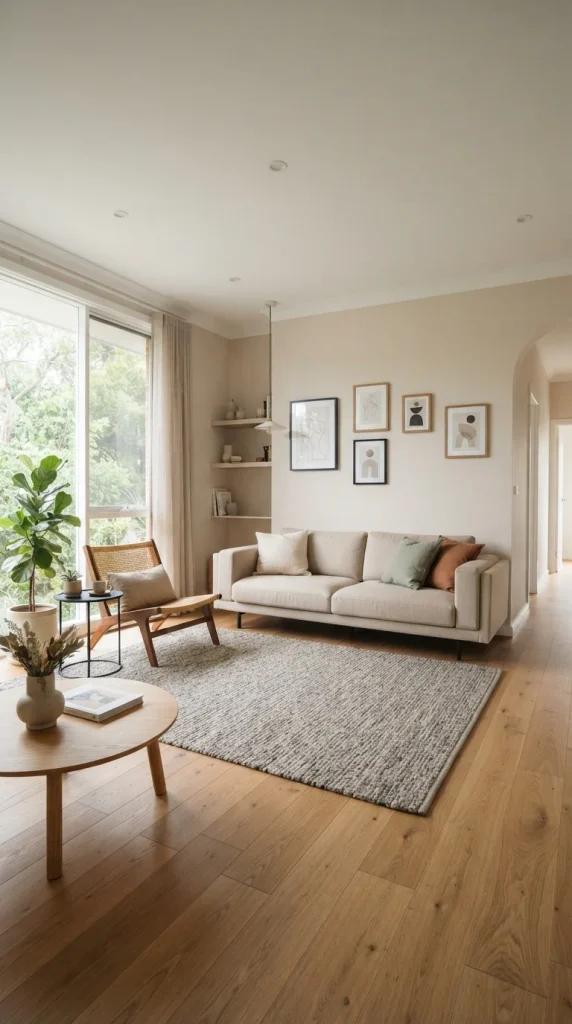
A minimalist frame arrangement works well when you prefer a clean and quiet living room. Choose a few pieces with simple frames and plenty of space around them. Black, white, wood, or neutral frames can keep the look timeless. Use artwork with similar colors for a calm visual effect. A straight arrangement can create a neat and structured appearance. For a softer look, slightly vary the sizes while keeping the spacing consistent. Place the display at a comfortable viewing height. This approach proves that a wall does not need many decorations to feel complete.
14. Fireplace Wall Decor
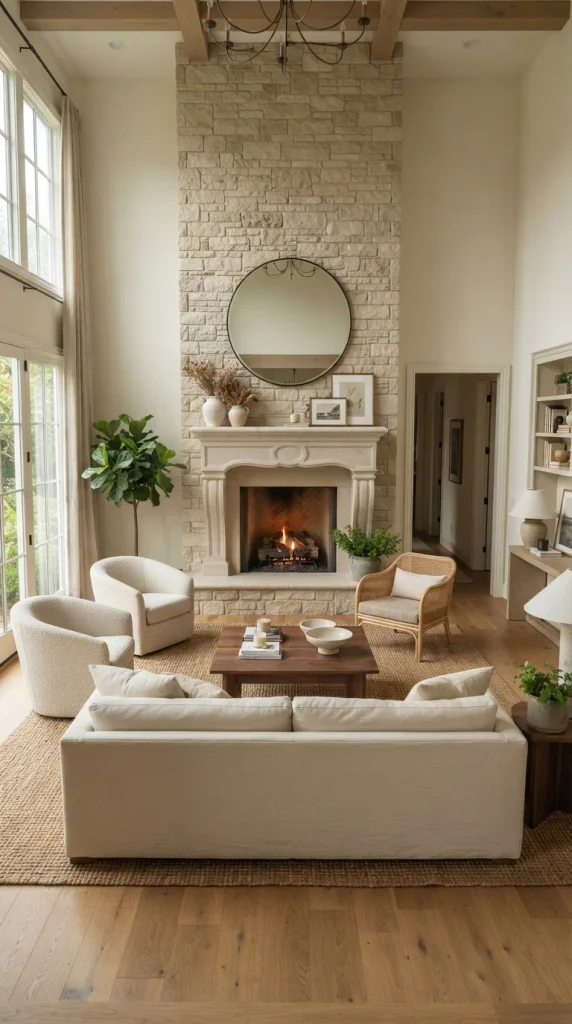
A fireplace wall naturally attracts attention, so the decor should support rather than hide its character. A large mirror or artwork can create a strong feature above the mantel. You can also add a few simple objects such as vases, candles, or small framed pieces. Keep the mantel balanced without filling it from end to end. Natural materials can make the fireplace feel warm and inviting. If the fireplace already has detailed surroundings, choose simpler wall decor. The colors should connect with the seating and other room finishes. A thoughtful arrangement can make the fireplace the natural heart of the living room.
15. Bold Wallpaper Accent
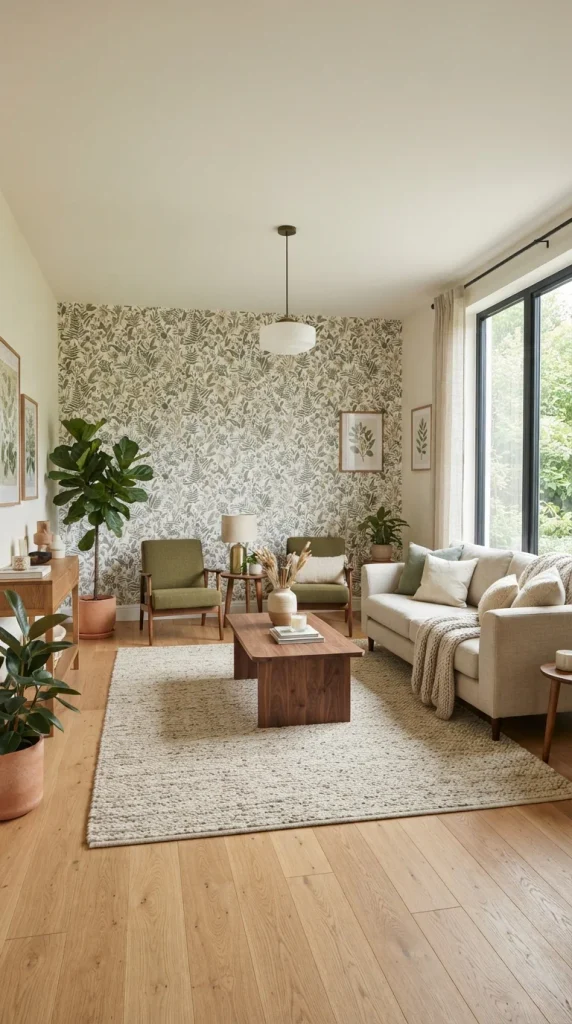
Wallpaper can completely change the mood of a living room without replacing the furniture. Use it on one wall when you want a clear focal point. Soft botanical patterns create a relaxed look, while geometric designs feel more contemporary. Choose colors that connect with your sofa, rug, curtains, or accessories. Large patterns usually work better when the rest of the room is simple. Smaller patterns can add detail without becoming overwhelming. Before installing wallpaper, check how the design looks under both natural and artificial lighting. A carefully selected pattern can give the room depth and personality.
16. Sculptural Wall Decorations
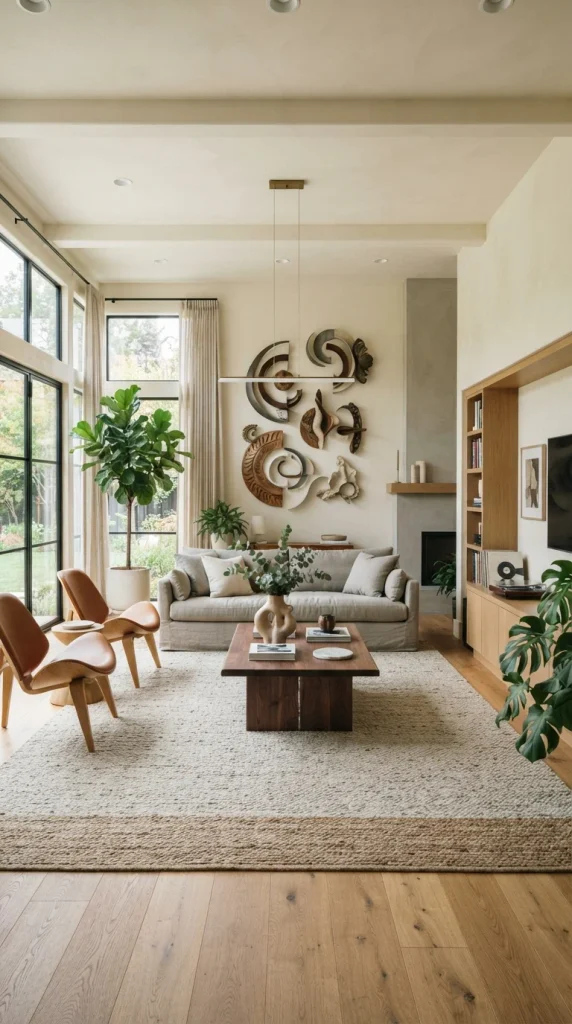
Sculptural wall decorations can add dimension to a room where flat artwork feels too ordinary. Try simple metal shapes, carved wood pieces, ceramic forms, or other three-dimensional designs. Choose a piece that has enough space around it to remain visible. Sculptural decor works especially well with neutral walls and simple furniture. You can use one large piece or arrange several smaller pieces together. Keep the colors connected to the rest of the room for a balanced appearance. Consider how shadows change throughout the day when choosing the placement. This type of decor gives the wall a more artistic and layered feeling.
17. Black and White Gallery
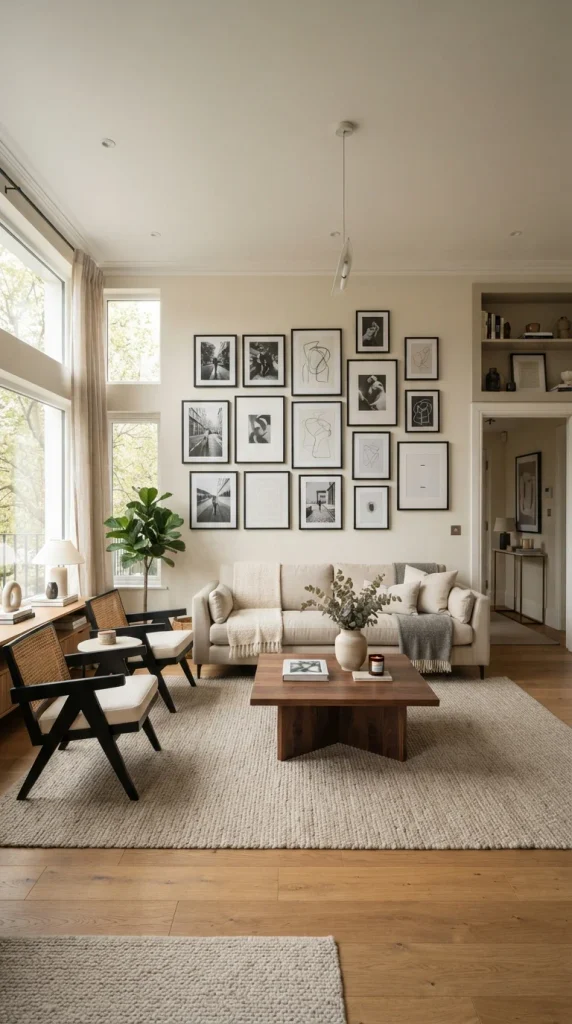
A black and white gallery wall creates a classic look that works with many decorating styles. Use photographs, sketches, typography, or simple artwork in a limited color palette. Matching black frames can make the arrangement feel clean and organized. White space between each piece keeps the display from becoming too heavy. You can place the gallery above a sofa, console, or reading chair. Mix different artwork sizes to create movement while keeping the overall layout balanced. This style is especially useful when your furniture already includes several colors. The simple palette allows the wall to stand out without competing with the room.
18. Layered Wall Art
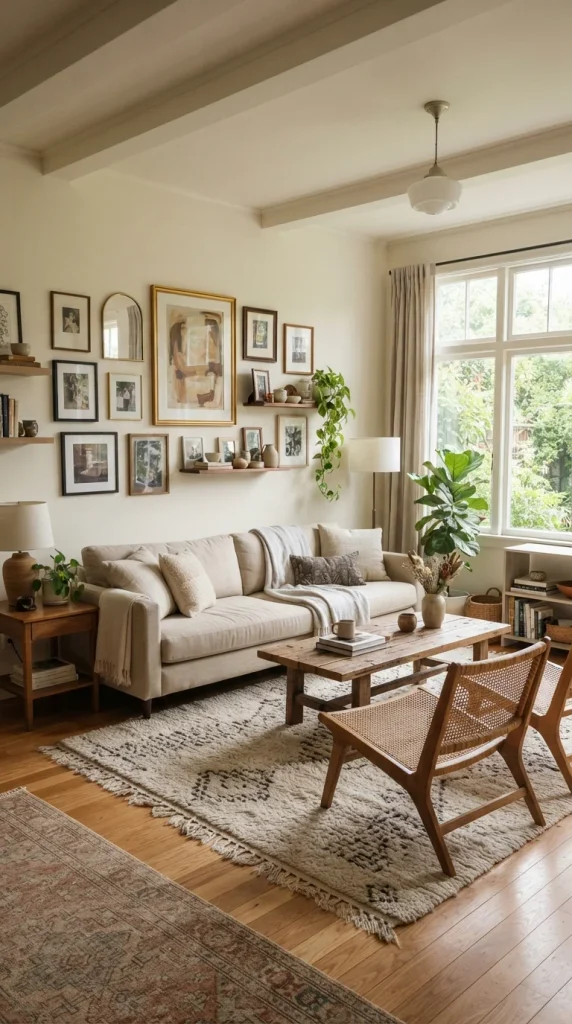
Layered wall art creates a relaxed look by combining artwork with shelves, mirrors, or other decorative pieces. Start with one larger piece as the main anchor. Add smaller frames or objects around it without making the arrangement too symmetrical. Different textures can make the display feel more interesting. Wood, metal, glass, and fabric can work together when their colors are connected. Leave small areas of empty wall so the arrangement can breathe. Check the display from different seating positions before making the final placement. This method gives the living room a collected and personal appearance.
19. Built-In Shelf Decor
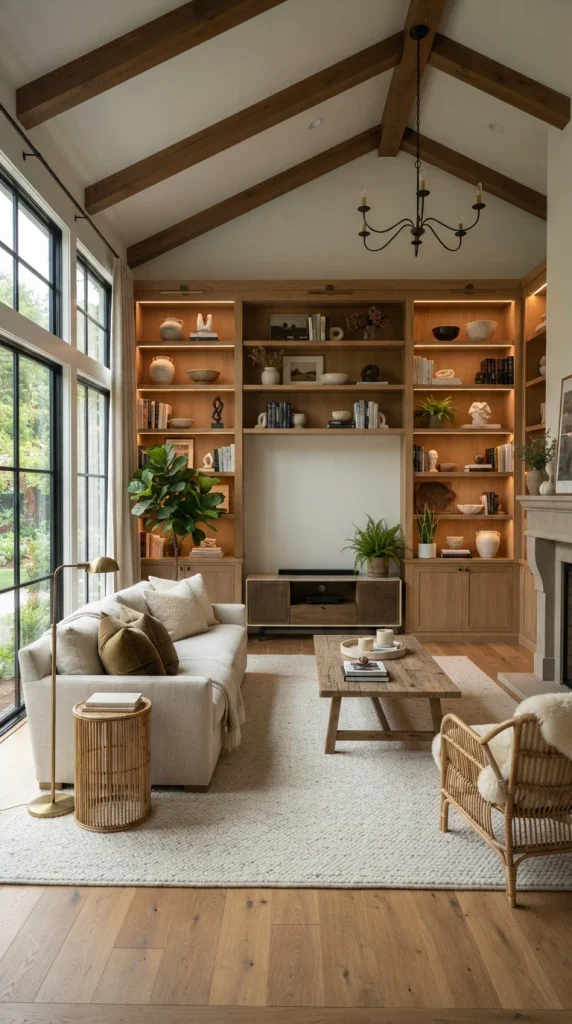
Built-in shelves can turn a plain wall into a useful and attractive feature. Use them to display books, artwork, ceramics, plants, and meaningful accessories. Mix tall and short objects to create visual movement. Keep some shelves partly empty so the display does not look crowded. Similar colors can help different objects feel like part of one arrangement. Add lighting inside the shelves if you want the display to stand out in the evening. Avoid placing too many small items together because they can quickly create visual clutter. A balanced shelf display can provide both storage and personality.
20. Natural Wood Wall Accents
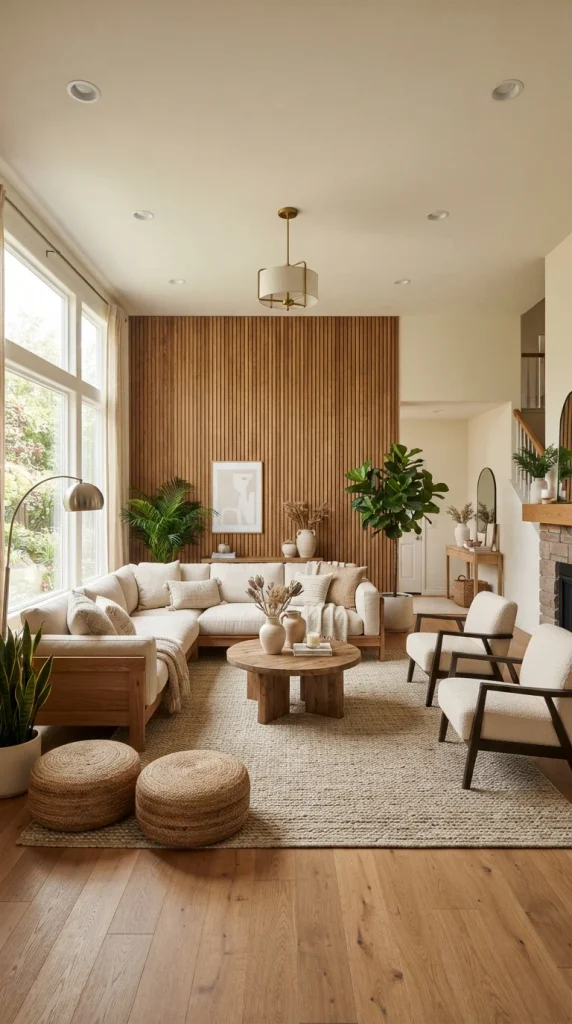
Natural wood can bring warmth and texture to a living room wall. Try wood slats, reclaimed boards, carved panels, or simple wooden artwork. Light wood suits bright and relaxed rooms, while darker wood can create a richer atmosphere. Use the material on one wall when you want it to become the main feature. Pair it with soft fabrics and neutral furniture for a comfortable feeling. Keep the wood finish consistent with other wooden elements in the room when possible. Good lighting can highlight the natural grain and texture. This approach works especially well when you want the space to feel warm and connected to nature.
21. Eclectic Gallery Wall
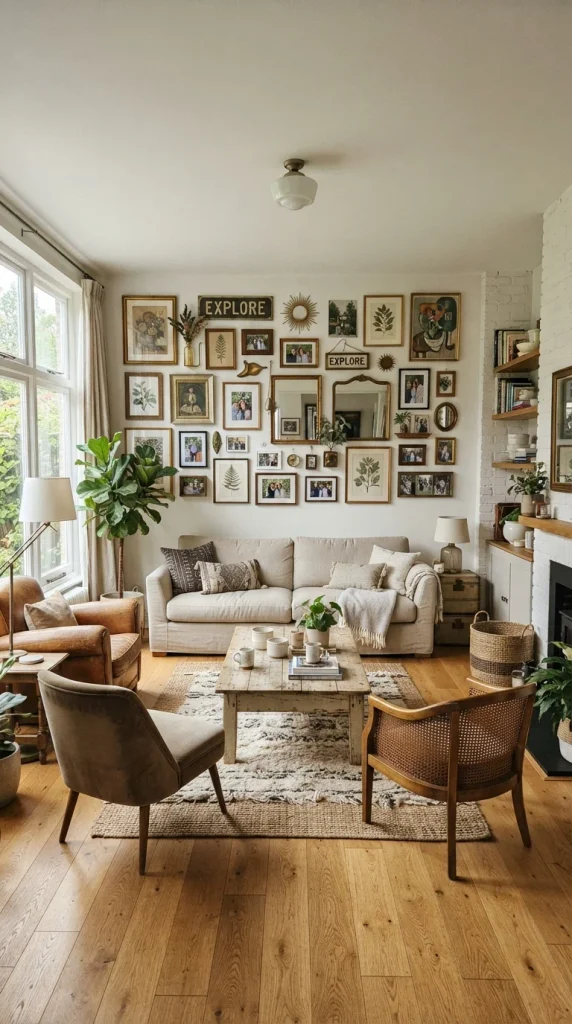
An eclectic gallery wall gives you more freedom to mix artwork, photographs, mirrors, signs, and personal objects. The pieces do not need to match exactly to create a successful display. Use a shared color, frame finish, or theme to create some visual connection. Start with the largest piece and build the arrangement around it. Mix horizontal and vertical pieces to make the wall feel lively. Before hanging everything, lay the pieces on the floor and test different arrangements. Leave enough breathing room so the collection does not feel crowded. The final result should feel personal, comfortable, and naturally collected.
Conclusion
The right living room wall decor can turn an empty wall into one of the most inviting parts of your home. Whether you choose artwork, shelves, mirrors, wallpaper, wood, or a gallery display, focus on balance and personal style. Start with one strong focal point and build around it with pieces that complement your furniture and colors. Simple choices can create a warm, stylish space without making the wall feel crowded.
Frequently Asked Questions
1. What is the easiest way to decorate a blank living room wall?
A large mirror, oversized artwork, or simple gallery wall is an easy starting point. Choose one main piece that fits the wall size and matches your existing furniture.
2. How can I decorate a small living room wall without making it feel crowded?
Use fewer, larger pieces instead of many small decorations. A mirror, slim floating shelves, or one large artwork can add interest while keeping the space visually open.
3. What wall decor looks best above a sofa?
Large artwork, a gallery arrangement, a wide mirror, or several balanced frames usually work well above a sofa. Keep the display proportional to the sofa width.
4. How can I decorate a living room wall on a budget?
Try printable artwork, family photos, thrifted frames, DIY gallery walls, or simple floating shelves. Rearranging pieces you already own can also create a fresh look without much cost.
5. What colors work well for living room wall decor?
Choose colors that already appear in your sofa, rug, curtains, or accessories. Neutral rooms can handle stronger artwork, while colorful rooms often look better with simpler wall pieces.
6. How high should wall art be hung in a living room?
Artwork should generally be placed at a comfortable eye level rather than too close to the ceiling. When hanging art above furniture, leave enough space between the furniture and artwork so the arrangement feels connected.
7. How do I make my living room wall decor look cohesive?
Repeat one or two colors, materials, or frame finishes throughout the display. This creates a connection between different pieces while still allowing the wall to have personality.