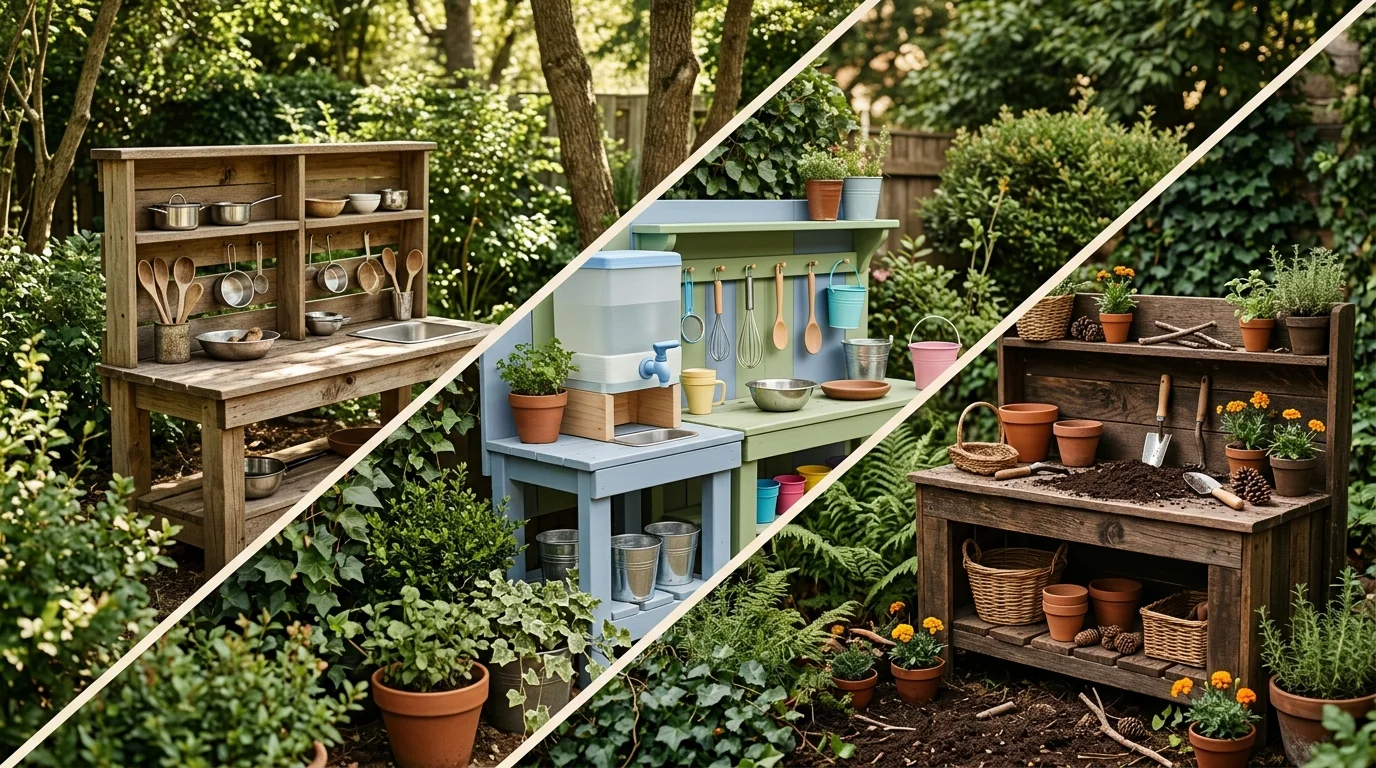
An outdoor mud kitchen is a fun way to create a playful backyard space where kids can explore, imagine, and enjoy hands-on activities. From a simple DIY mud kitchen to a charming wooden setup, there are many creative options for every outdoor space. These outdoor mud kitchen ideas can include old pots, natural materials, water stations, and easy storage. A kids’ mud kitchen also encourages pretend play while helping children connect with nature. Whether you have a large yard or a small garden, these ideas can make outdoor play more creative, active, and enjoyable.
1. Simple Wooden Mud Kitchen
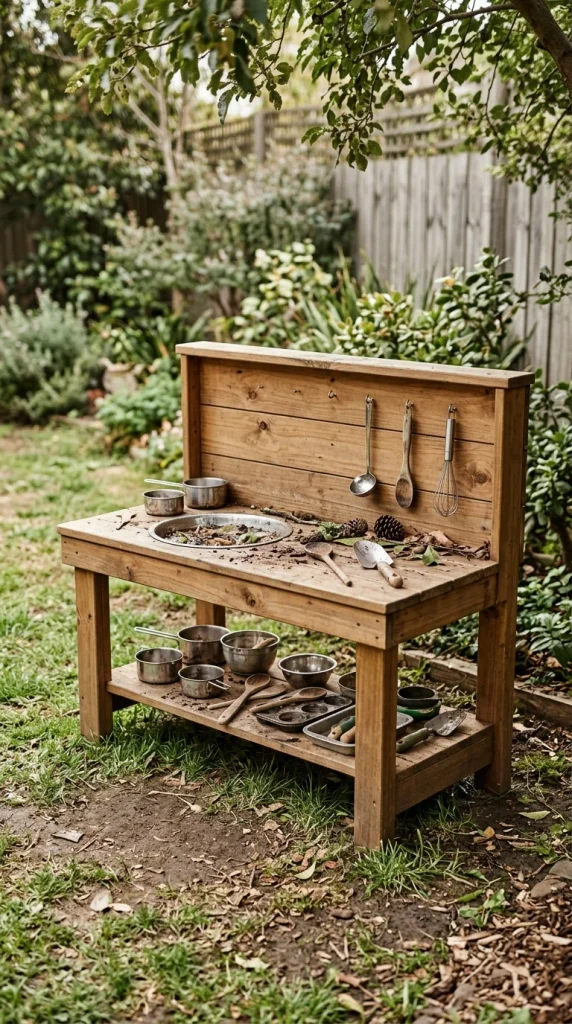
A simple wooden mud kitchen can create a charming play area without taking up too much space. Use a sturdy wooden counter with a lower shelf for storing pots, bowls, and cooking tools. Keep the design natural with unfinished or lightly stained wood. Add a shallow basin for mixing mud and water. This easy setup gives children plenty of room for creative pretend play.
2. DIY Pallet Mud Kitchen

Old wooden pallets can be turned into a fun and affordable outdoor mud kitchen. Stack or arrange the pallets to create a basic counter and storage area. Add hooks for hanging spoons, pans, and small gardening tools. A coat of outdoor-safe finish can help protect the wood from moisture. This DIY idea is perfect for families who enjoy simple backyard projects.
3. Rustic Backyard Mud Kitchen
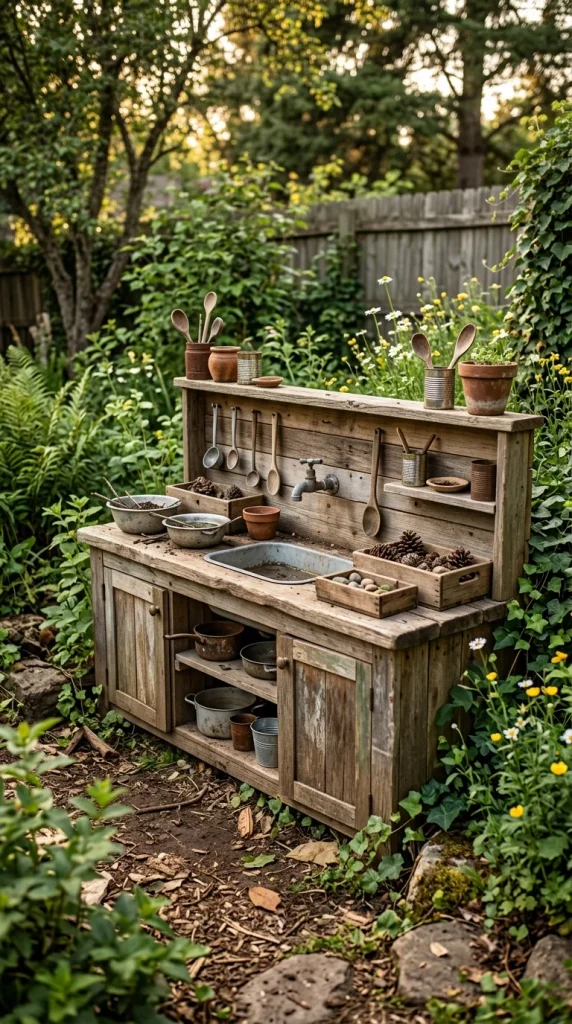
A rustic mud kitchen fits beautifully into a natural backyard or garden setting. Use reclaimed wood, stone details, wooden crates, and simple metal containers for an authentic look. Keep the colors earthy to blend the play area with its surroundings. A few plants nearby can make the space feel even more inviting. It creates a cozy spot where children can enjoy imaginative outdoor play.
4. Mud Kitchen with a Water Station

Adding a water station makes an outdoor mud kitchen even more exciting for kids. Place a small water container, outdoor tap, or safe pouring station beside the counter. Children can mix water with soil, leaves, and sand to create their own pretend recipes. Keep a bucket nearby to collect used water and reduce mess. Make sure the water area is positioned where spills can drain safely.
5. Small Mud Kitchen for Tiny Yards

A small mud kitchen can work wonderfully when outdoor space is limited. Choose a narrow counter with a single shelf underneath for storage. A compact design can still include bowls, utensils, a mixing area, and a small water container. Place it against a fence or garden wall to save valuable floor space. This makes it easy to create a fun play zone without crowding the yard.
6. Colorful Mud Kitchen for Kids
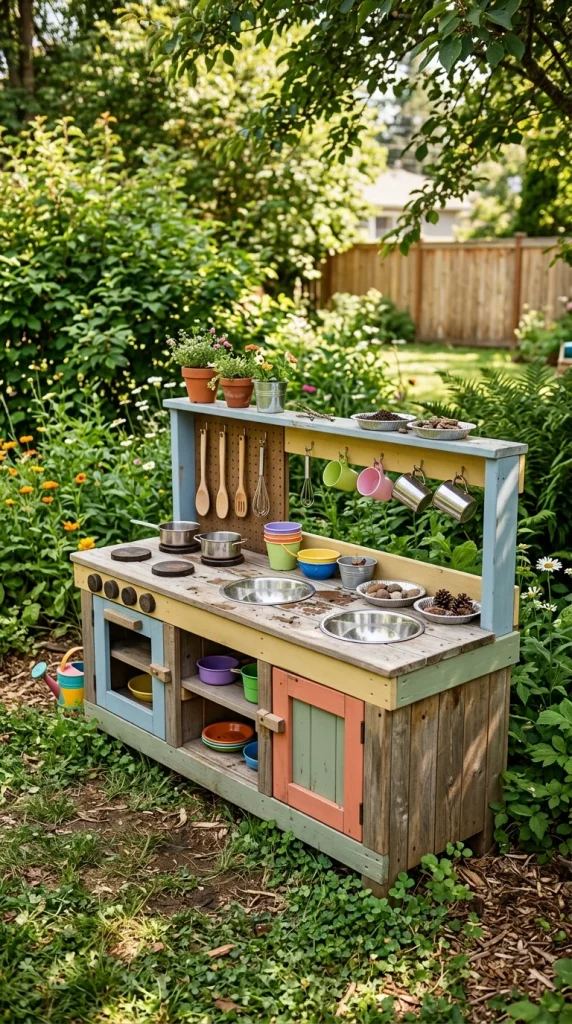
Bright colors can make a mud kitchen feel playful and exciting. Paint the wooden counter in cheerful shades while keeping the surrounding area natural and simple. Colorful bowls, pots, spoons, and buckets can add more personality without requiring a large setup. Choose durable outdoor-safe finishes for any painted surfaces. The result is a cheerful space that encourages imaginative play.
7. Mud Kitchen with Open Shelving

Open shelving makes it easy for children to see and reach their play accessories. Add one or two sturdy shelves underneath the main counter for bowls, pots, pans, and containers. Keep frequently used items on the lower shelf so children can access them more easily. Use baskets or wooden crates to keep smaller pieces together. This design combines practical storage with an attractive open look.
8. Natural Garden Mud Kitchen
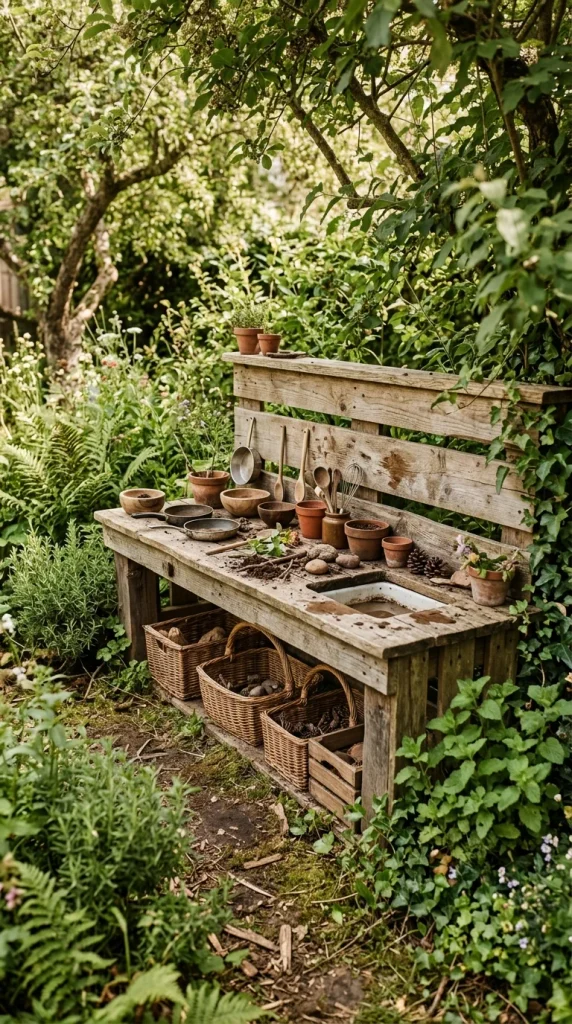
A natural garden mud kitchen can blend beautifully with flowers, herbs, trees, and other outdoor greenery. Use untreated-looking wood, stone, clay pots, and natural baskets to create a relaxed setting. Place the kitchen near a patch of soil where children can safely collect leaves and natural materials. Keep delicate plants protected from heavy play. This setup makes the backyard feel like a small outdoor discovery space.
9. Budget-Friendly Mud Kitchen
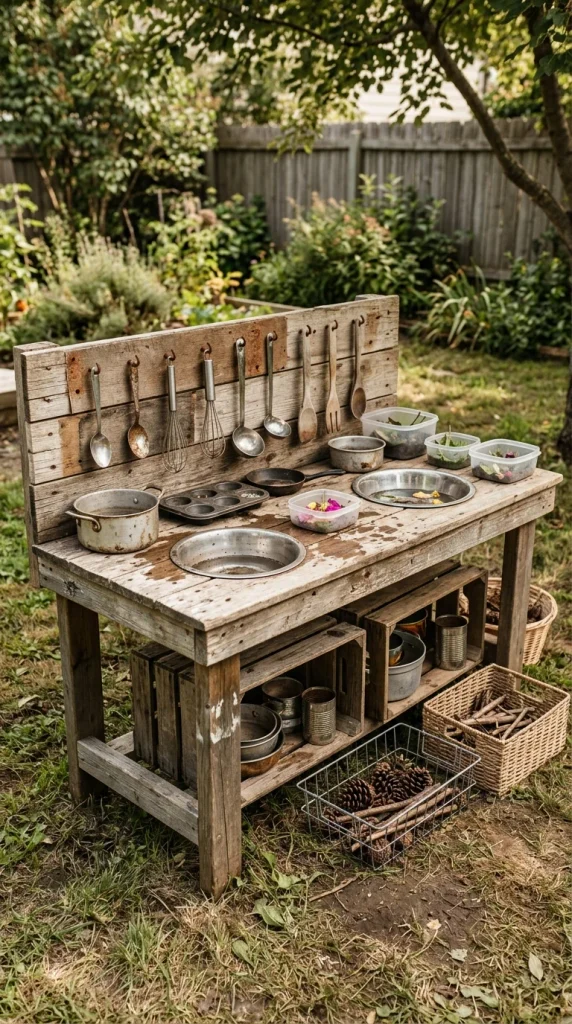
You do not need to spend a lot of money to create an enjoyable outdoor mud kitchen. Reuse old wooden furniture, crates, metal bowls, containers, and kitchen utensils when possible. A basic table or sturdy bench can even become the main counter. Focus on creating useful areas for mixing, storing, and playing rather than adding expensive decorations. With a little creativity, a simple setup can provide hours of outdoor fun.
10. Mud Kitchen with a Mini Sink
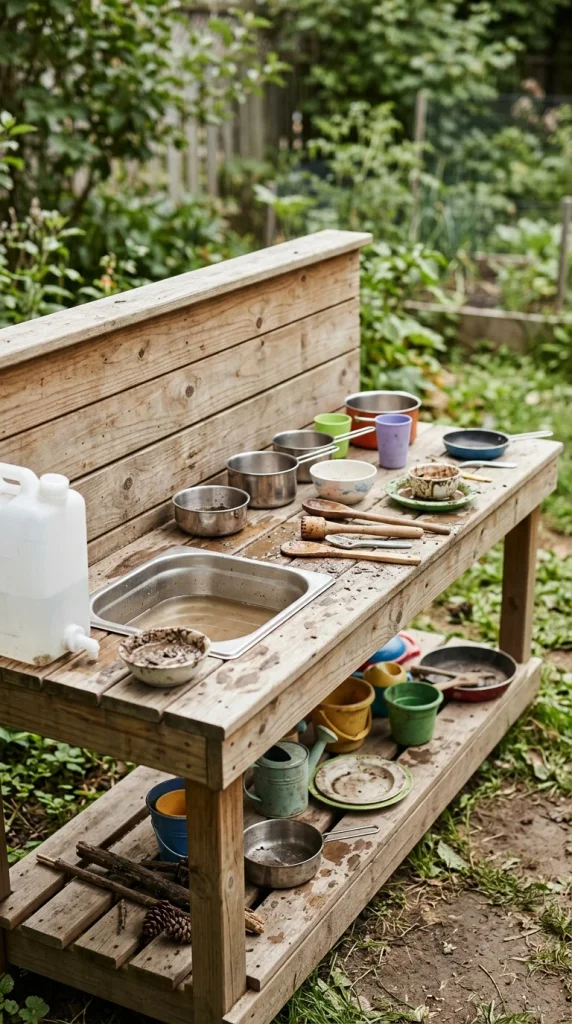
A mini sink gives an outdoor mud kitchen a more realistic pretend-cooking feel. You can use a shallow metal bowl or another suitable basin as the sink. Place it securely into the counter and keep a water container nearby for easy filling. Add a small shelf underneath for towels and play dishes. Make sure all water containers and fixtures are stable and child-safe.
11. Covered Outdoor Mud Kitchen

A covered mud kitchen allows children to enjoy outdoor play in different weather conditions. Place the kitchen under a small roof, pergola, awning, or covered patio area. This also helps protect wooden surfaces and play accessories from direct rain and strong sunlight. Keep the space open on the sides for good airflow and visibility. A covered location can make the mud kitchen more comfortable throughout the year.
12. Mud Kitchen with a Potting Bench

A potting bench can easily become a practical base for an outdoor mud kitchen. Its work surface provides plenty of room for mixing mud, arranging pretend ingredients, and preparing play recipes. Lower shelves can hold pots, buckets, and gardening tools. Add hooks along the side for spoons and small pans. This idea works especially well in gardens where children enjoy playing with natural materials.
13. Creative Mud Kitchen with Storage
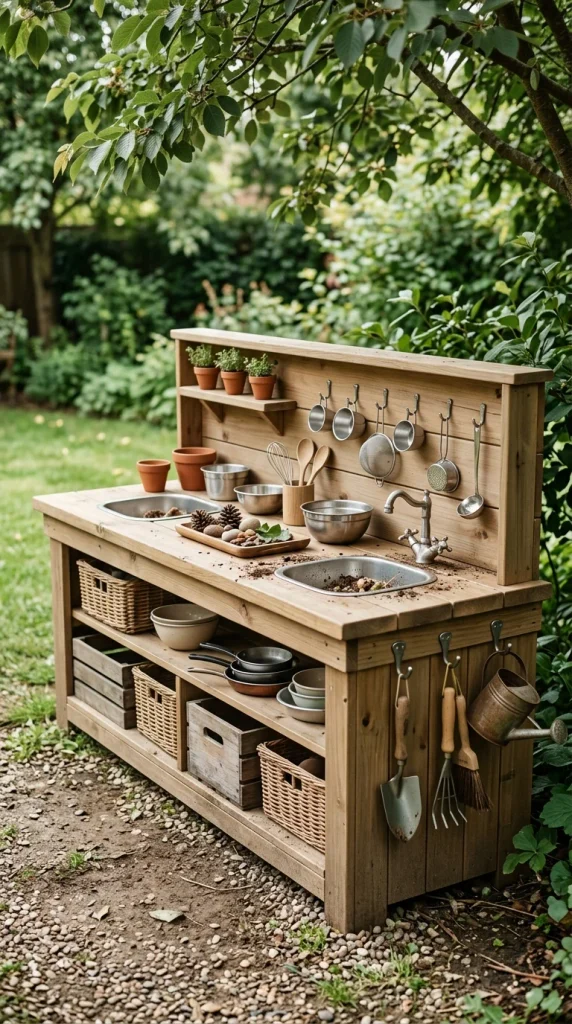
Good storage can keep an outdoor mud kitchen organized and ready for play. Include shelves, baskets, crates, or hooks to hold the different accessories. Labeling is not necessary, but grouping similar items together makes cleanup easier. Keep heavier objects on lower shelves for better stability. A well-organized kitchen gives children more space to focus on creative play.
14. Montessori-Inspired Mud Kitchen

A Montessori-inspired mud kitchen can encourage children to explore simple tasks independently. Keep useful tools such as bowls, spoons, cups, and small containers within easy reach. Natural wood and simple materials can create a calm and uncluttered appearance. Allow children to choose their own ingredients and activities during supervised play. The focus should be on hands-on exploration rather than having a perfectly finished play setup.
15. Mud Kitchen with a Gardening Corner

Combining a mud kitchen with a small gardening corner creates a fun connection between cooking and nature. Place a few child-friendly gardening tools, small pots, and containers beside the kitchen. Children can collect safe leaves, flowers, herbs, or soil for imaginative recipes. Keep any plants or materials used for play clearly separate from edible garden crops. This setup can make outdoor time more engaging and interactive.
16. Upcycled Outdoor Mud Kitchen
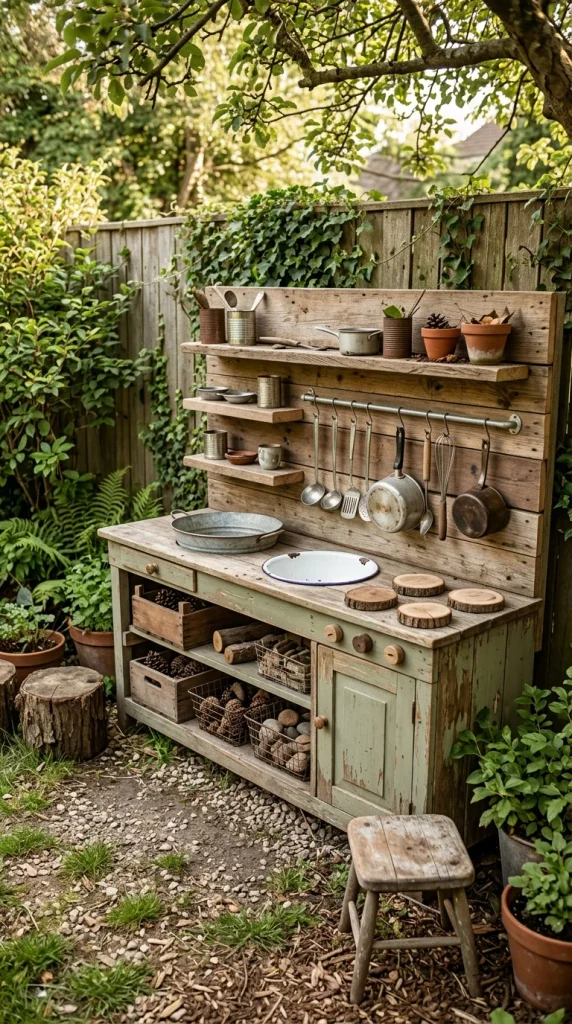
An upcycled mud kitchen is a creative way to give old household items a new purpose. Repurpose a small table, wooden cabinet, crates, old bowls, or unused kitchen utensils. Check every item carefully for sharp edges, loose parts, rust, or unstable construction before using it. Keep the finished design simple and sturdy. This approach can create a unique mud kitchen while reducing unnecessary spending.
17. Compact Mud Kitchen for Toddlers
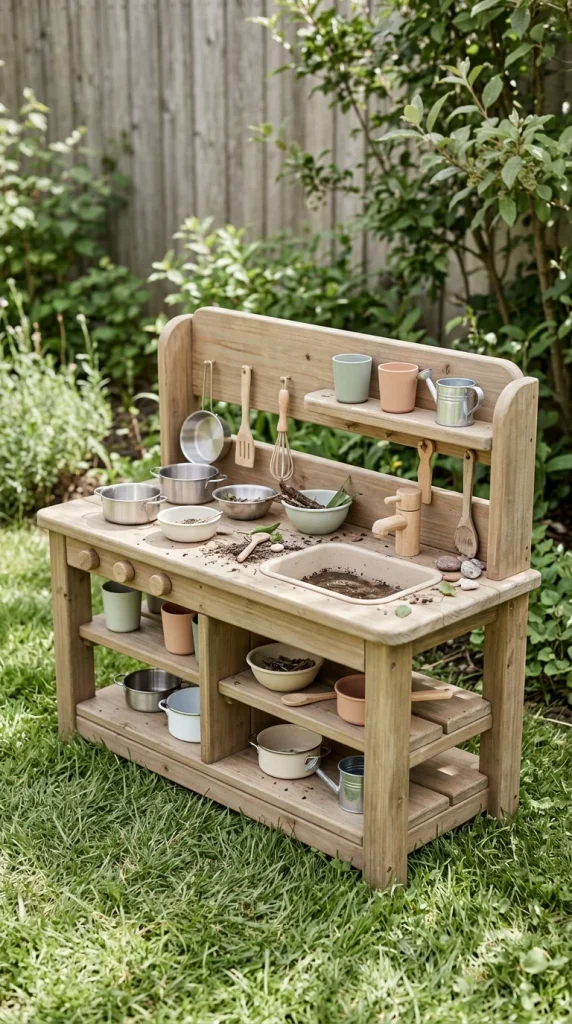
A toddler-friendly mud kitchen should be low enough for small children to reach comfortably. Choose a stable counter with rounded edges and lightweight accessories that are easy to handle. Keep the setup simple with bowls, spoons, cups, and a small mixing area. Avoid tiny pieces that could be unsafe for young children. A compact design gives toddlers a comfortable space for supervised sensory and pretend play.
18. Farmhouse-Style Mud Kitchen

A farmhouse-style mud kitchen can bring a warm and charming look to the backyard. Use natural wood, simple shelves, vintage-inspired containers, and neutral colors for the design. A small sign or decorative detail can add personality, but keep the area practical for play. Galvanized-style bowls and metal pots can complement the farmhouse appearance. This style works especially well beside a garden, porch, or rustic outdoor space.
19. Mud Kitchen with Hanging Utensils

Hanging utensils can make a mud kitchen look organized while keeping frequently used tools easy to reach. Install sturdy hooks along the back or side of the counter for spoons, small pans, cups, and safe gardening tools. Leave enough space between each item so children can remove them easily. Keep the hooks and hanging objects securely attached. This simple feature adds both function and visual interest to the play area.
20. Outdoor Mud Kitchen with a Prep Counter

A dedicated prep counter gives children more room to mix, arrange, and create pretend meals. Use a wide wooden surface with separate areas for bowls, natural ingredients, and utensils. Add a lower shelf for storing extra accessories when they are not being used. A smooth but durable surface can also make cleanup easier. This design is ideal for children who enjoy longer, more involved pretend cooking sessions.
21. Whimsical Mud Kitchen Play Area
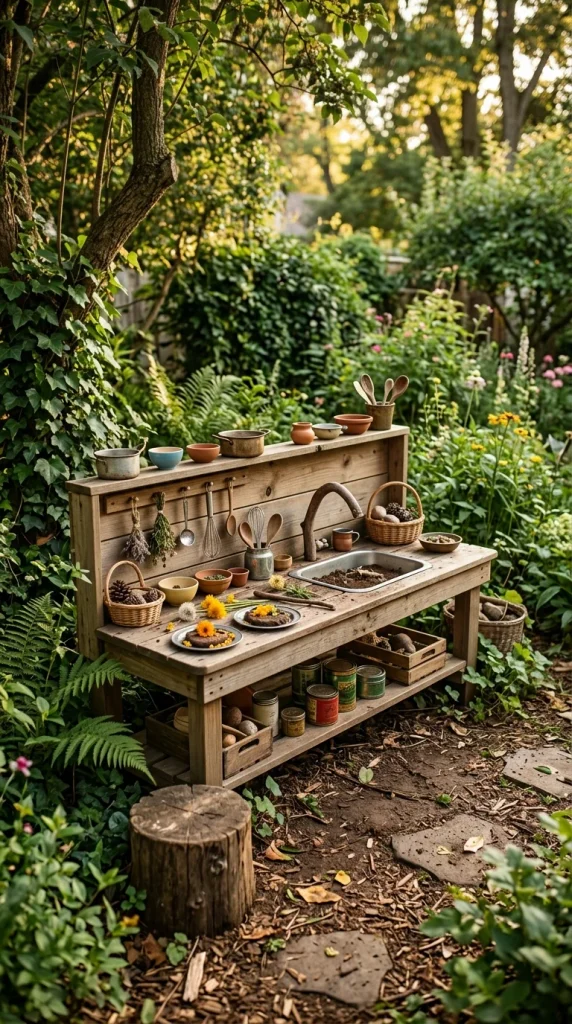
A whimsical mud kitchen can turn a simple backyard corner into a magical pretend-play space. Add natural decorations, colorful containers, small wooden crates, and playful garden details around the main kitchen. Keep the design open enough for children to move around comfortably. A few creative touches can make the space feel special without making it complicated. The goal is to create an inviting outdoor area where imagination can lead the play.
Conclusion
An outdoor mud kitchen is a simple and creative way to make backyard play more exciting. Whether you choose a DIY pallet design, a compact setup, or a rustic garden kitchen, focus on sturdy materials, practical storage, and a comfortable layout. Adding water, natural materials, and child-friendly accessories can make the space even more enjoyable. With thoughtful planning, a small outdoor corner can become a fun place for imaginative play.
Frequently Asked Questions
What is an outdoor mud kitchen?
An outdoor mud kitchen is a child-friendly play station designed for pretend cooking using materials such as mud, soil, sand, water, leaves, and natural objects. It usually includes a counter, storage, bowls, utensils, and sometimes a water station.
How much does it cost to make an outdoor mud kitchen?
The cost can vary depending on the materials and size. A simple mud kitchen can be made inexpensively by reusing old furniture, pallets, crates, bowls, and kitchen utensils. Buying new weather-resistant materials will usually increase the overall cost.
Can I make a mud kitchen in a small backyard?
Yes, a mud kitchen can work in a very small outdoor space. Choose a narrow counter, use vertical storage, and place the kitchen against a fence or wall. A compact design can still provide plenty of room for imaginative play.
What materials are best for an outdoor mud kitchen?
Durable wood, stainless steel or suitable metal containers, outdoor-safe finishes, and sturdy plastic accessories are practical choices. Avoid materials with sharp edges, loose parts, or finishes that are not suitable for outdoor or child use.
Where should I place an outdoor mud kitchen?
Choose a level location with good visibility and enough space for children to move around safely. A spot near a garden or soil area can be convenient, while partial shade can make the play area more comfortable during sunny weather.
How do I keep an outdoor mud kitchen clean?
Keep a separate container or bucket for dirty tools and encourage children to rinse reusable items after play. Store utensils and containers where they can dry properly. Periodically check the wooden surfaces, storage areas, and accessories for dirt, mold, rust, or damage.
What should I put in an outdoor mud kitchen?
Useful accessories include old pots, bowls, wooden spoons, measuring cups, small pans, buckets, sieves, and child-friendly gardening tools. Natural materials such as leaves, sticks, flowers, sand, and soil can also provide plenty of pretend-cooking possibilities.