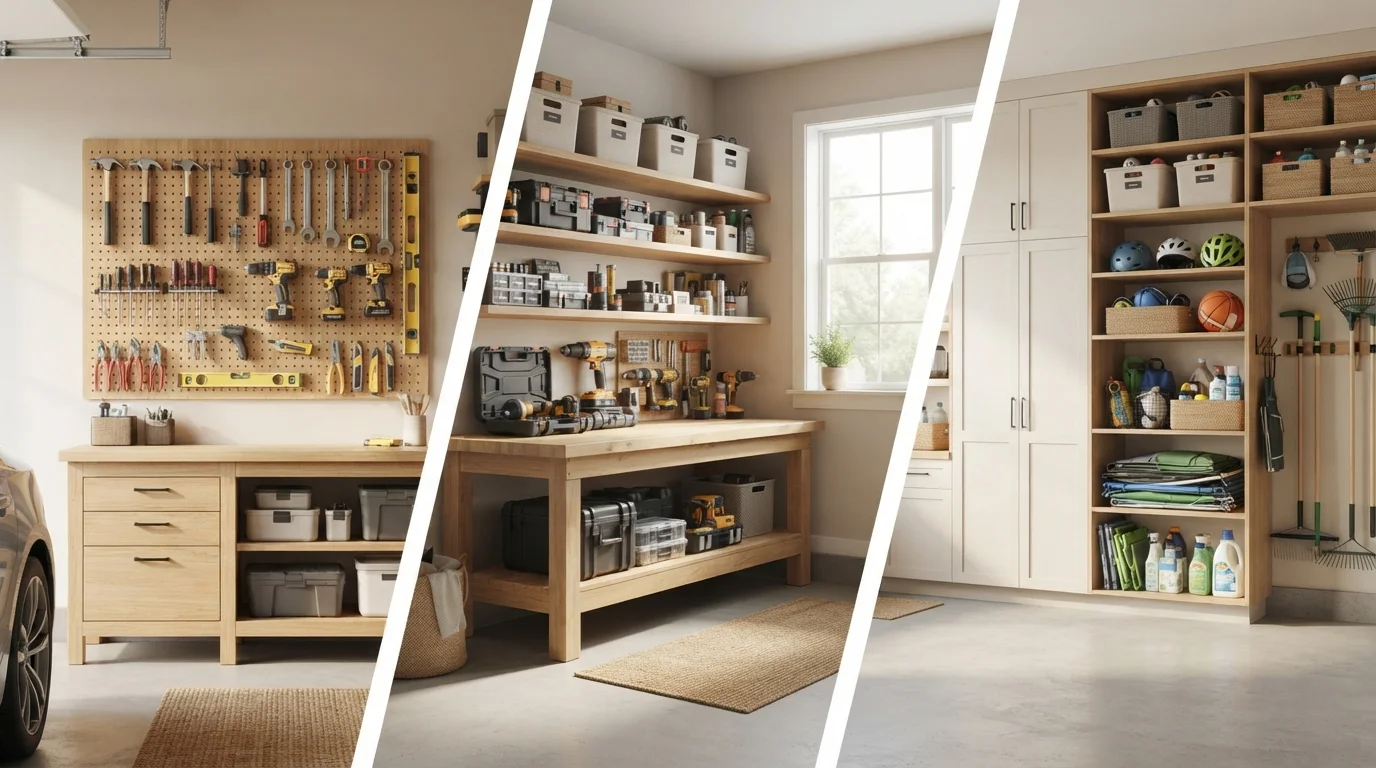
When I organize a garage, I start by looking at how the space is actually used rather than simply adding more storage. DIY garage storage solutions can help organize spaces that feel cluttered with cars, tools, and equipment by giving everything a clear place. Simple and creative, budget-friendly ideas such as shelving and wall racks can maximize every inch without making the garage feel crowded. One of my favorite smart strategies is utilizing vertical areas, corners, and unused wall sections instead of filling the floor. These practical techniques make it easier to create a well-organized, efficient garage while keeping daily items within reach. With the right layout and a little planning, you can improve storage without spending a fortune.
1. DIY Wall-Mounted Tool Storage

Wall-mounted storage is one of the easiest ways to free up valuable garage floor space. Instead of leaving tools on a workbench or scattered around the floor, use a strong wall panel to keep them visible and easy to reach. Hooks, rails, and simple brackets can hold hammers, drills, wrenches, and other everyday tools. This setup also makes cleaning much easier because fewer items sit on the floor. Choose a wall that is close to your work area so you do not have to walk across the garage whenever you need something. Labeling different sections can make the system even more useful. With a little planning, an empty wall can become practical storage without taking away space for your car.
2. Pegboard Organization for Small Tools
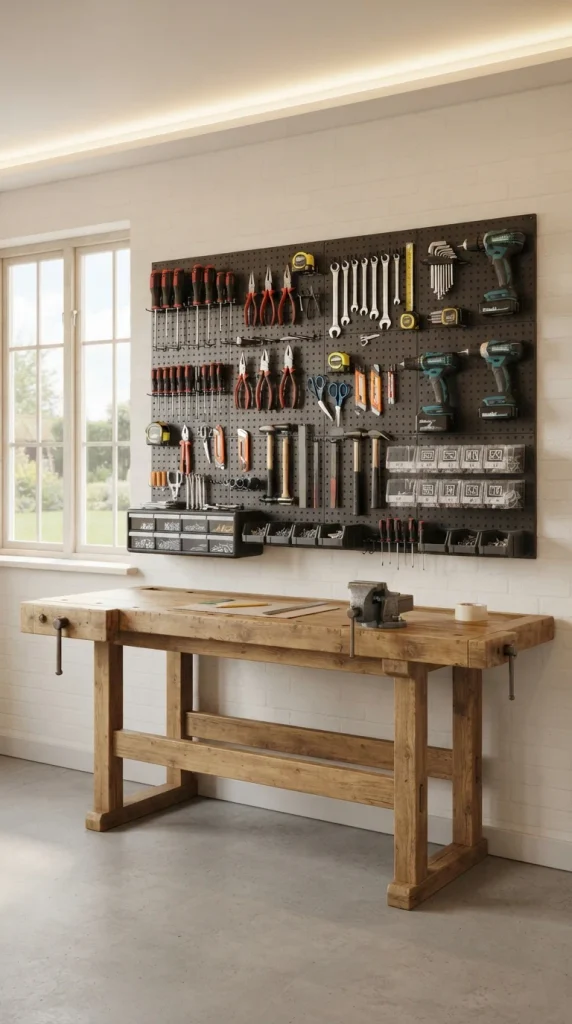
A pegboard can turn a plain garage wall into a flexible storage station for small tools. Install it above a workbench or another convenient area where you regularly complete projects. Use different hooks and holders to arrange screwdrivers, pliers, measuring tapes, and other small equipment. The biggest benefit is that you can move the hooks whenever your storage needs change. Keeping similar tools together also makes it easier to notice when something is missing. A neat pegboard can make a busy garage look more organized without requiring expensive cabinets. For a simple DIY project, paint the board in a neutral shade that works well with the rest of the garage.
3. DIY Garage Shelving Units
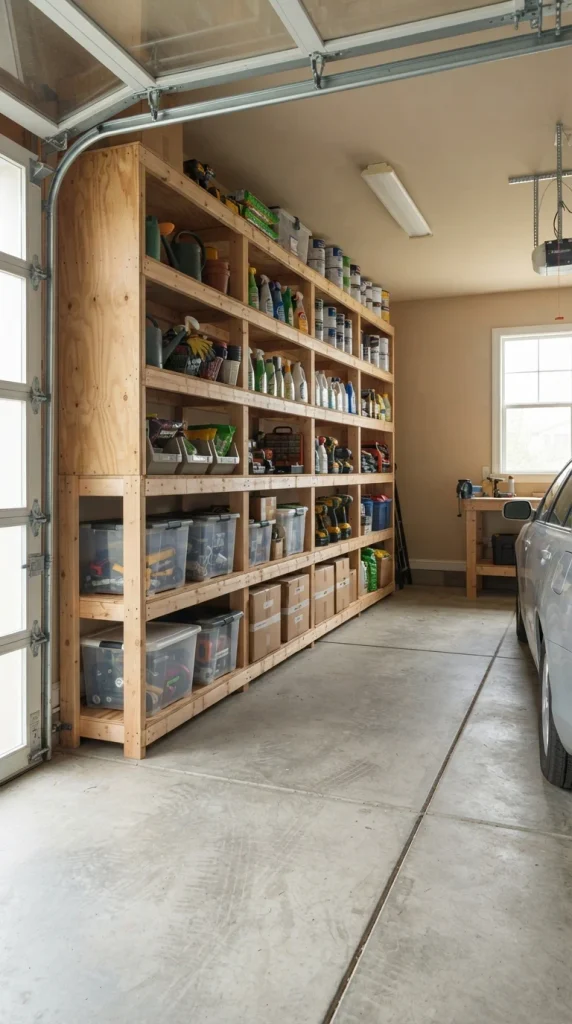
DIY shelving is a practical solution when you need storage for boxes, cleaning supplies, tools, and larger equipment. Build shelves along an unused wall and choose a depth that leaves enough room for walking and parking. Strong wood boards can work well when properly supported and secured to the wall. Keep heavy items on the lower shelves and lighter boxes higher up for safer access. Clear containers are useful because you can see what is inside without opening every box. Leave some space between groups of items so the shelves do not become another cluttered area. A well-planned shelving unit can make use of vertical space while keeping the garage floor open.
4. Overhead Garage Storage Racks
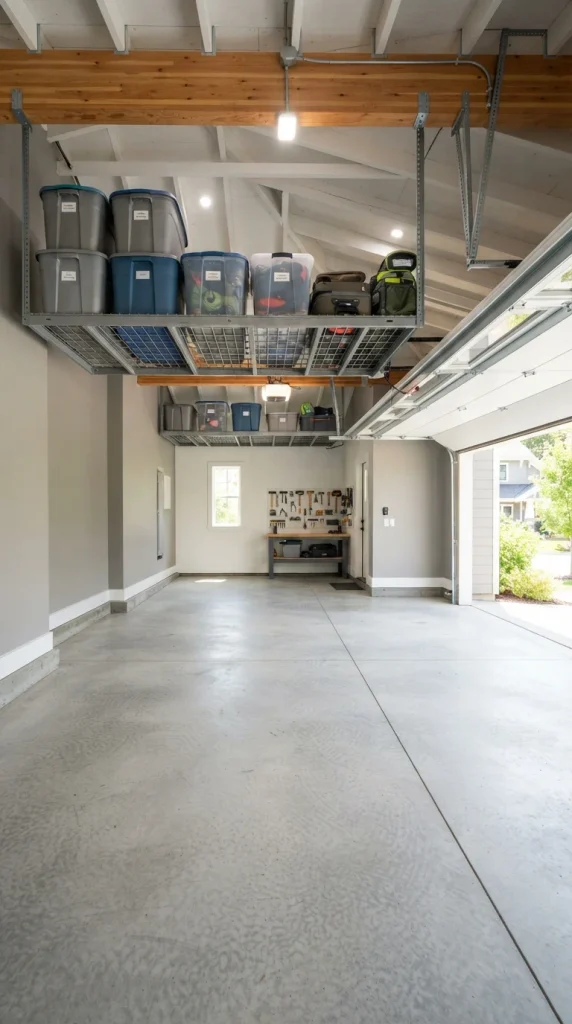
The ceiling is often one of the most overlooked storage areas in a garage. Overhead racks can hold seasonal decorations, camping gear, empty luggage, and other items that are not needed every day. Before installing one, make sure the ceiling structure can safely support the planned weight. Use strong containers with lids to protect stored items from dust and moisture. Keep frequently used belongings at a lower and easier-to-reach level instead. Proper labeling will also help you remember what is stored above your head. When arranged carefully, overhead storage can add useful capacity without taking away parking or working space.
5. DIY Storage Cabinets for Tools

Storage cabinets are useful when you want the garage to look cleaner while keeping tools and supplies out of sight. You can build simple cabinets from plywood or adapt old cabinets for a more affordable project. Add shelves inside so every section can hold a different type of item. Doors help protect tools from dust and give the garage a more finished appearance. Keep heavy equipment on lower shelves and smaller supplies at eye level. If you have children around, store sharp or hazardous tools in closed and secure areas. A few carefully placed cabinets can make a major difference without requiring a complete garage makeover.
6. PVC Pipe Tool Organizers
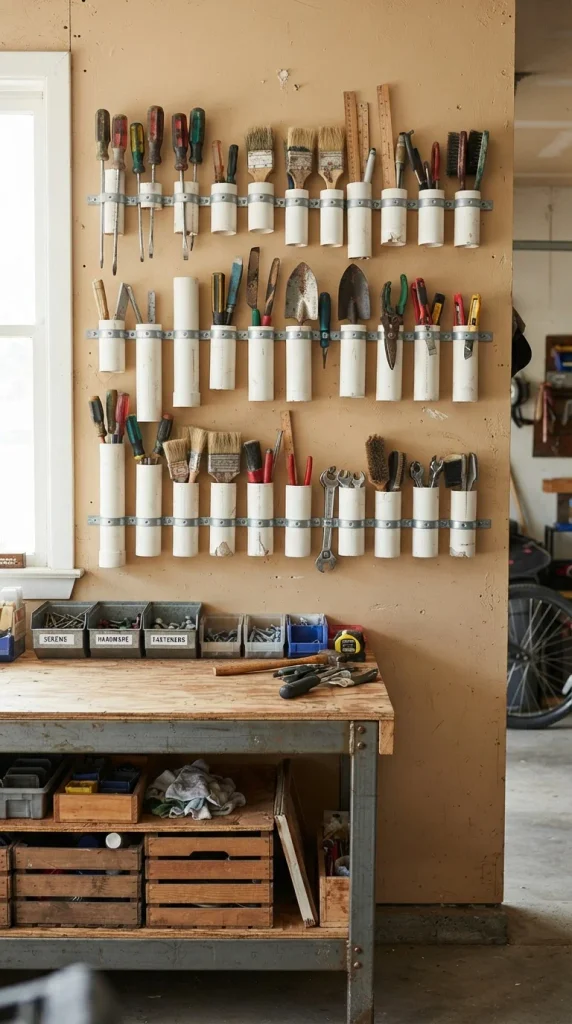
PVC pipes can become surprisingly useful organizers for long-handled tools and smaller workshop items. Cut the pipes into suitable lengths and attach them securely to a wall or storage board. Each section can hold items such as screwdrivers, brushes, rulers, or small garden tools. This keeps loose equipment upright instead of allowing it to pile together in a corner. You can use different pipe sizes depending on what you need to store. Labeling each section makes the system even easier to maintain. It is a simple DIY project that uses inexpensive materials while giving unused wall space a practical purpose.
7. DIY Garage Workbench Storage
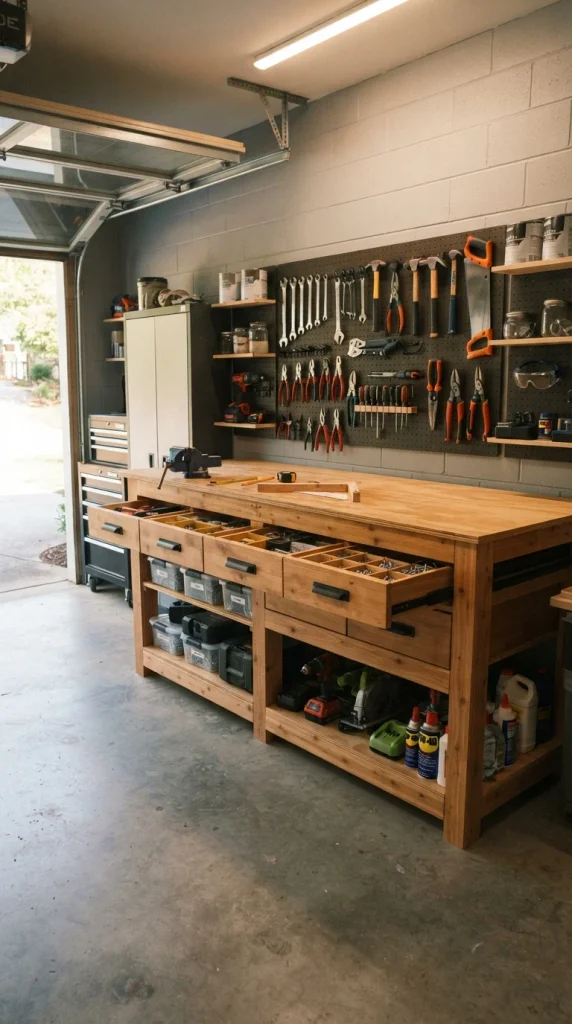
A workbench becomes much more useful when its design includes built-in storage. Add drawers, shelves, or open compartments underneath the work surface to keep everyday tools close by. Store frequently used items in the top drawers and larger equipment in the lower sections. A small pegboard above the bench can provide additional room for tools you use during projects. Keep the work surface mostly clear so you always have room to work. Strong materials and solid supports are important because a garage workbench often carries heavy equipment. This setup creates a dedicated project area while reducing clutter throughout the rest of the garage.
8. Rolling Garage Storage Cart
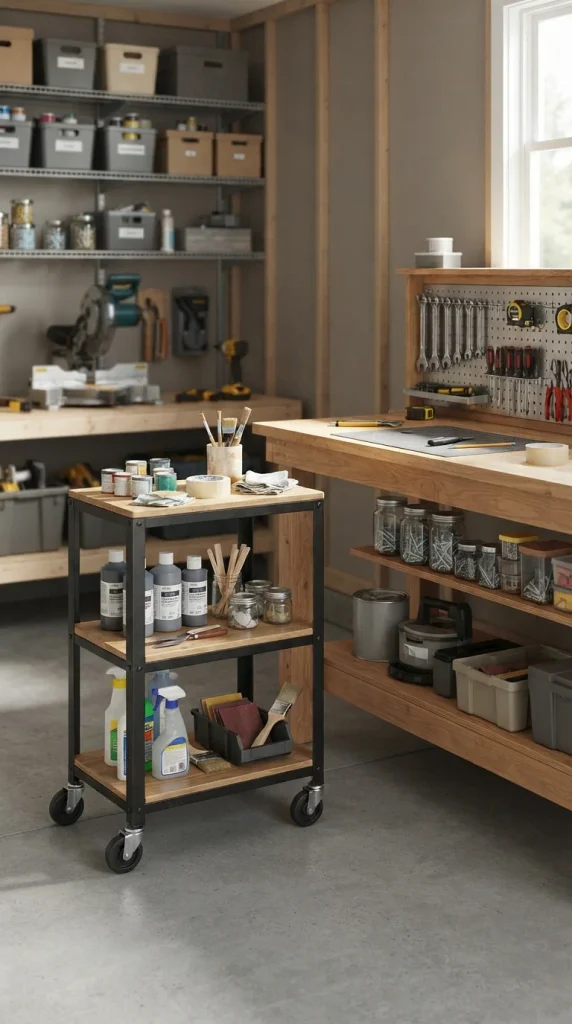
A rolling storage cart is helpful when you need flexible storage that can move around the garage. Use it for painting supplies, gardening tools, automotive equipment, or materials for weekend projects. Choose a sturdy cart with several levels so you can separate different categories of items. Wheels allow you to move the cart close to your workbench or car whenever needed. Locking wheels are especially useful because they keep the cart steady while you work. A narrow design can fit beside a cabinet or in a small corner when not in use. This simple solution gives you extra storage without permanently taking over one part of the garage.
9. DIY Sports Equipment Storage
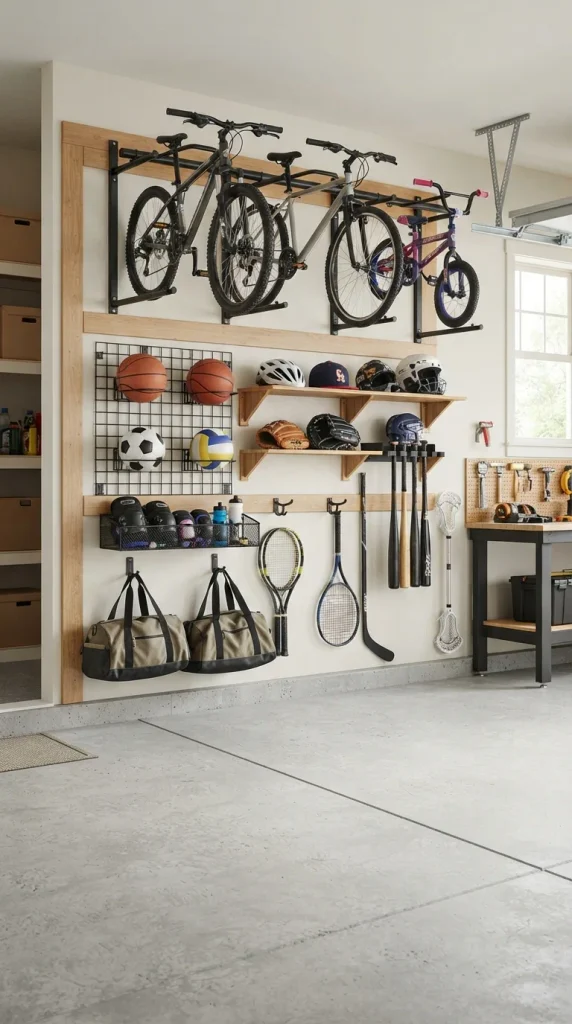
Sports equipment can quickly take over a garage when balls, helmets, bats, and other gear are left on the floor. Create dedicated storage using wall hooks, baskets, shelves, and simple racks. Keep frequently used equipment at an easy height so children and adults can reach it without making a mess. Use separate bins for smaller items such as gloves, balls, and protective gear. Larger equipment can be stored vertically to save floor space. Labeling each basket can make cleanup much faster after outdoor activities. A dedicated sports zone keeps recreational gear together and prevents it from mixing with tools and household supplies.
10. Garage Corner Shelving Ideas
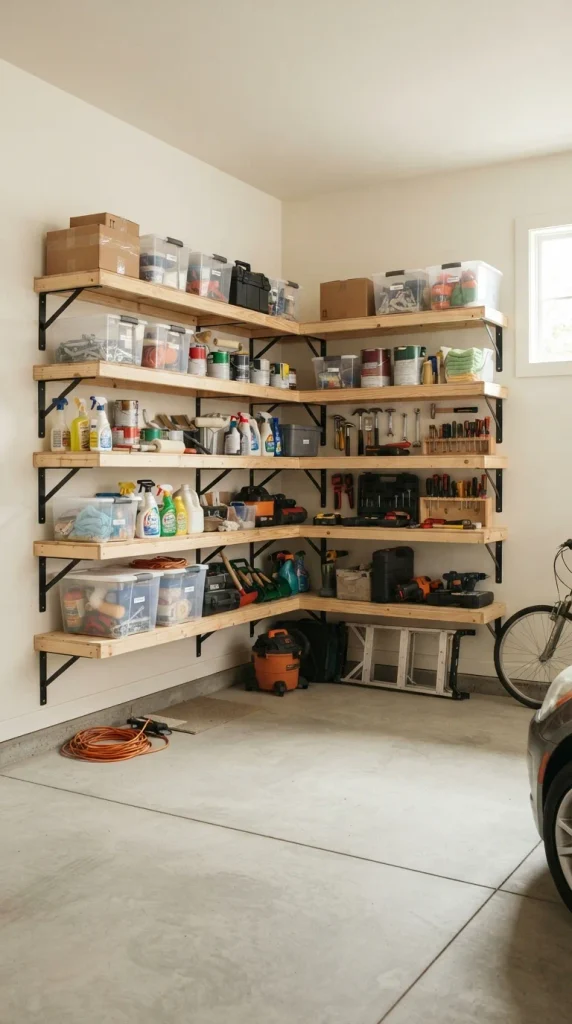
Garage corners are often wasted because standard storage units do not fit comfortably into them. Custom corner shelves can turn these awkward areas into useful storage zones. Use triangular or L-shaped shelves to hold boxes, paint supplies, cleaning products, or small equipment. Keep the items you use most often at the front where they are easy to reach. Corners are also a good place for less frequently used belongings because they stay out of the main working area. Secure shelves properly so they remain stable when loaded. Making use of these forgotten spaces can give your garage extra storage without reducing the room available for your car.
11. DIY Garden Tool Storage
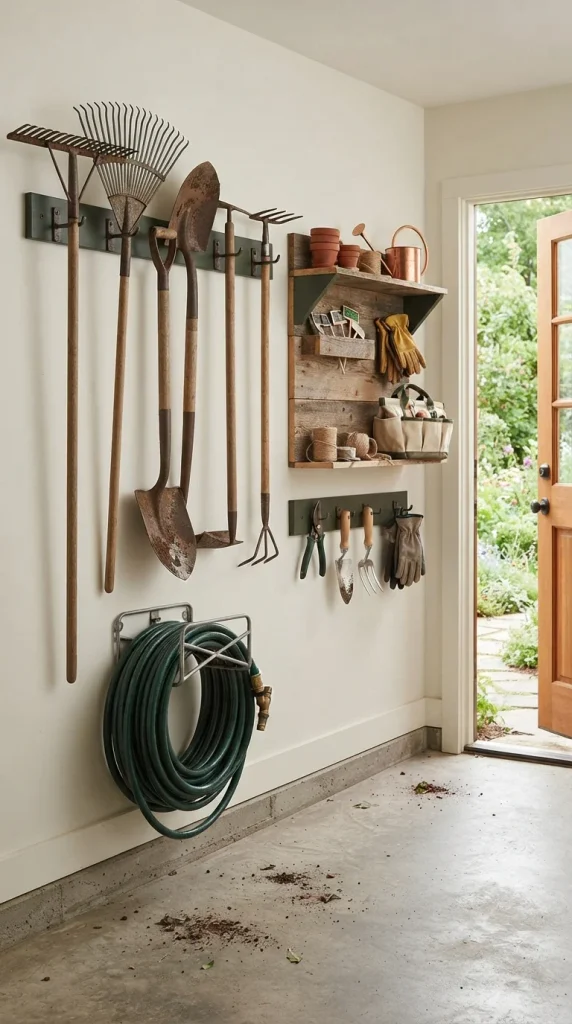
Garden tools such as shovels, rakes, hoes, and pruning equipment are much easier to manage when they have a dedicated storage area. Install strong hooks or a simple vertical rack on an empty wall near the garage entrance. Store long-handled tools upright instead of leaving them in a pile on the floor. Smaller gardening supplies can go into a nearby bin or cabinet. Keeping outdoor tools together also makes it easier to grab what you need before heading outside. Choose storage that allows wet tools to dry properly before putting them away. A simple garden tool station can keep both the garage and your outdoor area more orderly.
12. Wall-Mounted Bike Storage

Bikes can consume a large amount of floor space, especially in a smaller garage. Wall-mounted hooks or vertical bike racks allow you to store them safely while keeping the floor open. Choose a mounting position that leaves enough clearance for doors, vehicles, and walking paths. If several bikes are stored together, arrange them at different heights to make better use of the wall. Add nearby hooks for helmets, locks, and cycling accessories. Make sure the mounting hardware is strong enough for the weight of the bike. This approach keeps bicycles organized and makes more room for other garage activities.
13. DIY Garage Bin Organization
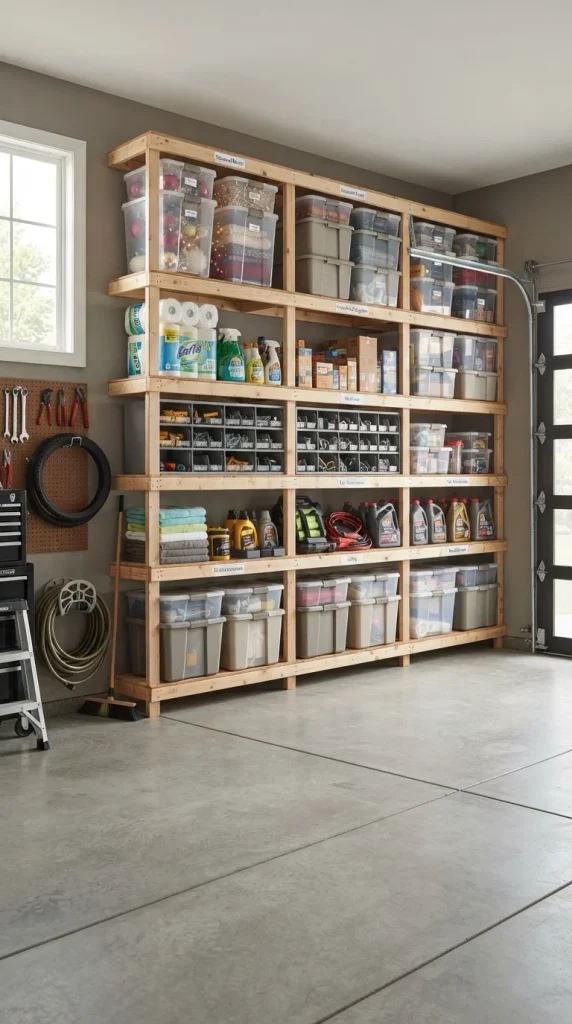
Storage bins are one of the easiest ways to control small items that would otherwise become scattered around the garage. Use separate containers for hardware, electrical supplies, car accessories, seasonal items, and household extras. Clear bins make it easier to identify contents, while labeled solid bins can create a cleaner visual appearance. Place frequently used containers on accessible shelves and reserve higher areas for items used less often. Avoid mixing unrelated items in one large container because it makes finding things harder. Stack bins carefully and keep heavier ones lower for easier handling. A simple bin system can turn loose garage clutter into organized storage.
14. Ceiling Storage for Seasonal Items

Seasonal belongings are ideal candidates for ceiling storage because they may only be needed a few times each year. Holiday decorations, winter equipment, outdoor cushions, and camping supplies can be placed in secure overhead containers. Use strong, sealed boxes to keep dust away and protect delicate belongings. Label each container clearly so you know what is inside before bringing it down. Keep heavier containers in positions that are easy to lower safely. Leave enough clearance around garage doors, lighting, and vehicles. When seasonal storage is planned carefully, it frees valuable shelves and floor areas for things you use throughout the year.
15. DIY Lumber Storage Rack
Extra boards and pieces of lumber can create a serious mess when they are simply leaned against a wall. A DIY lumber rack gives these materials a dedicated place while keeping them off the floor. Build a strong horizontal or vertical rack based on the amount and length of wood you normally store. Keep longer boards supported at several points so they do not fall or become difficult to handle. Separate different sizes when possible to make future projects easier. Place the rack in an area where it will not block your car or main walkway. Proper lumber storage keeps materials safer while making your garage easier to navigate.
16. Garage Door Storage Solutions

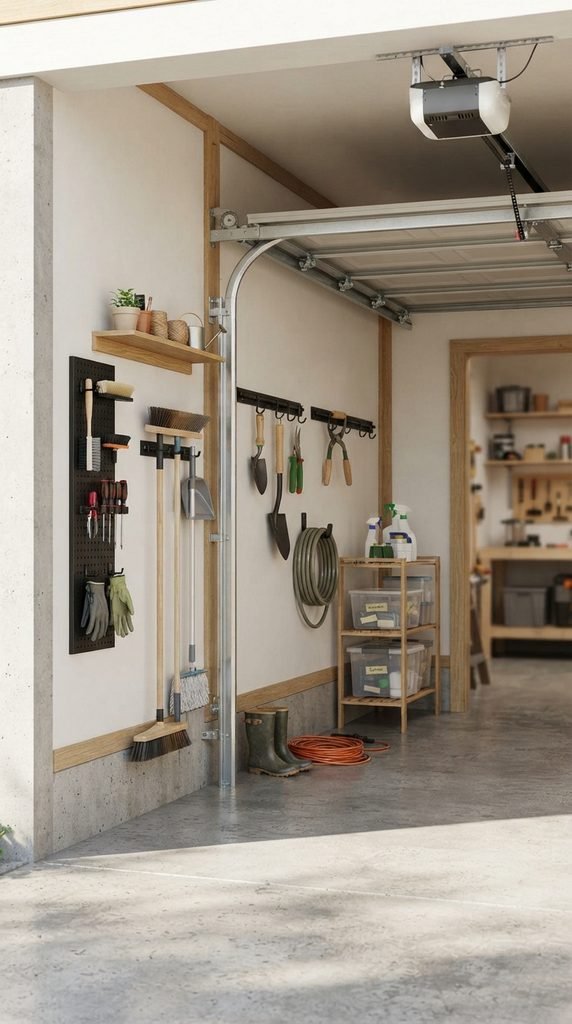
The area around the garage door can offer useful storage opportunities when planned carefully. Narrow racks, hooks, or wall organizers can hold lightweight items without interfering with the door mechanism. Use this space for small tools, cleaning accessories, sports gear, or other frequently used belongings. Avoid placing anything where it could obstruct the door or moving parts. Keep heavier items on secure wall-mounted supports rather than unstable hooks. A slim storage system can make use of an otherwise overlooked section of the garage. This is especially helpful when floor space is limited and every wall area matters.
17. DIY Cord and Cable Storage

Loose cords and cables can easily become tangled and difficult to identify. Create a simple storage station using hooks, small bins, or pieces of PVC pipe. Coil each cable neatly before storing it and avoid wrapping cords too tightly. Label different cables according to their purpose so you can find the right one quickly. You can also use separate sections for extension cords, power tools, chargers, and outdoor equipment. Keeping cables off the floor reduces trip hazards and makes cleaning easier. A small dedicated organizer can save time and prevent a frustrating pile of tangled wires.
18. Small Hardware Storage Containers
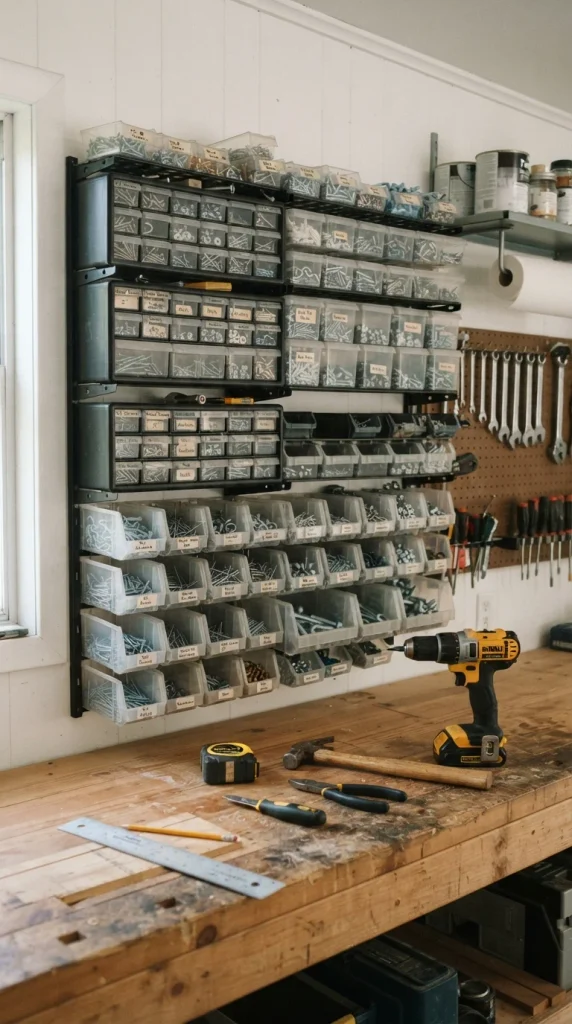
Nails, screws, bolts, washers, and other small hardware pieces are much easier to manage when stored in individual containers. Choose clear jars, small drawers, or divided boxes so you can quickly identify what you need. Group similar pieces together and label each container with its size or purpose. Keep the storage system close to your workbench for convenient access during projects. Small containers can also be mounted on a wall or placed inside a shallow drawer to save space. Avoid filling one container with mixed hardware because sorting it later takes extra time. A simple organized system makes small garage tasks faster and less frustrating.
19. DIY Paint and Supply Organization

Paint cans and decorating supplies can quickly fill shelves when they are not arranged properly. Use a dedicated cabinet or sturdy shelf to keep paint, brushes, rollers, tape, and other supplies together. Store cans upright and check that lids are properly sealed before putting them away. Place frequently used supplies where they are easy to reach while keeping older or less-used materials farther back. Small baskets can hold brushes, sanding tools, and painting accessories in one place. Keep the storage area dry and away from anything that could damage the containers. Organized paint storage makes future projects easier because everything is ready when you need it.
20. DIY Shoe and Boot Storage

Shoes and boots often end up near the garage entrance, creating an untidy pile and blocking the walkway. A simple shoe rack, bench with compartments, or wall-mounted organizer can give every pair a designated spot. Place outdoor boots on a lower shelf where dirt and moisture are easier to manage. Use separate sections for everyday shoes, work boots, and seasonal footwear. A washable mat underneath can help catch mud before it spreads across the garage floor. Keep the most frequently worn pairs near the entrance for convenience. This small organization project can make the garage entry feel cleaner and more welcoming.
21. Budget-Friendly Garage Storage Projects

You do not need an expensive renovation to create a more organized garage. Start with simple materials such as leftover wood, hooks, PVC pipes, baskets, and recycled containers. Look around the garage first and identify empty walls, unused corners, and vertical areas before buying anything. Build storage according to the items you already own instead of creating unnecessary shelves. Reusing materials can keep the project affordable while giving old items a useful purpose. Focus on practical storage that improves access and clears the floor. With thoughtful planning, even small DIY projects can make the entire garage feel more functional and manageable.
Conclusion
A well-organized garage starts with making better use of the space you already have. Wall storage, shelving, overhead racks, cabinets, bins, and simple DIY organizers can keep tools, equipment, bikes, and seasonal items in their proper places. Focus on vertical areas and unused corners while keeping everyday belongings easy to reach. With a little planning and creativity, you can make your garage cleaner, safer, and more useful without a costly renovation.
Frequently Asked Questions
What is the cheapest way to organize a garage?
Start with materials you already have, such as leftover wood, boxes, jars, hooks, and PVC pipes. Simple wall storage and labeled containers can provide useful organization without requiring expensive storage systems.
How can I organize a small garage?
Use vertical walls, ceiling space, narrow shelving, and wall-mounted racks. Keep the center of the garage open so you have enough room for your car and comfortable movement.
How do I keep garage tools organized?
Group tools by purpose and store them on pegboards, hooks, shelves, or inside labeled drawers. Keep the tools you use most often close to your workbench.
What should I store overhead in a garage?
Overhead storage works well for seasonal decorations, camping supplies, luggage, sports equipment, and other items you do not need every day. Use strong containers and label them clearly.
How can I make my garage look less cluttered?
Use matching storage bins, closed cabinets, labeled containers, and dedicated zones for different belongings. Keeping items off the floor will make the space look noticeably cleaner.
What materials are best for DIY garage storage?
Wood, metal brackets, PVC pipes, pegboards, hooks, wire racks, and sturdy plastic bins are useful choices. Select materials based on the weight and type of items you plan to store.
Where should I put garage storage shelves?
Place shelves along unused walls or in corners where they will not interfere with your car, doors, or walking paths. Keep heavy items low and frequently used items within comfortable reach.