A well-planned DIY craft desk can make your creative projects easier and more enjoyable. These 21 DIY Craft Desk Ideas offer simple ways to create a stylish and organized craft workspace. From small craft desks to smart craft room storage and practical craft station ideas, there is something for every space. Use these ideas to build a comfortable workspace that keeps your supplies tidy and your creativity flowing.
1. Simple Wooden Craft Desk

A simple wooden desk is a practical choice for a DIY craft workspace. Use a sturdy tabletop with basic legs to create an affordable desk. Add a few small shelves underneath for storing craft supplies. Keep the surface mostly clear so you have enough room to work comfortably.
2. Wall-Mounted Craft Desk

A wall-mounted craft desk is perfect when floor space is limited. Attach a strong wooden surface to the wall at a comfortable working height. Add shelves or pegboards above it for easy storage. You can fold the desk away when it is not being used.
3. Small Corner Craft Desk

Turn an unused corner into a useful creative workspace with a compact desk. Choose a narrow tabletop that fits neatly between two walls. Use vertical shelves to store paper, tools, paints, and other supplies. This setup works especially well in small rooms.
4. DIY Craft Desk With Shelves

Built-in shelves can make a craft desk much more useful. Place open shelves beside or underneath the desk for quick access to supplies. Use baskets and small containers to keep everything organized. This design gives you both a comfortable workspace and practical storage.
5. Pegboard Craft Desk

A pegboard above your desk provides flexible storage for everyday craft tools. Hang scissors, rulers, brushes, ribbons, and other small items where you can easily reach them. Paint the pegboard to match your room for a coordinated look. Keep frequently used supplies at eye level.
6. Foldable Craft Desk

A foldable craft desk is a smart solution for multipurpose rooms. Use hinges to create a tabletop that can fold against the wall when you finish crafting. Add small shelves nearby for your supplies. This design saves space without giving up a useful work surface.
7. Craft Desk With Drawer Storage
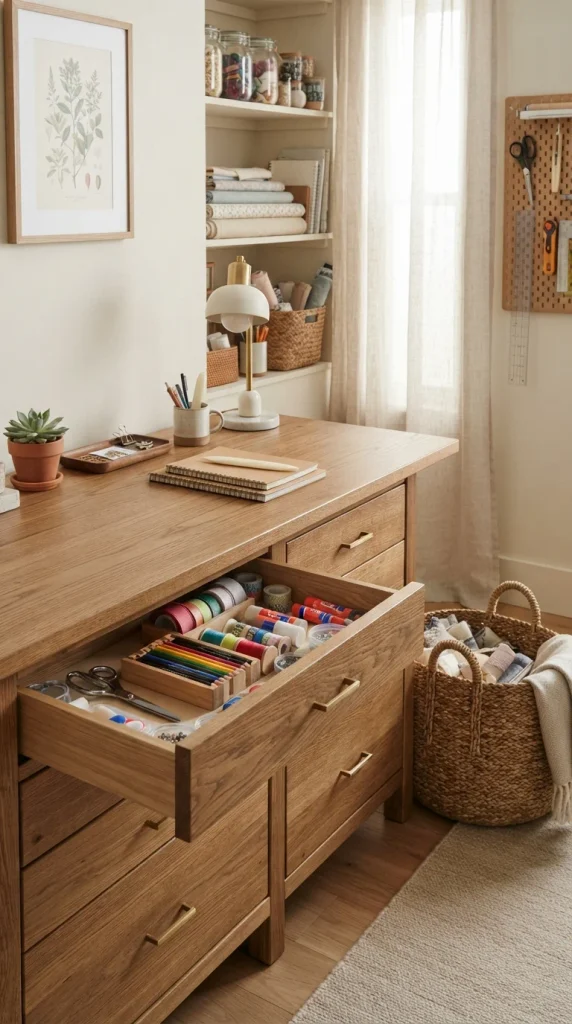
Drawers are excellent for keeping small craft supplies out of sight. You can build or reuse a desk with several drawers for scissors, glue, paper, threads, and tools. Label each drawer to make supplies easier to find. Keep the most-used items in the top drawers.
8. DIY Craft Desk From an Old Table

An old table can easily become a useful DIY craft desk with a little updating. Sand the surface, repair any damage, and give it a fresh finish or paint color. Add storage baskets underneath for extra organization. This is also a budget-friendly way to create a personalized workspace.
9. Floating Craft Desk With Storage

A floating desk creates a clean and modern craft workspace without taking up much floor space. Install a sturdy tabletop directly onto the wall and place storage shelves above it. Use matching boxes or baskets to hide clutter. The open floor underneath can make a small room feel larger.
10. Craft Desk With Rolling Cart

Pair your desk with a rolling storage cart for flexible organization. Keep paints, tools, paper, and other frequently used materials inside the cart. You can move it around the room whenever needed. Choose a cart with several levels to make the most of vertical space.
11. DIY Craft Desk for Small Spaces

A narrow desk can provide a complete craft station even in a small room. Choose a compact design with drawers, shelves, or wall storage to save space. Keep the tabletop simple and uncluttered. Vertical organization can give you more storage without making the room feel crowded.
12. L-Shaped Craft Desk

An L-shaped desk gives you separate areas for different creative tasks. One side can be used for drawing or cutting, while the other can hold your supplies or computer. Add shelves underneath both sections for extra storage. This design works well in a dedicated craft room.
13. Craft Desk With Cube Storage
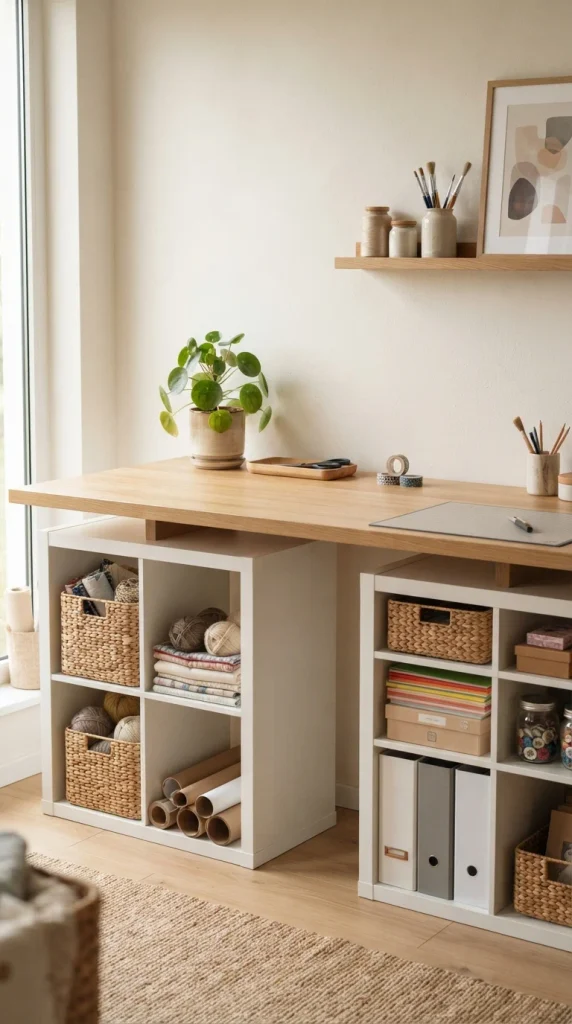
Cube storage units can serve as sturdy supports for a DIY craft desk. Place a tabletop across two cube organizers to create a simple workstation. Use the cubes for baskets, fabric, paper, and craft tools. This setup is easy to customize as your storage needs change.
14. Minimalist Craft Workspace

A minimalist craft desk focuses on keeping the workspace clean and useful. Choose a simple tabletop with only essential storage nearby. Use matching containers to reduce visual clutter. A neutral color palette can also create a calm space that helps you concentrate on creative projects.
15. Colorful DIY Craft Desk
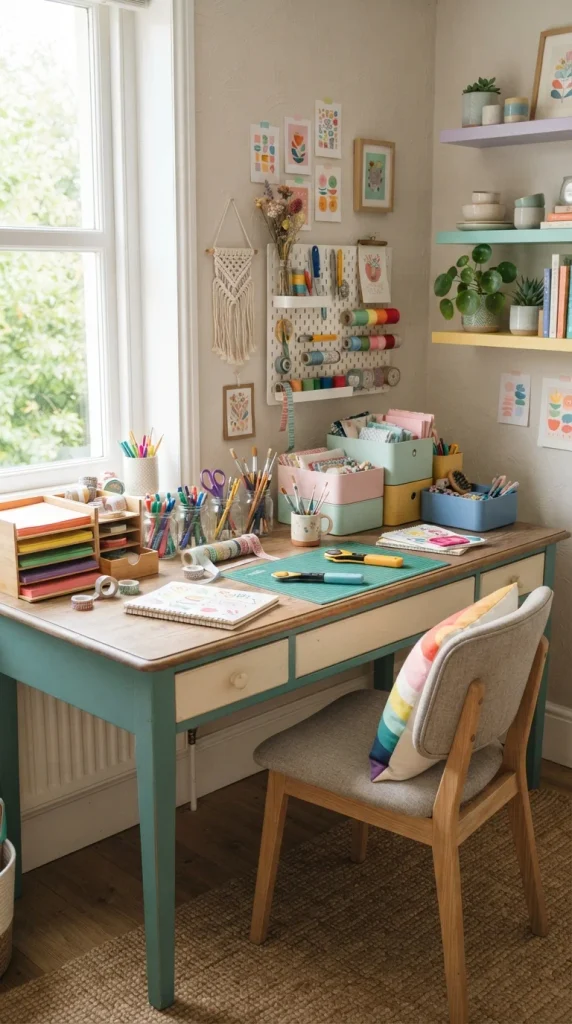
Add personality to your craft room with a colorful desk setup. Paint the desk in a cheerful shade or use colorful storage boxes and accessories. Keep the main workspace practical so the colors do not become distracting. This is a fun option for a creative and inspiring craft station.
16. Craft Desk With Overhead Cabinets
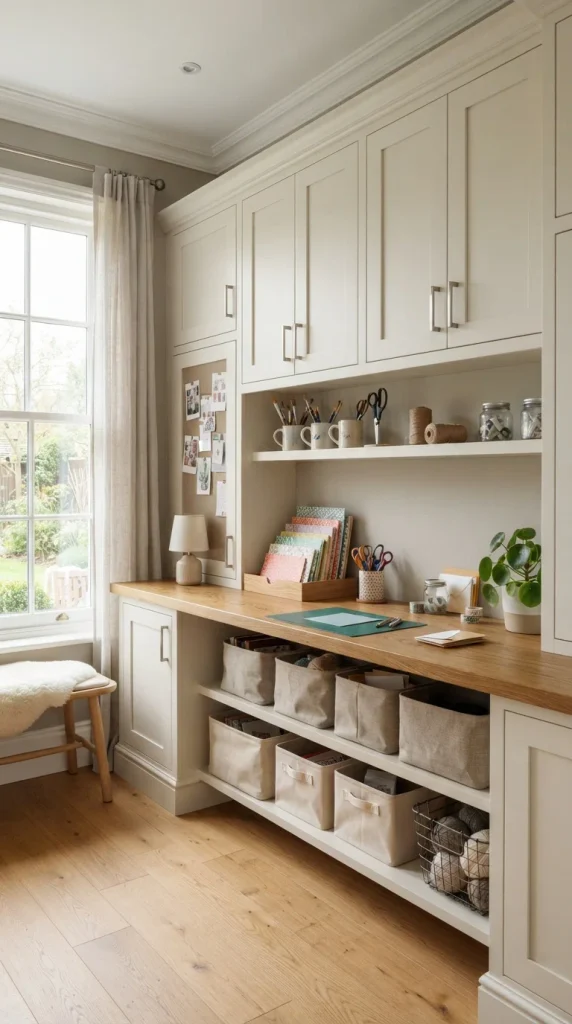
Overhead cabinets provide valuable storage while keeping the floor area open. Install them above the desk to store materials that you do not use every day. Keep frequently used supplies on the desk or in lower storage. Choose cabinet doors if you prefer a clean and uncluttered look.
17. DIY Craft Desk With Open Bins

Open bins make it easy to see and reach your craft supplies while working. Place them on shelves under or beside the desk and group similar items together. Use separate bins for paper, fabric, paint, tools, and accessories. This simple system can make craft desk organization much easier.
18. Narrow Craft Desk for a Hallway

A narrow hallway or unused wall can become a compact craft station. Choose a slim desk that does not block the walking area. Add wall shelves above it for supplies and decorations. This idea is useful when you want a dedicated workspace without needing an entire room.
19. Craft Desk With Built-In Lighting
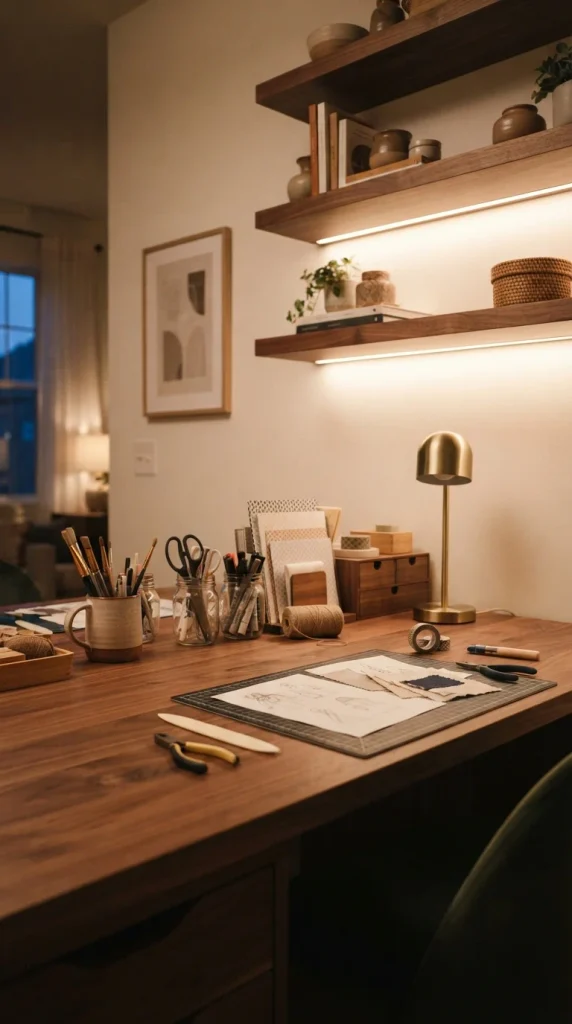
Good lighting can make crafting more comfortable and help you see small details clearly. Add a desk lamp or install lighting underneath shelves above the workspace. Choose adjustable lighting so you can direct it where you need it most. Keep cords organized to maintain a neat desk.
20. Rustic DIY Craft Desk
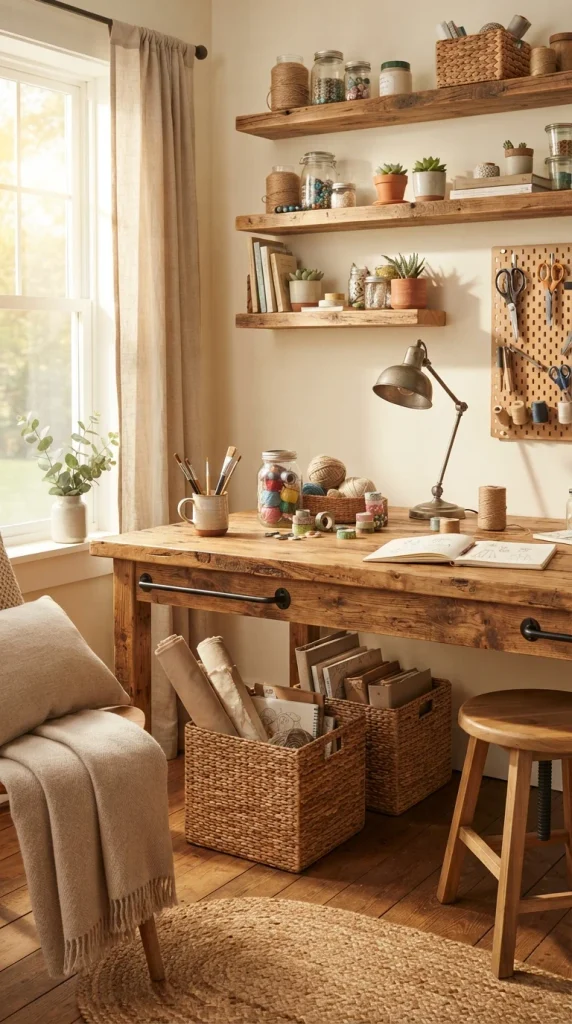
A rustic craft desk can bring warmth and character to your workspace. Use natural wood, simple hardware, and woven baskets to create a cozy look. Keep the design practical with drawers or shelves for storage. This style works especially well in warm and relaxed craft rooms.
21. Multi-Purpose DIY Craft Desk

A multi-purpose desk can support crafting, writing, organizing, and other everyday tasks. Choose a spacious tabletop with flexible storage underneath or nearby. Keep supplies in removable containers so the desk can quickly be cleared. This is a practical option for bedrooms, home offices, and shared spaces.
Conclusion
The right DIY Craft Desk Ideas can turn even a small area into a comfortable and organized creative workspace. Focus on a sturdy work surface, useful storage, good lighting, and a layout that fits your room. Whether you choose a simple wooden desk, a wall-mounted design, or a storage-friendly craft station, the goal is to create a space that makes crafting easier and more enjoyable.
Frequently Asked Questions
1. What is the best material for a DIY craft desk?
Wood is a popular choice because it is strong, easy to customize, and works with many decor styles. Plywood and laminated boards can also be practical options for budget-friendly projects.
2. How can I make a craft desk for a small room?
Choose a narrow, wall-mounted, or foldable desk to save floor space. Use shelves, pegboards, and vertical organizers to store supplies without taking up more room.
3. How much does it cost to build a DIY craft desk?
The cost depends on the materials and design. Using an old table, basic wood, or affordable storage units can help create a useful craft desk without spending a lot.
4. What should I keep on a craft desk?
Keep only frequently used tools on the desktop, such as scissors, glue, pencils, brushes, or cutting tools. Store less-used supplies in drawers, bins, shelves, or cabinets.
5. What colors work well for a craft workspace?
Soft neutrals, warm wood tones, white, beige, and light pastels can create a calm workspace. Brighter colors can be added through storage boxes, accessories, or wall decor.
6. Where should I place a DIY craft desk?
Place the desk near a window when possible so you can benefit from natural light. If that is not practical, choose a well-lit wall and add a good desk lamp for focused work.
7. How can I keep my craft desk organized?
Group similar supplies together and use labeled boxes, drawers, baskets, or containers. Keep your most-used tools within easy reach and clear the desktop after each project.