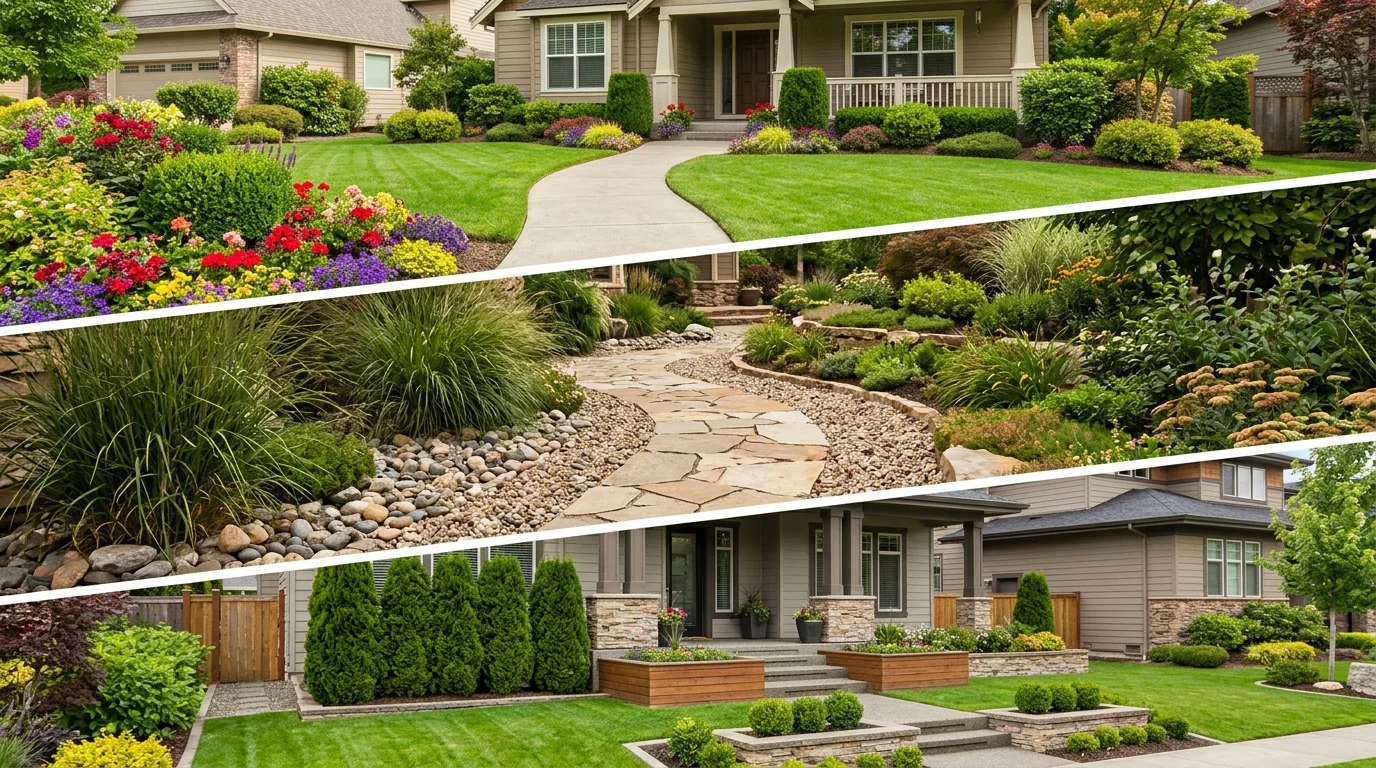
Front yard landscaping is a great way to improve your home’s curb appeal and create a beautiful first impression. From colorful flower beds and lush green lawns to stone pathways and stylish garden borders, the right front yard landscaping ideas can make any home look more welcoming. Whether you have a small front yard or a large outdoor space, simple landscaping designs can add charm, beauty, and value to your property. Explore these 21 front yard landscaping ideas to create an attractive, inviting, and well-organized outdoor space.
1. Colorful Flower Beds
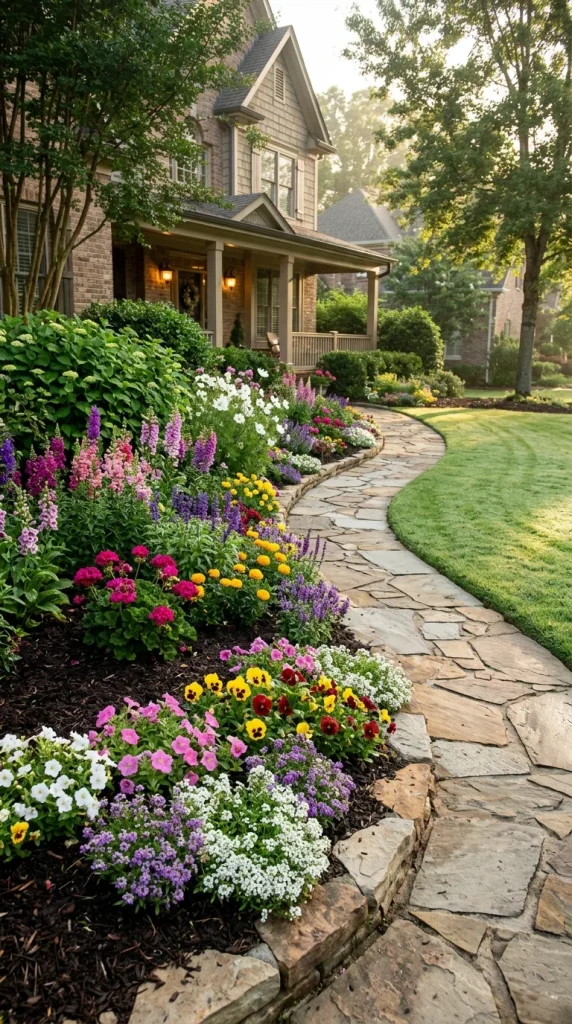
Colorful flower beds can make your front yard look bright, cheerful, and welcoming. Choose flowers in different colors that complement your home’s exterior. Arrange taller plants at the back and shorter flowers near the front for a neat appearance. Add fresh mulch to keep the soil healthy and give the flower beds a finished look.
2. Lush Green Lawns

A lush green lawn creates a fresh and beautiful look for your front yard. Keep the grass trimmed and water it according to your local weather and soil conditions. You can add a few small plants or flowers along the edges to make the lawn more attractive. Regular lawn care helps your outdoor space look clean and well-maintained.
3. Stone Garden Pathways
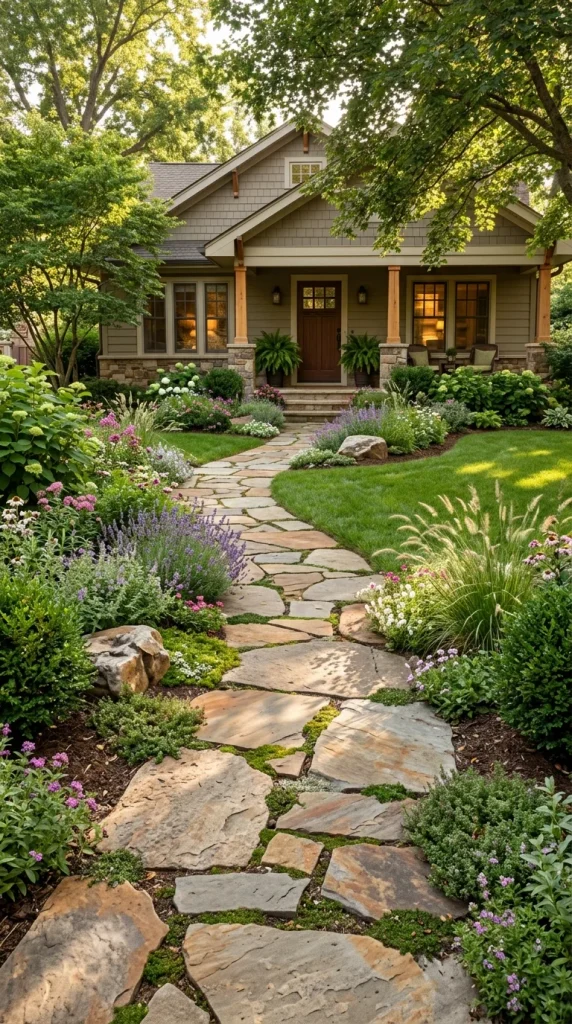
Stone garden pathways add charm and function to your front yard landscaping. Use natural stone pavers to create a clear walkway from the driveway or sidewalk to your front door. Choose stones that match your home’s style and outdoor colors. Adding low-growing plants along the edges can make the pathway feel more natural and inviting.
4. Modern Gravel Gardens
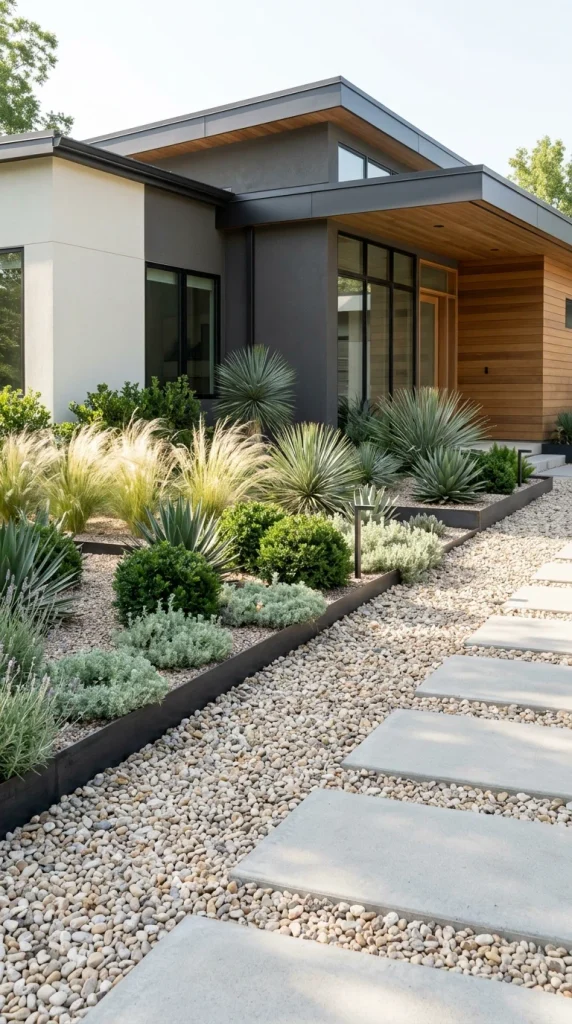
Modern gravel gardens are a stylish choice for homeowners who want simple and low-maintenance landscaping. Use decorative gravel in neutral shades such as white, gray, or beige to create a clean outdoor design. Add ornamental grasses, small shrubs, or drought-tolerant plants for extra texture. A weed barrier beneath the gravel can help reduce unwanted growth and keep the area tidy.
5. Charming Garden Borders

Garden borders help define your front yard and create a neat, organized appearance. You can use bricks, natural stones, or metal edging to separate flower beds from the lawn. Plant colorful flowers and small shrubs along the borders to add beauty and texture. Choose materials that complement your home’s exterior for a balanced landscaping design.
6. Small Tree Landscaping
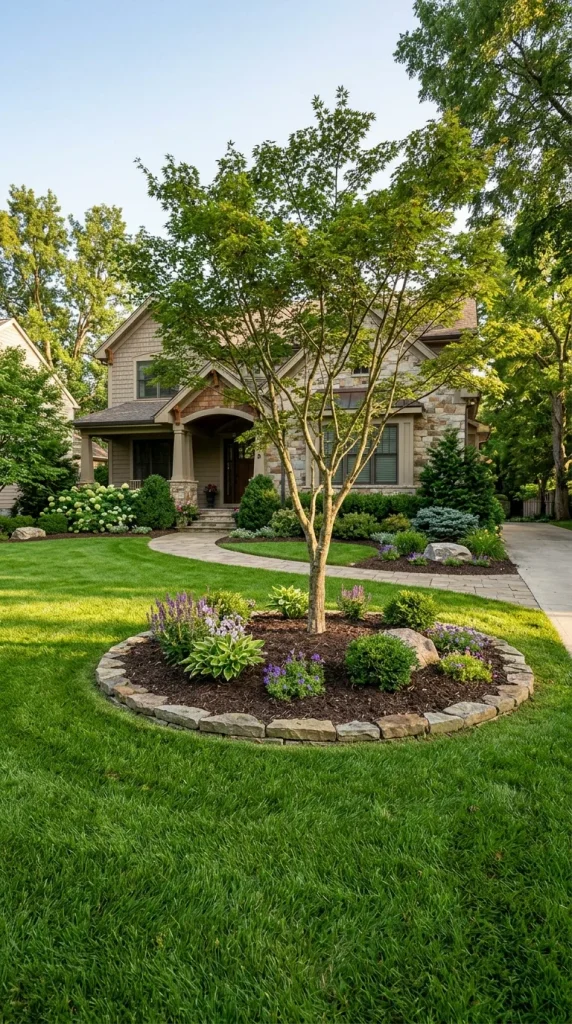
Small trees can add height, shade, and natural beauty to your front yard without taking up too much space. Choose varieties that suit your local climate and will fit comfortably when fully grown. Place them where their roots and branches will not interfere with walkways, foundations, or overhead wires. Surrounding the trees with flowers or decorative mulch can create an attractive focal point.
7. Elegant Front Walkways

An elegant front walkway makes your home feel more welcoming and provides a practical route to the entrance. Choose concrete pavers, brick, or natural stone to match your home’s architectural style. Keep the path wide enough for comfortable walking and make sure the surface is safe and even. Adding small plants or outdoor lights along the walkway can improve its appearance.
8. Decorative Rock Gardens

Decorative rock gardens bring natural texture and visual interest to front yard landscaping. Combine rocks of different sizes with ornamental grasses, succulents, or other plants suited to your climate. Arrange the stones in natural-looking groups rather than spreading them randomly across the yard. This design works especially well in areas where maintaining a traditional lawn would require too much water or effort.
9. Symmetrical Garden Designs
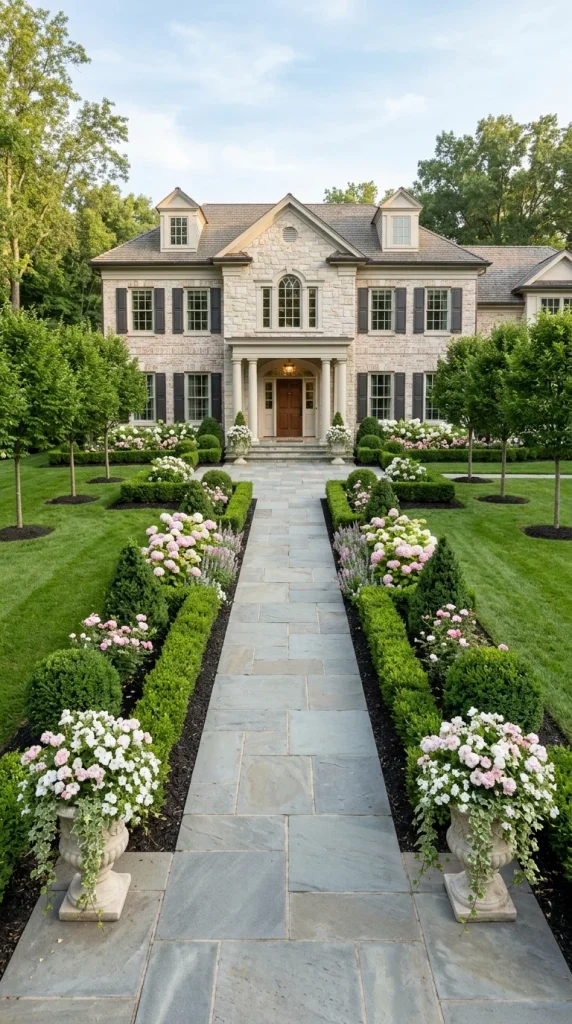
Symmetrical garden designs create a balanced and elegant look around your front entrance. Place matching planters, shrubs, or flower beds on both sides of the front door or walkway. Keep the plants trimmed to maintain a clean and organized appearance. This landscaping style works particularly well with traditional homes and entrances that benefit from a formal design.
10. Cottage Style Gardens

Cottage-style gardens bring a relaxed and charming feeling to your front yard. Plant a mix of colorful flowers, leafy greenery, and small shrubs to create a natural, layered appearance. Choose plants with different heights and flowering seasons to keep the garden interesting throughout the year. A simple stone pathway or wooden garden gate can complete this welcoming look.
11. Low Maintenance Landscaping
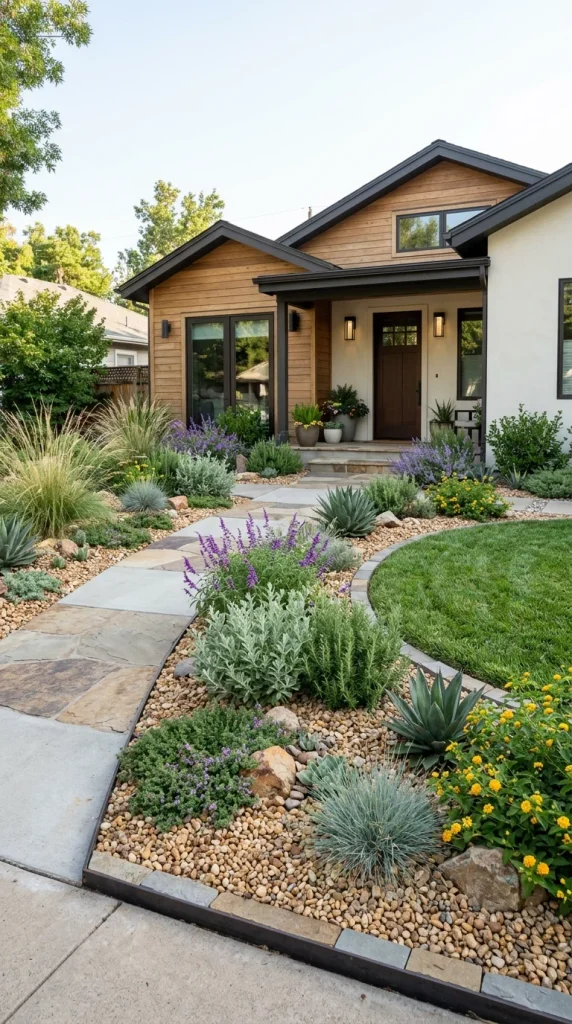
Low-maintenance landscaping is ideal for homeowners who want a beautiful yard without spending hours on upkeep. Choose hardy plants that grow well in your local climate and require less frequent watering. Use mulch or suitable ground covers to reduce weeds and protect the soil. Combining these plants with gravel pathways and clearly defined borders creates an attractive yard that is easier to manage.
12. Layered Planting Designs
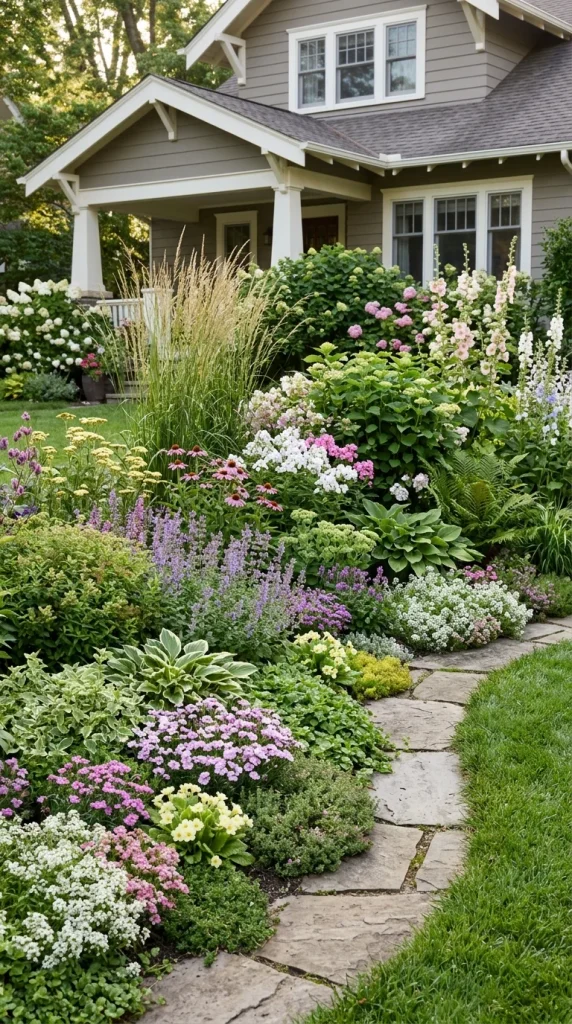
Layered planting designs make your front yard look fuller and more visually interesting. Place taller shrubs or ornamental grasses at the back, medium-sized plants in the middle, and shorter flowers near the front. Choose plants with complementary colors, leaf shapes, and growing needs. This arrangement creates depth while allowing each plant to remain visible and receive enough sunlight.
13. Beautiful Shrub Borders
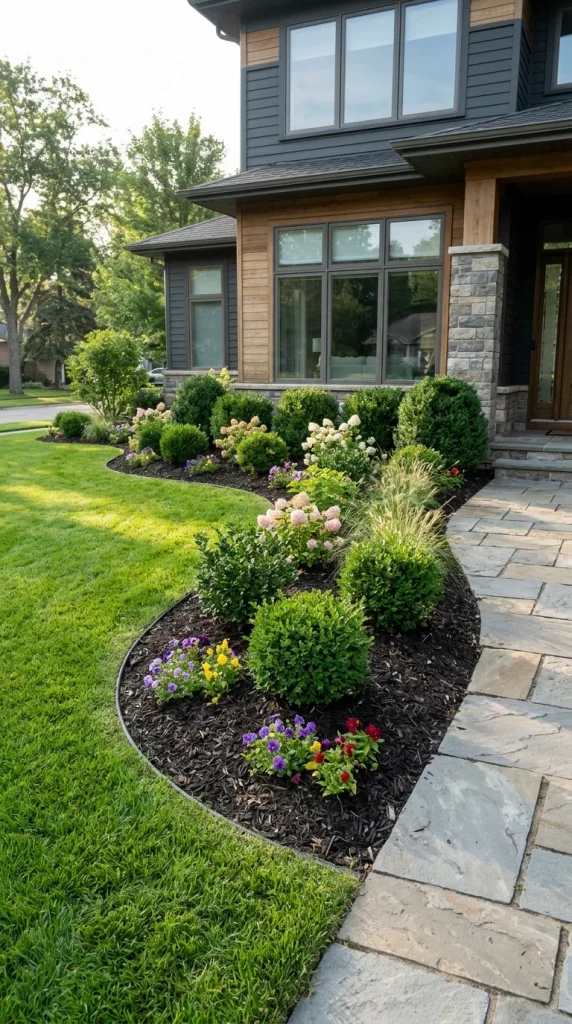
Shrub borders add greenery, structure, and a polished appearance to your front yard. Plant compact shrubs along the foundation of your home, beside walkways, or around flower beds. Mix different leaf textures and plant heights to create a more natural design. Leave enough room for mature growth so the shrubs do not block windows, doors, or outdoor access.
14. Welcoming Porch Gardens
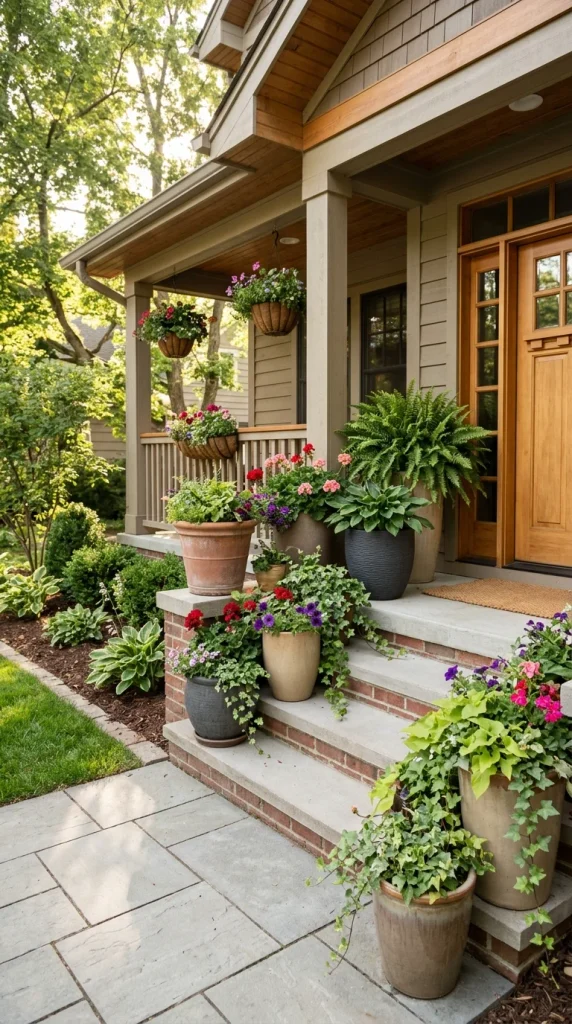
A porch garden can make your front entrance feel warm and inviting. Place attractive planters beside the steps or near the front door, using flowers and greenery that suit the available sunlight. Combine different planter heights to add interest without overcrowding the entrance. Keep the steps and walkway clear so your porch remains comfortable and easy to access.
15. Raised Flower Planters

Raised flower planters are a practical way to add color and structure to your front yard. Choose wooden, brick, or stone planters that complement your home’s exterior. Fill them with suitable soil and plant flowers, compact shrubs, or seasonal greenery. Raised beds can also make gardening easier by providing better control over soil conditions and helping define outdoor spaces.
16. Curved Garden Edges

Curved garden edges give your front yard a soft and natural appearance. Use gentle curves to shape flower beds around the lawn, trees, or front walkway. Define the edges with bricks, stones, or flexible landscape edging to keep the design neat. Planting colorful flowers and low-growing greenery along these curves can make the entire yard feel more welcoming.
17. Evergreen Foundation Plants

Evergreen foundation plants provide year-round greenery and help connect your home with the surrounding landscape. Choose compact evergreen shrubs that suit your climate and will not grow too large for the available space. Arrange them along the front of your house, leaving enough room around windows and exterior walls. Mixing evergreens with seasonal flowers adds color while keeping the overall design attractive throughout the year.
18. Rustic Wooden Planters
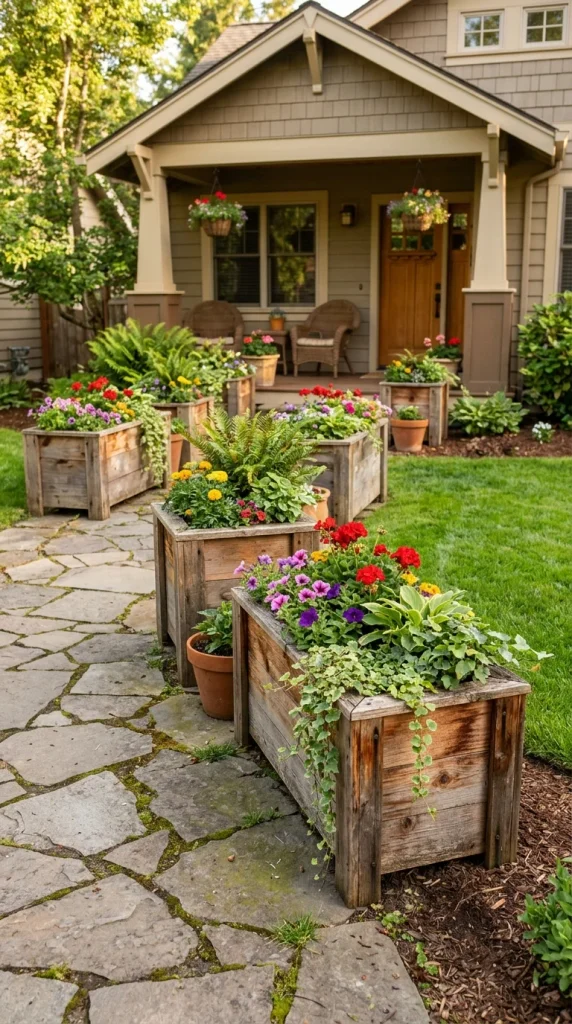
Rustic wooden planters bring warmth and a natural touch to front yard landscaping. Place them near your porch, along the walkway, or beside the entrance to create welcoming focal points. Fill them with colorful flowers, trailing greenery, or small ornamental plants that suit the location. Choose weather-resistant wood or a suitable protective finish to help the planters last longer outdoors.
19. Water Feature Gardens

Water feature gardens can create a peaceful and attractive focal point in your front yard. A small fountain or compact water feature works well beside a garden pathway or within a decorative planting bed. Surround it with stones, ornamental grasses, and moisture-tolerant plants suited to the location. Choose a size that fits your space and plan for safe installation, regular cleaning, and easy maintenance.
20. Tropical Front Gardens

Tropical front gardens create a lush and vibrant look with bold leaves and rich greenery. Choose tropical plants that can thrive in your local climate, such as suitable palms, elephant ears, or other large-leaf varieties. Arrange plants at different heights to create depth and a natural appearance. In cooler climates, use cold-hardy alternatives or grow sensitive plants in containers that can be moved indoors.
21. Minimalist Modern Landscaping
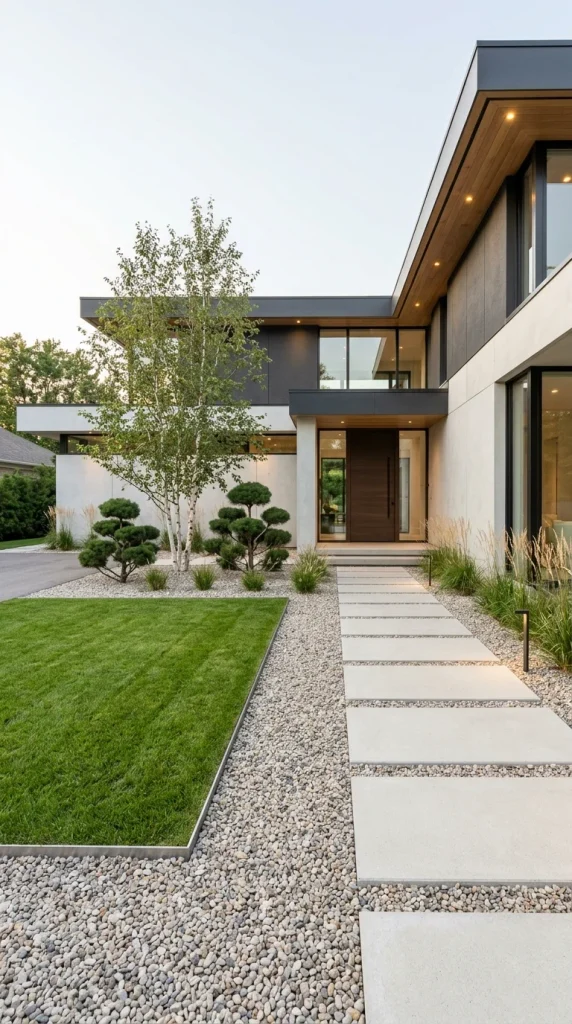
Minimalist modern landscaping focuses on clean lines, simple materials, and carefully chosen plants. Use a limited color palette with gravel, concrete pavers, and a few well-placed shrubs or ornamental grasses. Keep the lawn and garden borders neat to maintain an uncluttered appearance. This style works especially well for contemporary homes and homeowners who prefer a simple outdoor space.
Conclusion
Beautiful front yard landscaping can make your home more welcoming while improving its curb appeal. From colorful flower beds and stone pathways to low-maintenance gardens and modern designs, there are plenty of ways to create an outdoor space that suits your home and budget. Choose plants that grow well in your local climate, use practical materials, and keep the layout balanced. With thoughtful planning and regular care, your front yard can remain attractive and inviting throughout the year.
Frequently Asked Questions
1. How can I landscape my front yard on a budget?
Start with affordable improvements such as adding mulch, planting seasonal flowers, creating simple garden borders, and refreshing existing plants. You can also use gravel or reuse suitable stones to define pathways and garden beds. Focus on one area at a time to spread out the cost.
2. What are the best front yard landscaping ideas for small spaces?
Small front yards benefit from vertical planting, compact shrubs, narrow flower beds, and simple walkways. Choose plants that will not outgrow the available space and avoid filling every corner with decorations. A clear layout can make a small yard feel more open.
3. Which plants are best for front yard landscaping?
The best plants depend on your climate, soil, sunlight, and available space. Evergreen shrubs, native plants, ornamental grasses, and seasonal flowers are popular options. Choose varieties suited to your local conditions to make gardening easier and reduce maintenance.
4. How can I make my front yard look more expensive?
Use a coordinated color palette, neatly trimmed plants, attractive edging, and a well-defined walkway. Matching planters and balanced planting around the entrance can also create a polished appearance. Keeping the lawn, driveway, and garden beds clean makes a noticeable difference.
5. What materials are best for front yard landscaping?
Popular materials include natural stone, brick, concrete pavers, decorative gravel, mulch, and weather-resistant wood. Select materials that complement your home’s exterior and suit your budget. For pathways, choose durable, slip-resistant surfaces that remain safe in wet weather.
6. How do I choose the right front yard landscaping design?
Consider your home’s architectural style, the size of your yard, your budget, and the amount of maintenance you can manage. Look at how sunlight and drainage affect different areas before choosing plants. A simple plan with a few coordinated features often looks better than an overcrowded design.
7. How can I maintain my front yard landscaping throughout the year?
Regularly remove weeds, trim plants when needed, and check that your garden receives appropriate water. Refresh mulch when necessary and remove dead leaves or damaged branches. Adjust seasonal planting and watering according to your local weather to keep your front yard healthy and attractive.