havenoracozydecor

  • 21 Dining Room Paint Colors That Create a Cozy and Elegant Atmosphere

    21 Dining Room Paint Colors That Create a Cozy and Elegant Atmosphere

    The right dining room paint color can instantly make your space feel warmer, brighter, and more inviting. From soft neutrals to rich, moody shades, the perfect color can complement your furniture and create a beautiful atmosphere. Whether you love a classic, modern, or cozy style, there are plenty of shades to explore. These 21 dining…


  • 25 British Colonial Interior Design Ideas for a Timeless and Elegant Home

    25 British Colonial Interior Design Ideas for a Timeless and Elegant Home

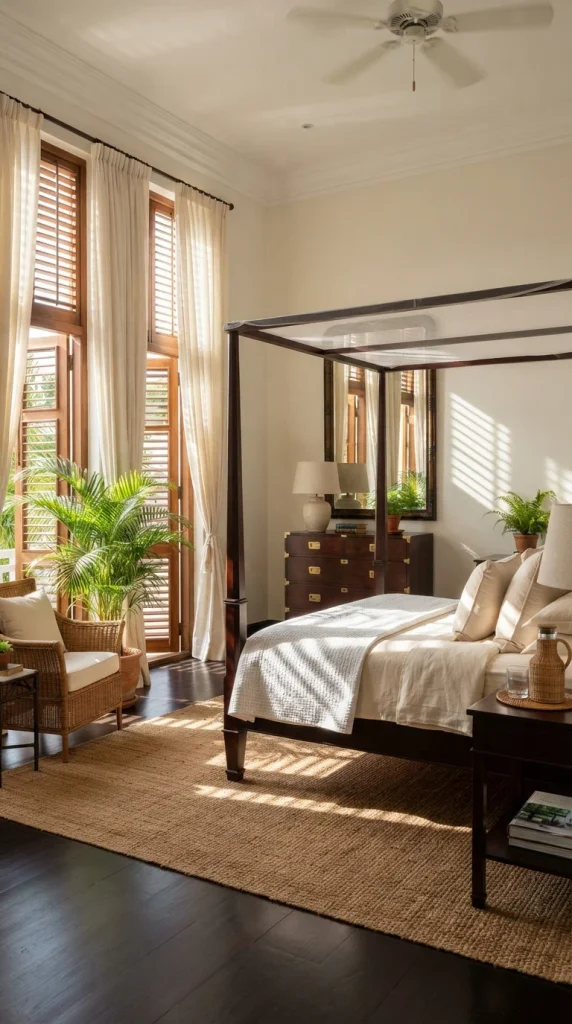
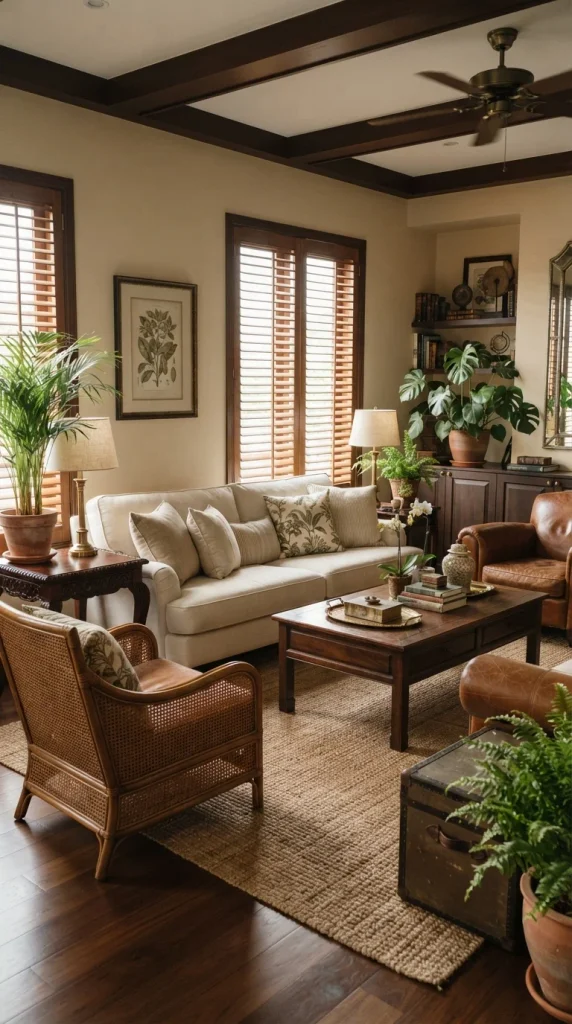
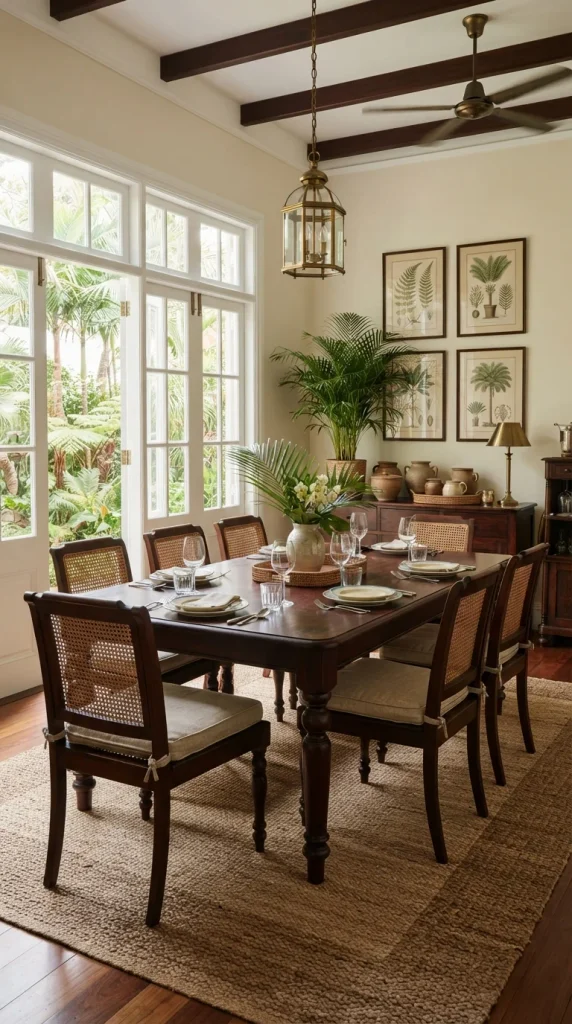
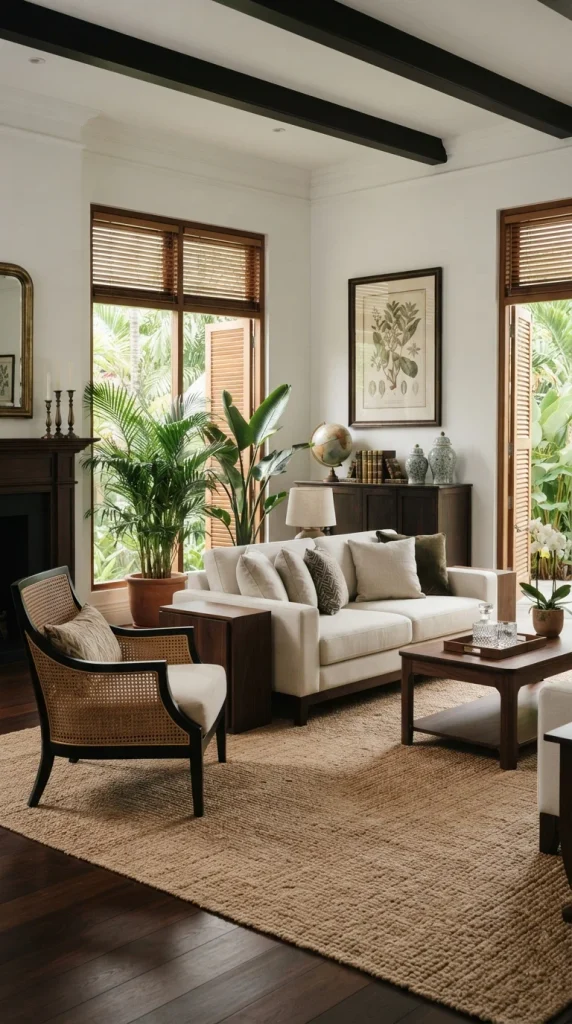
    British Colonial interior design brings together classic British elegance with warm tropical influences and natural materials. From rich wood furniture and woven textures to soft neutral colors and lush greenery, this style feels both refined and comfortable. These 25 British Colonial interior design ideas can help you create a timeless home with character and warmth.…


  • 22 Budget-Friendly Outdoor Seating Ideas for a Cozy Backyard

    22 Budget-Friendly Outdoor Seating Ideas for a Cozy Backyard

    Create a cozy backyard oasis with affordable outdoor seating, soft cushions, pillows, and simple outdoor furniture for comfort and relaxation. A small patio, deck, lawn, or balcony can become a welcoming outdoor lounge with smart space-saving seating and weather-resistant materials. Choose comfortable seating and durable materials that suit your climate, seating style, and maintenance needs.…


  • 21 IKEA Closet Hacks for Better Storage and Organization

    21 IKEA Closet Hacks for Better Storage and Organization

    IKEA closet pieces can be a simple way to create more storage without spending a lot on custom cabinetry. With the right combination of shelves, drawers, rails, and organizers, even a small closet can become much more functional. You can also personalize basic IKEA furniture with stylish hardware, baskets, and wood details. These IKEA closet…


  • 21 Budget-Friendly Pool Ideas for a Beautiful Backyard

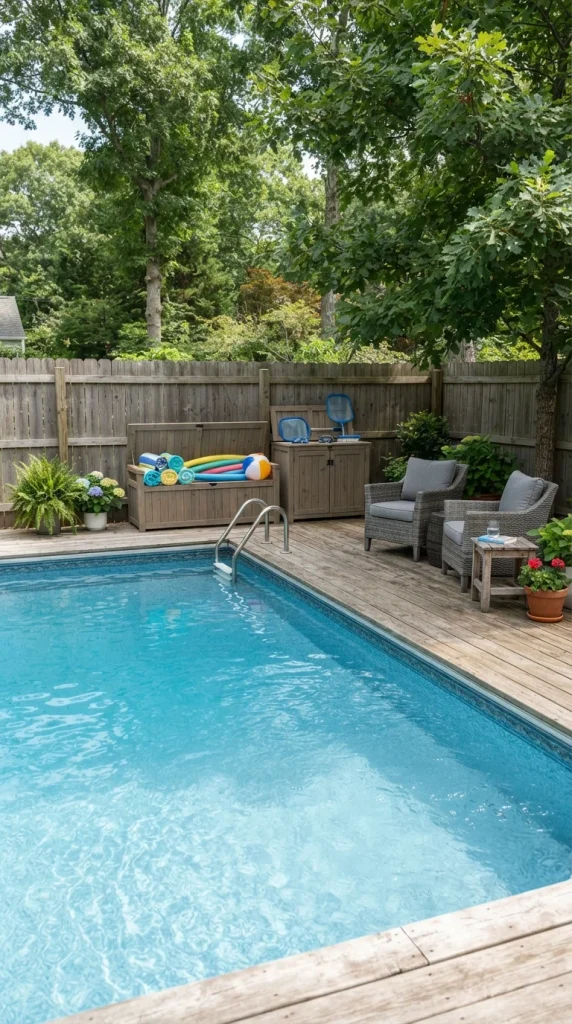
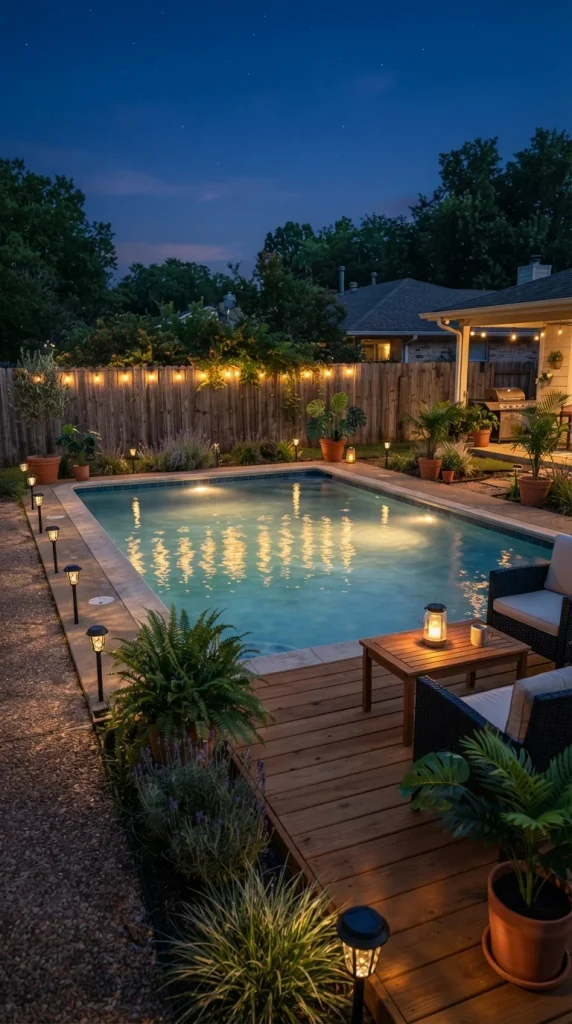
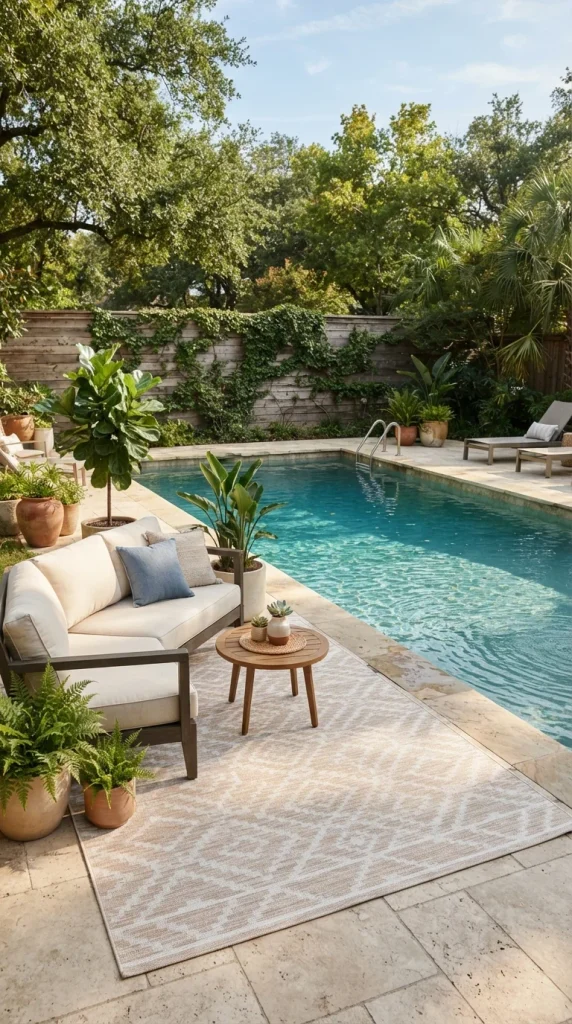
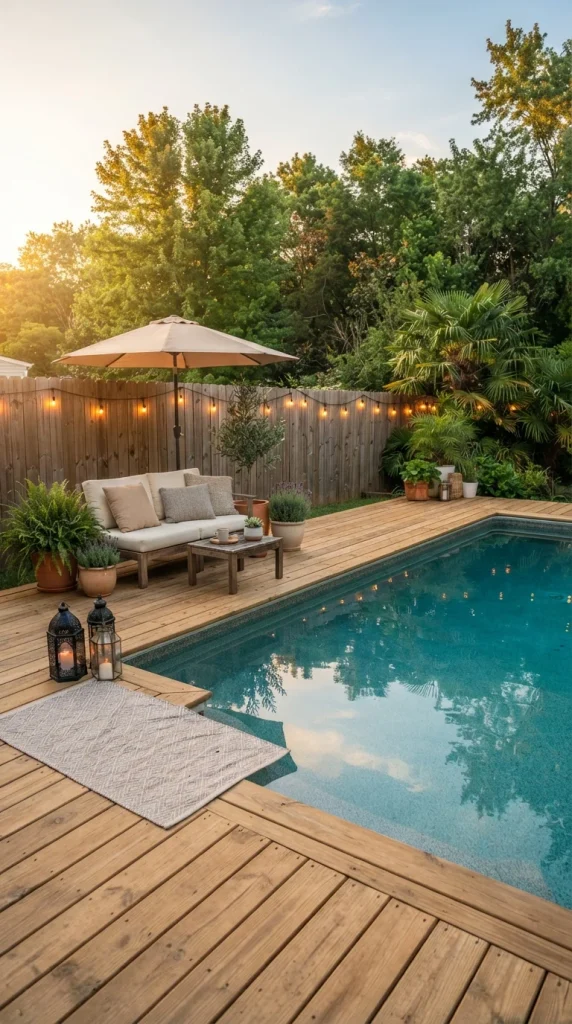
    21 Budget-Friendly Pool Ideas for a Beautiful Backyard

    A beautiful backyard pool does not have to cost a fortune or require a complete outdoor makeover. With smart choices, simple materials, and creative styling, you can create a pool area that feels comfortable, inviting, and stylish. From affordable pool decks to DIY landscaping and cozy seating, there are many ways to refresh your outdoor…


  • 21 Unfinished Basement Ideas to Make the Most of Your Extra Space

    21 Unfinished Basement Ideas to Make the Most of Your Extra Space

    An unfinished basement can become one of the most useful areas in your home with a little creativity. You do not need a complete renovation to make the space feel organized, comfortable, and inviting. From smart storage and cozy seating to work areas and simple lighting, there are many ways to use every corner. These…


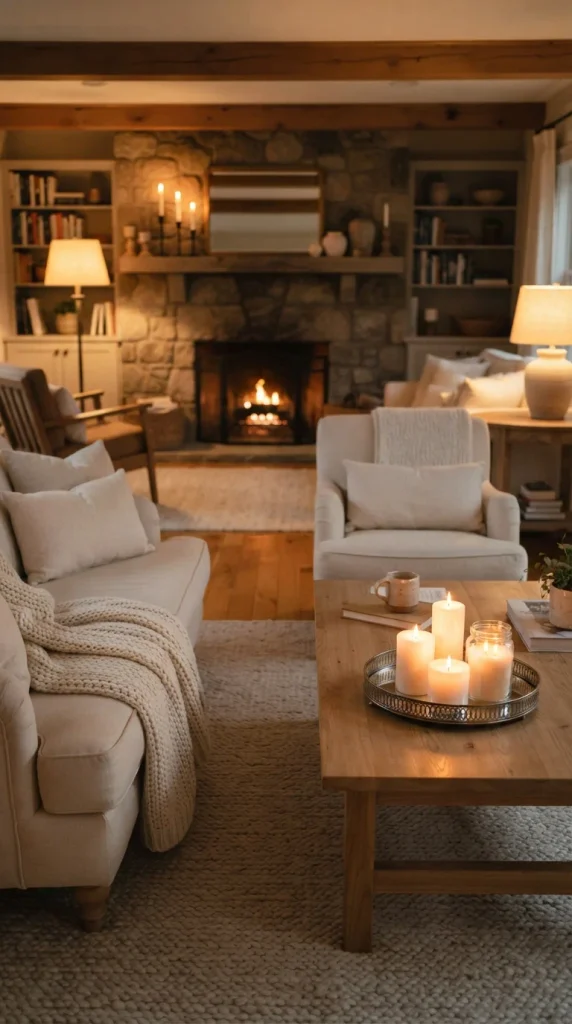
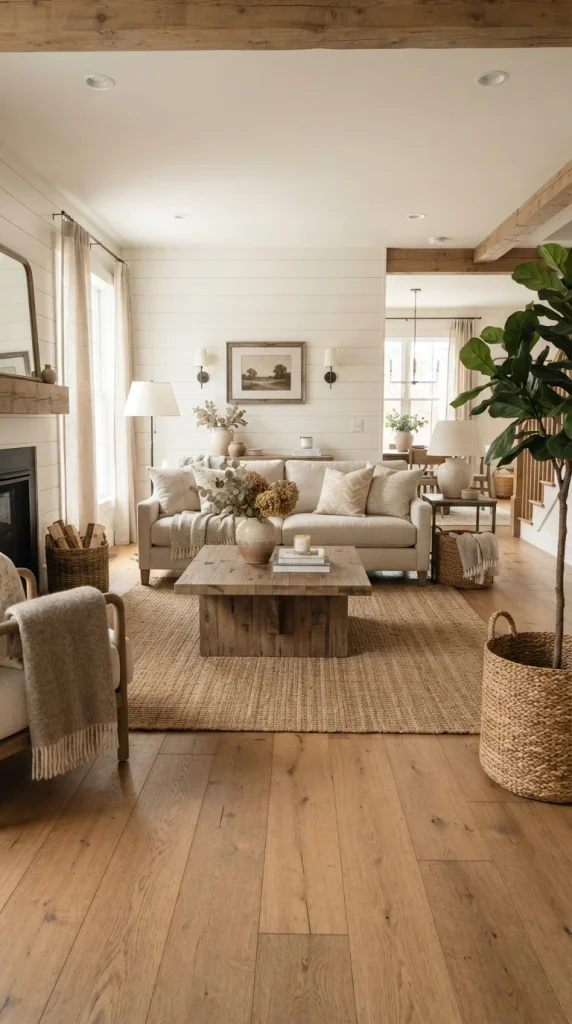
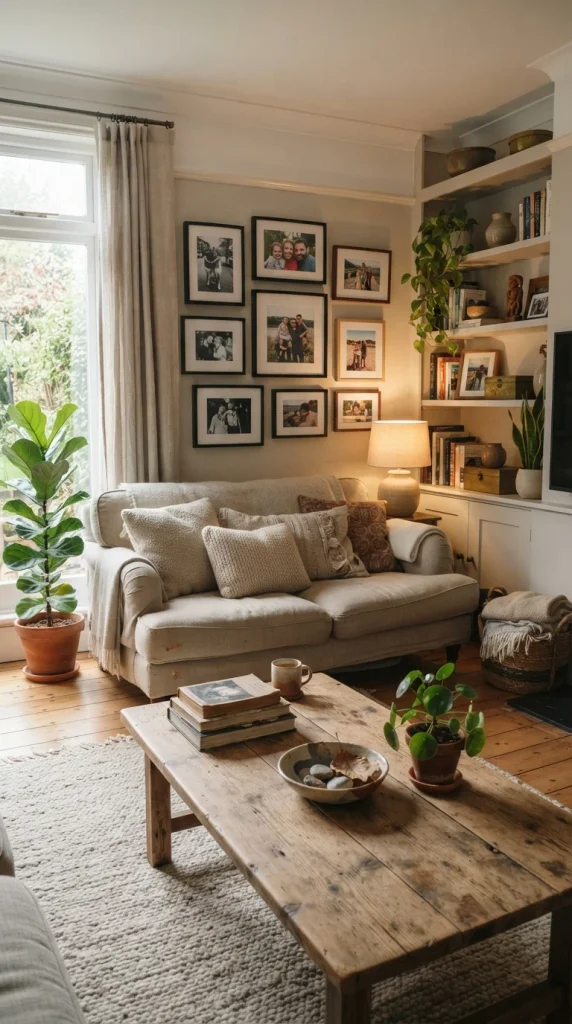
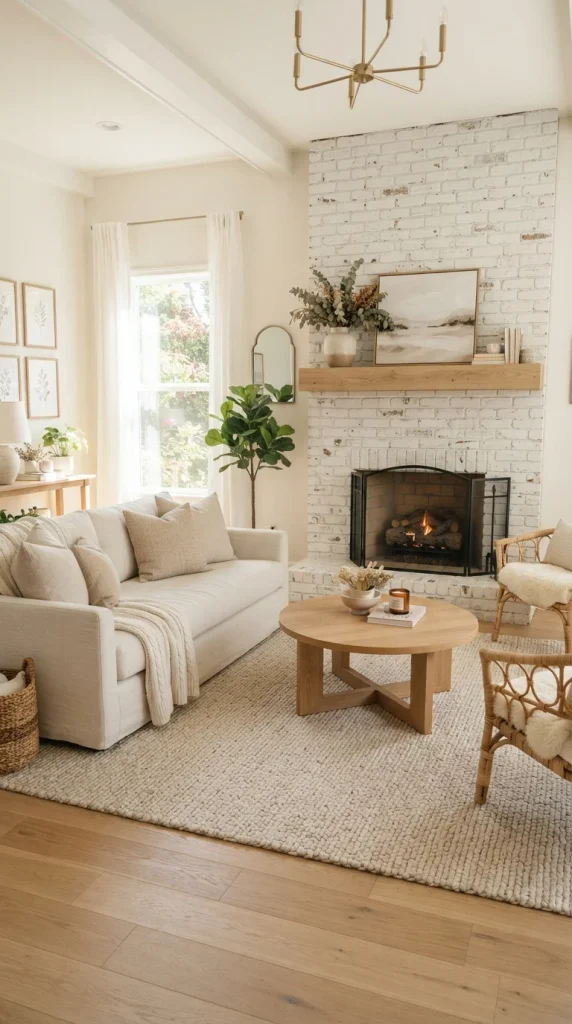
  • 23 Cozy Living Room Ideas That Make You Want to Stay a Little Longer

    23 Cozy Living Room Ideas That Make You Want to Stay a Little Longer

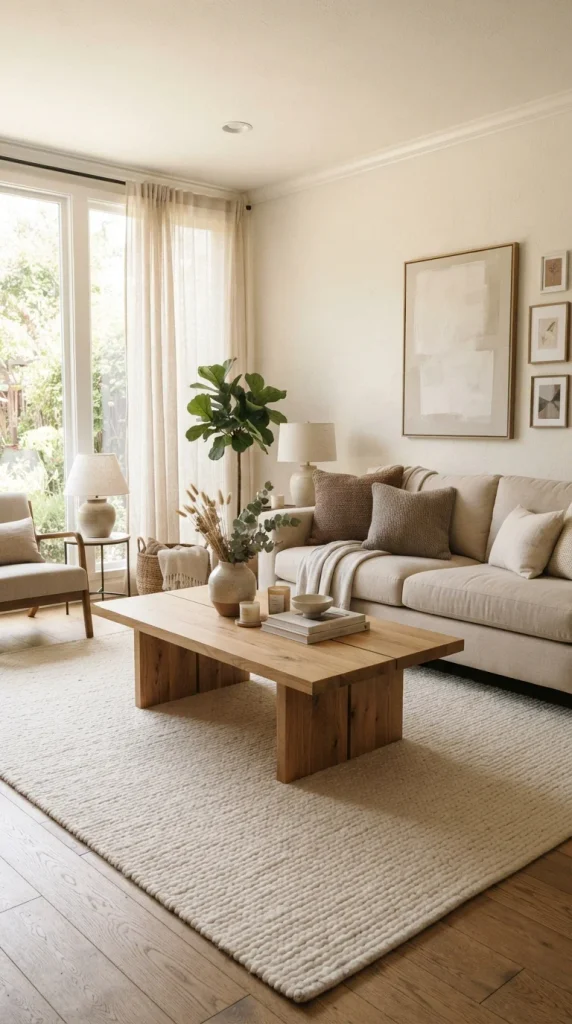
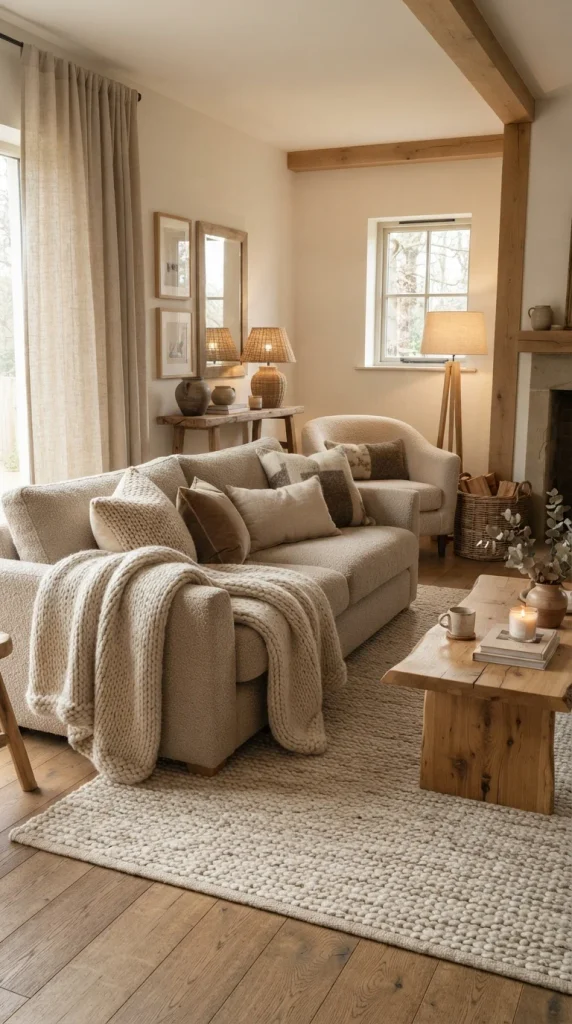
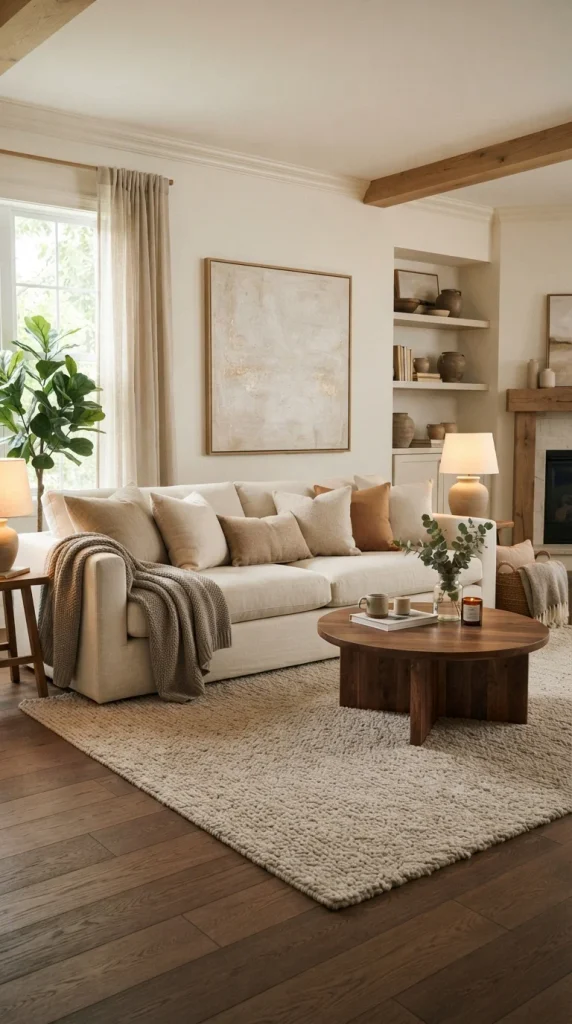
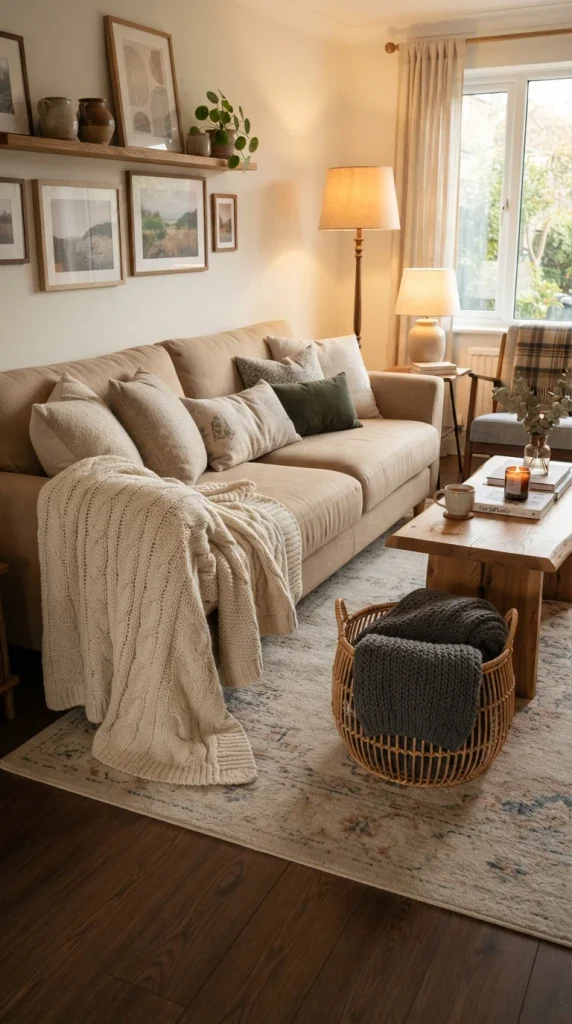
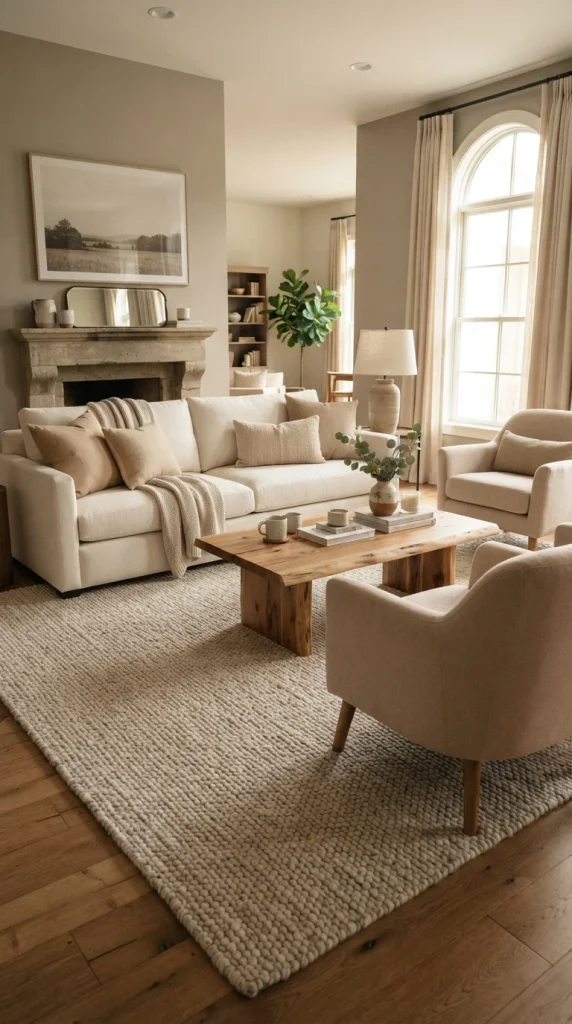
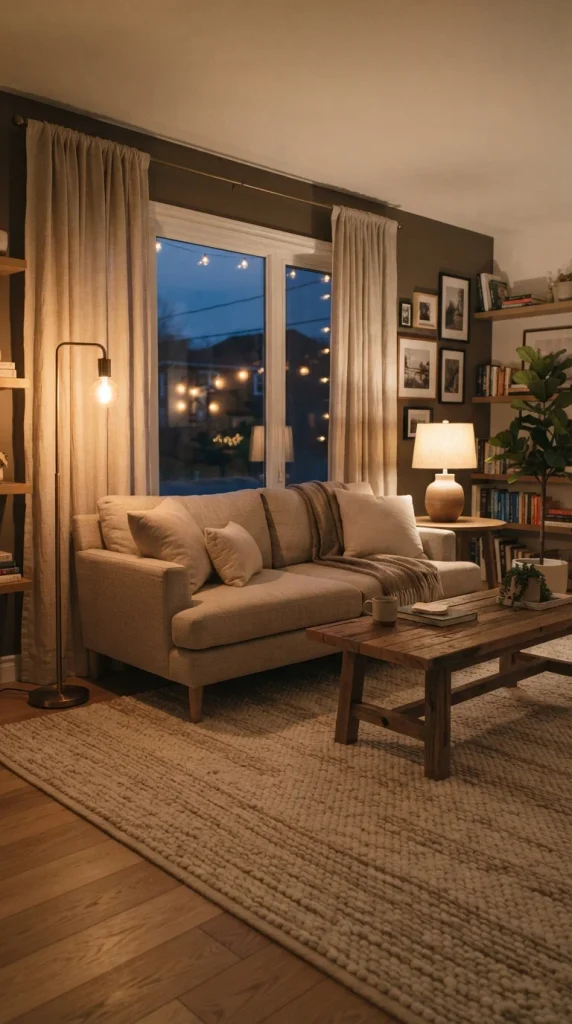
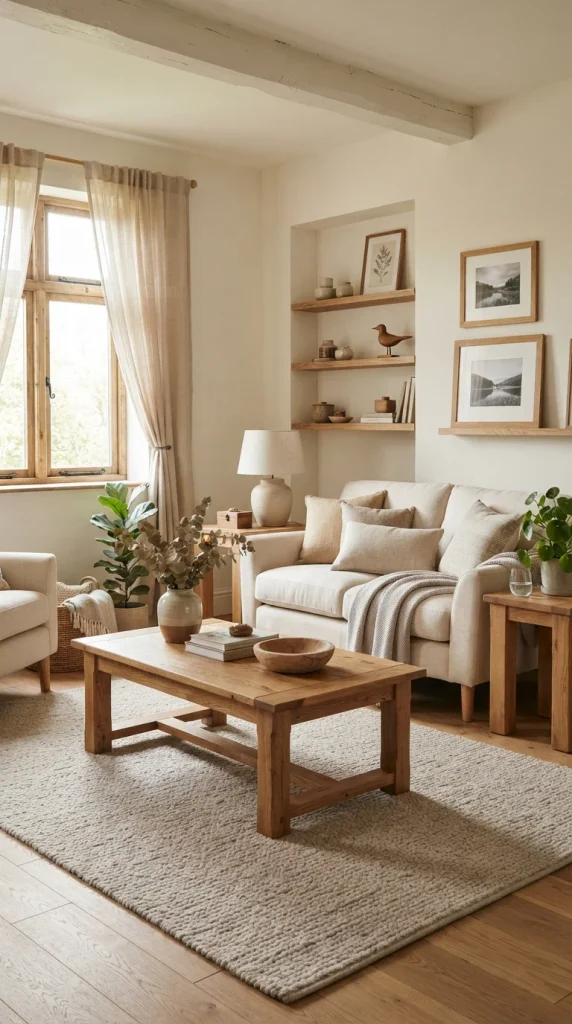
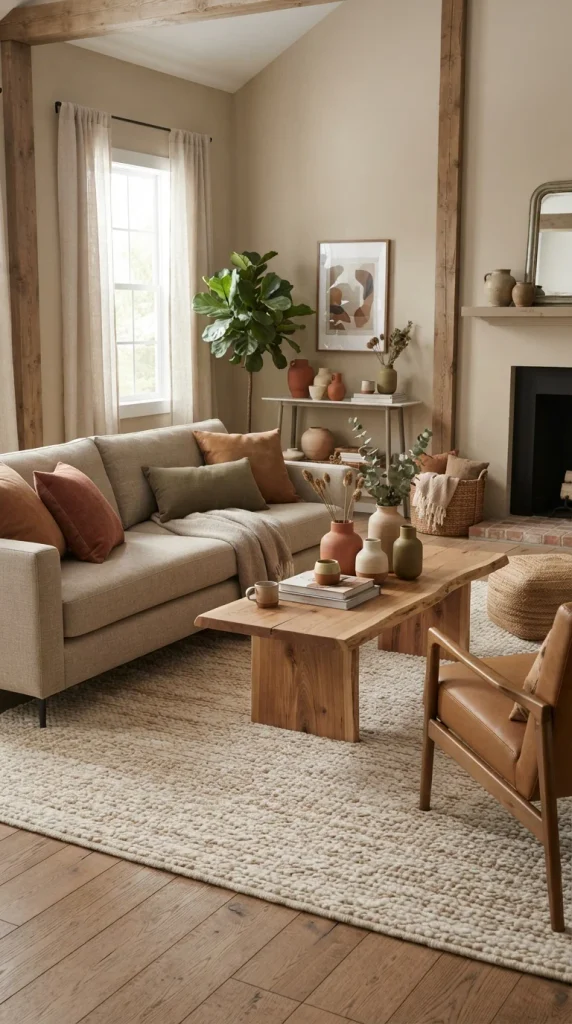
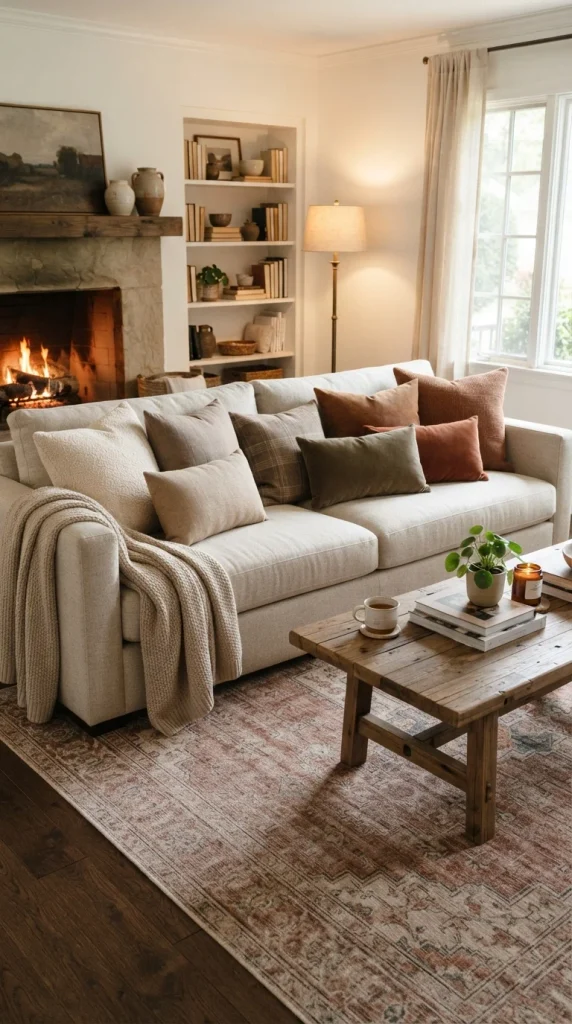
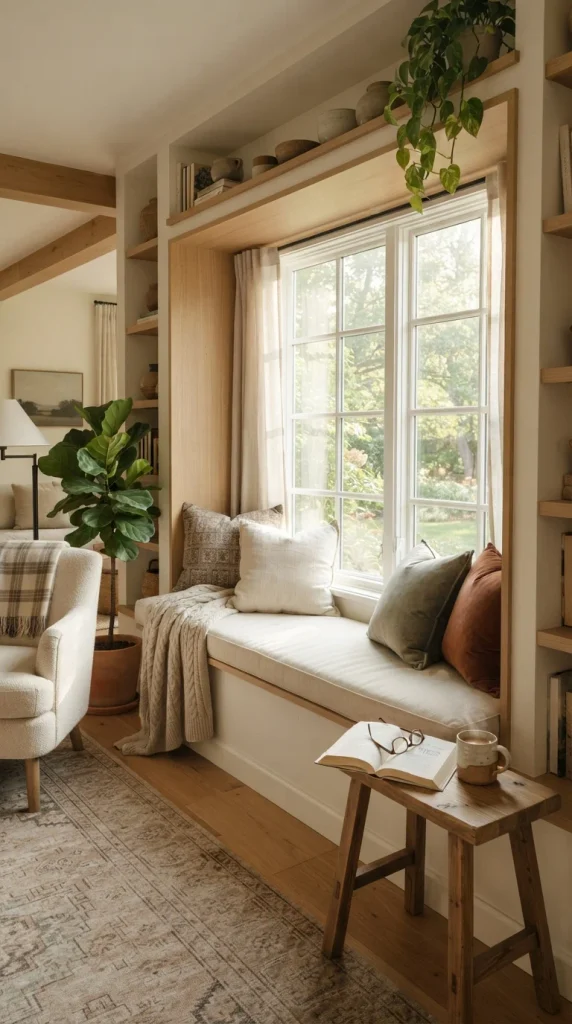
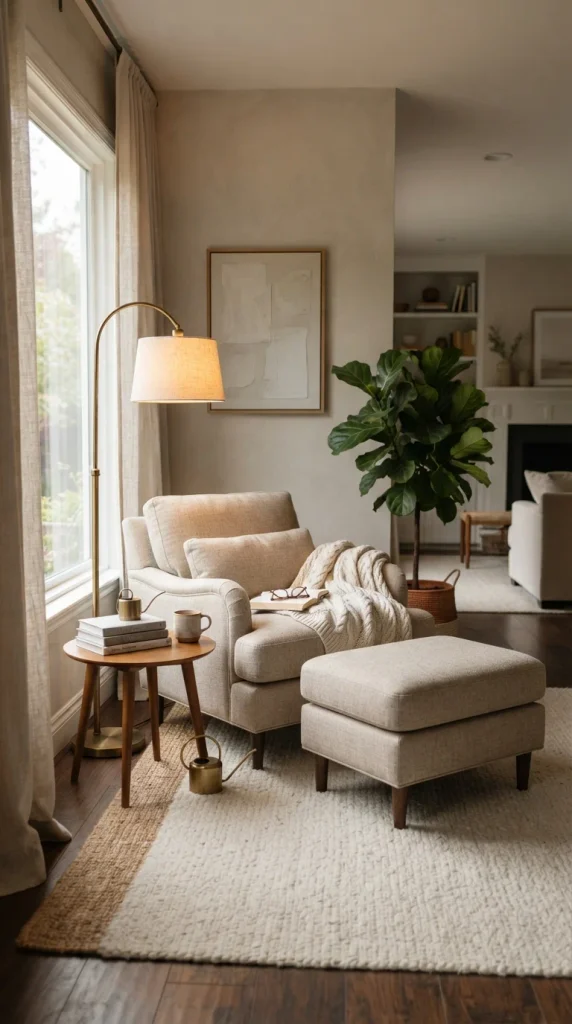
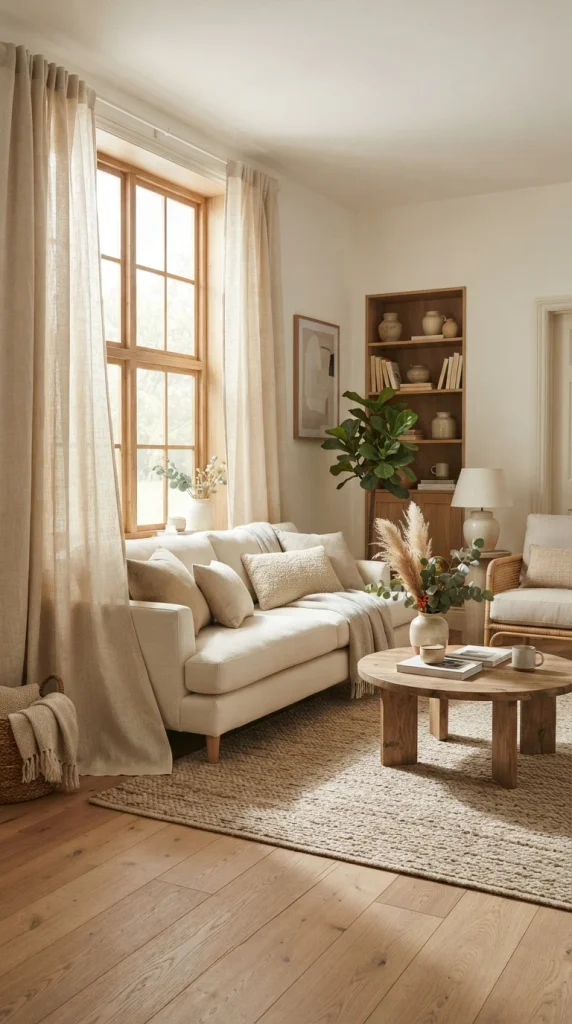
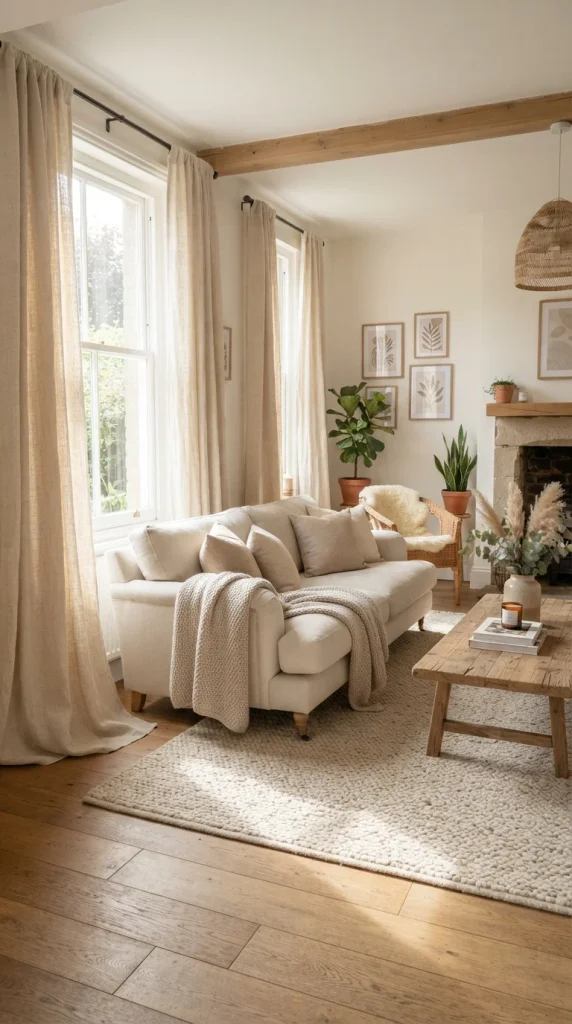
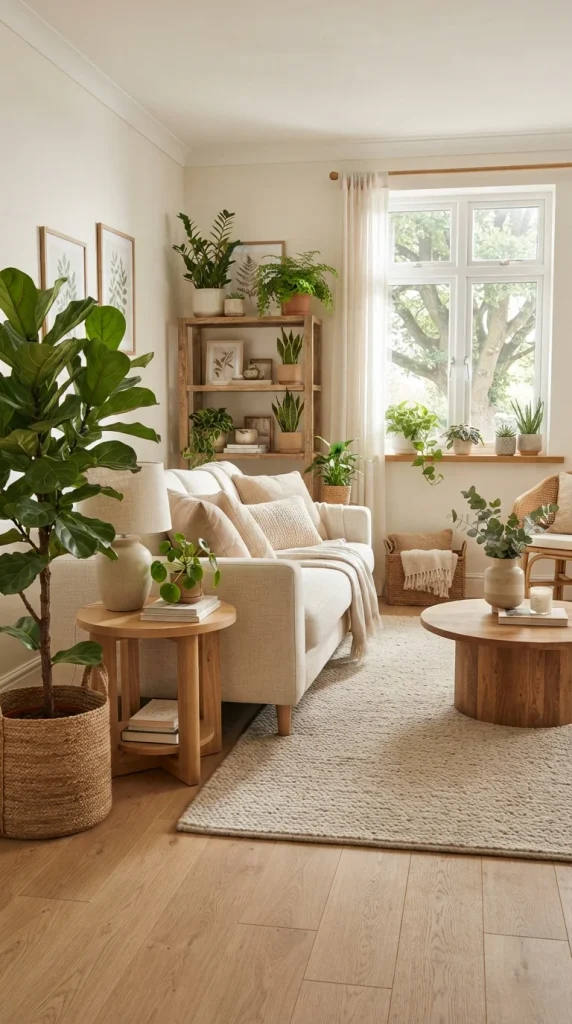
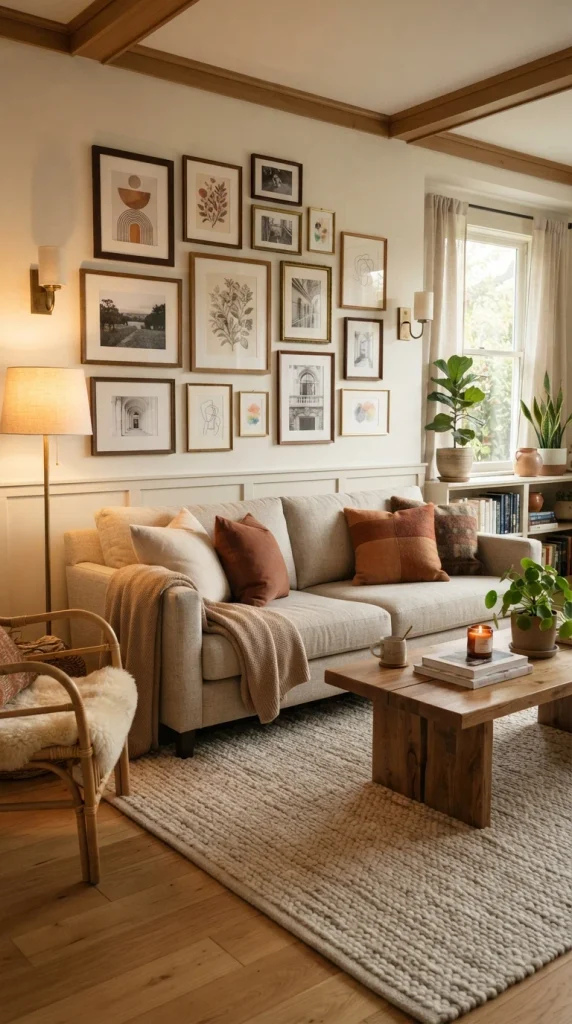
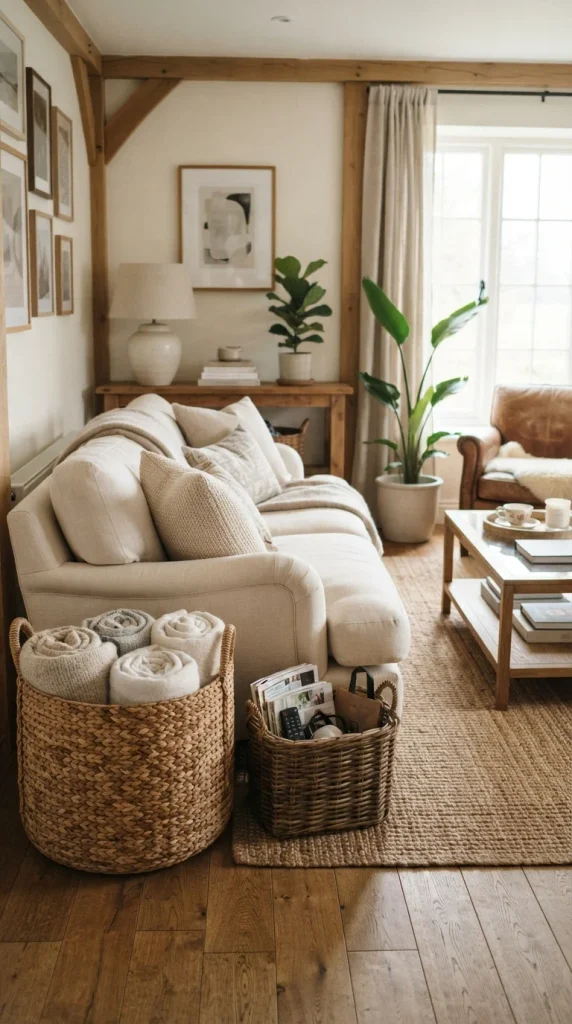
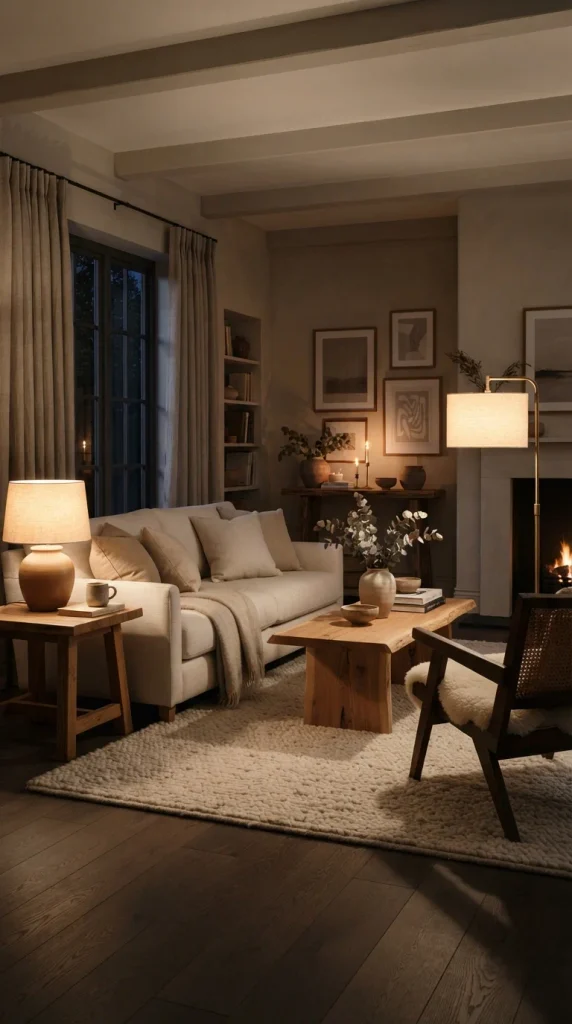
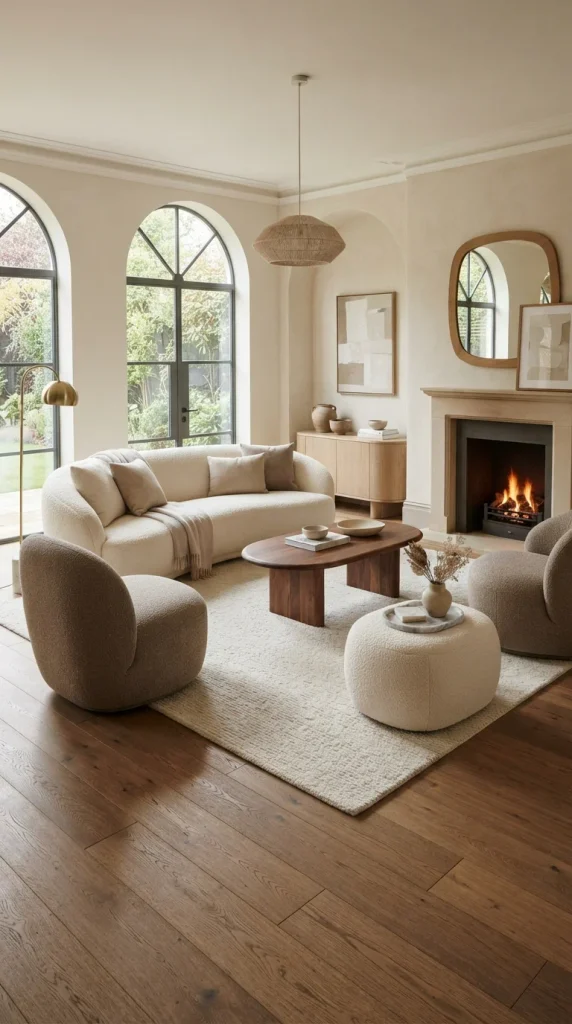
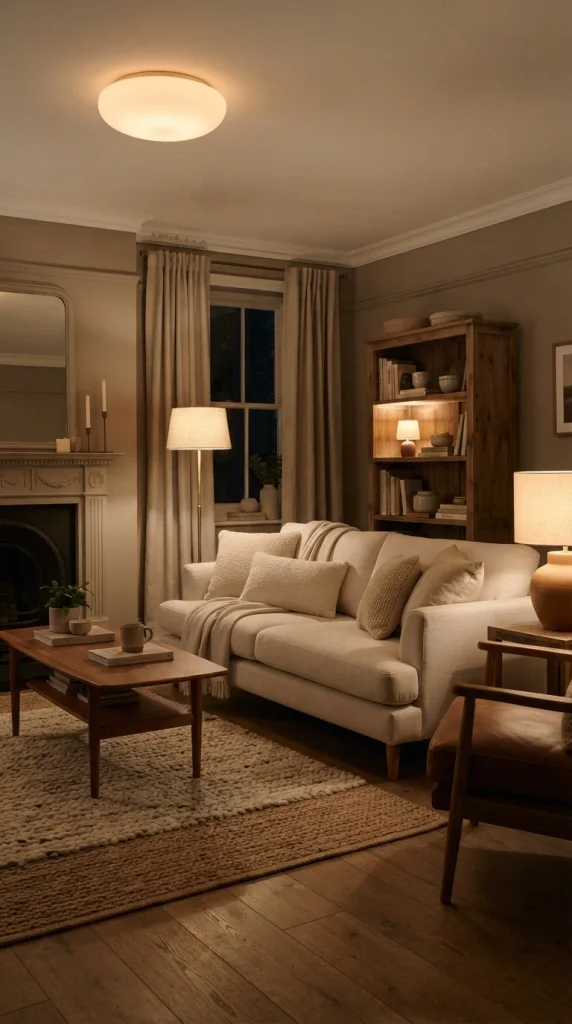
    A cozy living room should feel like the easiest place in the home to slow down, get comfortable, and stay awhile. With the right mix of soft textures, warm lighting, comfortable seating, and thoughtful decor, even a simple space can feel inviting and relaxing. Whether you love neutral colors, layered blankets, natural materials, or a…


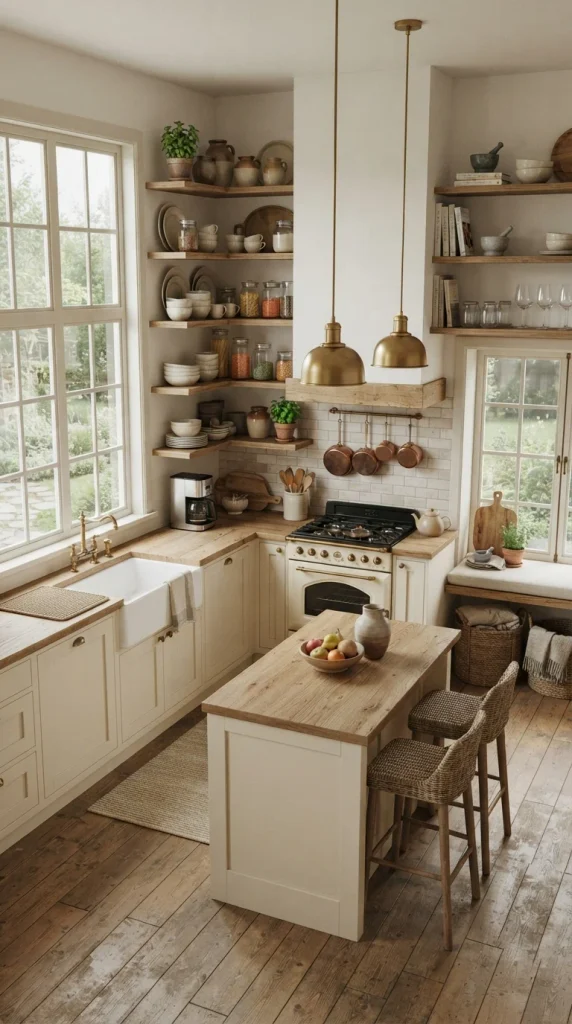
  • 21 Bloxburg Kitchen Ideas for a Stylish and Cozy Build

    21 Bloxburg Kitchen Ideas for a Stylish and Cozy Build

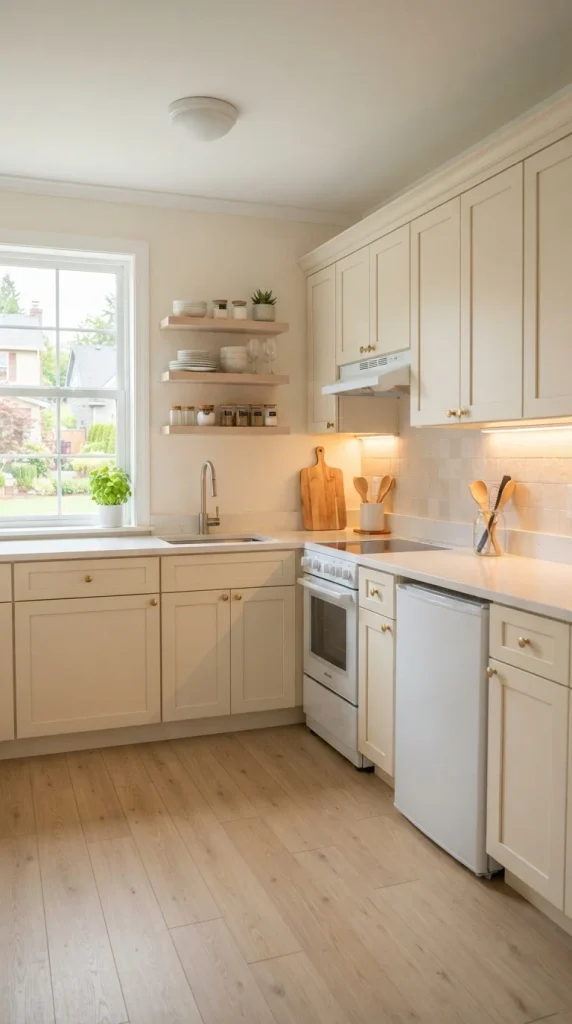
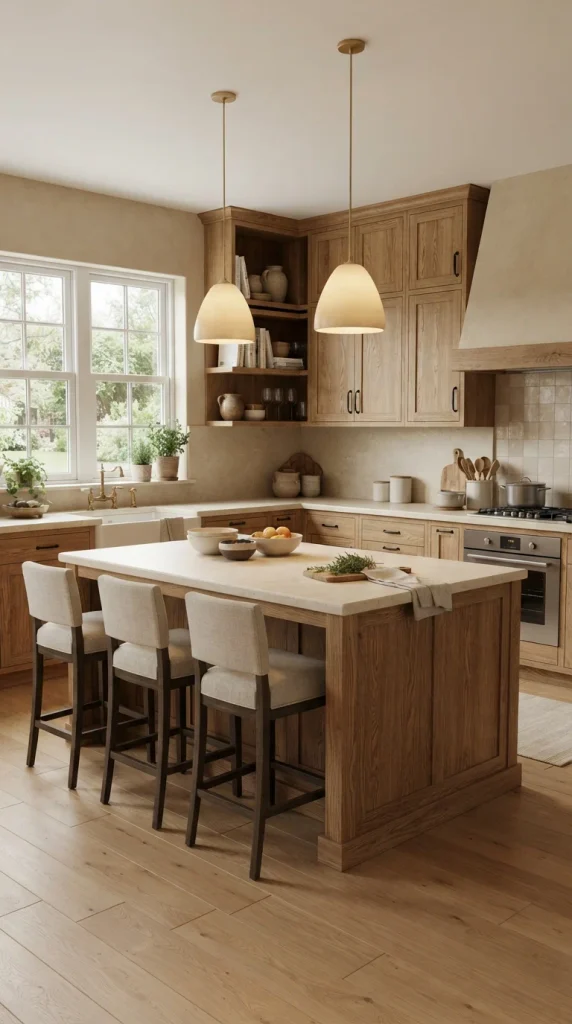
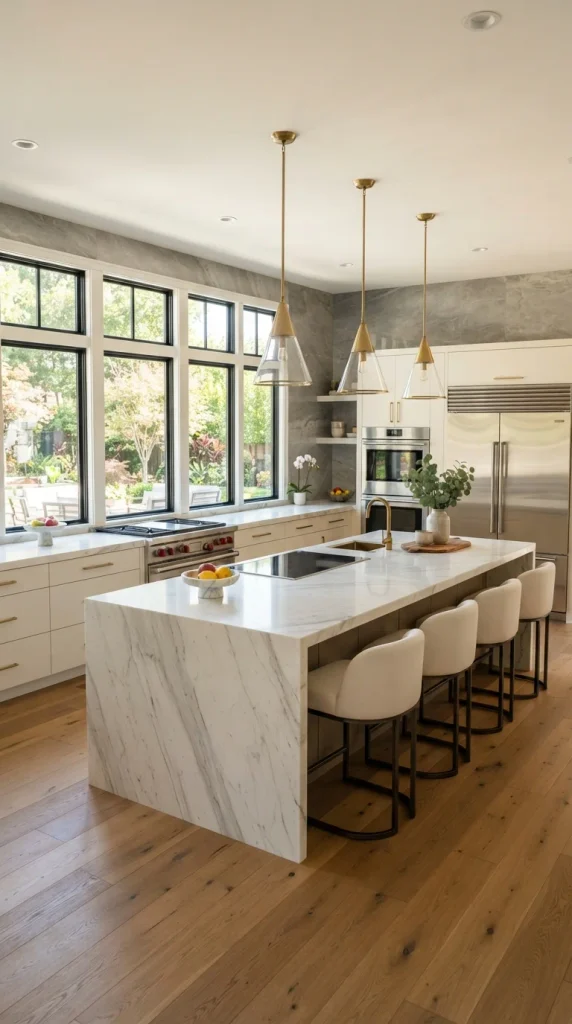
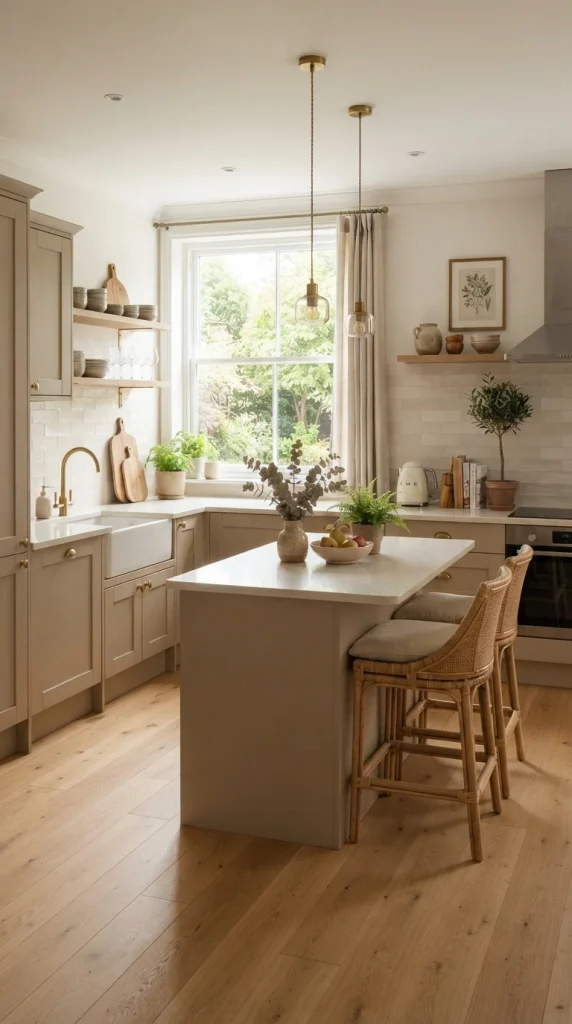
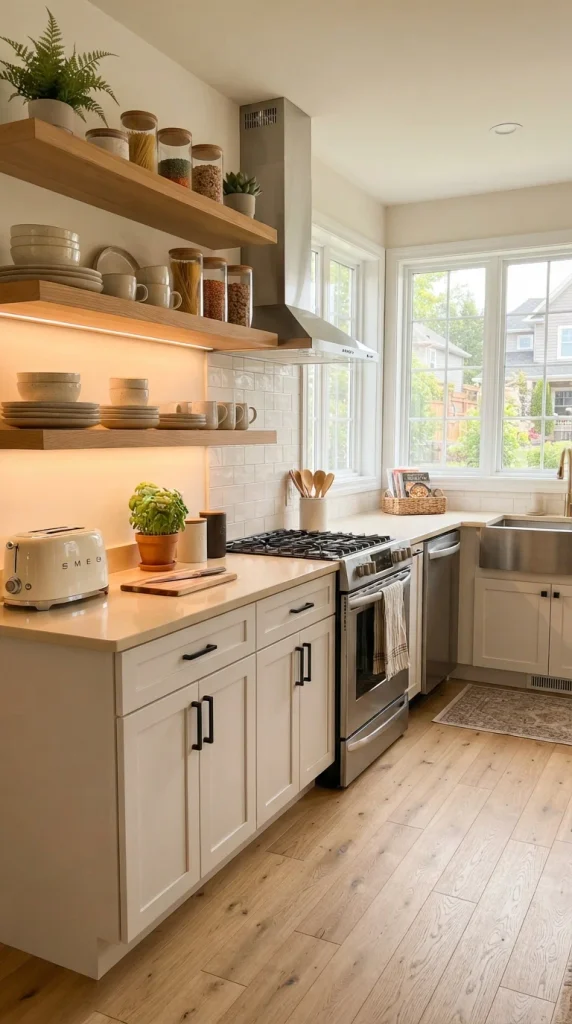
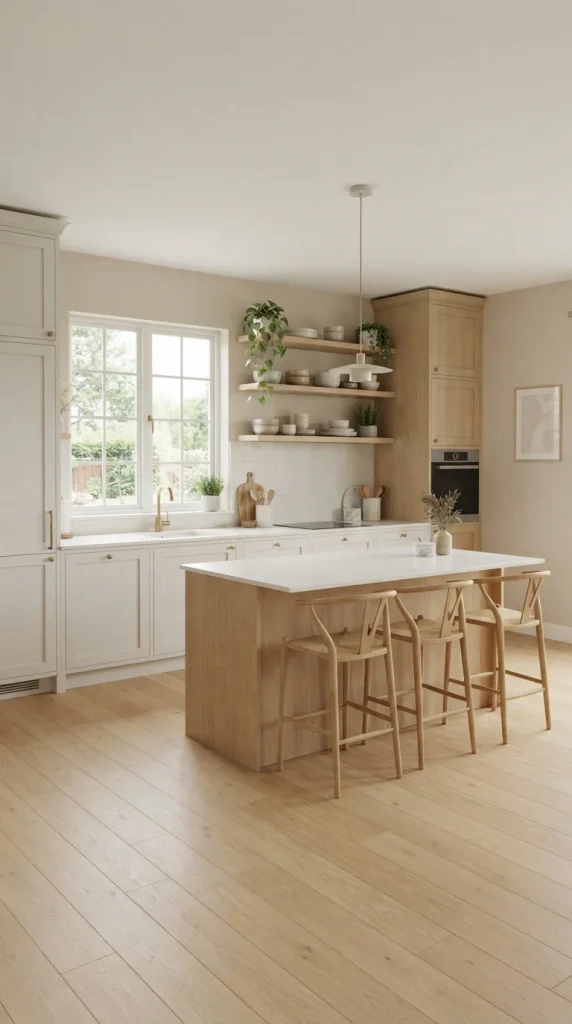
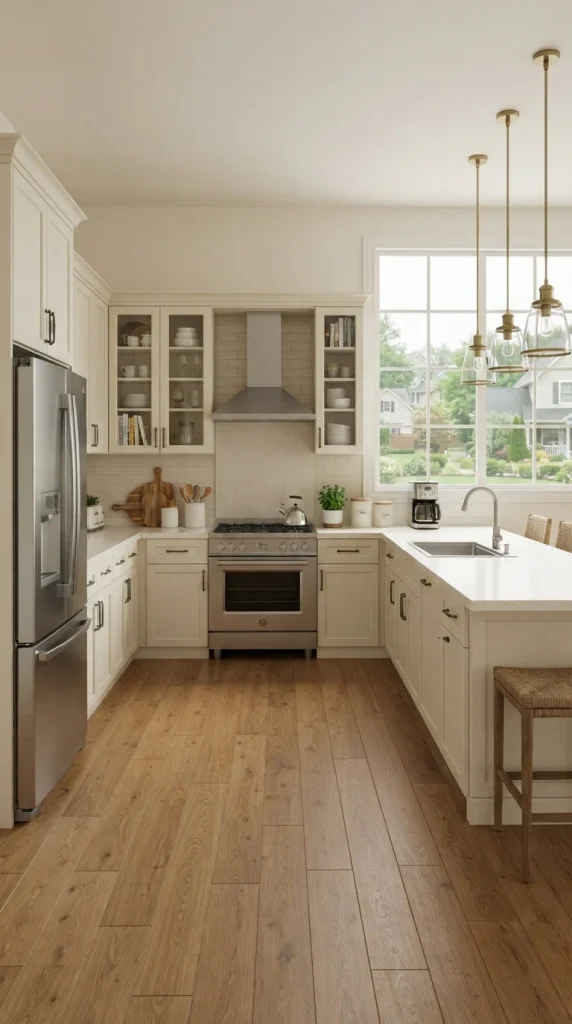
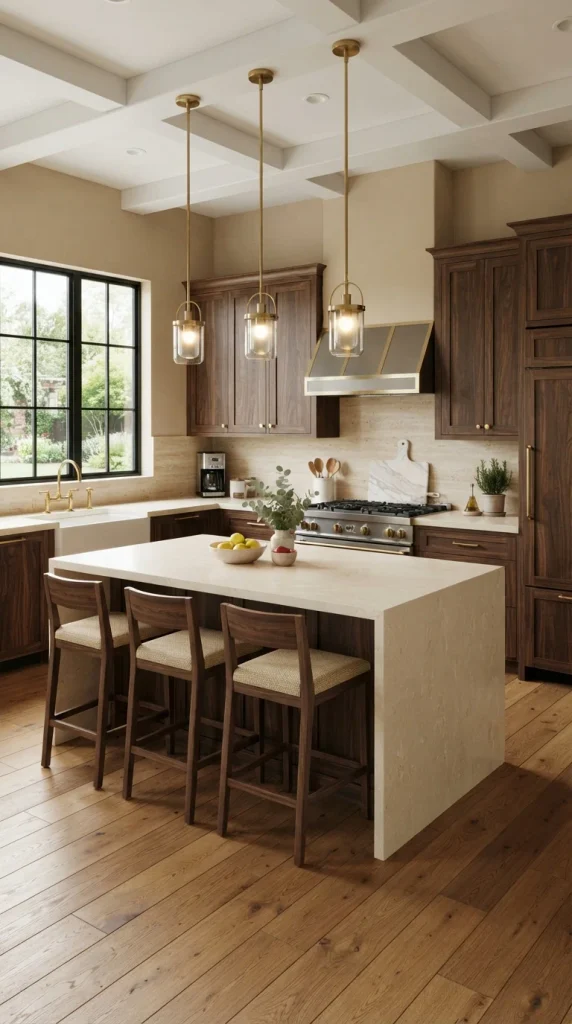
    Creating the perfect kitchen in Bloxburg can make your home feel more stylish, cozy, and realistic. Whether you love a modern look, warm farmhouse style, or a simple small kitchen, the right layout and details can completely change your build. In this guide, you’ll find 21 Bloxburg kitchen ideas with beautiful colors, practical layouts, islands,…


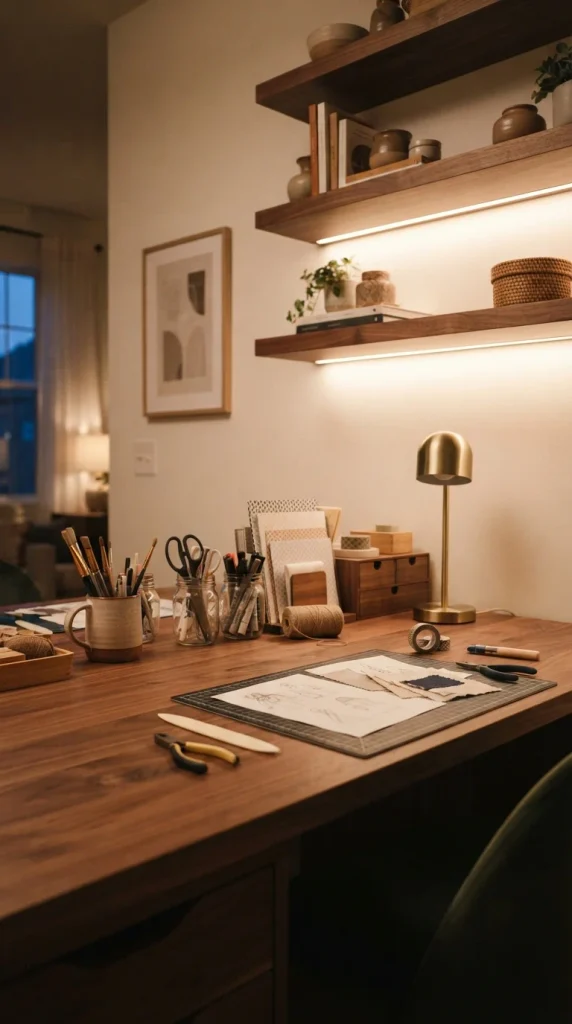
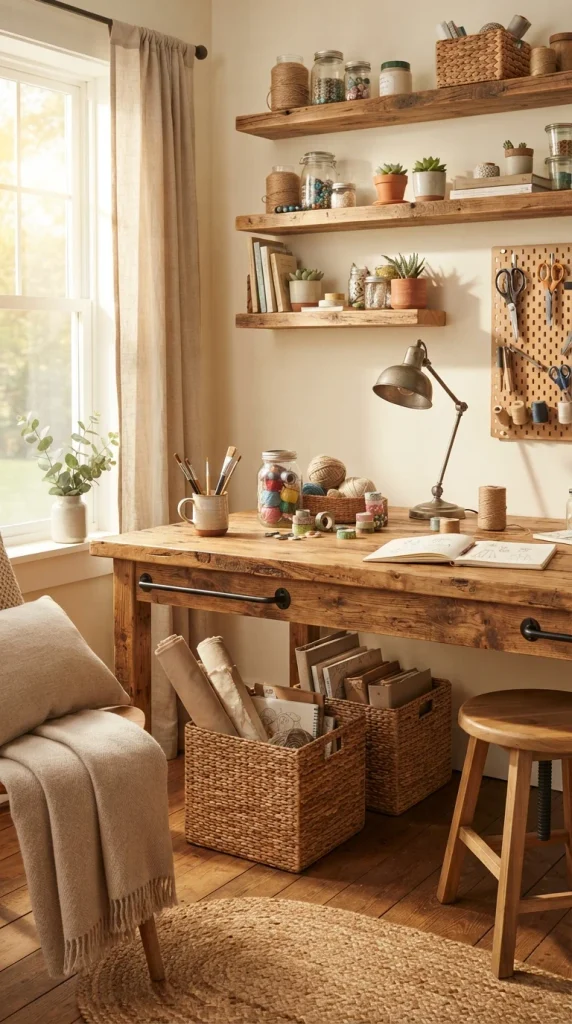
  • 21 DIY Craft Desk Ideas for a Creative and Organized Workspace

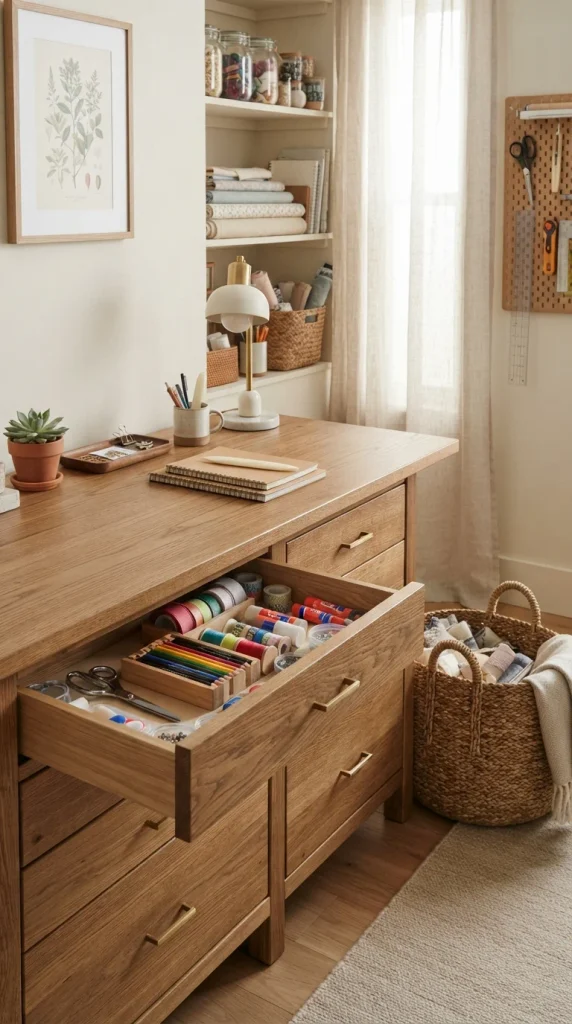
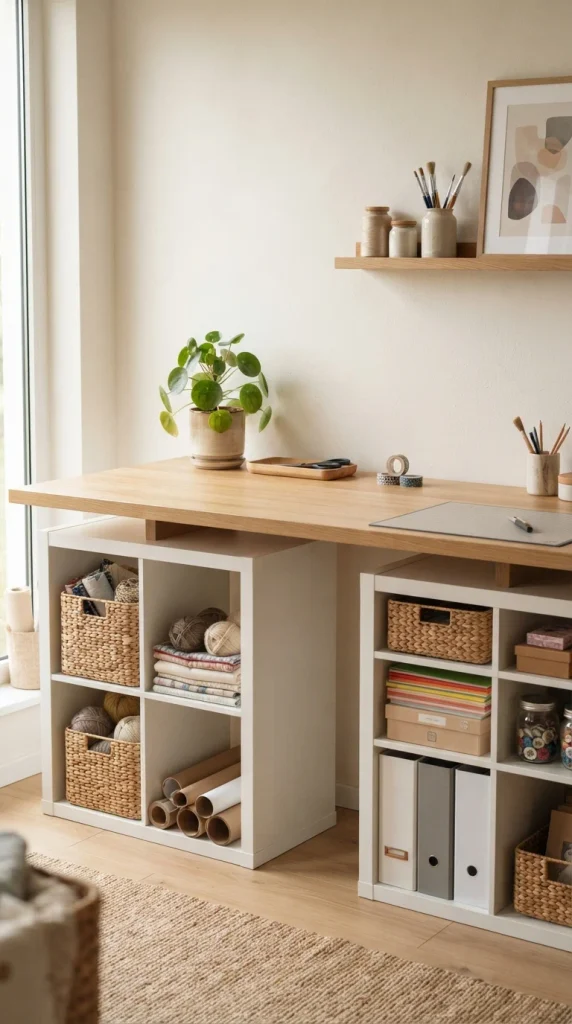
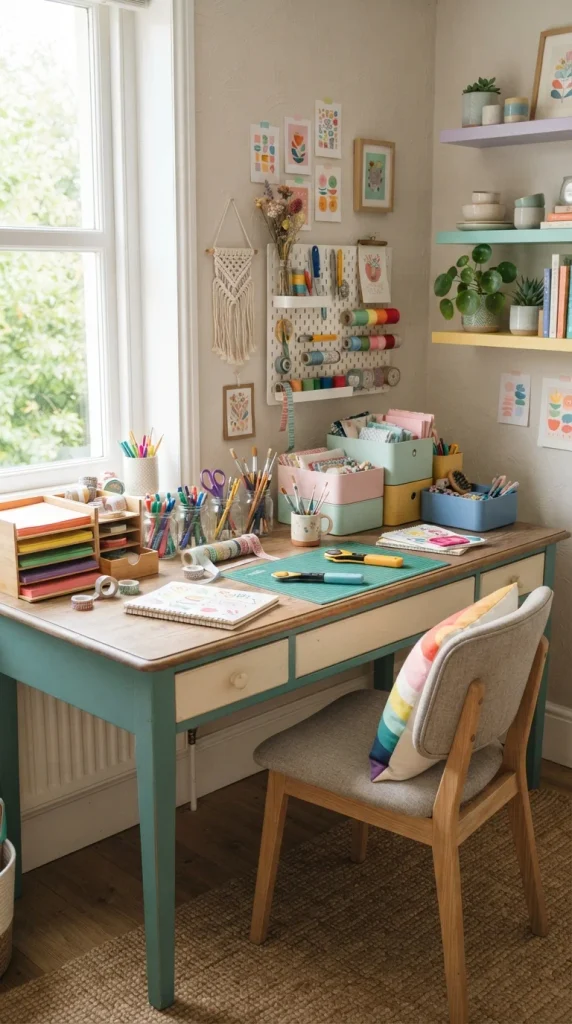
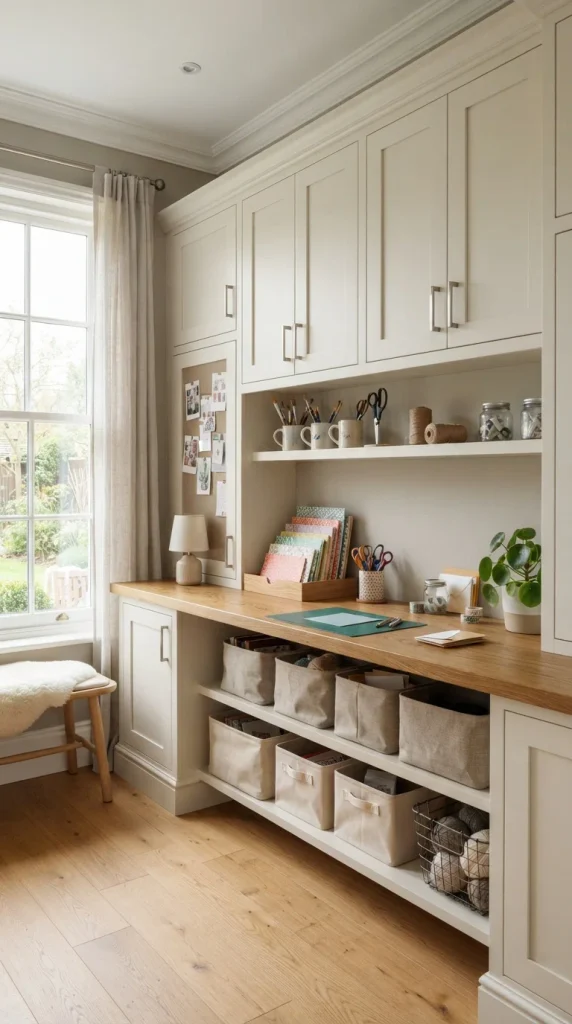
    A well-planned DIY craft desk can make your creative projects easier and more enjoyable. These 21 DIY Craft Desk Ideas offer simple ways to create a stylish and organized craft workspace. From small craft desks to smart craft room storage and practical craft station ideas, there is something for every space. Use these ideas to…


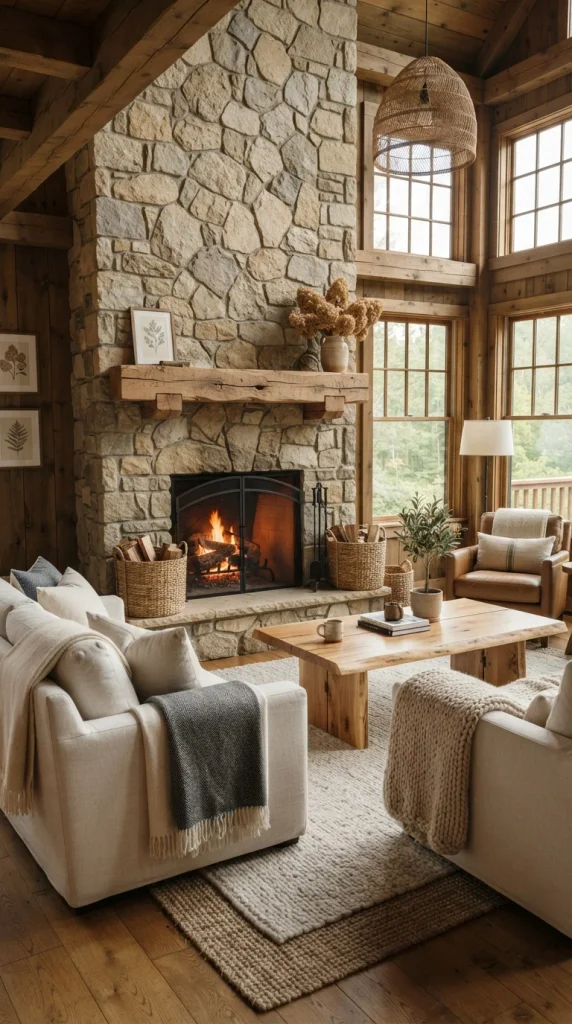
  • 22 Fireplace Design Ideas to Create a Cozy and Stylish Home

    22 Fireplace Design Ideas to Create a Cozy and Stylish Home

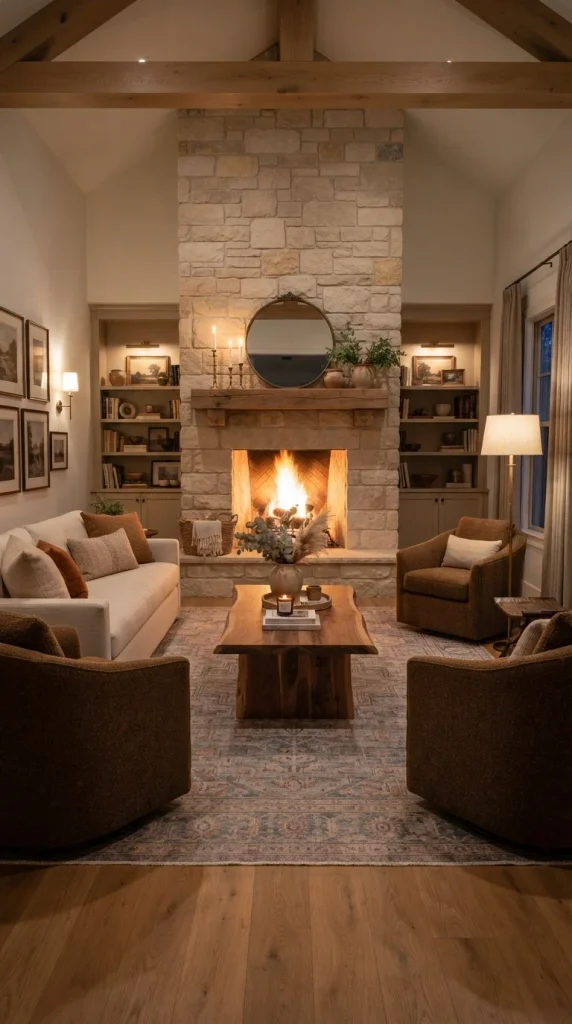
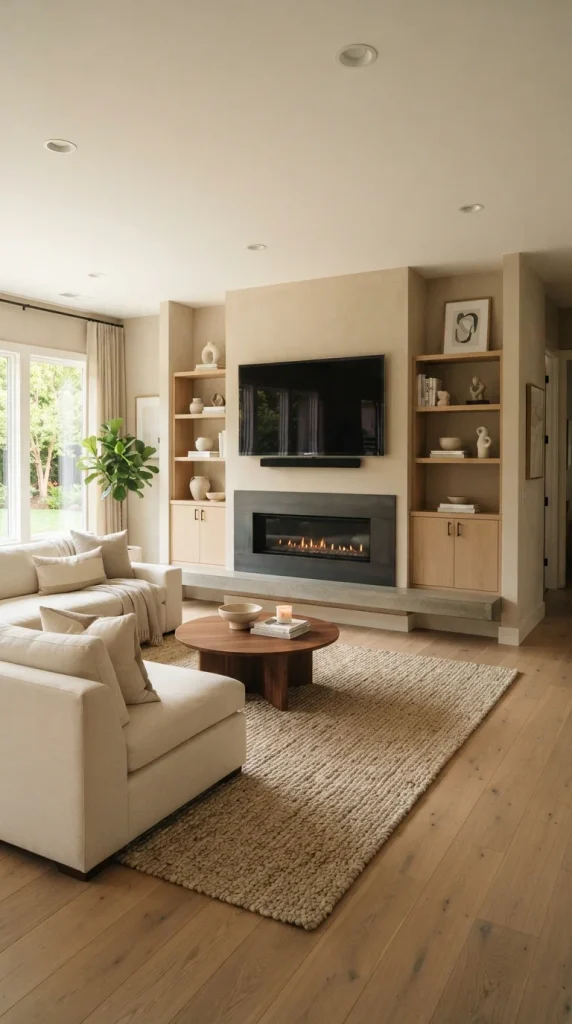
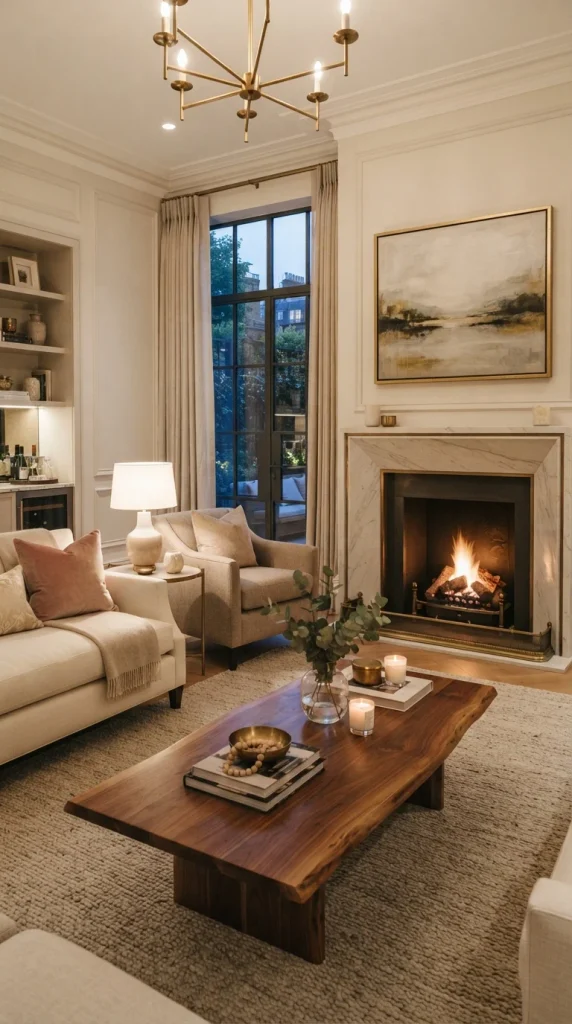
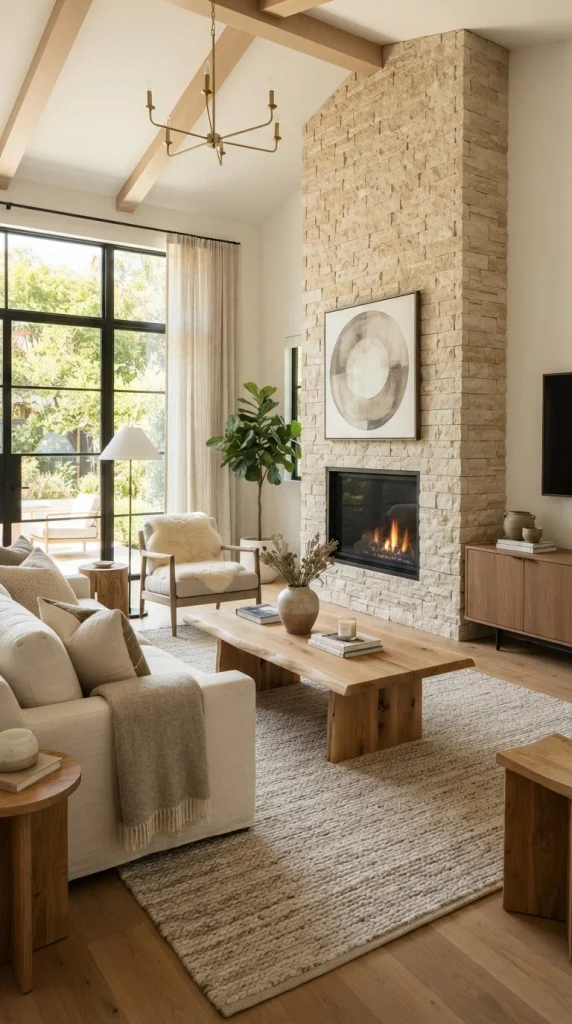
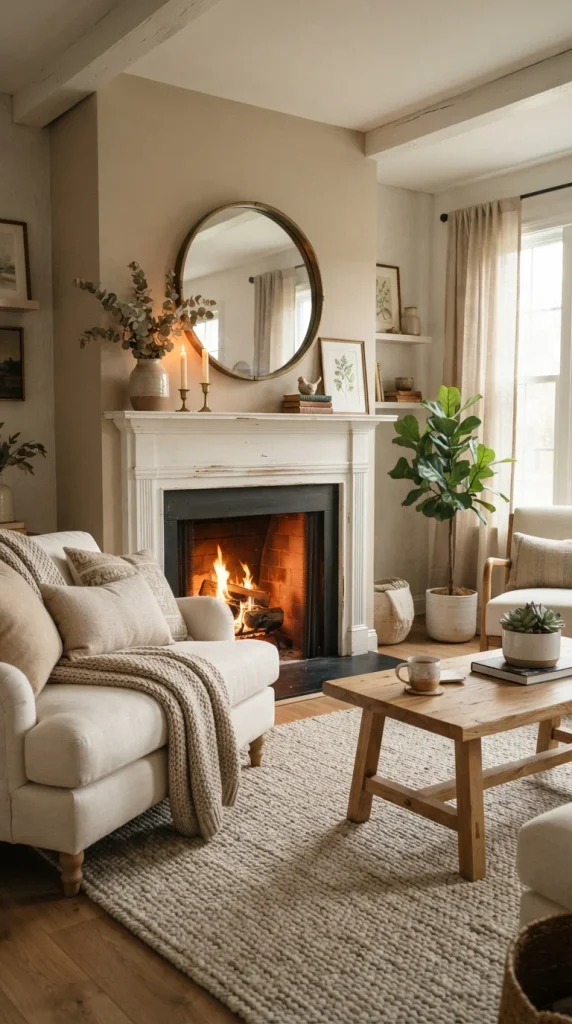
    A fireplace can instantly make a room feel warm, cozy, and inviting while also becoming a beautiful focal point. From modern fireplace designs and sleek built-in styles to rustic stone surrounds and classic mantels, there are many ways to create a look that fits your home. These fireplace design ideas will help you explore stylish…


  • 21 Dining Room Paint Colors That Create a Cozy and Elegant Atmosphere

    21 Dining Room Paint Colors That Create a Cozy and Elegant Atmosphere

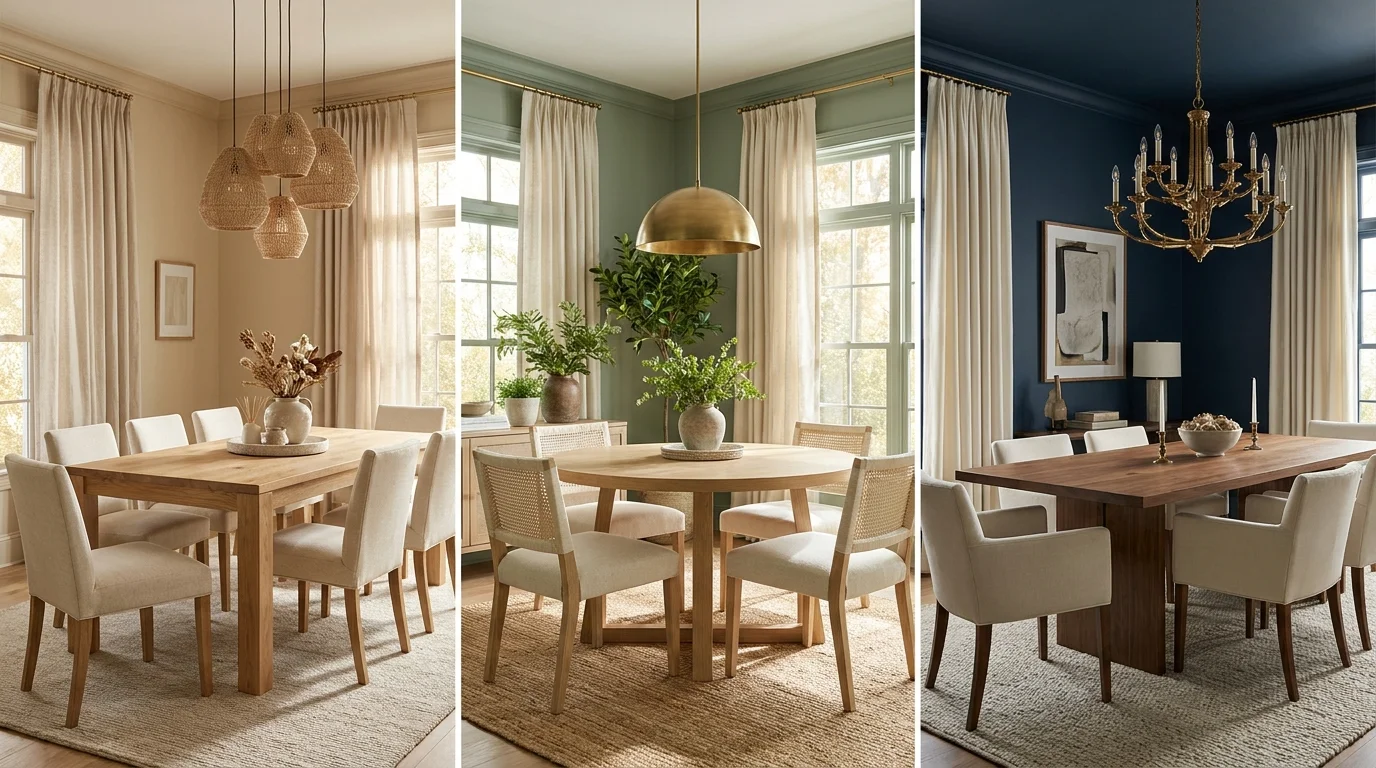
    The right dining room paint color can instantly make your space feel warmer, brighter, and more inviting. From soft neutrals to rich, moody shades, the perfect color can complement your furniture and create a beautiful atmosphere. Whether you love a classic, modern, or cozy style, there are plenty of shades to explore. These 21 dining room paint colors will help you create a space that feels both cozy and elegant.

    1. Warm White

    Warm white creates a clean and welcoming dining room without feeling too cold. Its soft undertone works beautifully with wood furniture, woven textures, and natural materials. It also reflects light well, making the room feel more open and comfortable. Add warm lighting and neutral fabrics to create an elegant and relaxed atmosphere.

    2. Soft Beige
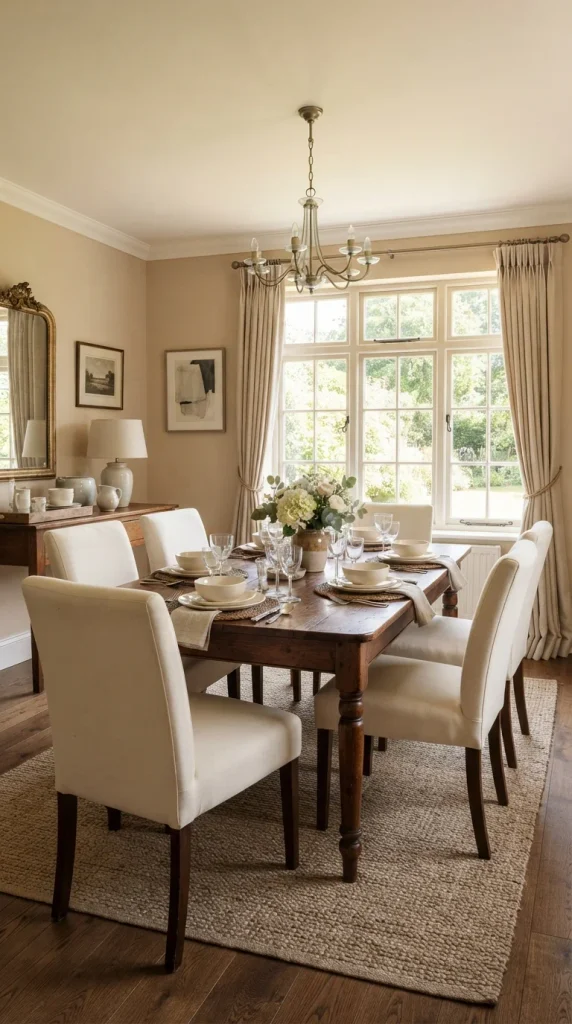
    Soft beige is a timeless choice for a cozy dining room. It adds gentle warmth while keeping the space light and sophisticated. This shade pairs easily with dark wood, cream upholstery, brass accents, and natural textures. It is especially useful when you want a classic look that will not quickly feel outdated.

    3. Creamy Ivory
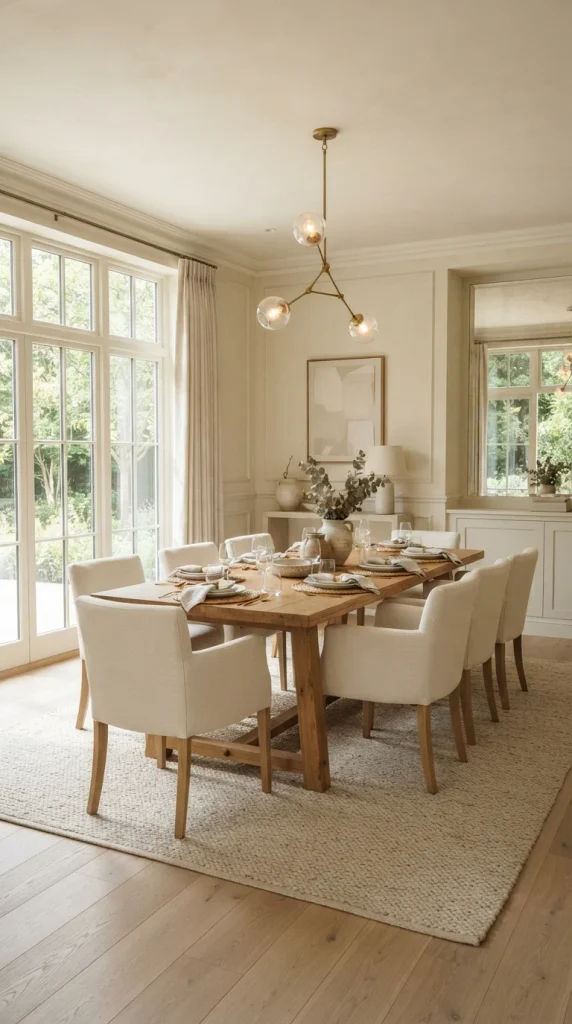
    Creamy ivory brings a soft, refined feeling to dining spaces. Unlike bright white, it has a warmer appearance that makes the room feel more inviting. Pair it with wooden dining chairs, linen curtains, and simple decorative pieces for a relaxed look. It also works well in both traditional and modern homes.

    4. Greige

    Greige combines the softness of beige with the modern feel of gray. This balanced color gives a dining room a polished look while keeping it warm and comfortable. It works beautifully with black accents, natural wood, and soft cream fabrics. Greige is a great option if you want a neutral color with a little more depth.

    5. Light Taupe
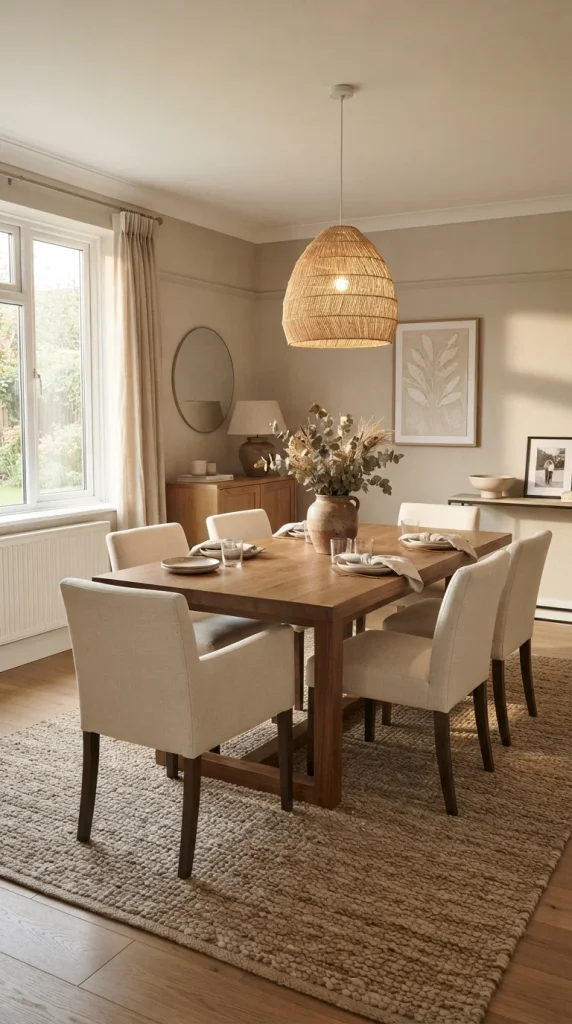
    Light taupe adds subtle warmth and sophistication without making the room feel dark. Its earthy character works especially well with wood furniture and natural textures. Use it with soft lighting and neutral table linens for a calm dining atmosphere. This shade is perfect for creating an understated and elegant space.

    6. Sage Green

    Sage green brings a peaceful, natural feeling into the dining room. Its muted tone feels fresh without being too bright or overwhelming. It pairs beautifully with light wood, cream, rattan, and warm metal accents. This color can make everyday meals feel more relaxed and connected to nature.

    7. Olive Green
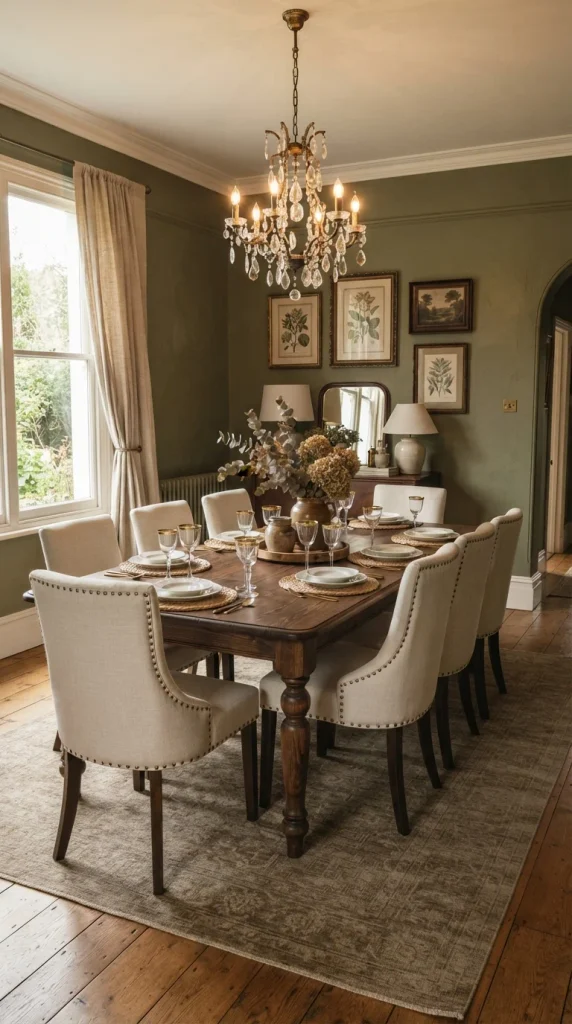
    Olive green gives a dining room a richer and more grounded appearance. Its earthy tone works especially well in spaces with traditional furniture or warm wood finishes. Balance it with cream walls, natural fabrics, or lighter decorative accents. The result can feel cozy, collected, and sophisticated.

    8. Dusty Blue
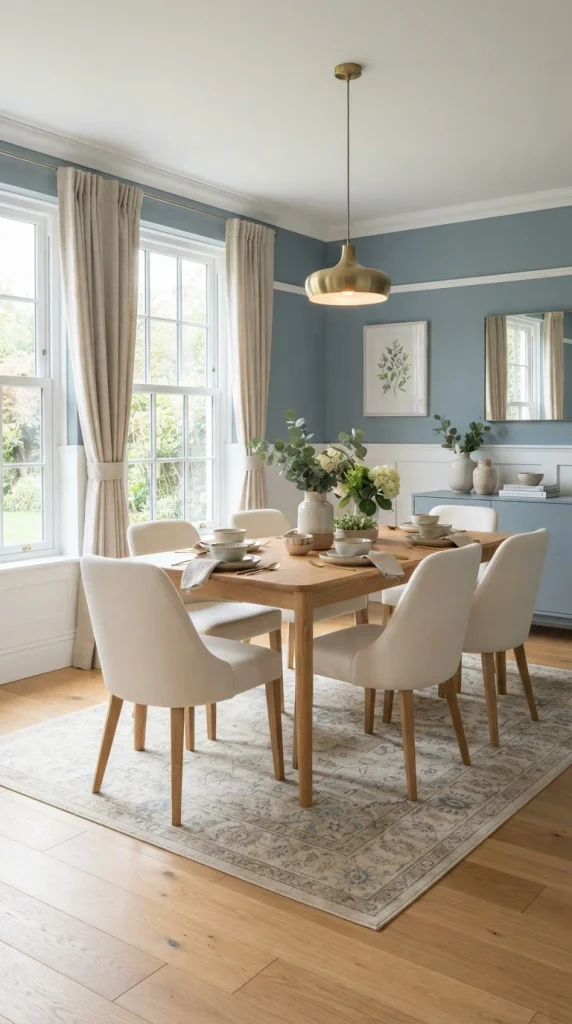
    Dusty blue creates a calm and elegant dining atmosphere with a soft, slightly muted appearance. It works well when you want color without making the room feel too dramatic. Pair it with white trim, warm wood, and brass or antique-style accents. This shade is especially lovely in rooms with plenty of natural light.

    9. Deep Navy

    Deep navy adds drama and sophistication to a dining room. Its rich color can make the space feel intimate and especially cozy in the evening. Pair navy walls with lighter furniture, warm wood, or metallic accents to keep the room balanced. Good lighting is important to prevent the deep shade from feeling too heavy.

    10. Soft Gray
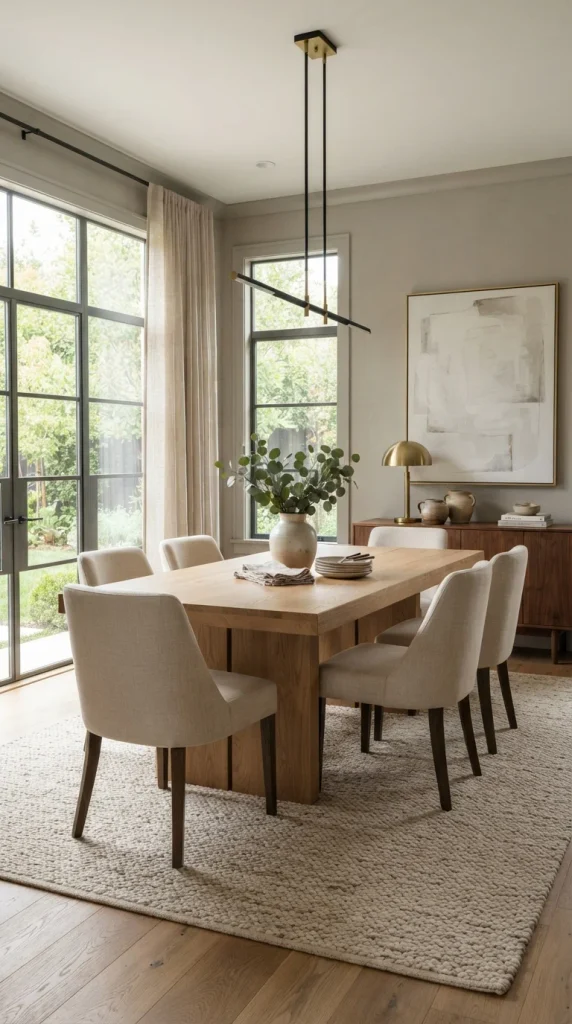
    Soft gray provides a simple and modern backdrop for dining room furniture and artwork. Its neutral character allows other elements, such as a statement table or colorful rug, to stand out. Choose a warm gray if you want the room to feel cozy rather than cool. It is a flexible option for many decorating styles.

    11. Charcoal Gray

    Charcoal gray creates a bold and sophisticated dining room with plenty of visual depth. It works particularly well on accent walls or in rooms with large windows and strong natural light. Balance the darker color with cream upholstery, light wood, or warm metallic details. This combination can create an intimate and elegant dining setting.

    12. Warm Terracotta
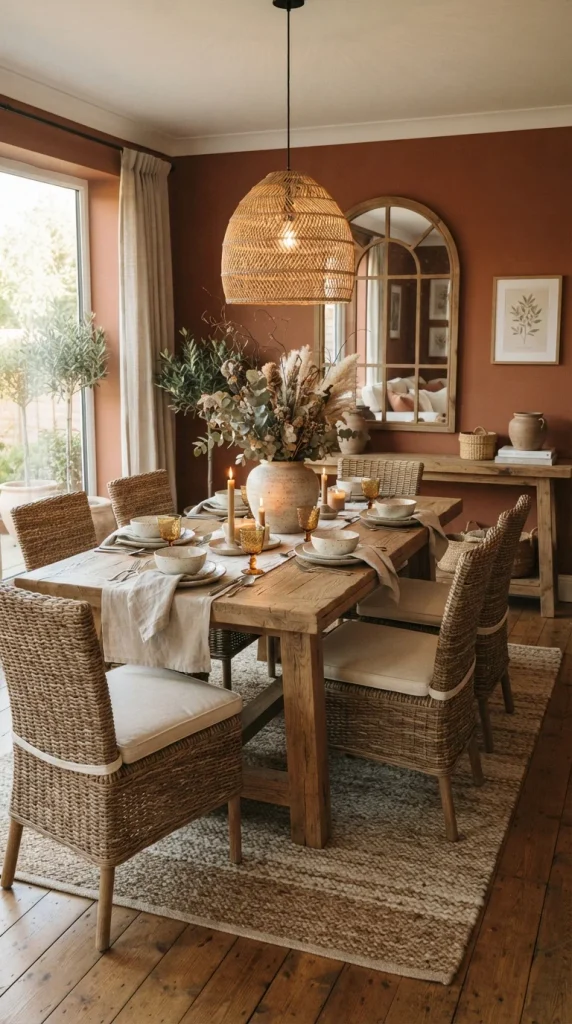
    Warm terracotta brings an earthy and inviting character to the dining room. Its reddish-brown undertones make the space feel comfortable and full of warmth. Pair it with natural wood, woven textures, cream, and muted green accents. It is a beautiful choice for a dining room inspired by relaxed, organic interiors.

    13. Muted Blush
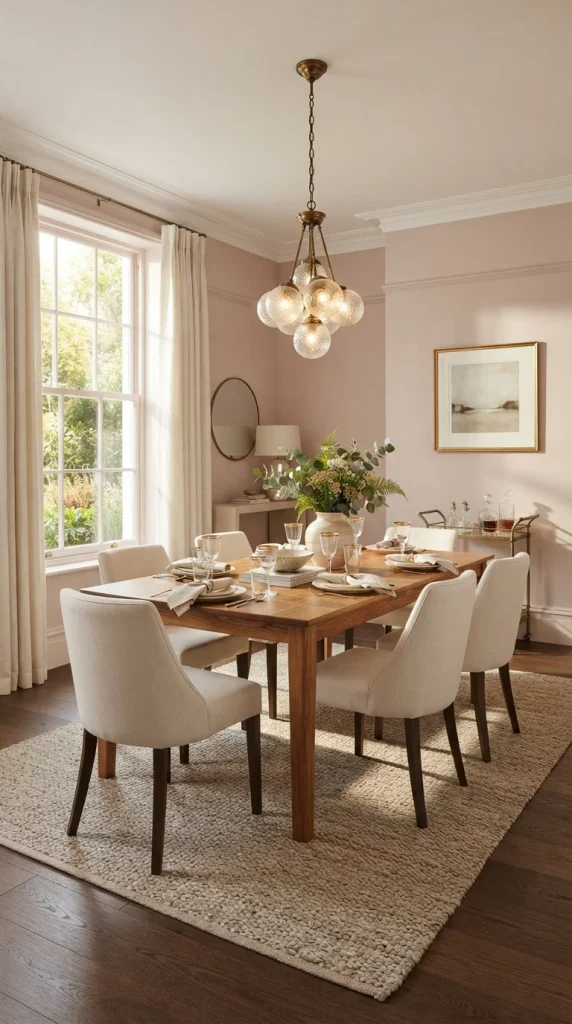
    Muted blush adds a gentle touch of color while keeping the dining room soft and sophisticated. Its subtle warmth can work beautifully with cream, beige, light wood, and antique brass. Unlike brighter pinks, a muted blush feels mature and easy to decorate around. It can create a welcoming setting without becoming overly feminine.

    14. Dusty Rose
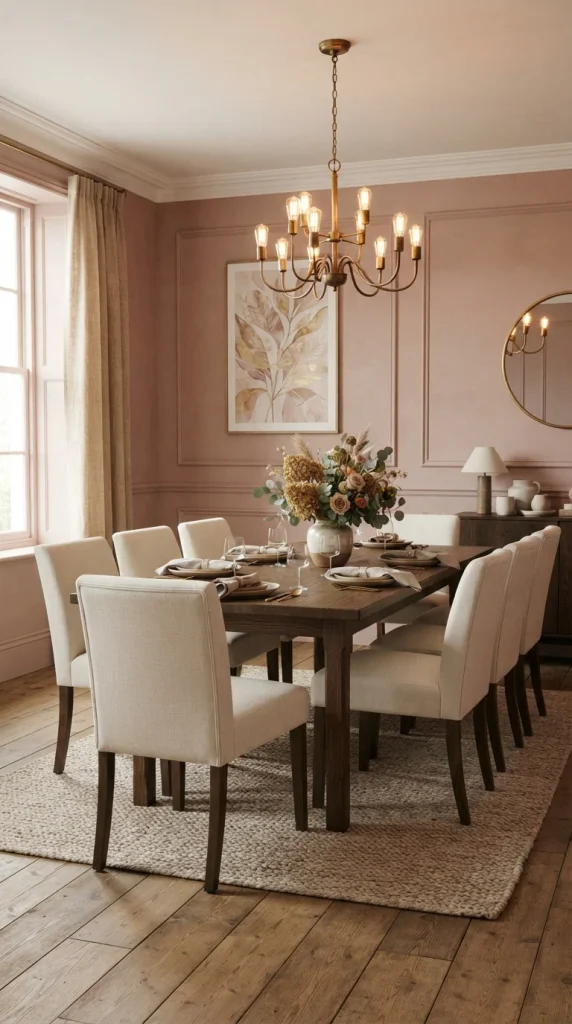
    Dusty rose offers a deeper and slightly more sophisticated alternative to soft pink. It gives the walls warmth and personality while remaining calm enough for everyday dining. Combine it with warm neutrals, natural wood, and simple lighting. This shade works especially well in rooms where you want a cozy and romantic atmosphere.

    15. Rich Burgundy

    Rich burgundy creates a dramatic and intimate dining room with a traditional, luxurious feel. Its deep red tone can make the space feel warm and inviting, especially under soft evening lighting. Pair it with cream, dark wood, brass, or natural fabrics to balance its richness. It is ideal for creating a dining room with strong character.

    16. Forest Green

    Forest green brings depth and a natural elegance to the dining room. Its rich tone works beautifully with wood furniture, cream fabrics, and warm metallic finishes. Because it is a darker color, it looks especially appealing when balanced with good lighting. The result is a cozy dining space that feels sophisticated and grounded.

    17. Deep Teal
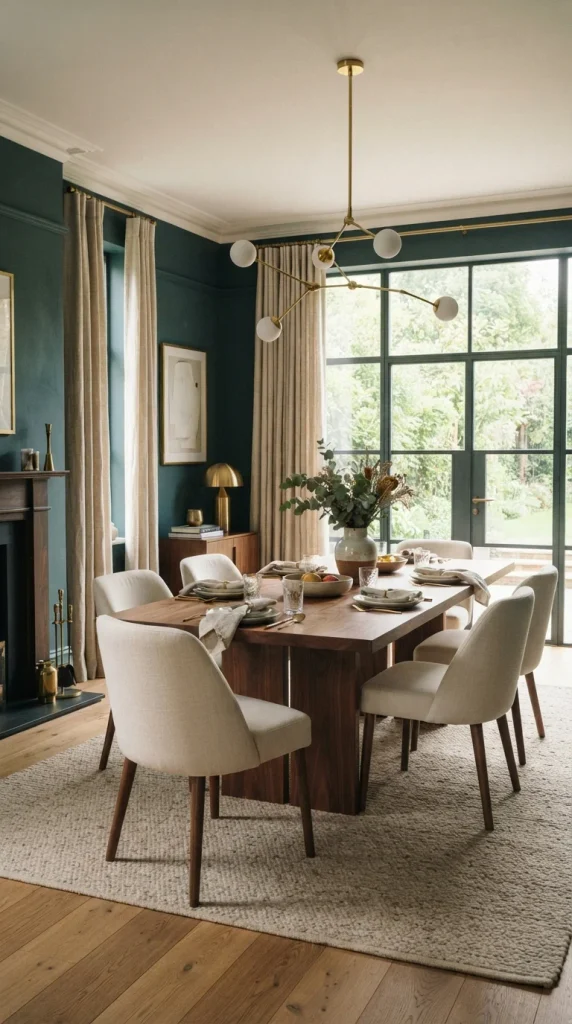
    Deep teal combines the richness of blue with the earthy character of green. It can give a dining room a stylish and slightly dramatic appearance without feeling too traditional. Pair it with warm wood, cream seating, and simple gold or brass accents. This color works well when you want the dining room to feel distinctive and elegant.

    18. Warm Mocha
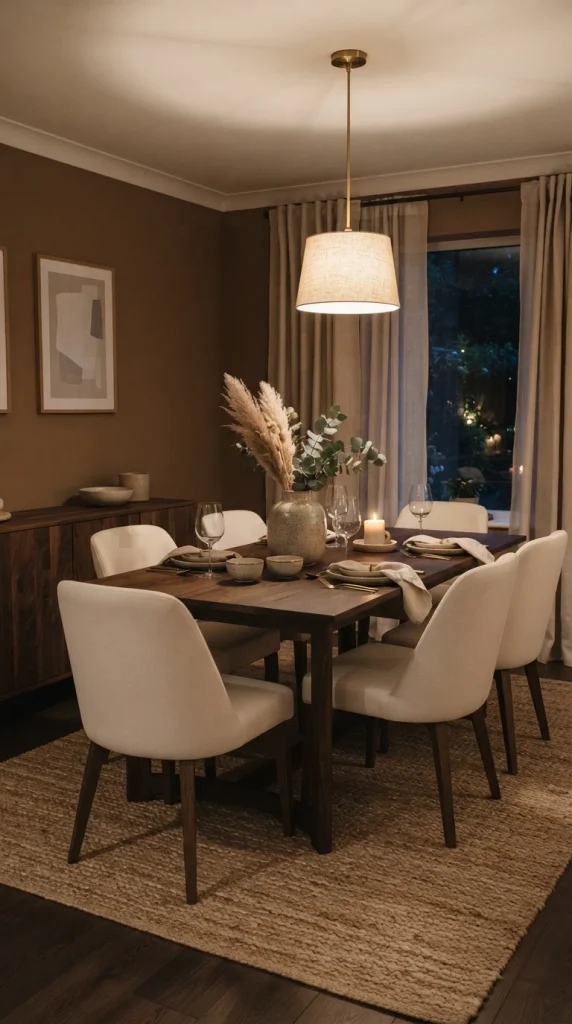
    Warm mocha creates a cozy and comforting backdrop with its soft brown undertones. It pairs naturally with wooden furniture, cream upholstery, and earthy decorations. This color can make a large dining room feel more intimate and inviting. Add layered lighting to bring out its warmth and create a welcoming evening atmosphere.

    19. Chocolate Brown

    Chocolate brown gives the dining room a rich, grounded, and classic appearance. It works especially well with traditional wood furniture and warm decorative details. To prevent the room from feeling too dark, balance the walls with lighter fabrics, artwork, or curtains. This shade is ideal for creating a cozy dining space with a sophisticated mood.

    20. Soft Lavender
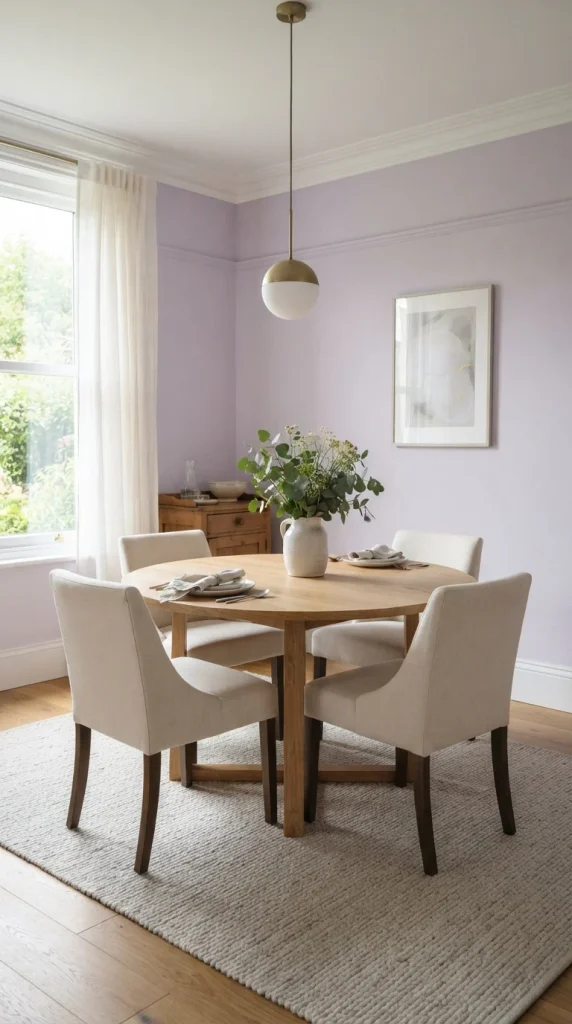
    Soft lavender adds a subtle touch of color while keeping the dining room peaceful and elegant. Its gentle tone works nicely with warm white, light gray, natural wood, and soft metallic accents. Use it when you want something different from traditional beige or gray. The result can feel fresh, calm, and welcoming.

    21. Moody Plum

    Moody plum brings depth and personality to a dining room with its rich purple undertones. It creates a cozy atmosphere that feels especially beautiful with warm lamps and candlelight. Balance this deeper shade with cream, natural wood, or soft beige furnishings. It is a strong choice for an elegant dining room with a dramatic but comfortable feel.

    Conclusion

    Choosing the right dining room paint color can completely change how the space feels. Soft neutrals create a light and timeless look, while greens, blues, browns, and deeper shades can add warmth and personality. Consider your room’s natural light, furniture, and overall decor style before choosing a color. The best shade is one that makes your dining room feel comfortable, welcoming, and beautiful.

    Frequently Asked Questions

    1. What is the best paint color for a cozy dining room?

    Warm white, beige, taupe, sage green, and warm brown are excellent choices for a cozy dining room. They create a comfortable atmosphere without making the space feel overwhelming.

    2. What dining room colors make a small room look bigger?

    Light colors such as warm white, creamy ivory, soft beige, and light gray can make a small dining room feel more open. Using similar light tones on the walls and trim can create an even more spacious appearance.

    3. Are dark paint colors good for dining rooms?

    Yes, dark colors such as navy, forest green, charcoal, burgundy, and plum can work beautifully in dining rooms. Use good lighting and balance them with lighter furniture or accessories.

    4. What dining room paint color works best with wooden furniture?

    Warm beige, creamy ivory, sage green, olive green, taupe, and terracotta pair especially well with wood furniture. The right choice depends on whether the wood has warm, neutral, or darker undertones.

    5. Should dining room walls be lighter or darker than the furniture?

    Either can work. Light walls can make darker furniture stand out, while deeper walls can create a cozy background for lighter furniture. Consider the room’s size and natural light when deciding.

    6. What is a timeless color for a dining room?

    Warm white, soft beige, ivory, greige, and light taupe are among the easiest colors to keep timeless. They also give you flexibility when changing furniture, artwork, or accessories.

    7. How can I choose the right dining room paint color?

    Start by looking at your existing furniture, flooring, curtains, and lighting. Test a few paint samples on the wall and observe them at different times of day before making your final choice.
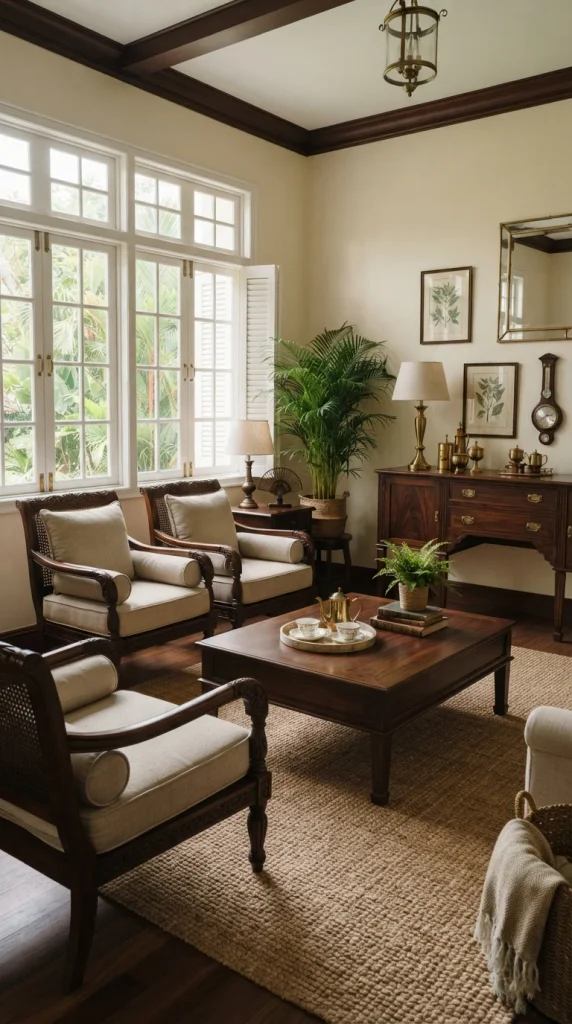
  • 25 British Colonial Interior Design Ideas for a Timeless and Elegant Home

    25 British Colonial Interior Design Ideas for a Timeless and Elegant Home

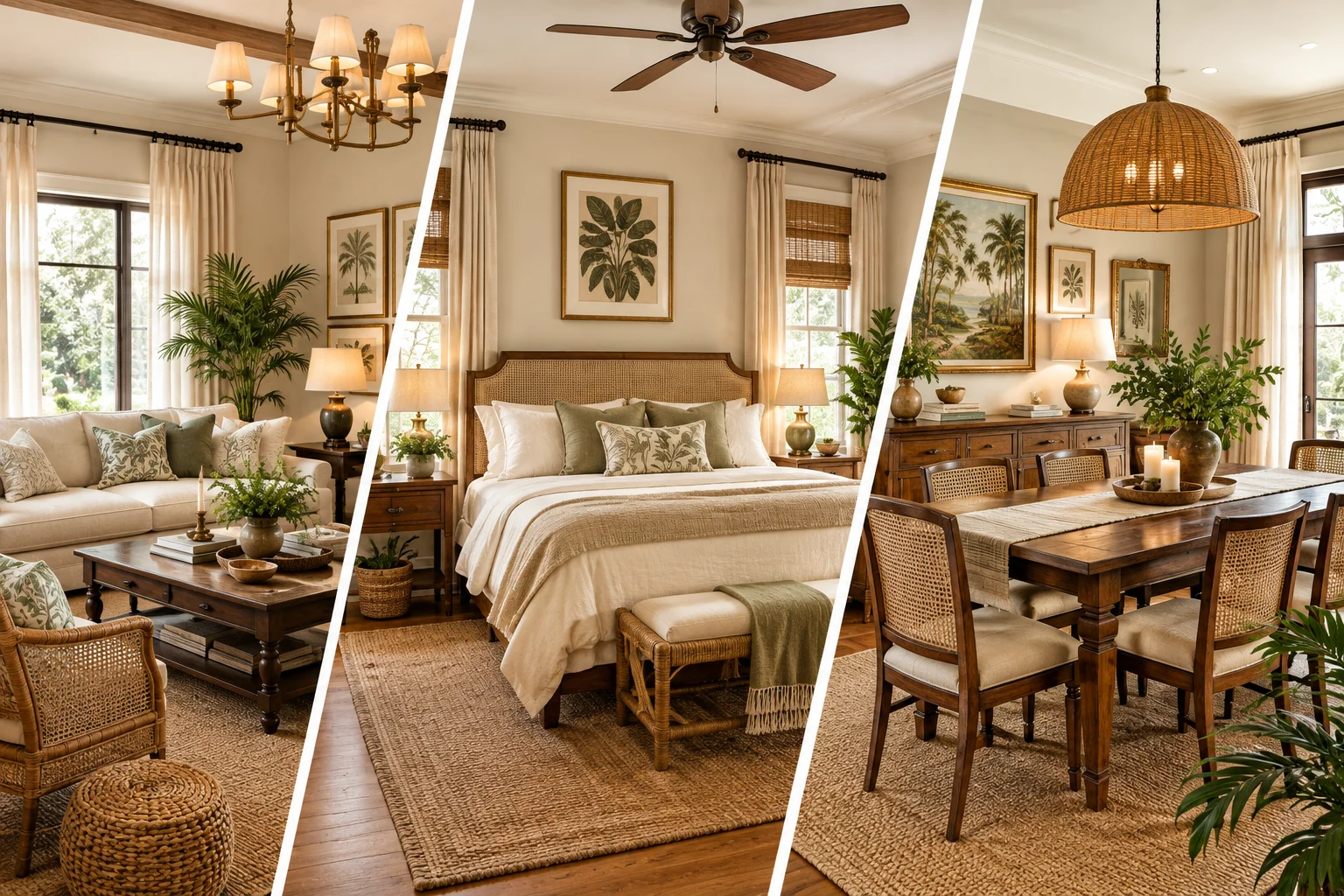
    British Colonial interior design brings together classic British elegance with warm tropical influences and natural materials. From rich wood furniture and woven textures to soft neutral colors and lush greenery, this style feels both refined and comfortable. These 25 British Colonial interior design ideas can help you create a timeless home with character and warmth. Whether you prefer traditional details or a modern touch, there are plenty of simple ways to bring this elegant style into your space.

    1. Dark Wood Furniture for a Classic Look

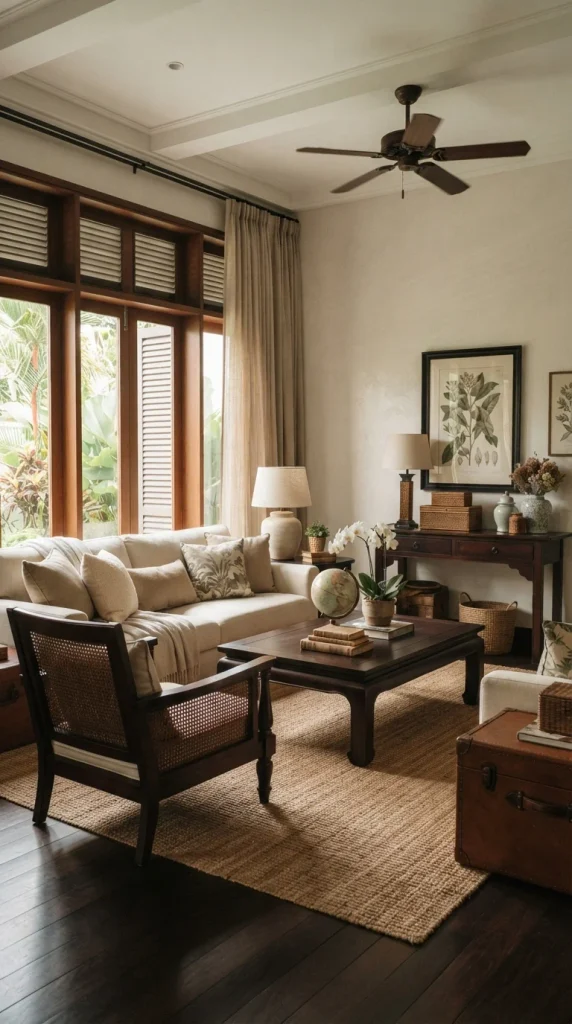
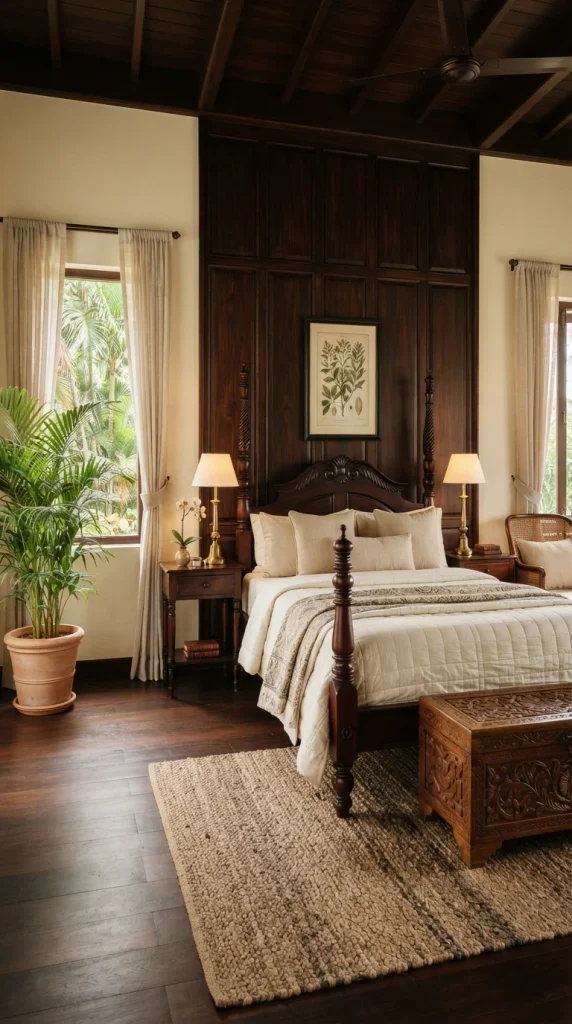
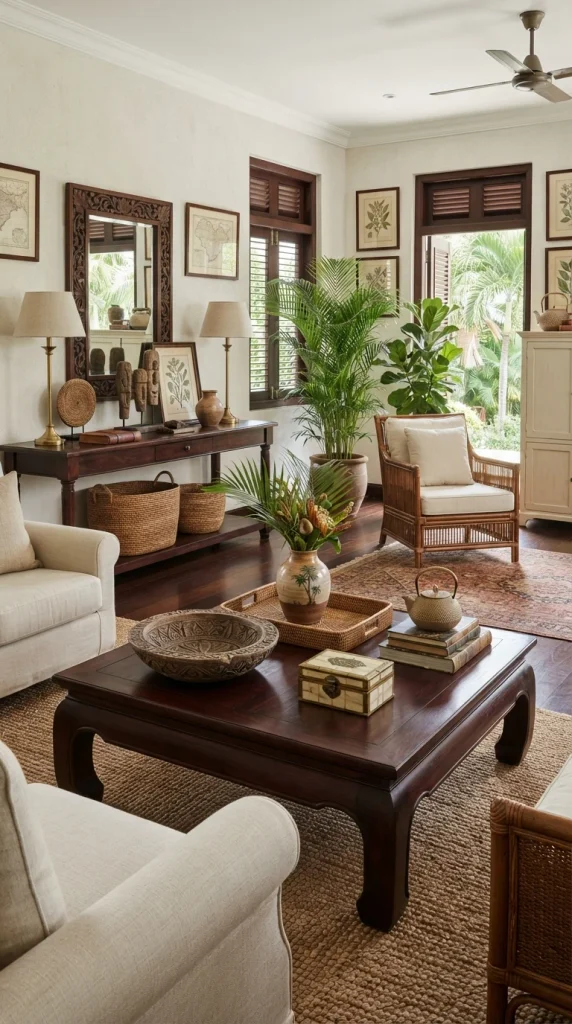
    Dark wood furniture is one of the easiest ways to bring British Colonial style into your home. Choose pieces made from rich wood with a natural or slightly polished finish. A dark wooden coffee table, cabinet, or dining table can instantly add warmth and character. Balance the deeper tones with cream walls, light fabrics, or woven accessories. This creates a space that feels elegant without becoming too dark.

    2. Rattan and Wicker Accent Pieces

    Rattan and wicker add a relaxed tropical feeling to British Colonial interiors. You can use them for chairs, baskets, lampshades, or small side tables. Their natural texture works beautifully with dark wood and neutral fabrics. These materials also help soften a room filled with traditional furniture. Even a few woven accents can make the space feel warm and inviting.

    3. Neutral Colonial Color Palettes

    A neutral color palette creates a calm foundation for British Colonial decorating. Cream, beige, warm white, taupe, and soft brown work especially well with this style. You can add small touches of green or muted blue for more visual interest. Keeping the main colors soft allows wood furniture and natural textures to stand out. The result is comfortable, timeless, and easy to live with.

    4. Tropical Greenery and Indoor Plants

    Indoor plants bring the tropical side of British Colonial design to life. Large leafy plants can look beautiful beside wooden furniture or in empty corners. Choose simple ceramic, woven, or wooden planters to keep the natural feeling consistent. Plants also add freshness and color without making the room feel overly decorated. A few well-placed plants can make the entire space feel more welcoming.

    5. Cane Furniture for a Relaxed Feel

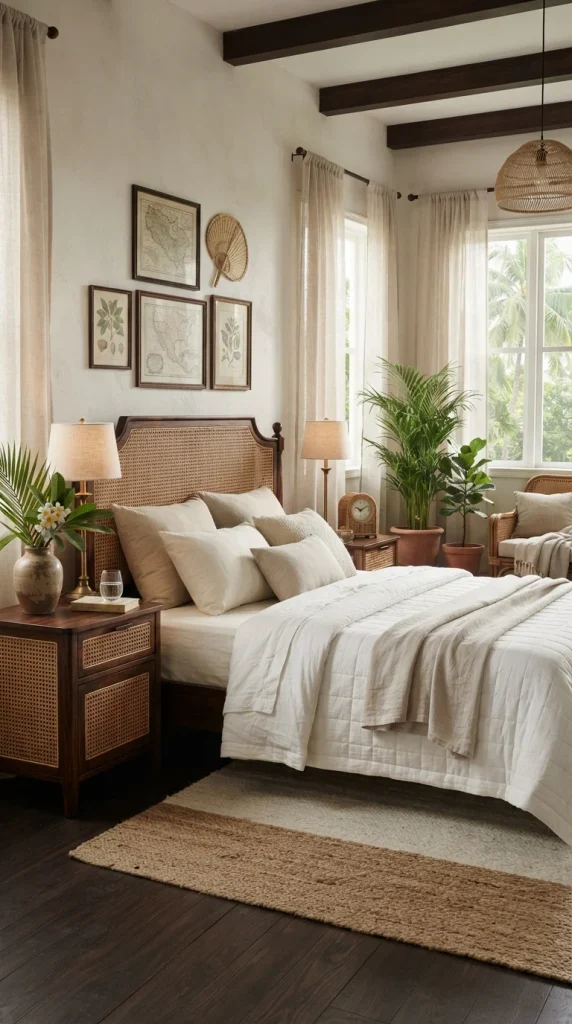
    Cane furniture adds lightness to the richer materials commonly used in British Colonial interiors. A cane chair, cabinet door, or headboard can introduce beautiful texture without overwhelming the room. Pair cane pieces with linen cushions and dark wood for a balanced look. This combination feels classic while still being casual enough for everyday living. It works especially well in bedrooms and sitting areas.

    6. Vintage Trunks as Decorative Tables

    Vintage trunks can add personality while also providing useful storage. Place one beside a sofa as a side table or use a larger trunk as a coffee table. Look for pieces with leather details, aged wood, or subtle metal hardware. Their worn appearance can give the room a collected and worldly character. This is a practical way to bring a little old-world charm into your decor.

    7. Colonial-Style Living Room Decor

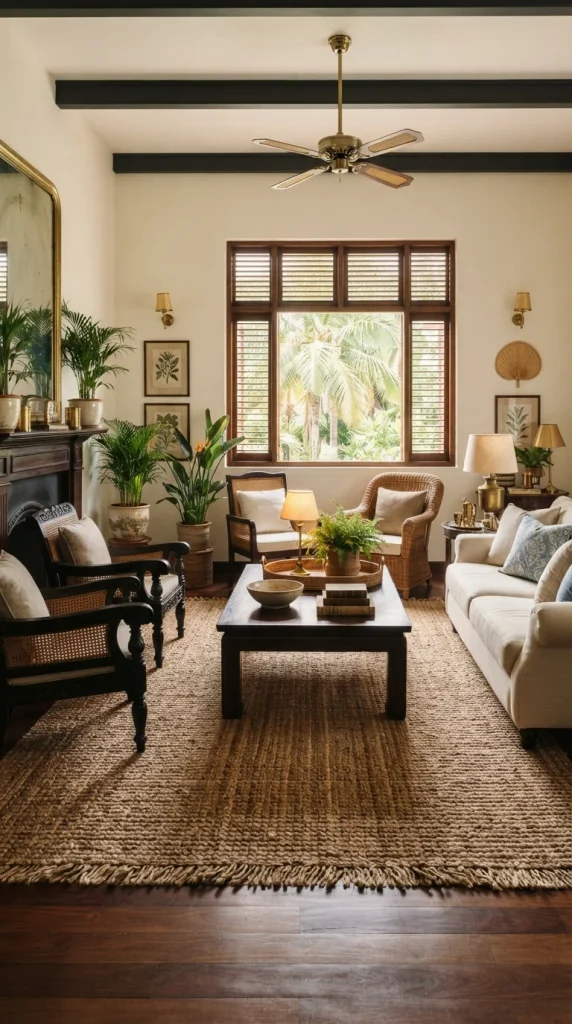
    A British Colonial living room should feel elegant, comfortable, and naturally layered. Combine dark wood furniture with neutral sofas, woven chairs, soft rugs, and leafy plants. Add a few vintage-inspired accessories rather than filling every surface with decorations. Warm lighting can make the room feel especially inviting in the evening. The goal is a relaxed space that looks collected over time.

    8. British Colonial Bedroom Ideas

    A British Colonial bedroom can feel peaceful by combining natural fabrics with rich wooden furniture. Consider a wooden bed, linen bedding, woven accents, and soft neutral colors. A few tropical plants or botanical details can add a gentle connection to nature. Keep the lighting warm and avoid too many bright colors. This creates a restful bedroom with timeless character.

    9. Woven Baskets for Natural Texture

    Woven baskets are simple accessories that add both texture and function. Use them to store blankets, books, towels, or everyday items. Place them near sofas, under consoles, or in empty corners where extra storage is useful. Their natural fibers work beautifully with rattan, cane, and dark wood. They can make a room feel more organized while keeping the relaxed Colonial look.

    10. Elegant Four-Poster Beds

    A four-poster bed can become the main feature of a British Colonial bedroom. Choose a wooden frame with clean lines and pair it with soft white or neutral bedding. Light linen curtains around the posts can create an airy and romantic feeling. Keep the surrounding decor simple so the bed remains the focal point. This classic piece adds height, drama, and timeless elegance.

    11. Linen Curtains in Soft Neutral Tones

    Linen curtains are perfect for creating the relaxed side of British Colonial style. Choose shades such as ivory, cream, beige, or soft tan to keep the room light. Their natural texture adds softness while allowing plenty of daylight to enter. Floor-length curtains can also make windows feel taller and more elegant. Pair them with dark wood furniture for a beautiful contrast.

    12. Antique-Inspired Decorative Accessories

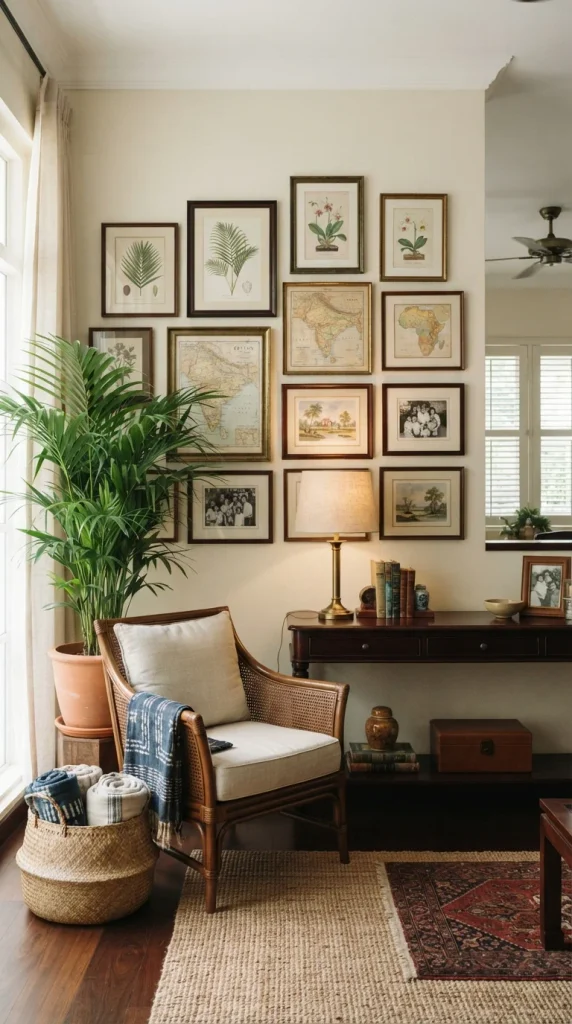
    Small antique-inspired accessories can give a British Colonial room a sense of history. Look for old-style clocks, decorative boxes, brass objects, maps, or traditional picture frames. You do not need many pieces to create this effect. Choose a few meaningful-looking items and arrange them naturally on shelves or tables. This keeps the room sophisticated instead of crowded.

    13. Tropical Botanical Prints

    Botanical prints bring color and nature into British Colonial interiors without making them feel overly modern. Use leafy patterns on cushions, curtains, wallpaper, or framed artwork. Green, cream, and muted botanical shades work especially well with dark wood. If you prefer a subtle look, use botanical patterns on just one or two accent pieces. This creates a gentle tropical influence while maintaining a classic atmosphere.

    14. Leather Seating for Timeless Style

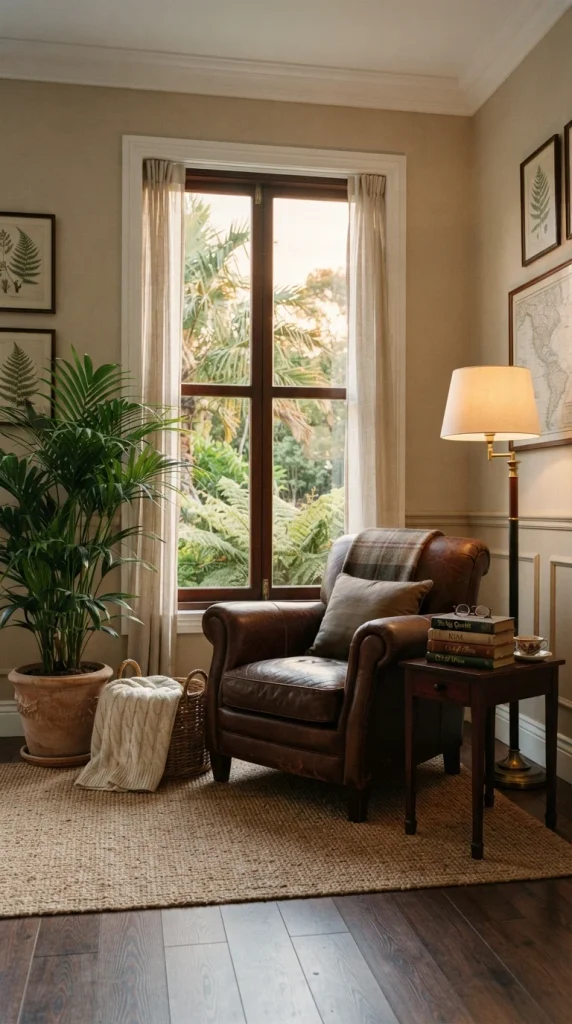
    Leather seating adds depth and a traditional feel to British Colonial rooms. A brown leather armchair or sofa can work beautifully with woven materials and neutral fabrics. Choose a warm, aged-looking finish rather than something overly glossy. Add linen cushions or a soft throw to make the seating more comfortable. The combination of leather and natural textures creates a welcoming, lived-in appearance.

    15. Natural Fiber Rugs and Carpets

    Natural fiber rugs can help connect all the elements of a British Colonial room. Jute, sisal, and other woven textures provide a warm foundation beneath furniture. Their neutral colors work well with dark wood, cream fabrics, and greenery. Choose a rug large enough to visually connect the main furniture pieces. This simple addition can make the room feel more finished and comfortable.

    16. Brass Lighting and Decorative Details

    Brass details can add a subtle touch of elegance to British Colonial interiors. Consider brass table lamps, pendant lights, picture frames, handles, or small decorative objects. Warm brass works especially well with dark wood and earthy colors. Use it in small amounts so it enhances the room rather than becoming the main feature. Soft lighting will make these details look even warmer.

    17. Colonial Gallery Walls

    A gallery wall can add personality while supporting the traditional character of British Colonial design. Combine botanical artwork, vintage-style prints, maps, or simple framed photographs. Use wooden, brass, or neutral frames to keep the arrangement cohesive. You can create the display above a sofa, console, or bedroom dresser. A carefully arranged gallery wall makes the space feel personal and collected.

    18. Dark Wood Accent Walls

    A dark wood accent wall can create a strong focal point in a Colonial-inspired room. Use wood paneling or a warm wood finish behind a bed, sofa, or dining area. Balance the darker wall with lighter furniture and neutral textiles. This prevents the room from feeling heavy while still adding depth. Even a single feature wall can give the space a rich and sophisticated appearance.

    19. Global-Inspired Decorative Objects

    British Colonial interiors often feel collected because they combine traditional pieces with influences from different regions. Add decorative objects such as carved bowls, woven trays, ceramic pieces, or handcrafted-looking accessories. Choose items with natural colors and interesting textures. Display them in small groups rather than spreading them across every surface. This creates a thoughtful and well-traveled feeling.

    20. Cozy British Colonial Reading Nooks

    A small reading nook can bring comfort and character to an unused corner. Place a comfortable leather or rattan chair beside a small wooden table and add a soft floor lamp. A woven basket can hold blankets or books nearby. Surrounding the space with greenery can make it feel even more peaceful. Keep the colors warm and neutral for a cozy Colonial atmosphere.

    21. Plantation-Style Shutters and Windows

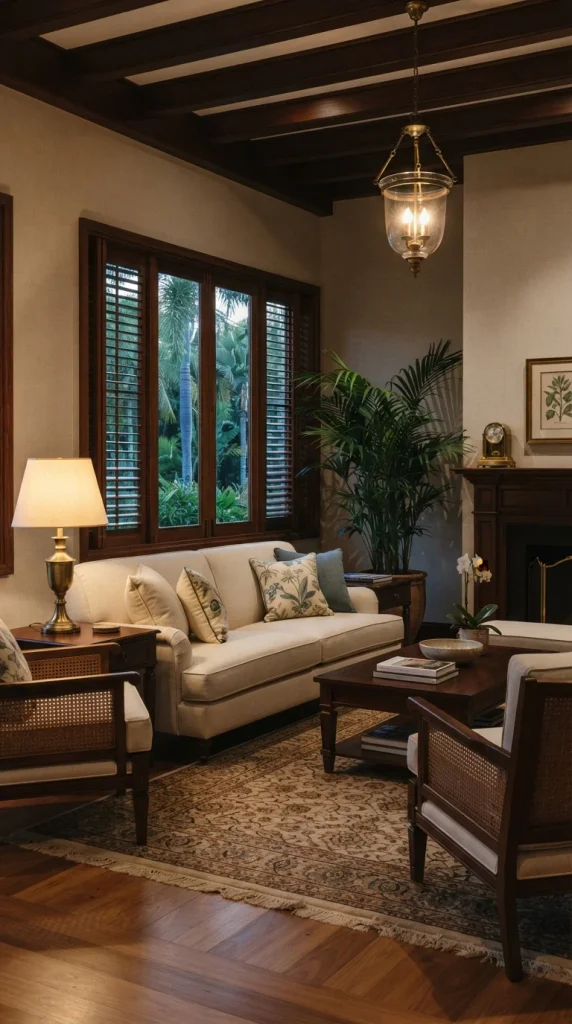
    Plantation-style shutters can complement the traditional architecture often associated with British Colonial interiors. Their clean lines and wooden appearance add structure without looking overly decorative. White, cream, or natural wood finishes can work with different room palettes. They are especially attractive in rooms with plenty of natural light. Pair them with simple linen curtains for a softer layered look.

    22. Layered Textures for a Collected Look

    Layering different textures is an important part of creating a comfortable British Colonial interior. Combine wood, linen, leather, rattan, cane, jute, and soft cotton throughout the room. You do not need many colors when the textures already provide visual interest. Mix smooth surfaces with woven and natural materials for balance. This makes the room feel rich, warm, and thoughtfully decorated.

    23. Classic Colonial Dining Room Ideas

    A Colonial-inspired dining room can feel both formal and welcoming. Start with a sturdy dark wood dining table and pair it with comfortable upholstered, cane, or wooden chairs. Add a woven rug, warm pendant light, and simple botanical artwork to complete the setting. Keep the table styling natural with ceramics, glassware, or greenery. The finished room should feel elegant enough for guests but comfortable for everyday meals.

    24. British Colonial Outdoor-Inspired Decor

    Bring an outdoor-inspired feeling indoors with natural materials and tropical details. Use leafy plants, woven furniture, bamboo-style accents, and earthy colors throughout the space. Large windows and light curtains can help strengthen the connection with nature. This approach works especially well in sunrooms, living rooms, and covered outdoor areas. The result feels fresh, relaxed, and connected to the tropical side of Colonial design.

    25. Modern British Colonial Interior Design Mix

    Modern British Colonial design combines traditional materials with cleaner, simpler shapes. Keep classic elements such as dark wood, rattan, linen, and greenery, but choose furniture with less ornamentation. A neutral palette can help old and new pieces work together naturally. Avoid filling the room with too many vintage accessories. This balanced approach creates a timeless space that feels classic without looking dated.

    Conclusion

    British Colonial interior design is all about creating a home that feels warm, elegant, natural, and collected. Dark wood, rattan, cane, linen, greenery, neutral colors, and vintage-inspired details can work together beautifully without making a room feel crowded. Start with a few key materials and build the look gradually. With the right balance of classic pieces and relaxed textures, you can create a timeless home that feels comfortable and full of character.

    Frequently Asked Questions

    What colors are best for British Colonial interior design?

    Warm neutrals such as cream, beige, ivory, taupe, and brown are excellent choices. You can add muted greens, soft blues, or botanical shades for subtle color and contrast.

    Is British Colonial interior design expensive?

    It does not have to be expensive. You can create the look gradually by mixing affordable woven baskets, linen-style fabrics, plants, and secondhand wooden furniture with a few special pieces.

    Can British Colonial style work in a small room?

    Yes. In a small space, focus on lighter walls, natural textures, and a few carefully selected dark wood pieces. Avoid using too many large furniture items or heavy accessories.

    What materials are commonly used in British Colonial interiors?

    Dark wood, rattan, cane, wicker, linen, leather, jute, bamboo, and brass are common choices. Combining several of these materials creates the layered and natural character of the style.

    How can I make a modern home feel more British Colonial?

    Start with dark wood accents, woven furniture, neutral textiles, indoor plants, and warm lighting. Add a few traditional or vintage-inspired accessories without changing every piece of modern furniture.

    What type of furniture works best with British Colonial style?

    Wooden tables, leather sofas, rattan chairs, cane furniture, four-poster beds, and vintage trunks all work well. Choose comfortable pieces with natural finishes and classic shapes.

    How do I decorate a British Colonial living room without making it look old-fashioned?

    Keep the traditional materials but use simple silhouettes and a restrained color palette. Mix dark wood with light upholstery, natural rugs, modern lighting, and fresh greenery for a more updated appearance.

  • 22 Budget-Friendly Outdoor Seating Ideas for a Cozy Backyard

    22 Budget-Friendly Outdoor Seating Ideas for a Cozy Backyard

    Create a cozy backyard oasis with affordable outdoor seating, soft cushions, pillows, and simple outdoor furniture for comfort and relaxation. A small patio, deck, lawn, or balcony can become a welcoming outdoor lounge with smart space-saving seating and weather-resistant materials. Choose comfortable seating and durable materials that suit your climate, seating style, and maintenance needs. Whether you enjoy casual family lounging, alfresco dining, or poolside entertaining, thoughtful seating arrangements can create a stylish outdoor living space for hosting and entertaining.

    1. DIY Wooden Bench Seating

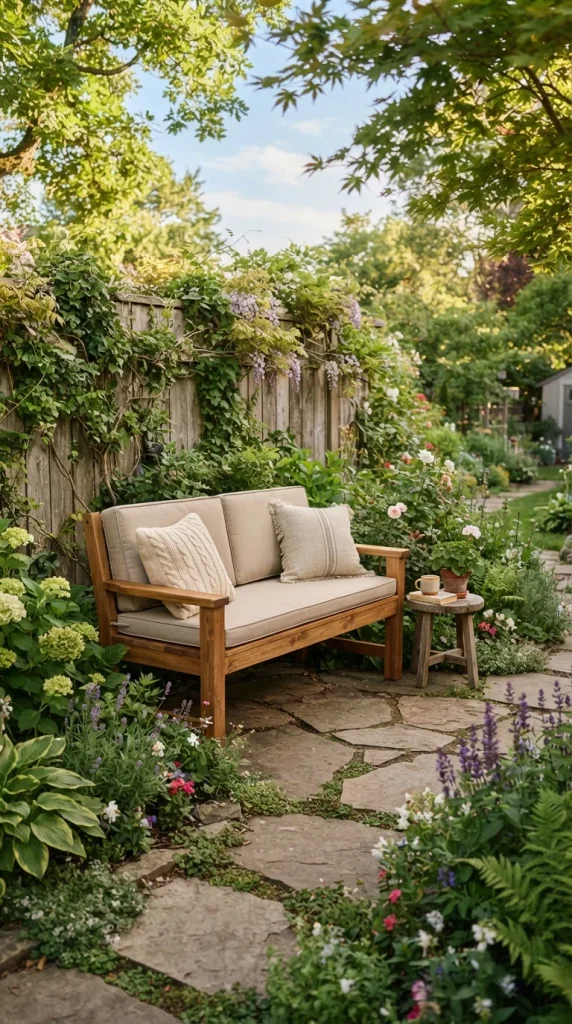
    A simple wooden bench is an affordable way to add useful seating to your backyard. Choose basic wood and give it a natural or painted finish. Add a few cushions for extra comfort. Place it along a wall, fence, or garden area to save space.

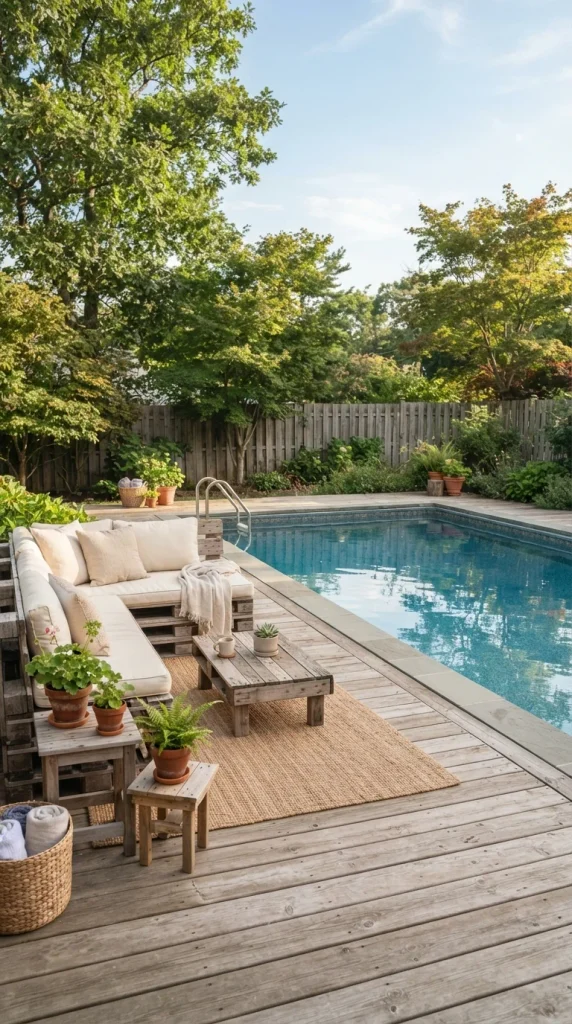
    2. Cozy Pallet Sofa

    Wooden pallets can be turned into a comfortable outdoor sofa without spending much. Stack and secure the pallets, then add a thick seat cushion and soft pillows. This idea works well on patios and decks. Choose weather-resistant fabric for easier care.

    3. Simple Adirondack Chairs

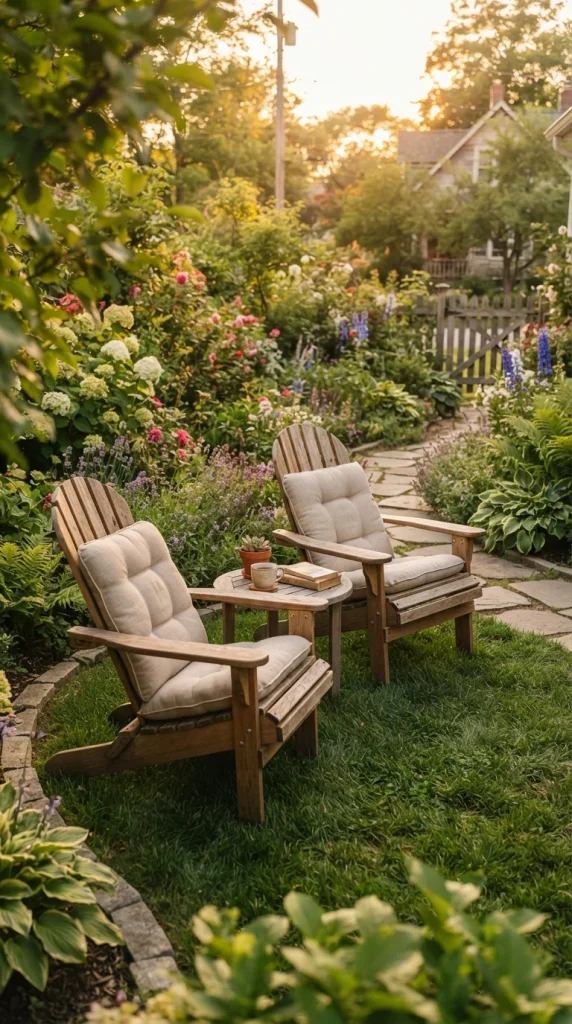
    Adirondack chairs offer a classic look without needing a large seating arrangement. You can find affordable versions or build simple wooden ones yourself. Place two chairs together for a cozy conversation spot. Add small cushions for extra comfort.

    4. Small Bistro Seating Set

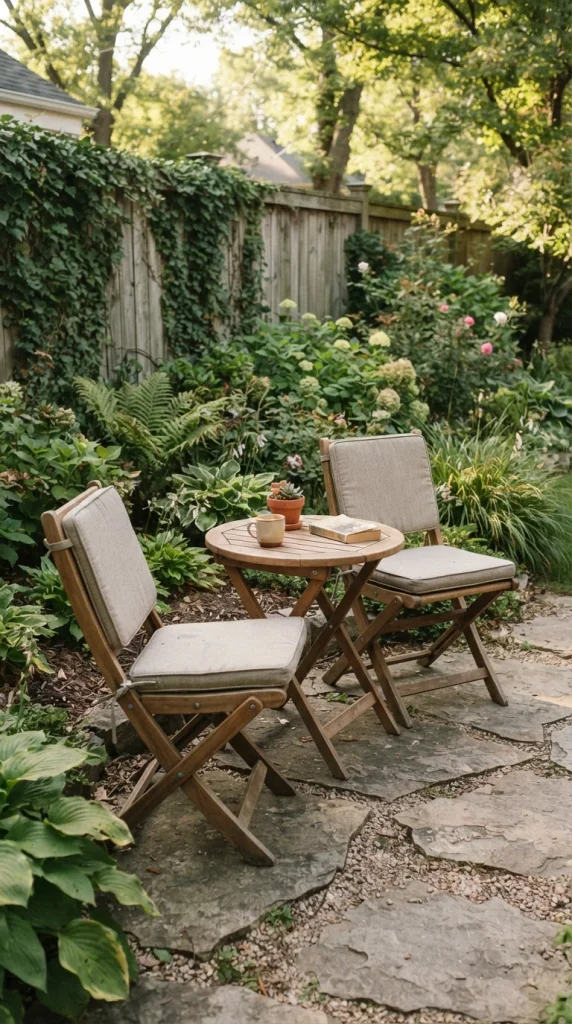
    A small bistro set is perfect when you have limited outdoor space. A compact table with two chairs can create a charming spot for morning coffee or evening drinks. Choose folding furniture if you want to store it easily. It works especially well on balconies and small patios.

    5. Outdoor Floor Cushion Seating

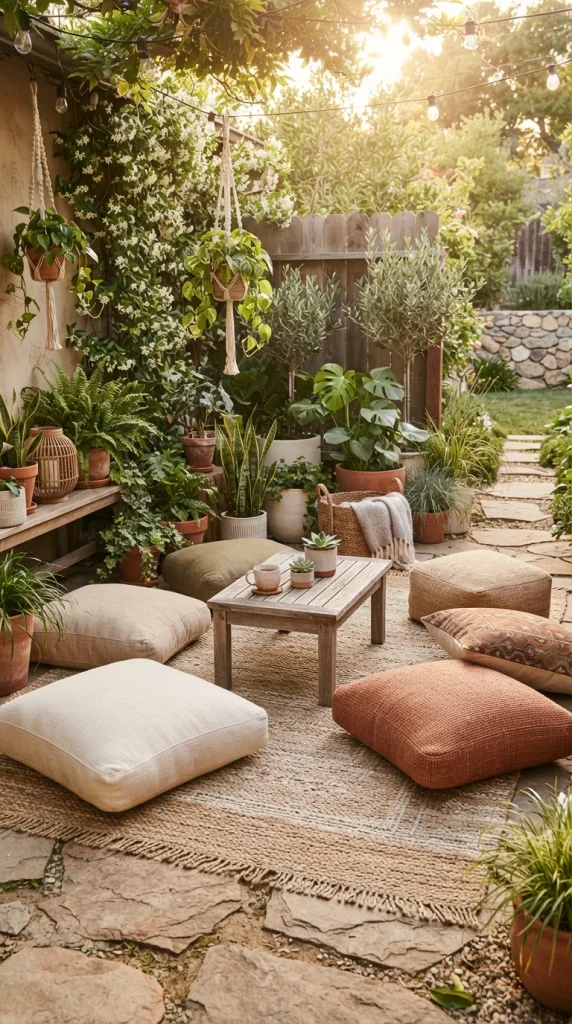
    Large outdoor floor cushions are an inexpensive way to create relaxed seating. Arrange several cushions around a low table for a casual gathering area. Choose washable and weather-resistant covers for practical use. This setup is also easy to move when needed.

    6. DIY Cinder Block Bench

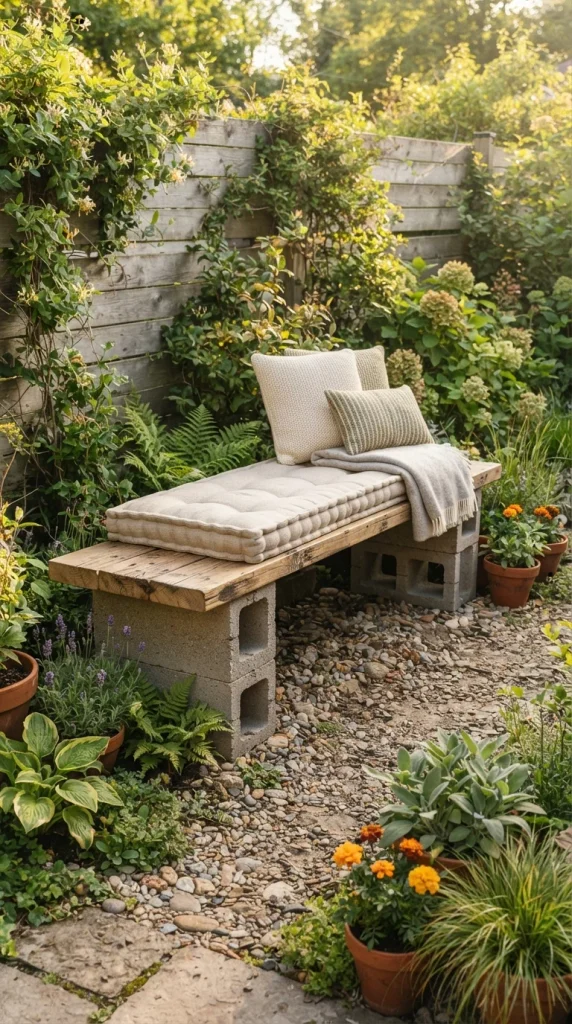
    Cinder blocks and wooden boards can create a sturdy outdoor bench on a small budget. The blocks provide a strong base while the wood creates the seat. Add cushions to make it softer and more inviting. It is a simple choice for patios, gardens, and backyard corners.

    7. Repurposed Wooden Crate Seating

    Old wooden crates can be reused to create creative outdoor seating. Stack sturdy crates securely and add a wooden top or cushion for a comfortable seat. You can also use the open spaces for storing garden items. A fresh coat of paint can give the setup a polished look.

    8. Cozy Outdoor Sectional

    An outdoor sectional can make a backyard feel like an extension of the living room. Look for affordable modular pieces that can be arranged in different ways. Add cushions and pillows for a softer appearance. Keep the layout simple so there is still enough room to move around.

    9. Hanging Egg Chair

    A hanging egg chair creates a cozy place to relax without requiring several pieces of furniture. Its compact shape works well in a quiet backyard corner. Add a soft cushion and small pillow for comfort. Place it under shade when possible to make relaxing more enjoyable.

    10. Compact Folding Chairs

    Folding chairs are practical when you need flexible outdoor seating. They can be opened when guests arrive and stored away when they are not needed. Choose sturdy designs made for outdoor use. A few colorful cushions can make them feel warmer and more comfortable.

    11. Built-In Corner Bench

    A corner bench can turn an unused backyard area into useful seating. Building along two sides helps make the most of limited space. Add cushions and pillows to create a comfortable place for relaxing. The space underneath can also provide convenient storage.

    12. DIY Pallet Lounge

    A pallet lounge is an easy project for creating a casual backyard retreat. Arrange sturdy pallets as a low base and cover them with comfortable cushions. Add a few pillows for a relaxed look. Place the lounge in a shaded area for a comfortable afternoon resting spot.

    13. Rattan Chair and Table Set

    A simple rattan chair and table set can bring warmth and texture to a backyard. You do not need a large set to create a welcoming seating area. Two chairs with a small table are enough for coffee or conversation. Choose outdoor-rated materials for better durability.

    14. Outdoor Pouf Seating

    Outdoor poufs provide flexible seating without taking up much room. They can work as extra seats, footrests, or casual lounge pieces. Choose sturdy covers that can handle outdoor conditions. Move them around the backyard whenever you need additional seating.

    15. Fire Pit Chair Arrangement

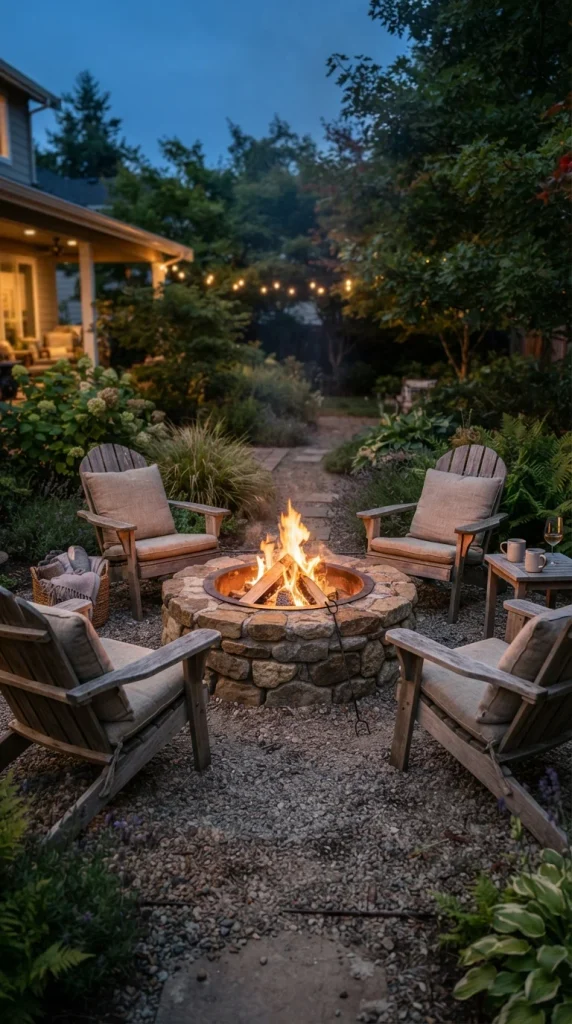
    Arrange affordable outdoor chairs around a fire pit to create a warm gathering area. Keep enough distance between the chairs and fire for safe use. Add cushions that can be removed when the area is not being used. This setup is especially inviting for evening conversations.

    16. Covered Porch Seating

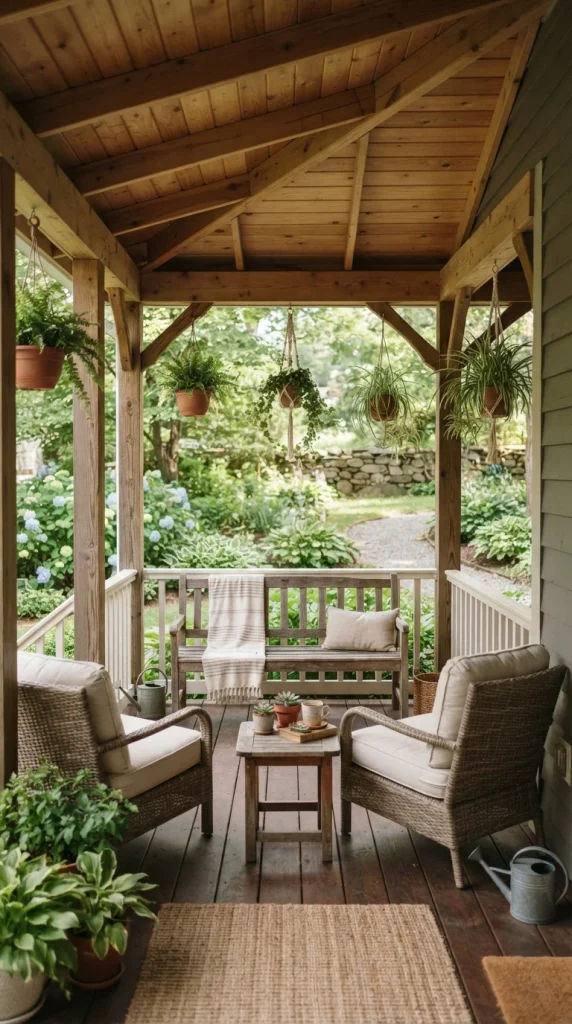
    A covered porch is an ideal place for simple and affordable seating. Add a small bench, a couple of chairs, or a compact sofa depending on the available space. Soft cushions can make the area feel more welcoming. A covered location also helps protect furniture from direct weather.

    17. String-Light Lounge Area

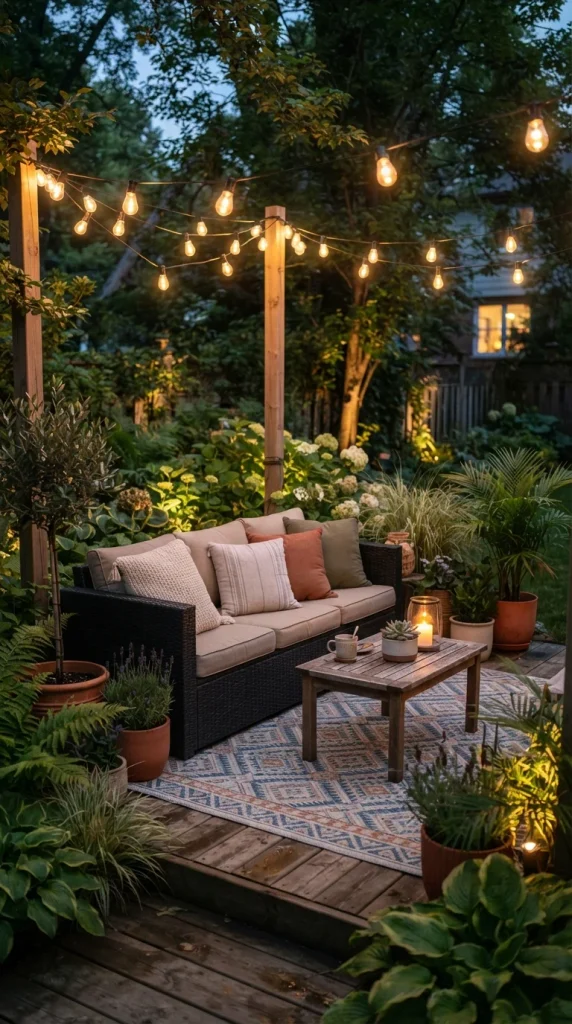
    String lights can make a basic seating area feel cozy without requiring expensive decor. Hang them above a small sofa, chairs, or bench to create a warm evening atmosphere. Keep the furniture simple and comfortable. Add a few cushions to complete the relaxed look.

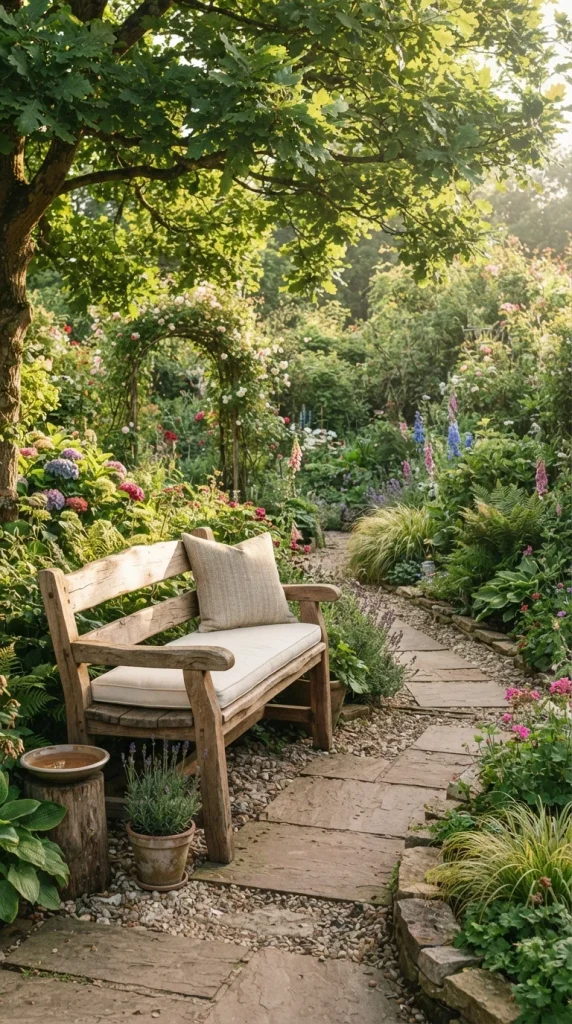
    18. DIY Garden Bench

    A garden bench can provide a peaceful place to sit while enjoying plants and flowers. A basic wooden design is often enough to create a charming seating spot. Place it beneath a tree or beside a garden path. Add one or two cushions for simple comfort.

    19. Small Balcony Seating Nook

    Even a tiny balcony can become a comfortable seating nook with the right furniture. Use one or two compact chairs with a small table to save floor space. Folding pieces are useful when the balcony needs to serve different purposes. Add cushions for color and comfort.

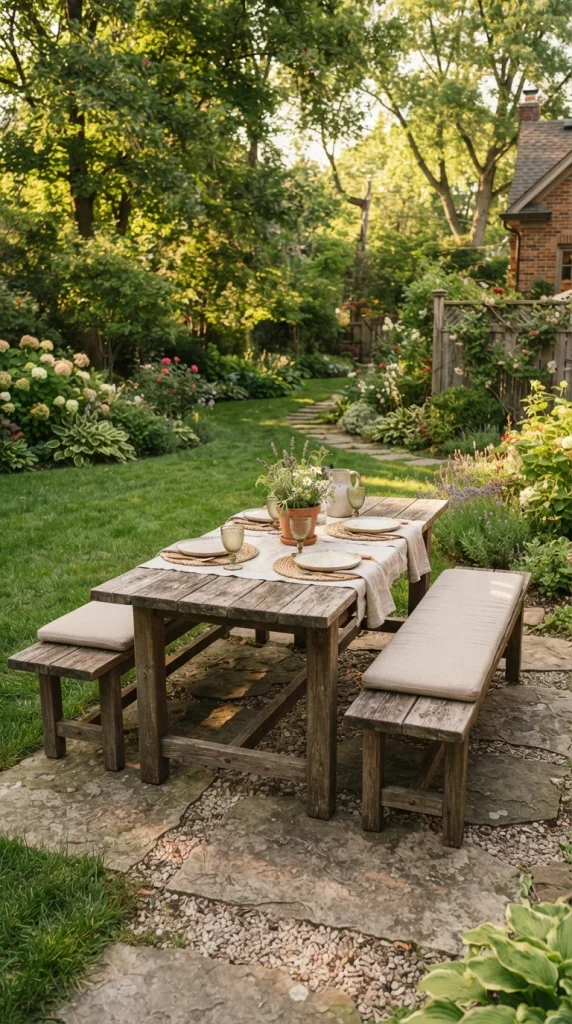
    20. Picnic-Style Outdoor Seating

    A picnic-style setup is simple, affordable, and useful for casual gatherings. Use a sturdy outdoor table with benches or inexpensive chairs around it. This arrangement gives everyone a comfortable place to eat and talk. It works particularly well for family meals and backyard gatherings.

    21. Cozy Daybed Lounge

    A simple outdoor daybed can create a relaxing place for reading, resting, or enjoying fresh air. Look for affordable frames or repurpose a sturdy platform with proper outdoor cushions. Add soft pillows for a welcoming feel. Place it in a shaded corner for extra comfort.

    22. Budget-Friendly Patio Sofa Setup

    A basic patio sofa can become the main seating piece without requiring a large budget. Choose a simple frame and improve its appearance with comfortable cushions and pillows. Add a small side table for drinks or accessories. Keep the surrounding decor simple to create a cozy and organized backyard.

    Conclusion

    Creating a cozy backyard does not require expensive furniture or complicated designs. Simple benches, pallets, cushions, folding chairs, and repurposed materials can provide comfortable seating while keeping costs low. Focus on pieces that suit your space, weather, and daily needs. With thoughtful placement and a few cozy touches, even a small backyard can become a welcoming place to relax and gather.

    Frequently Asked Questions

    1. What is the cheapest outdoor seating option?

    Pallet seating, DIY wooden benches, cinder block benches, and repurposed furniture are some of the most affordable options. Add outdoor cushions to make simple materials more comfortable.

    2. How can I create outdoor seating in a small backyard?

    Choose compact furniture such as folding chairs, a small bistro set, corner benches, or outdoor poufs. Use corners and walls efficiently to keep the center of the backyard open.

    3. What colors work well for outdoor seating?

    Neutral shades such as beige, cream, gray, and brown create a timeless look. You can add cushions or pillows in green, blue, terracotta, or other warm colors for personality.

    4. What materials are best for budget outdoor furniture?

    Wood, metal, treated pallets, rattan, and weather-resistant plastic can all work well. Choose materials based on your local weather and how much maintenance you want to do.

    5. How can I make cheap outdoor seating look expensive?

    Keep the furniture arrangement neat and add quality-looking cushions, pillows, and simple outdoor lighting. Matching fabrics and a limited color palette can also make the space look more polished.

    6. Where should I place outdoor seating in a backyard?

    Place seating where it is useful and comfortable, such as near a garden, under shade, beside a fire pit, or around an outdoor dining area. Leave enough walking space between furniture pieces.

    7. How can I protect budget outdoor seating?

    Use weather-resistant covers, cushions, and materials whenever possible. Store removable cushions indoors during bad weather and clean furniture regularly to help it last longer.

  • 21 IKEA Closet Hacks for Better Storage and Organization

    21 IKEA Closet Hacks for Better Storage and Organization

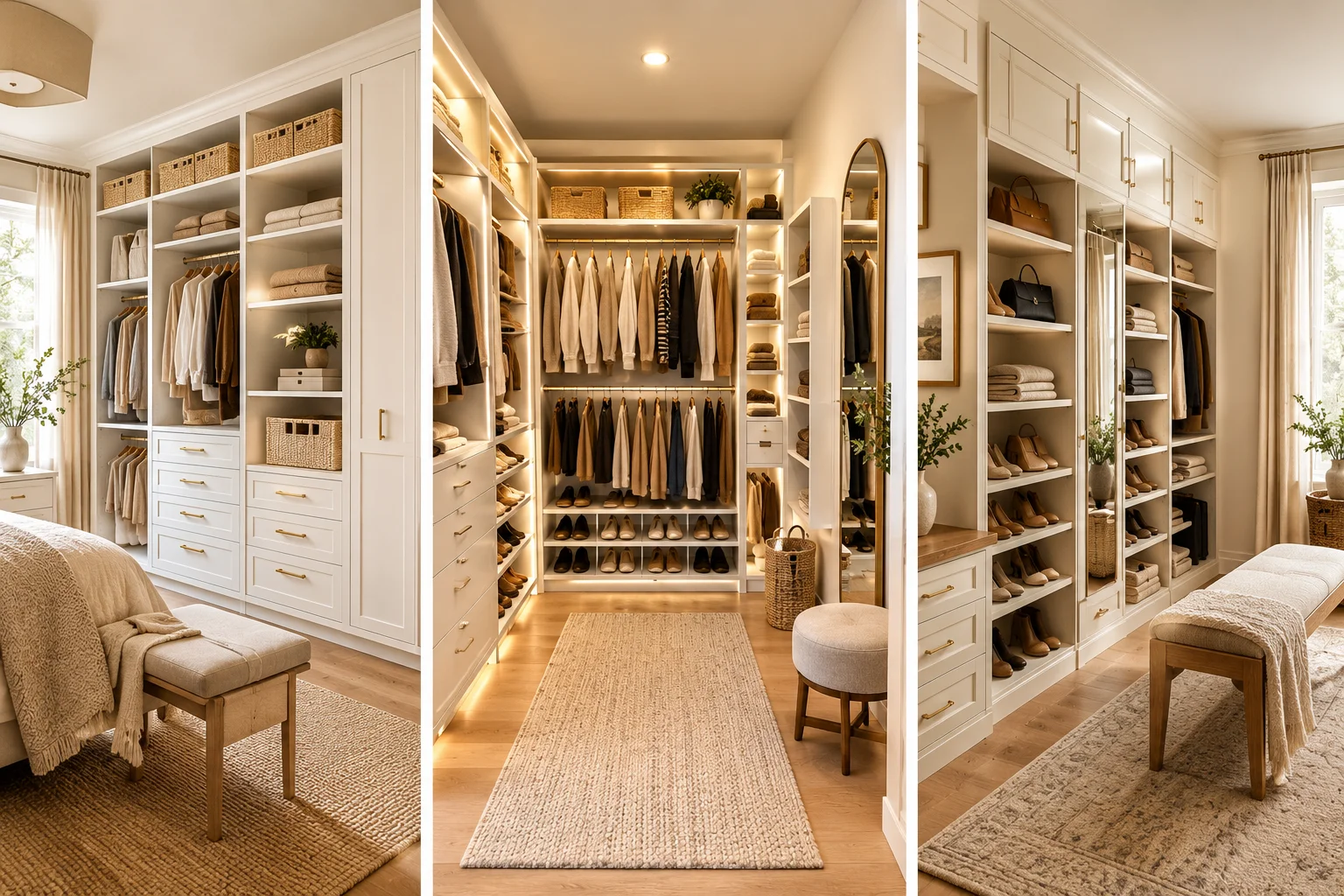
    IKEA closet pieces can be a simple way to create more storage without spending a lot on custom cabinetry. With the right combination of shelves, drawers, rails, and organizers, even a small closet can become much more functional. You can also personalize basic IKEA furniture with stylish hardware, baskets, and wood details. These IKEA closet hacks offer practical ideas for making your space organized, attractive, and easier to use.

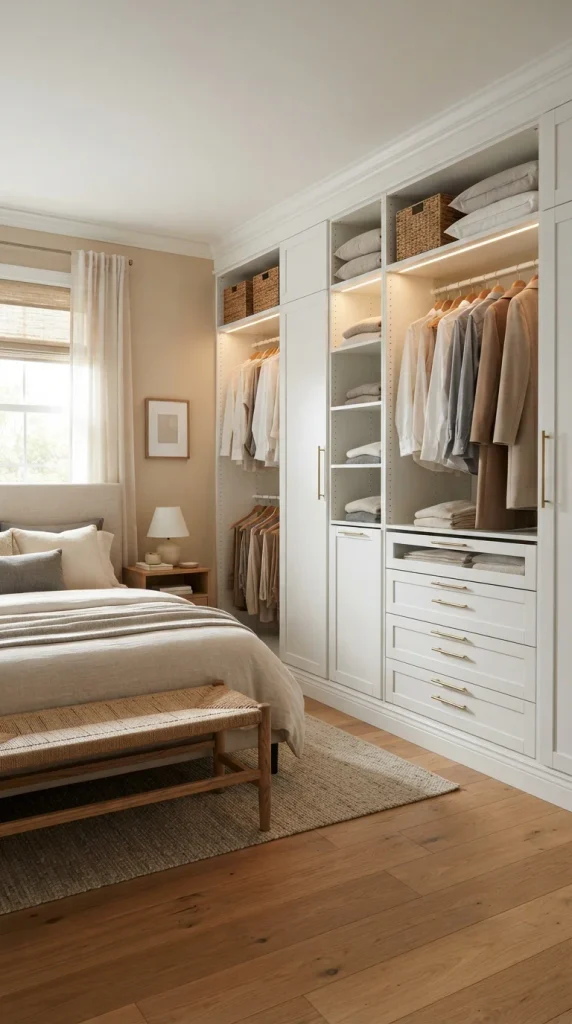
    1. IKEA PAX Built-In Closet

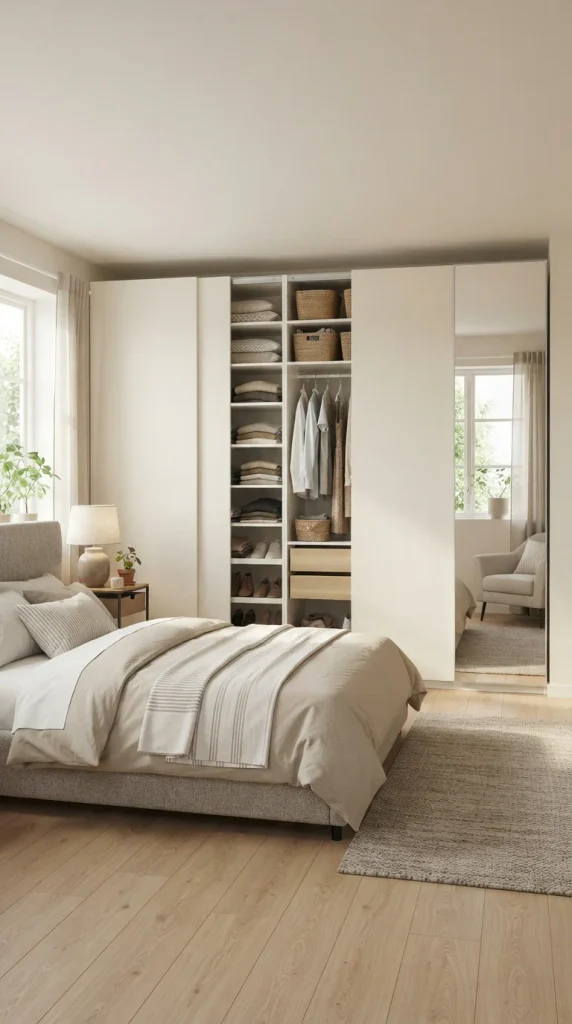
    An IKEA PAX system can give your closet the look of custom built-in storage without the cost of fully custom cabinetry. Use the frames to create a wall-to-wall closet that fits your room. Add drawers, shelves, hanging rails, and baskets based on the things you need to store. You can also add trim around the edges to make the units look more permanent. Choose simple doors for a clean and timeless appearance. Matching hardware can make the whole setup feel more polished. This hack works especially well in bedrooms with unused wall space. With thoughtful planning, a basic PAX system can become a highly functional wardrobe.

    2. IKEA Billy Bookcase Closet Hack

    An IKEA BILLY bookcase can be used in creative ways to add extra storage inside a closet. Place one or more bookcases along a wall and use the shelves for shoes, folded clothes, bags, and accessories. Add baskets to hide smaller items and keep the shelves looking neat. You can also install a hanging rail beside or between the bookcases for clothing. For a more built-in appearance, add trim around the edges and top. Keep the colors consistent with your bedroom for a seamless look. This hack is useful when you need open storage that is easy to see and reach.

    3. IKEA KALLAX Closet Storage

    IKEA KALLAX units can turn an empty closet wall into a practical storage station. The square compartments are useful for folded clothing, shoes, handbags, and storage baskets. Place fabric or woven bins inside some sections to hide items that you do not want on display. You can leave other compartments open for attractive accessories or everyday essentials. A KALLAX unit can also work as a divider when your closet is large and open. Add a clothing rail nearby to create a complete storage zone. Its simple design makes it easy to adapt as your storage needs change.

    4. IKEA MALM Dresser Closet Hack

    An IKEA MALM dresser can add valuable drawer storage to a closet while keeping the design clean and simple. Use the drawers for folded clothes, underwear, accessories, or other smaller items that can become messy on open shelves. Place the dresser under a hanging rail to make better use of vertical space. A small tray on top can hold perfumes, watches, or everyday accessories. You can also add decorative hardware if you want a more personalized look. Keep the surrounding area open so the dresser does not make the closet feel crowded. This hack works especially well in larger walk-in closets.

    5. IKEA BILLY Wardrobe Storage

    BILLY shelving can be adapted into a wardrobe storage area by combining open shelves with clothing rails. Use the upper shelves for folded sweaters, handbags, and seasonal items while keeping everyday clothing at an easy height. Storage boxes can make the higher sections look tidy and organized. Add a rail underneath one shelf for shirts, jackets, or dresses. You can also place baskets on the bottom shelves for shoes and accessories. This setup gives you a flexible alternative to traditional wardrobe storage. It is particularly useful when you want everything visible and easy to reach.

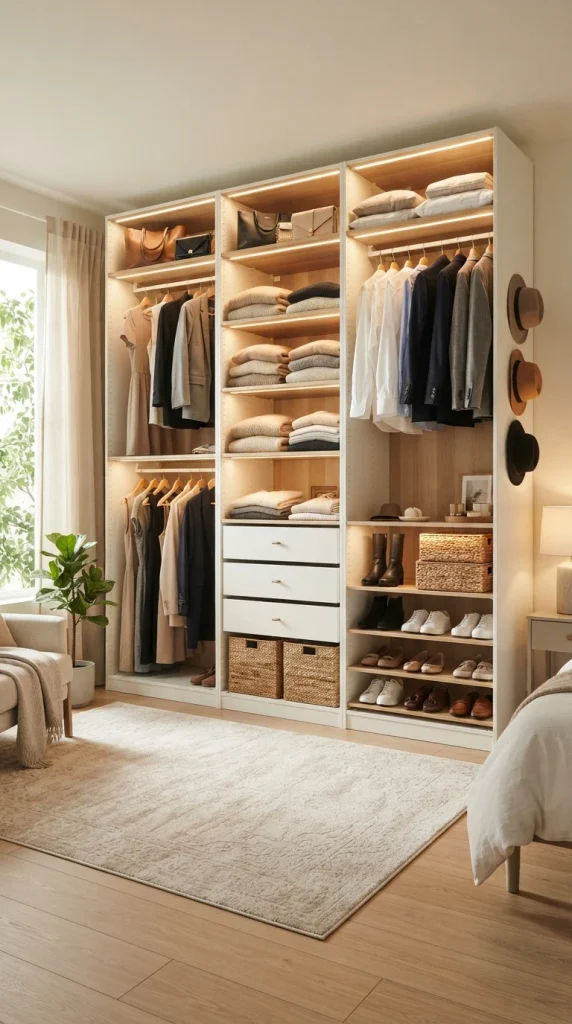
    6. IKEA PAX Open Closet System

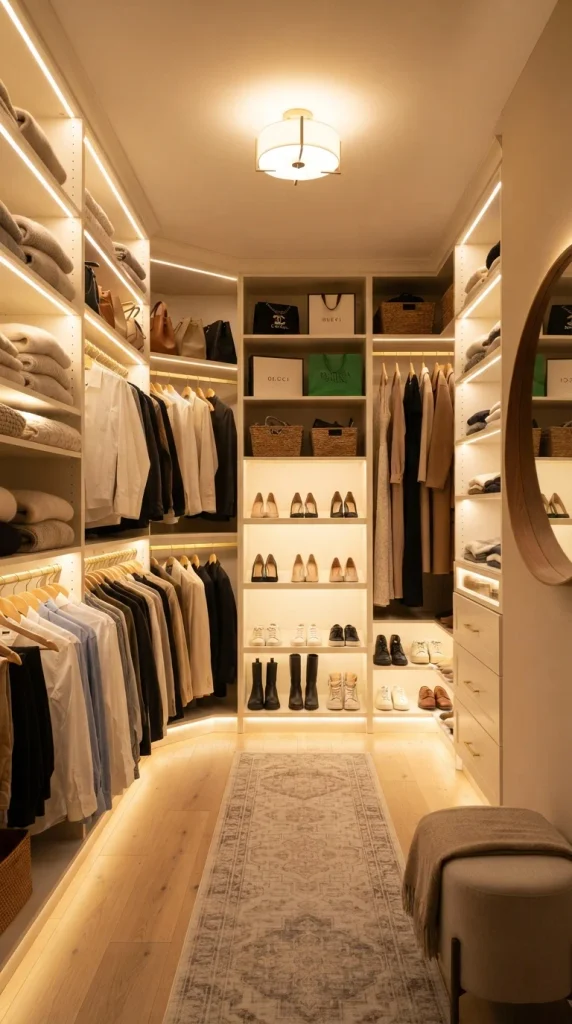
    An open PAX closet system can make clothing storage feel spacious and easy to organize. Without traditional doors, you can see your clothes, shoes, and accessories at a glance. Arrange hanging rails at different heights to separate shirts, dresses, jackets, and shorter clothing. Use drawers for smaller items and shelves for folded pieces. Matching baskets can hide anything that looks cluttered while keeping the system open. Add warm lighting inside the closet to make it feel more inviting. This style works especially well in modern bedrooms where an open wardrobe can become part of the room’s decor.

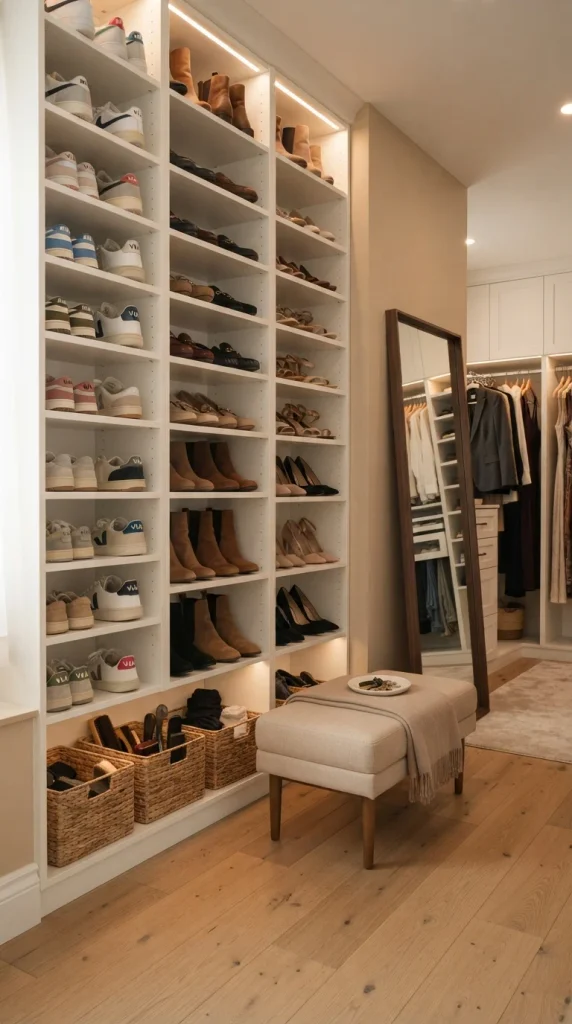
    7. IKEA Closet Shoe Storage

    IKEA furniture can provide a simple way to create a dedicated shoe storage area inside your closet. Use narrow shelving, compartments, or a slim cabinet to keep shoes organized without taking over the floor. Place everyday shoes where they are easy to reach and store less-used pairs higher up. Small baskets can hold sandals, slippers, or shoe-care supplies. Keep similar shoes together so finding a pair takes less time. If your closet is small, use vertical storage rather than spreading shoes across the floor. A dedicated shoe zone can make the entire closet feel cleaner and easier to maintain.

    8. IKEA Closet Drawer Organizer

    Adding drawer organizers to an IKEA closet system can make small clothing items much easier to manage. Use separate sections for socks, underwear, belts, scarves, and other accessories. Dividers help prevent items from becoming mixed together inside deep drawers. Clear or fabric organizers can also make it easier to see what you already have. Keep frequently used items in the top drawers for quick access. Less-used pieces can go into lower or deeper storage areas. This simple hack can make everyday routines easier while keeping the closet neat.

    9. IKEA Closet Basket Storage

    Baskets are an easy way to make open IKEA closet storage look more organized and attractive. Place matching baskets on shelves for scarves, accessories, folded clothing, or seasonal pieces. Woven baskets can add warmth and natural texture to a modern closet. Fabric bins are another good choice when you want a softer and more casual appearance. Labeling the baskets can make it easier to find things quickly. Choose sizes that fit your shelves without leaving too much wasted space. A few coordinated baskets can turn basic open shelving into a much cleaner storage system.

    10. IKEA Closet Jewelry Organizer

    A small jewelry organizer can make a big difference when your accessories are difficult to store. Use an IKEA cabinet, drawer insert, or small wall-mounted storage solution to keep necklaces, bracelets, earrings, and watches separated. Small compartments help prevent delicate pieces from becoming tangled. You can keep everyday jewelry near the front while storing special pieces in a more protected section. A shallow drawer can also work well for keeping jewelry out of sight. Add a small mirror nearby to make the area more useful. This hack gives accessories a dedicated home without taking up much closet space.

    11. IKEA Closet Double Hanging Rods

    Double hanging rods are a smart way to increase clothing storage without expanding your closet. Use one rail for shorter items such as shirts and another below it for skirts or folded-hanging pieces. This arrangement makes better use of the vertical space between the floor and ceiling. IKEA closet systems can be adjusted to create different hanging heights based on your wardrobe. Keep longer clothing in a separate section so dresses and coats have enough room. Avoid overcrowding each rod so clothes remain easy to see. This simple change can make a small closet feel much more efficient.

    12. IKEA Closet Corner Storage

    Closet corners are often difficult to use, but IKEA storage pieces can help turn these areas into useful zones. Use narrow shelves or adjustable units to store shoes, handbags, folded clothing, or accessories. A corner can also hold baskets for items that are not used every day. Keep the most accessible storage at waist and eye level for everyday essentials. Higher shelves can be reserved for seasonal belongings. If the closet is narrow, choose slim furniture so the walkway remains comfortable. Making use of corners can give you valuable storage without making the closet feel crowded.

    13. IKEA Closet Overhead Storage

    The space above your main hanging area is perfect for items you do not need every day. Use IKEA shelves or cabinets to store luggage, seasonal clothing, extra bedding, and special-occasion items. Matching storage boxes can keep the upper shelves looking neat and prevent dust from collecting on loose belongings. Label each box so you know what is inside without opening everything. Keep heavier items lower and lighter belongings higher for easier handling. A small step stool can make high shelves more practical. This hack helps you use the full height of the closet instead of leaving valuable space empty.

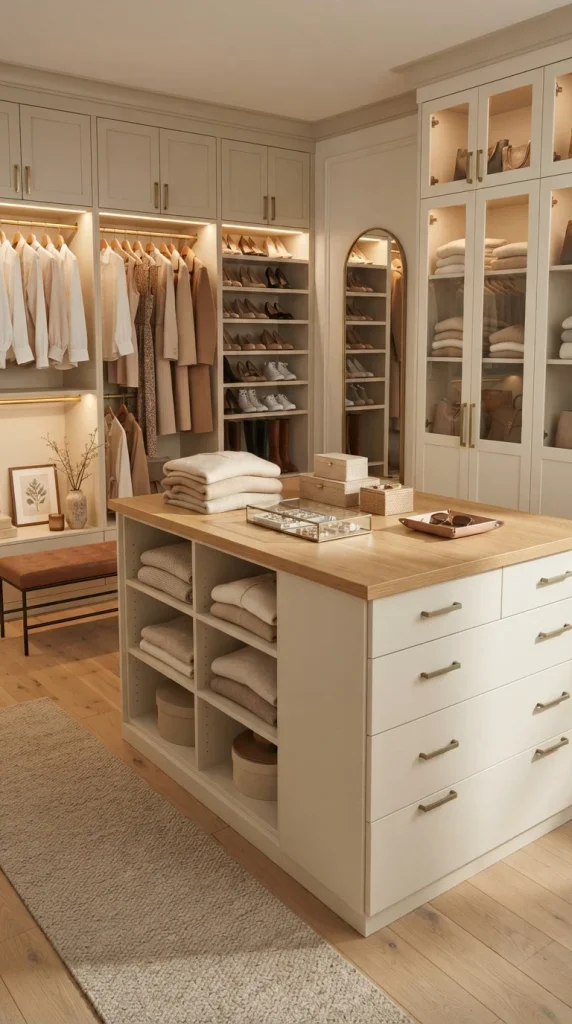
    14. IKEA Closet Island Hack

    If you have a spacious walk-in closet, an IKEA storage unit can be turned into a practical closet island. Use drawers for accessories, folded clothing, and smaller belongings that need organized storage. The top surface can provide a convenient place for jewelry, perfume, or a small decorative tray. Choose an island size that leaves enough room to walk comfortably around all sides. A wood-look countertop can add warmth and make the unit feel more custom. Keep the island simple so it does not overpower the rest of the closet. This hack combines extra storage with a stylish centerpiece.

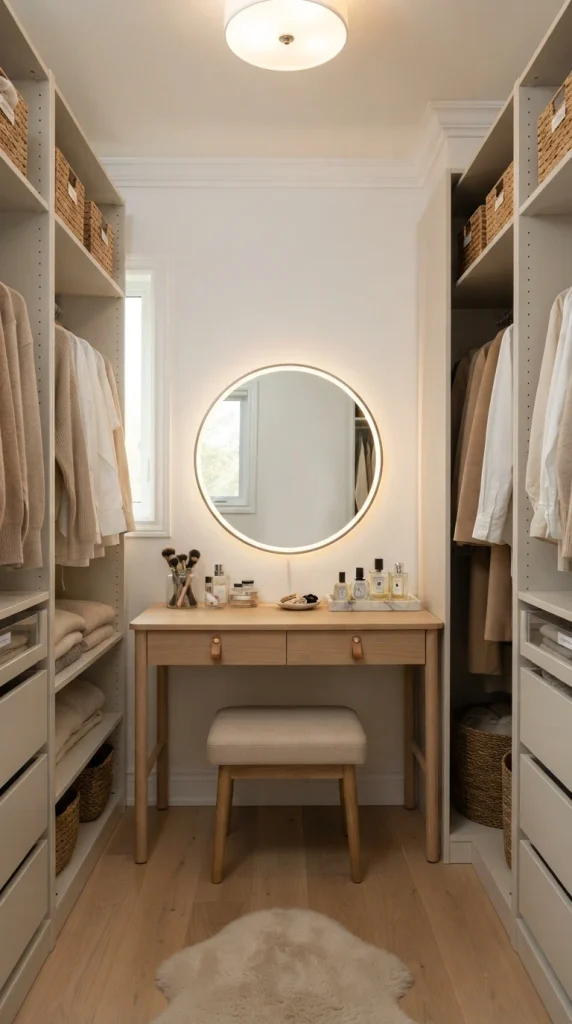
    15. IKEA Closet Vanity Station

    Create a simple vanity station by combining an IKEA desk or drawer unit with a mirror inside your closet. Use the drawers to organize makeup, hair accessories, skincare items, and other daily essentials. Add a comfortable stool that can easily slide underneath when not in use. Good lighting around the mirror is important, especially in closets with limited natural light. Keep a small tray on the surface for frequently used products. Choose finishes that coordinate with the rest of your closet storage. This creates a useful personal area without requiring a separate room.

    16. IKEA Closet Sliding Door Hack

    Sliding doors can help save valuable floor space in bedrooms and small dressing areas. IKEA closet systems can be paired with simple sliding doors to keep clothing hidden while maintaining a clean appearance. Choose light-colored doors to make the room feel brighter or wood finishes for a warmer look. Mirrors on the doors can also make a small room appear more open. Keep the door design simple so it blends naturally with the rest of the space. Make sure the surrounding area has enough clearance for the doors to operate smoothly. This hack combines privacy, style, and practical space-saving design.

    17. IKEA Closet Lighting Upgrade

    Good lighting can make even a basic IKEA closet feel more polished and functional. Add LED strip lights under shelves or inside cabinets to brighten darker storage areas. Motion-activated lights can be especially useful because they turn on when you open the closet. Warm lighting can create a cozy atmosphere, while neutral white lighting can make clothing colors easier to see. Avoid relying on one overhead fixture if the closet has deep corners. Layered lighting helps every section feel easier to use. A simple lighting upgrade can make the storage system feel much more custom.

    18. IKEA Closet Hardware Makeover

    Changing the hardware is one of the easiest ways to give basic IKEA furniture a more personalized appearance. Replace standard knobs or handles with simple brass, black, chrome, or wood options that match your room. Choose hardware that feels comfortable to use and fits the overall style of the closet. Small changes like these can make plain drawers and doors feel more decorative. Keep the same finish throughout the closet for a coordinated appearance. You can also use different shapes while keeping the material consistent. This affordable update can create a more finished and intentional look.

    19. IKEA Closet Wallpaper Accent

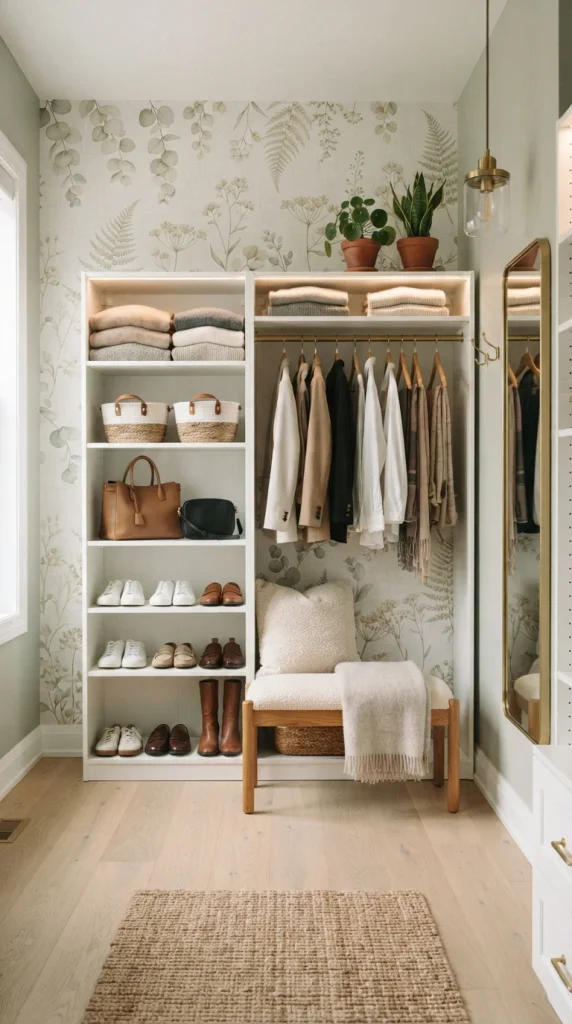
    Wallpaper can add personality to an IKEA closet without changing the entire storage system. Apply a subtle pattern or textured design to the wall behind open shelving to create an attractive backdrop. Neutral botanical, soft geometric, or classic striped patterns can work well in a bedroom. Keep the storage pieces simple so the wallpaper remains the main decorative feature. If you prefer a quieter look, choose a soft neutral color instead of a bold print. Make sure the wall surface is clean and smooth before applying the wallpaper. This hack can make basic IKEA storage feel more customized and stylish.

    20. IKEA Small Closet Storage Hack

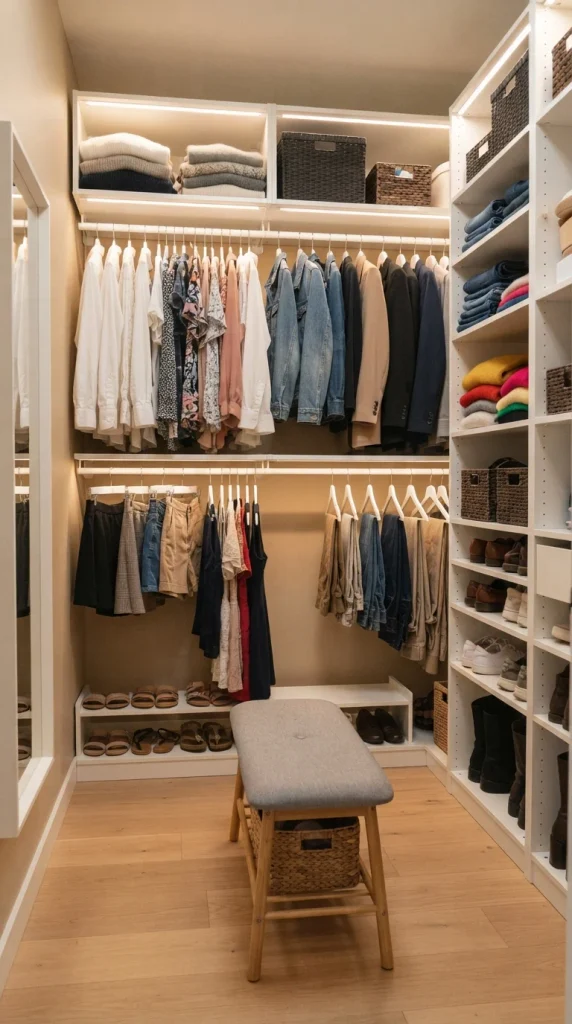
    A small closet needs storage that uses every available inch without making the room feel cramped. Choose narrow shelves, stackable bins, and adjustable IKEA organizers that fit your exact layout. Use vertical space for shoes, bags, and seasonal items instead of filling the floor. Double hanging rods can also create extra room for shorter clothing. Keep only everyday pieces in the easiest-to-reach areas and move less-used items higher up. Matching containers can reduce visual clutter and make the closet feel calmer. With a thoughtful layout, even a small closet can provide surprisingly useful storage.

    21. IKEA Custom-Look Closet Makeover

    You can make a basic IKEA closet look more custom by combining several simple upgrades. Add trim around the units to create a built-in appearance and choose hardware that matches your bedroom style. Wood accents can bring warmth, while painted panels can make the closet blend with the walls. Use a mix of drawers, shelves, hanging rails, and baskets so every item has a practical place. Add simple lighting to highlight the storage areas and make the closet easier to use. Keep the color palette consistent for a more polished result. These small changes can make affordable IKEA furniture feel thoughtfully designed for your home.

    Conclusion

    IKEA closet hacks make it easier to create storage that fits your space, lifestyle, and budget. From PAX systems and clever shelving to baskets, lighting, drawers, and custom-looking finishes, simple changes can make a basic closet much more useful. Focus on using vertical space, keeping everyday items easy to reach, and choosing storage that helps reduce clutter. With the right combination of practical organization and personal style, an IKEA closet can feel both functional and beautiful.

    Frequently Asked Questions

    1. What is the best IKEA product for a custom closet?

    The IKEA PAX system is a popular option because it offers different frame sizes, shelves, drawers, rails, and accessories. Its flexible design allows you to create a closet layout based on your available space and storage needs.

    2. How can I make an IKEA closet look more expensive?

    Add decorative trim, upgraded handles, warm lighting, and coordinated storage baskets. Choosing a simple color palette and keeping the storage neatly organized can also give the closet a more polished appearance.

    3. Are IKEA closet hacks good for small bedrooms?

    Yes. Slim shelving, double hanging rods, overhead storage, and vertical organizers can help maximize a small closet. Choose pieces that leave enough room to move comfortably around the bedroom.

    4. What colors work well for an IKEA closet makeover?

    Soft white, warm beige, light gray, natural wood, and muted green can create a timeless look. Darker colors can also work well when you want the closet to feel dramatic, but lighter shades may help a small space feel more open.

    5. How can I add more storage to an IKEA closet?

    Use the vertical space above hanging clothes, add drawer organizers, install double hanging rods, and use baskets or bins on shelves. Adjustable storage pieces are especially useful because they can change as your needs change.

    6. How can I organize shoes in an IKEA closet?

    Use narrow shelves, cubbies, or dedicated shoe storage to keep pairs together. Place frequently worn shoes at an easy-to-reach height and use higher shelves for special or seasonal footwear.

    7. Can IKEA closet furniture be customized?

    Yes. IKEA pieces can be personalized with different handles, trim, paint or panels where appropriate, lighting, baskets, and other organizational accessories. Planning the layout carefully before making changes will help create a cohesive result.

  • 21 Budget-Friendly Pool Ideas for a Beautiful Backyard

    21 Budget-Friendly Pool Ideas for a Beautiful Backyard

    A beautiful backyard pool does not have to cost a fortune or require a complete outdoor makeover. With smart choices, simple materials, and creative styling, you can create a pool area that feels comfortable, inviting, and stylish. From affordable pool decks to DIY landscaping and cozy seating, there are many ways to refresh your outdoor space on a budget. These 21 budget-friendly pool ideas can help you make the most of your backyard without overspending.

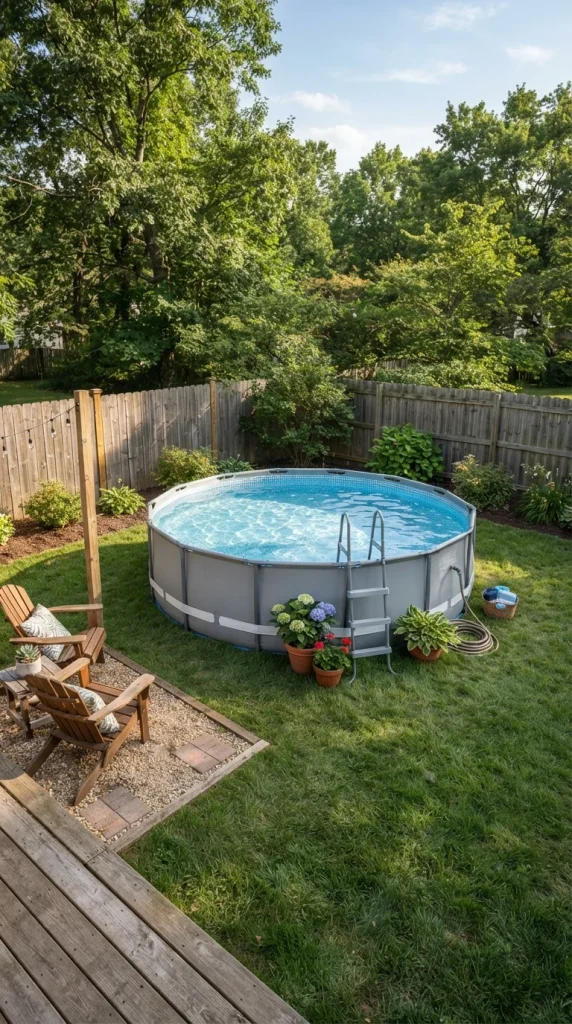
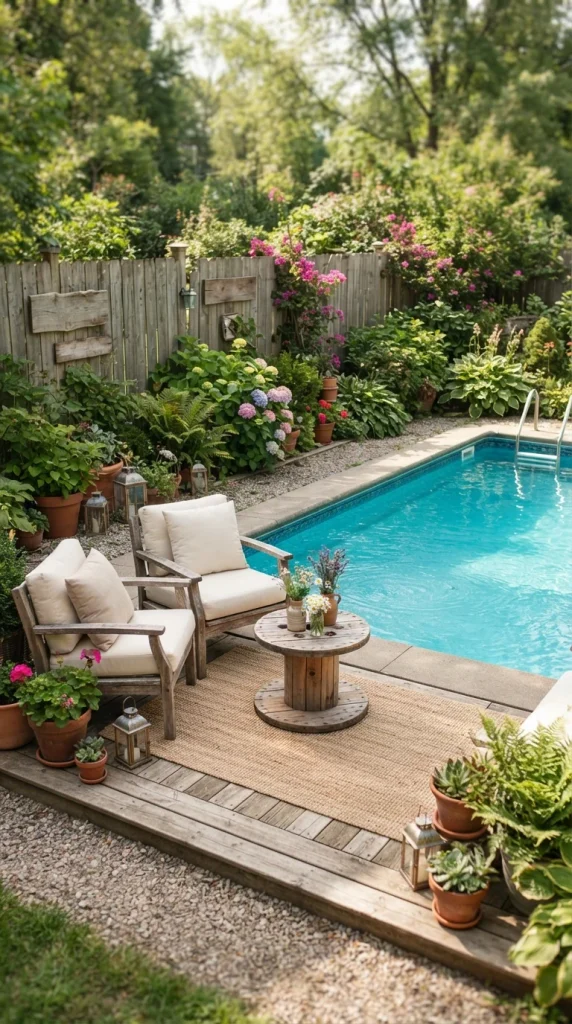
    1. Affordable Above-Ground Pool

    An affordable above-ground pool is a great way to enjoy summer without spending too much money. You can choose a simple round or rectangular pool that fits your backyard and budget. Add a few comfortable chairs and some potted plants to make the area more inviting. A small wooden platform or simple pool ladder can also improve its appearance. With a little creativity, you can create a relaxing pool area without expensive construction.

    2. Simple Pool Deck

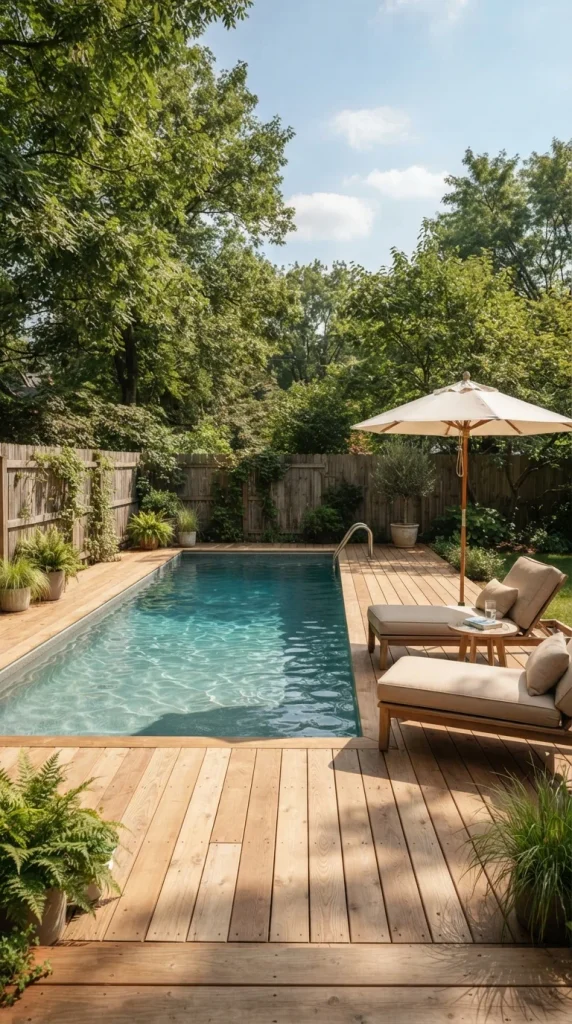
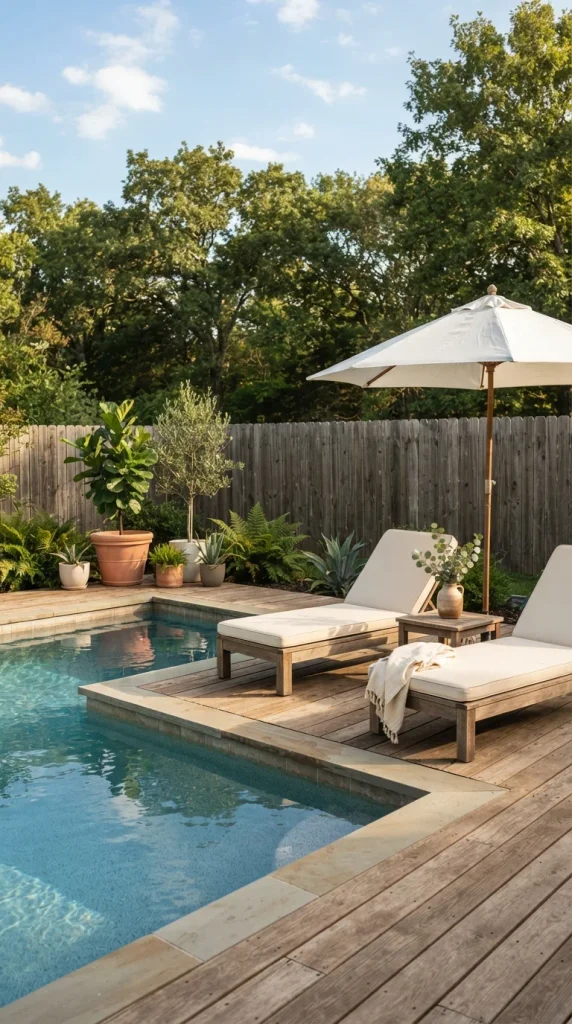
    A simple pool deck can make your backyard look neat, comfortable, and stylish. You can use affordable wooden boards or composite decking to create a practical space around your pool. Keep the design simple and leave enough room for walking and relaxing. Add a few outdoor chairs or a small table to make the area more useful. Choosing natural wood colors can also give your pool deck a warm and welcoming appearance.

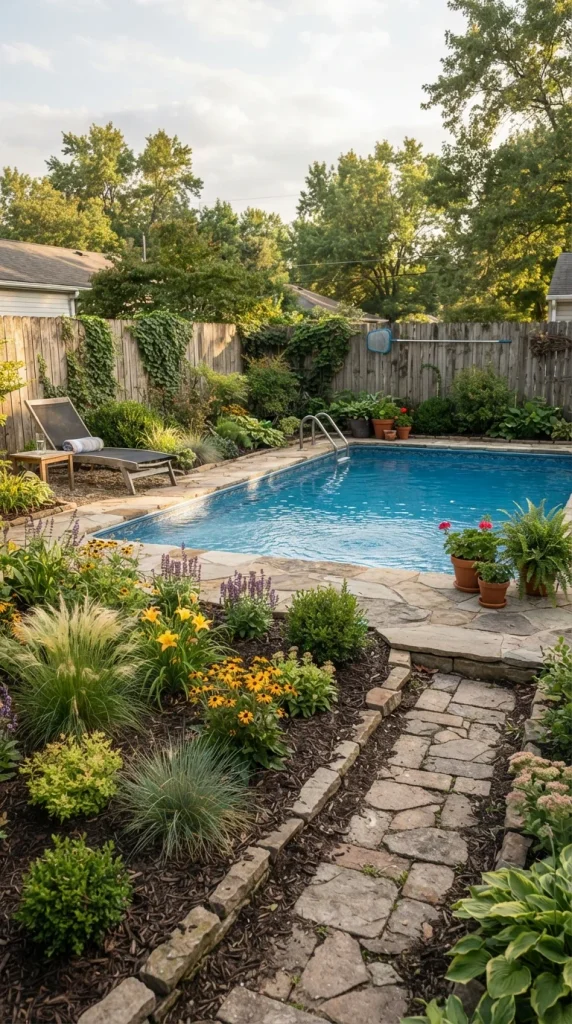
    3. DIY Pool Landscaping

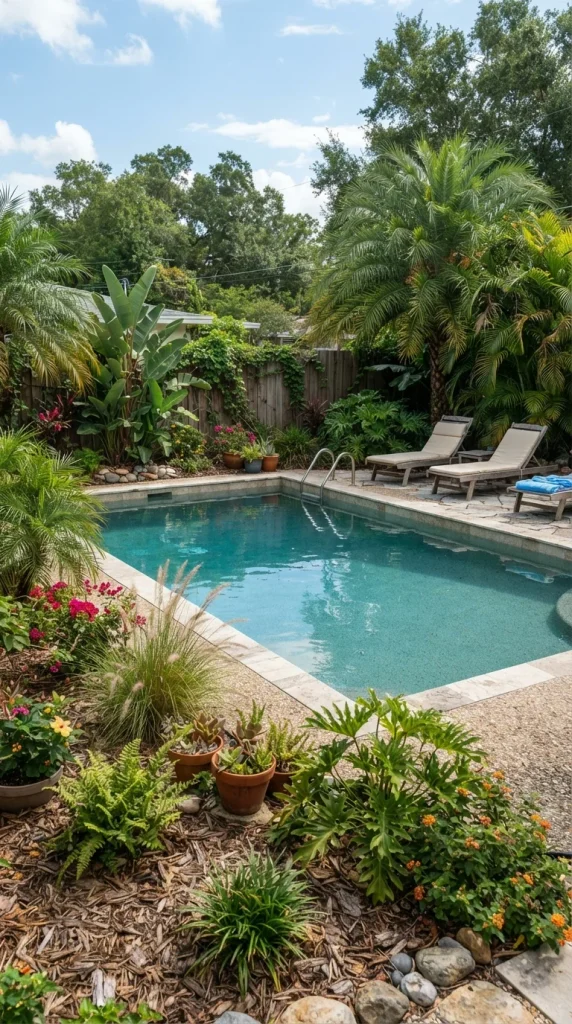
    DIY pool landscaping is an easy way to improve your backyard without spending a lot of money. You can use affordable plants, decorative stones, and simple garden borders to make the pool area attractive. Choose plants that can handle sunlight and require little maintenance. Place them around the pool to create a fresh and natural look. With careful planning, even a small garden can make your pool area feel peaceful and beautiful.

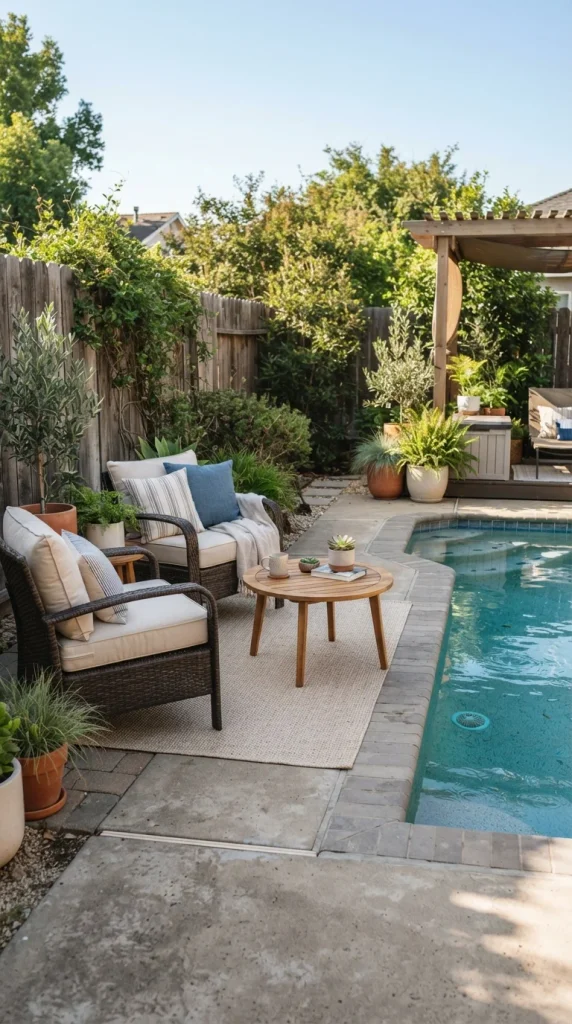
    4. Budget-Friendly Pool Seating

    Comfortable seating can make your pool area more enjoyable without requiring a large budget. You can use affordable outdoor chairs, simple benches, or secondhand furniture to create a relaxing space. Arrange the seating in a way that leaves enough room to walk around the pool safely. Add washable cushions in neutral or bright colors for extra comfort. A small side table can also provide a convenient place for towels and refreshments.

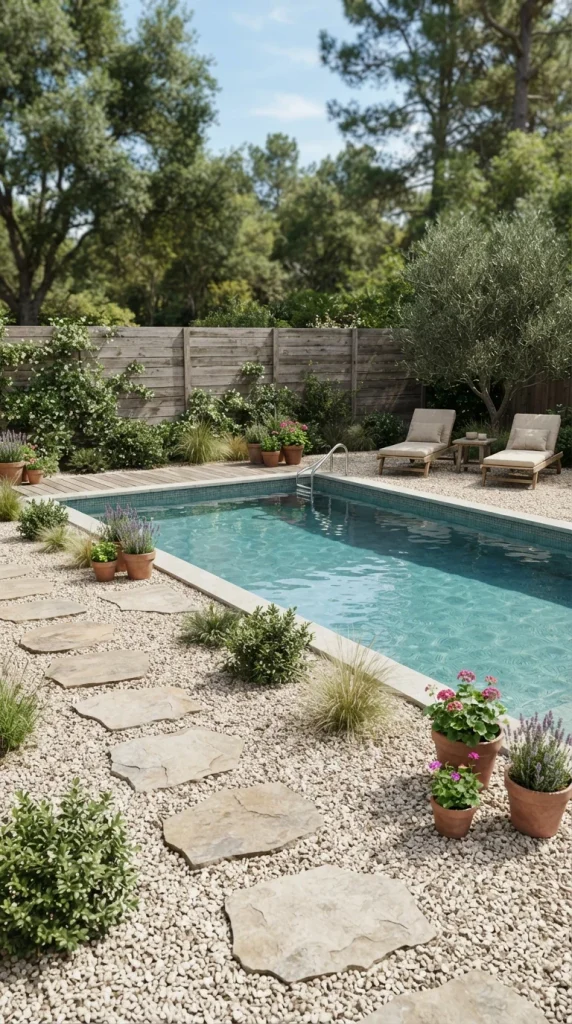
    5. Gravel Pool Surround

    A gravel pool surround is an affordable way to give your backyard pool a clean and natural appearance. Choose smooth, rounded gravel that is comfortable to walk on and suitable for outdoor use. You can combine it with simple stepping stones to create an attractive walking path. Add a few planters around the edges for a fresh and colorful look. Make sure the gravel is kept away from the pool water to reduce cleaning.

    6. Affordable Pool Pavers

    Affordable pool pavers can make the area around your pool look neat and well-organized. Concrete pavers are available in different shapes, sizes, and colors, making them suitable for many backyard designs. You can arrange them in a simple pattern to keep installation costs manageable. Choose textured, slip-resistant pavers designed for wet areas to improve safety. A few well-placed pavers can create a practical walkway and give your pool a polished appearance.

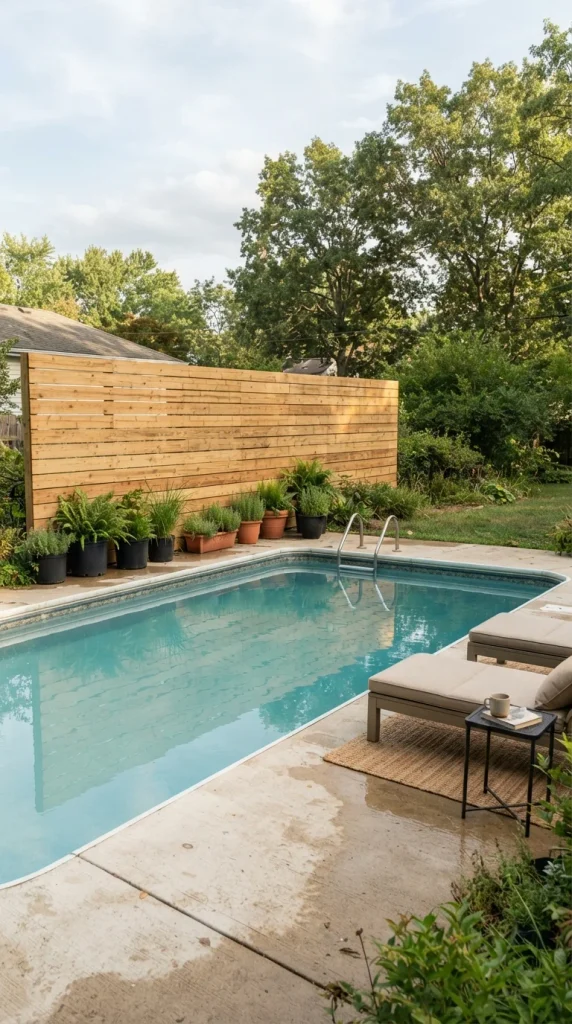
    7. DIY Pool Privacy Screen

    A DIY pool privacy screen can make your backyard feel more comfortable and private. You can create one using wooden panels, outdoor bamboo screens, or inexpensive lattice. Place it along the side of the pool where you need more privacy. Adding climbing plants or hanging planters can make the screen look more natural. Choose weather-resistant materials so your privacy screen can handle outdoor conditions and remain attractive for longer.
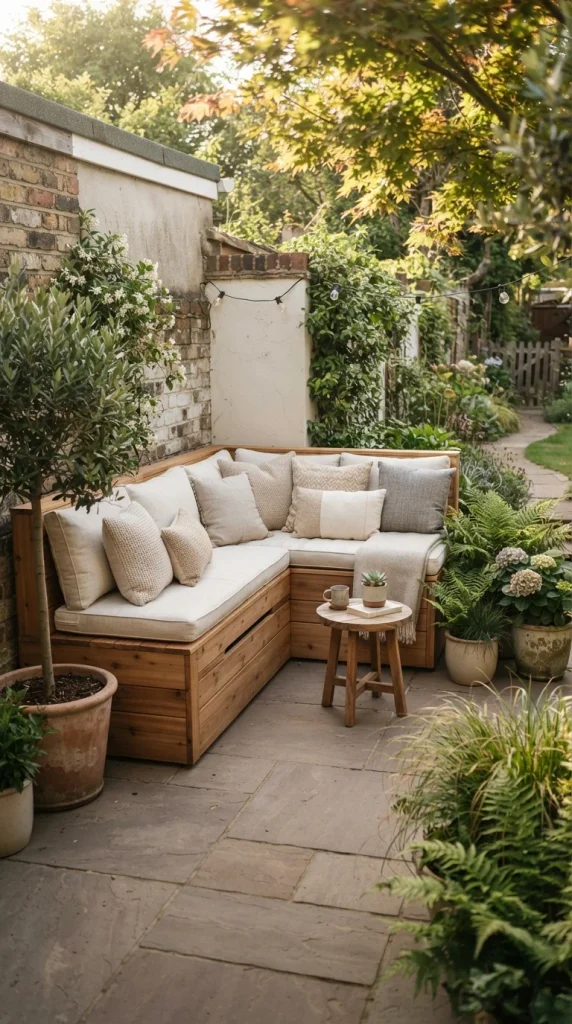
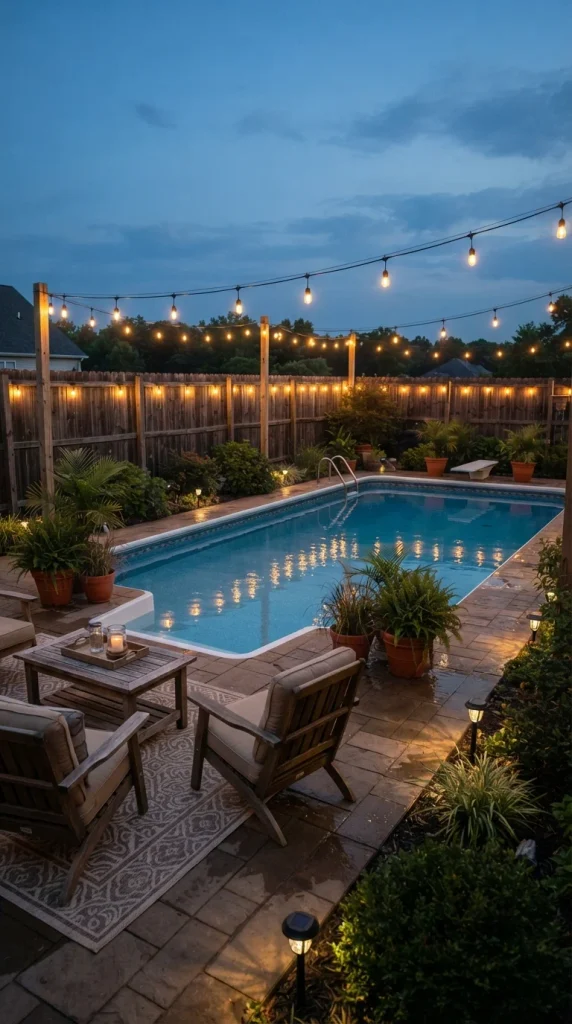
    8. String Lights Around the Pool

    String lights are an affordable way to create a cozy atmosphere around your pool in the evening. You can hang them along a nearby fence, pergola, or other suitable outdoor structure. Warm white lights work especially well with natural wood and neutral outdoor furniture. Use outdoor-rated, weatherproof lights and keep electrical connections away from water. Position the lights carefully to create a pleasant glow without making the pool area too bright.

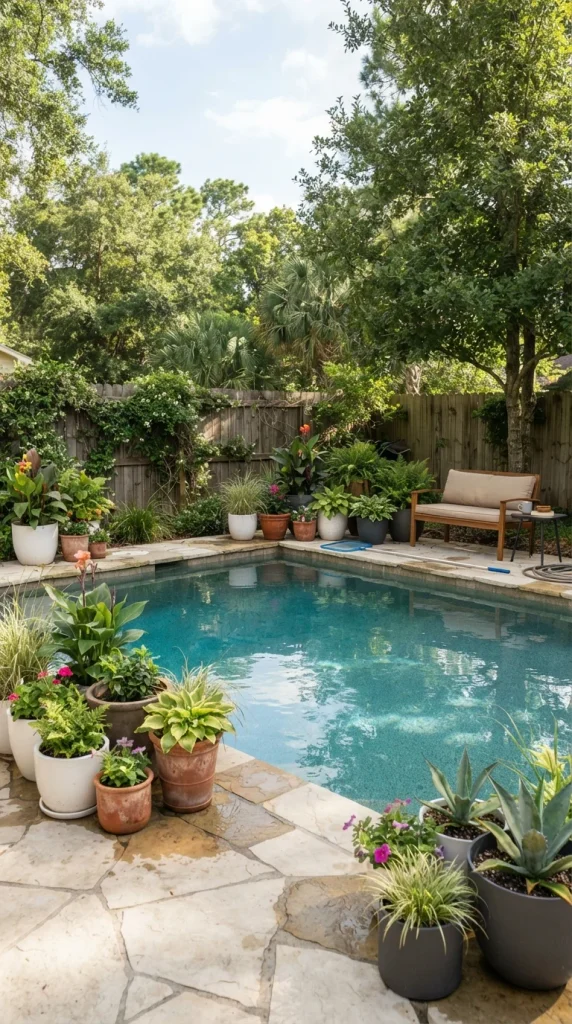
    9. Budget Poolside Planters

    Poolside planters are a simple way to add color and greenery to your backyard. You can use affordable plastic, ceramic, or repurposed containers to grow suitable outdoor plants. Arrange them in small groups near seating areas or along the pool’s edges. Choose plants that can tolerate your local weather and require minimal care. Using planters of different heights can create an attractive display without taking up too much space.

    10. Repurposed Outdoor Furniture

    Repurposed outdoor furniture is a creative way to save money while decorating your pool area. You can refresh old wooden chairs, benches, or small tables with outdoor paint or weather-resistant finishes. Sand rough surfaces and repair any loose parts before using the furniture. Add washable cushions to make the seating more comfortable and attractive. This approach helps you create a personalized poolside space without purchasing expensive new furniture.
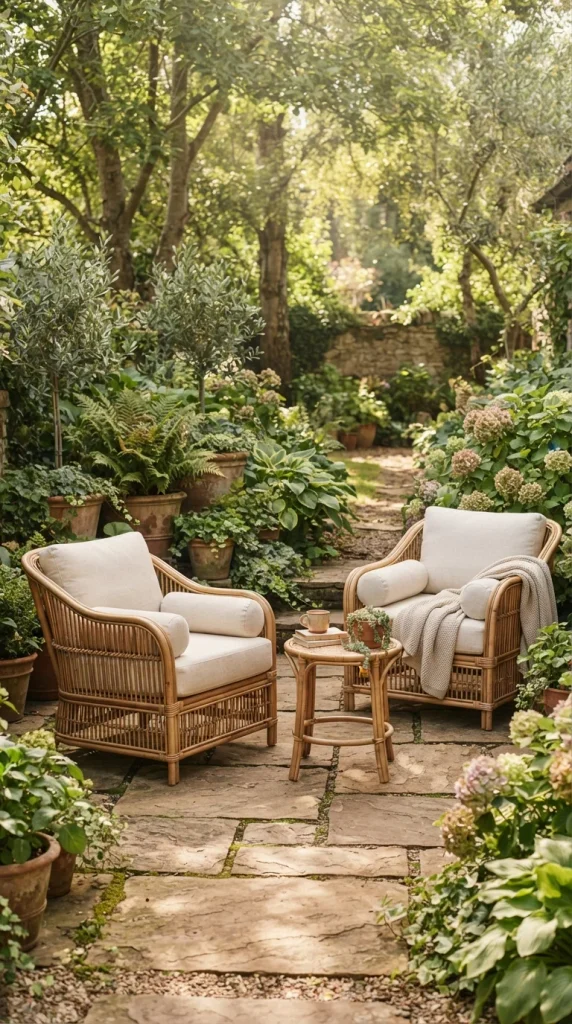
    11. Simple Pool Lounge Area

    A simple pool lounge area can turn your backyard into a comfortable place to relax during warm days. You can arrange two affordable lounge chairs with a small side table near the pool. Choose comfortable outdoor cushions in beige, white, or soft blue for a calm appearance. Keep enough open space around the furniture for easy movement. A simple layout with practical furniture can make even a small pool area feel welcoming.

    12. DIY Pool Shade

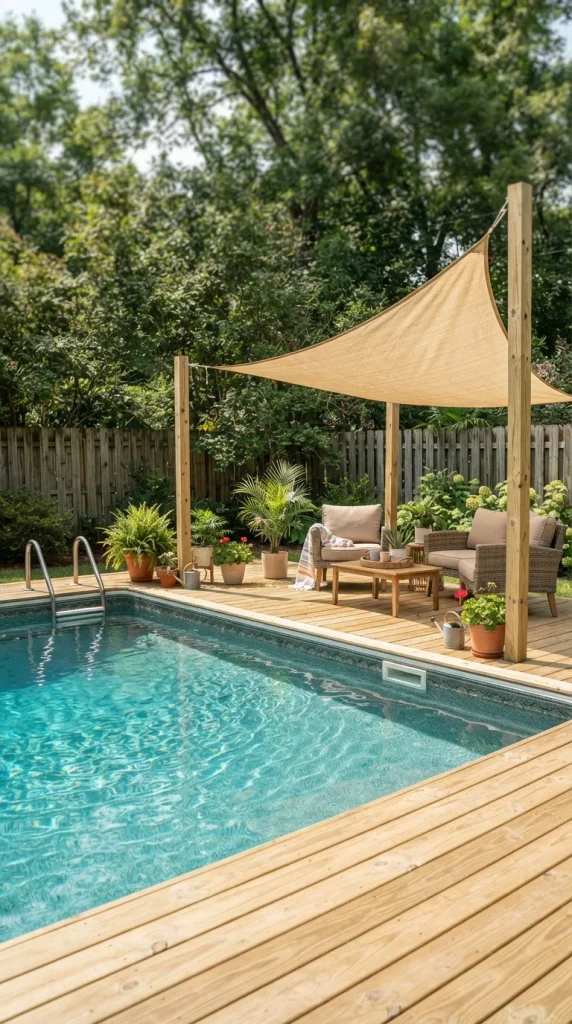
    DIY pool shade is a practical way to make your poolside area more comfortable on sunny days. You can use a properly installed shade sail or a simple outdoor canopy to provide protection from direct sunlight. Choose a light, neutral color that matches your backyard furniture. Make sure the shade is securely anchored and suitable for local wind conditions. Position it over the seating area to create a cooler place for relaxing between swims.

    13. Affordable Pool Umbrellas

    Affordable pool umbrellas can provide useful shade without the expense of building a permanent structure. Choose a durable outdoor umbrella that fits your seating area and offers enough coverage. Neutral colors such as beige, cream, and light gray can create a clean and relaxing appearance. Place the umbrella in a stable, heavy base and keep it away from the pool’s edge. Close it during strong winds to help prevent damage.

    14. Budget-Friendly Pool Fence

    A budget-friendly pool fence can help create a safer and more organized backyard. Depending on your local safety requirements, you can consider affordable fencing materials such as mesh or suitable metal panels. Choose a design that provides a clear view of the pool while creating a secure barrier. Make sure the fence has a properly secured, self-closing, and self-latching gate where required. Always follow local pool safety regulations rather than choosing a fence based on price alone.

    15. Low-Cost Tropical Landscaping

    Low-cost tropical landscaping can give your pool area a fresh and relaxing appearance. You can use affordable tropical-looking plants, such as suitable palms or large-leaf varieties, depending on your climate. Place them in decorative pots or arrange them around the pool to create a natural setting. Add a few smooth stones or simple garden borders to complete the look. Choose plants that suit your local weather to keep maintenance and replacement costs low.

    16. DIY Poolside Fire Pit

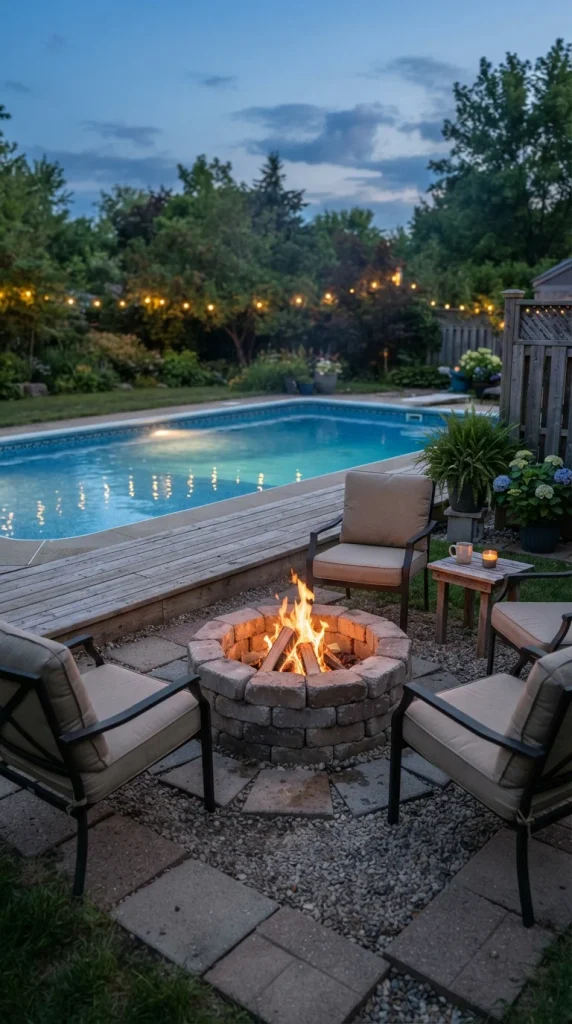
    A DIY poolside fire pit can create a cozy gathering area for cool evenings. You can use a suitable prefabricated fire pit or a properly designed outdoor fire pit made with appropriate materials. Place it well away from the pool, furniture, plants, and any flammable structures. Add a few comfortable outdoor chairs to create a simple seating area. Always follow local fire regulations and never leave a fire unattended.

    17. Simple Pool Storage

    Simple pool storage helps keep your backyard neat and makes everyday pool activities easier. You can use a weather-resistant storage box to organize towels, goggles, pool toys, and other accessories. Place it in a convenient location away from walkways and pool edges. Choose a design that matches your outdoor furniture for a coordinated appearance. Keeping everything organized can make your pool area look cleaner and more spacious.

    18. Budget-Friendly Pool Lighting

    Budget-friendly pool lighting can make your backyard more attractive and useful after sunset. Solar-powered garden lights are an affordable option for illuminating nearby pathways and landscaping. You can also use suitable low-voltage outdoor lights around seating areas. Choose warm lighting to create a comfortable atmosphere without excessive brightness. For lights inside or close to the pool, use only properly rated fixtures installed according to pool electrical safety requirements.

    19. Outdoor Rugs by the Pool

    Outdoor rugs can make your poolside seating area feel more comfortable and stylish. Choose a weather-resistant rug made from materials that dry quickly and resist moisture. Neutral colors, simple stripes, and subtle patterns can complement different backyard styles. Place the rug beneath outdoor chairs or a small seating arrangement. Select a non-slip design and keep the rug away from areas where it could create a tripping hazard.

    20. DIY Poolside Decor

    DIY poolside decor is an easy way to give your backyard a personal and attractive look. You can decorate the area with painted pots, simple outdoor signs, decorative baskets, or repurposed accessories. Choose materials that can withstand sunlight and moisture. Keep the decorations simple so the pool area does not feel crowded. A few carefully selected pieces can make your backyard look cozy without adding unnecessary expenses.

    21. Cozy Budget Pool Retreat

    A cozy budget pool retreat can make even a small backyard feel like a relaxing getaway. Start with affordable seating, a few colorful cushions, and simple potted plants. Add a shade umbrella and soft outdoor lighting to make the area comfortable throughout the day and evening. Keep the colors and decorations simple to create a peaceful atmosphere. With thoughtful arrangements and affordable materials, you can enjoy a beautiful poolside retreat without spending too much money.

    Conclusion

    Creating a beautiful pool area does not have to be expensive. With affordable furniture, simple landscaping, DIY decorations, and budget-friendly lighting, you can transform your backyard into a comfortable and inviting space. Choose ideas that fit your available space and budget while keeping safety and maintenance in mind. Even small changes can make your pool area more enjoyable throughout the summer.

    Frequently Asked Questions

    1. How can I make my pool area look nice on a budget?

    You can improve your pool area with affordable outdoor furniture, simple landscaping, colorful planters, and budget-friendly lighting. Reusing old furniture and choosing DIY decorations can also help reduce costs. Focus on a few simple changes that make the space more comfortable and attractive.

    2. What is the cheapest way to decorate around a pool?

    Using affordable planters, gravel, outdoor cushions, and repurposed furniture can be an inexpensive way to decorate around a pool. You can also add simple outdoor rugs and solar garden lights. Choose decorations that are weather-resistant to avoid frequent replacements.

    3. How can I make a small pool area look bigger?

    Keep the design simple and avoid filling the space with large furniture or too many decorations. Choose compact seating, light-colored materials, and vertical planters to save floor space. Keeping walkways clear can also make a small pool area feel more open.

    4. What are the most affordable materials for a pool surround?

    Gravel and basic concrete pavers can be affordable options for a pool surround. The right choice depends on your budget, drainage needs, and local climate. Always select slip-resistant materials designed for wet areas, and consider installation and maintenance costs before making a decision.

    5. Which colors work well for a budget-friendly pool area?

    White, beige, light gray, and natural wood tones can create a clean and relaxing poolside appearance. You can add touches of blue or green through cushions, planters, and outdoor accessories. Using a simple color palette also makes it easier to decorate with affordable items.

    6. How can I add privacy to my backyard pool cheaply?

    You can add privacy with outdoor bamboo screens, affordable lattice panels, or suitable privacy fencing. Tall plants in containers can also help create a more private atmosphere. Make sure any screen or fence is secure and does not interfere with required pool safety barriers.

    7. How do I maintain a budget-friendly pool area?

    Regularly clean the pool surround, wash outdoor cushions, and remove fallen leaves from the seating area. Check furniture, lighting, and shade structures for damage, especially after bad weather. Choosing durable, weather-resistant materials from the beginning can help reduce long-term maintenance costs.

  • 21 Unfinished Basement Ideas to Make the Most of Your Extra Space

    21 Unfinished Basement Ideas to Make the Most of Your Extra Space

    An unfinished basement can become one of the most useful areas in your home with a little creativity. You do not need a complete renovation to make the space feel organized, comfortable, and inviting. From smart storage and cozy seating to work areas and simple lighting, there are many ways to use every corner. These unfinished basement ideas can help you turn an empty lower level into a practical space that works for your family.

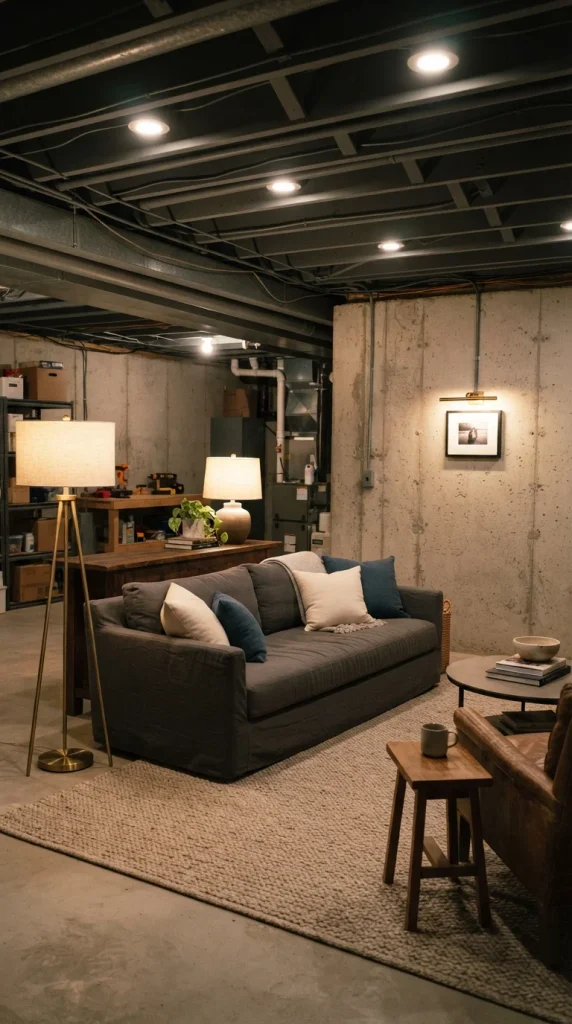
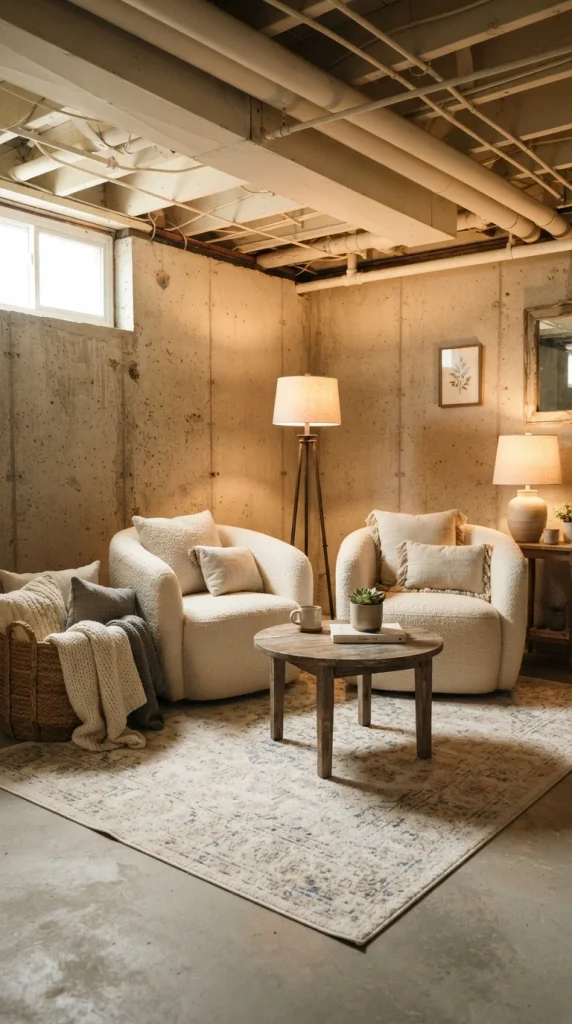
    1. Cozy Basement Lounge

    Turn an unfinished basement into a cozy lounge with comfortable seating, soft lighting, and a few warm accessories. A simple sofa or a pair of armchairs can create a welcoming place to relax. Add a small rug to define the seating area and make the concrete floor feel softer. Neutral colors and wood accents can also give the basement a more finished look.

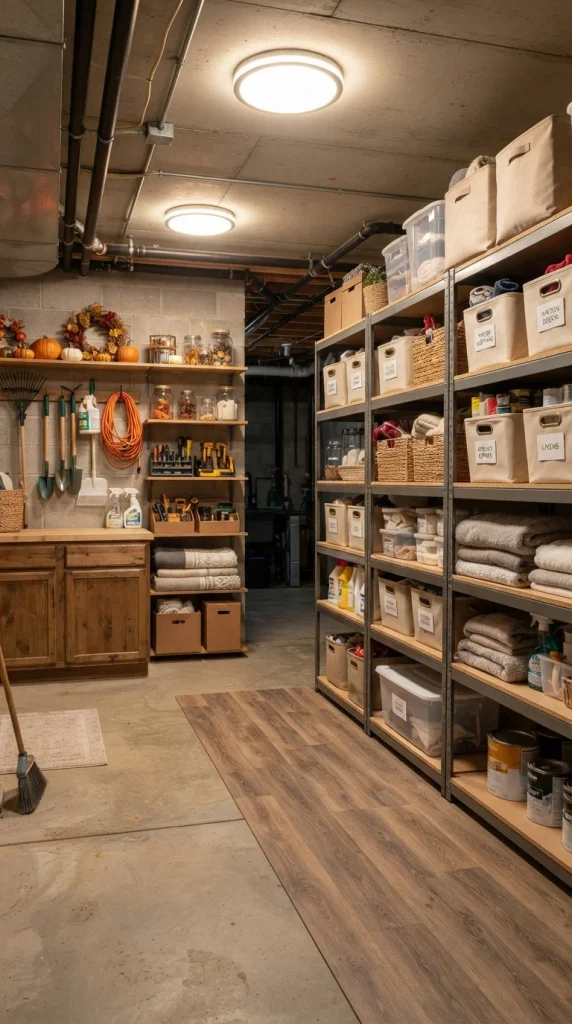
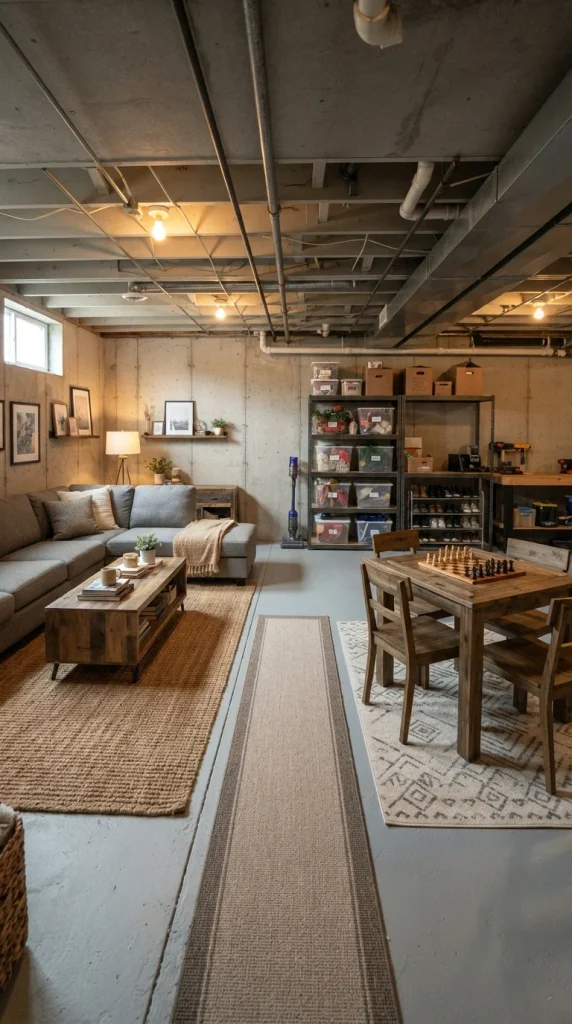
    2. Organized Basement Storage

    An unfinished basement can provide plenty of useful storage without needing a major renovation. Use sturdy shelves, labeled bins, and storage cabinets to keep seasonal items, tools, and household supplies organized. Keep frequently used things within easy reach while placing rarely used items higher up. Leaving clear walking paths will make the entire basement feel cleaner and more functional.

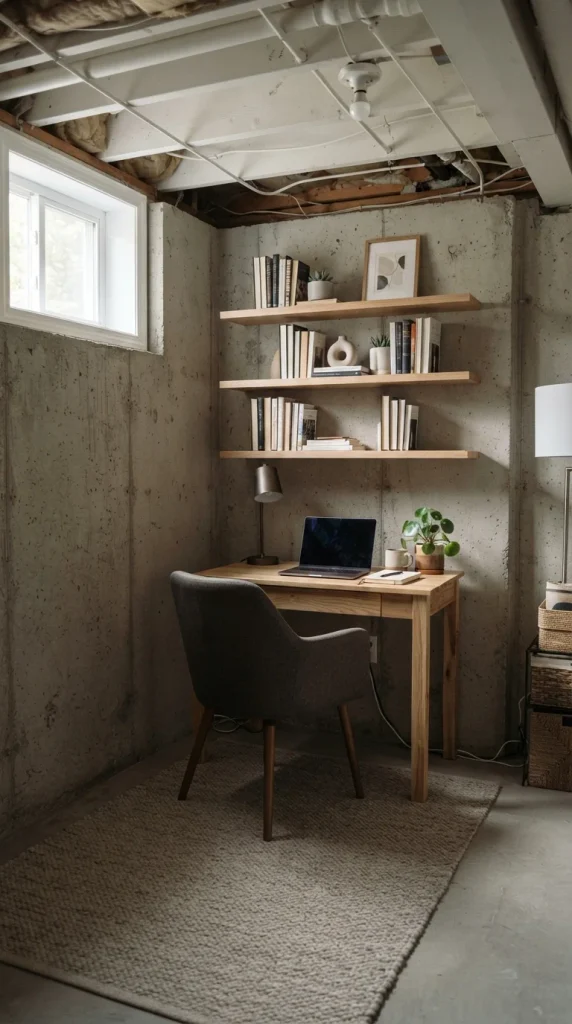
    3. Simple Home Office

    A quiet corner of an unfinished basement can work well as a simple home office. Place a compact desk near a window if possible, or add a good desk lamp for comfortable lighting. Floating shelves can provide space for books and office supplies without taking up much floor space. Keep the decor simple so the area feels calm and focused.
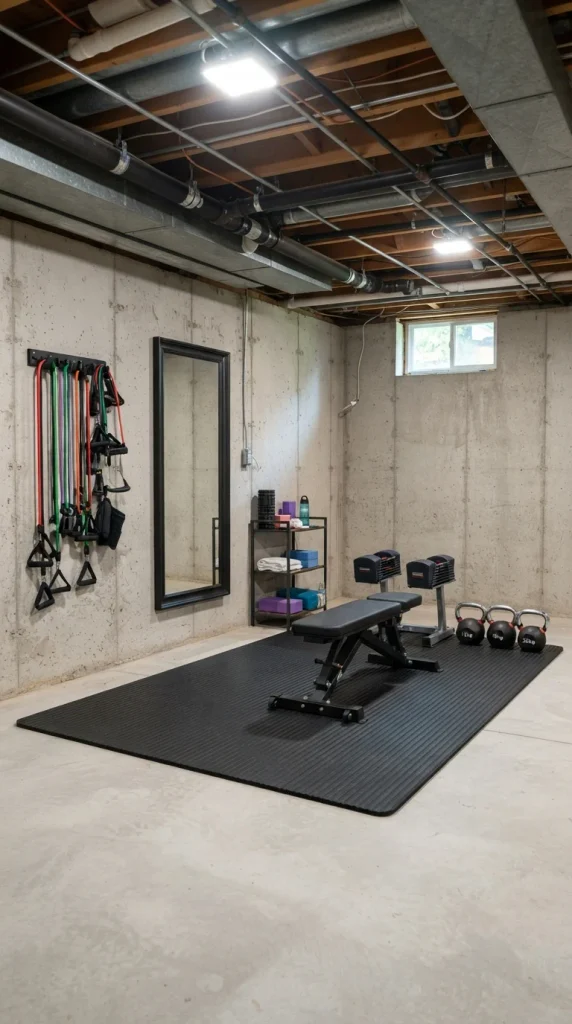
    4. Basement Home Gym

    Use your unfinished basement as a practical home gym with only a few essential pieces of equipment. A rubber exercise mat can create a comfortable workout surface while protecting the floor. Add wall hooks or shelves for resistance bands, weights, and other accessories. Good lighting and a large mirror can make the workout area feel brighter and more spacious.

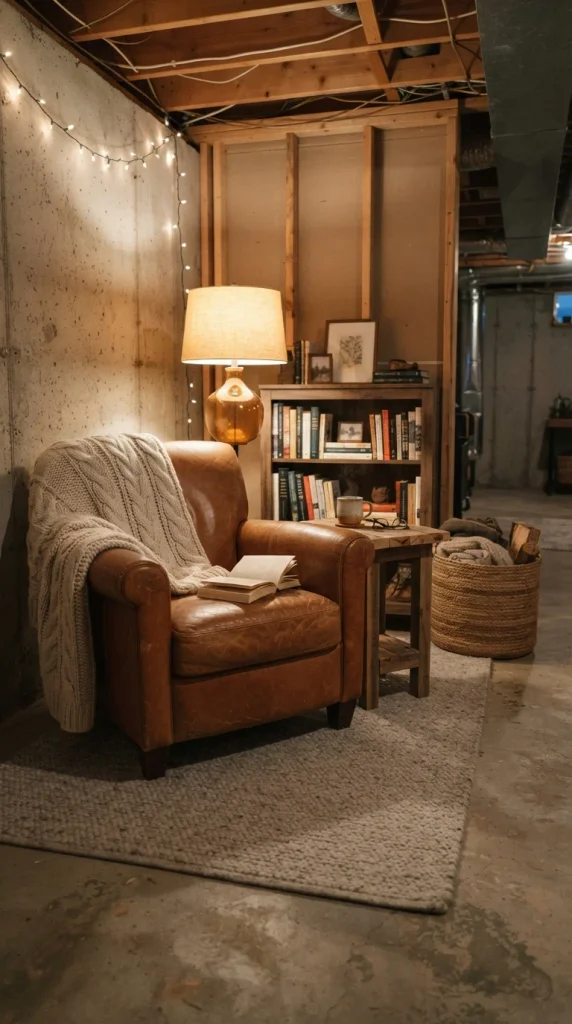
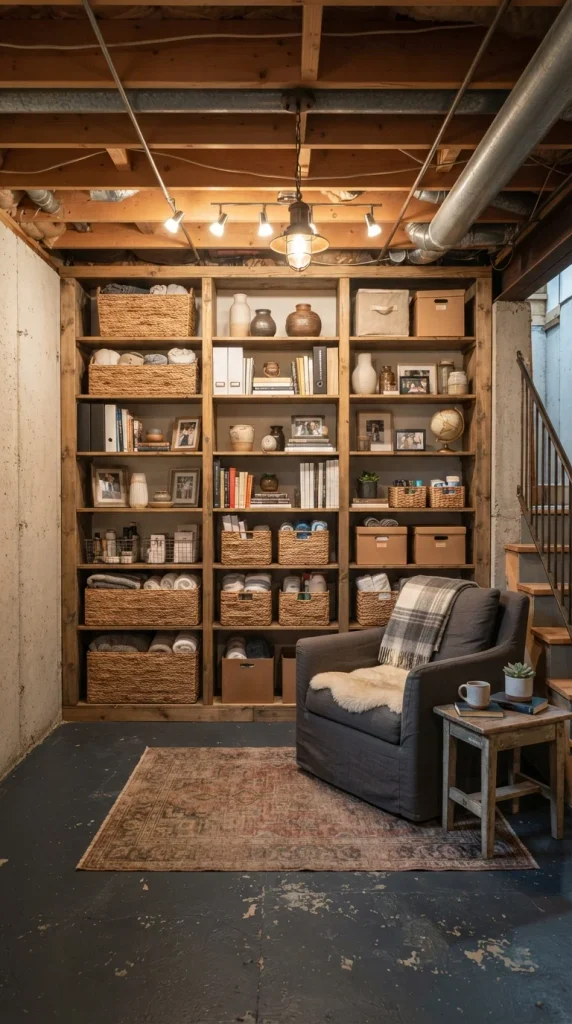
    5. Rustic Reading Nook

    Create a peaceful reading nook by adding a comfortable chair, a small side table, and a warm floor lamp. Exposed brick, natural wood, and woven textures can give the basement a charming rustic feel. Add a small bookshelf nearby to keep favorite books organized. A soft throw and cushion can make the corner especially inviting.

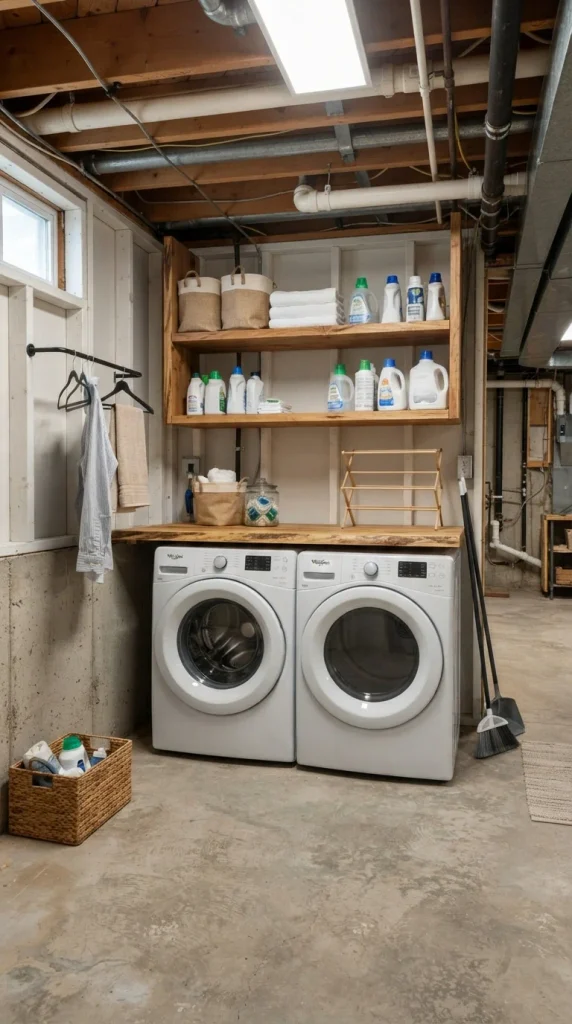
    6. Dedicated Laundry Area

    An unfinished basement can be an excellent place for a dedicated laundry area. Keep the washer and dryer together and use shelving above them for detergent, towels, and cleaning supplies. A simple countertop can provide useful folding space. Even basic organization can make the laundry area feel much more efficient and tidy.

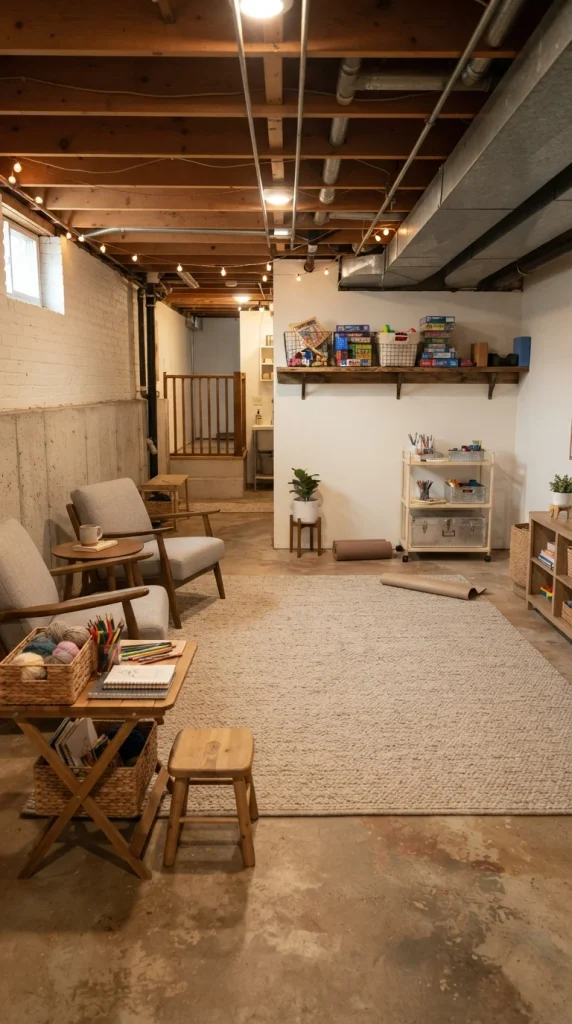
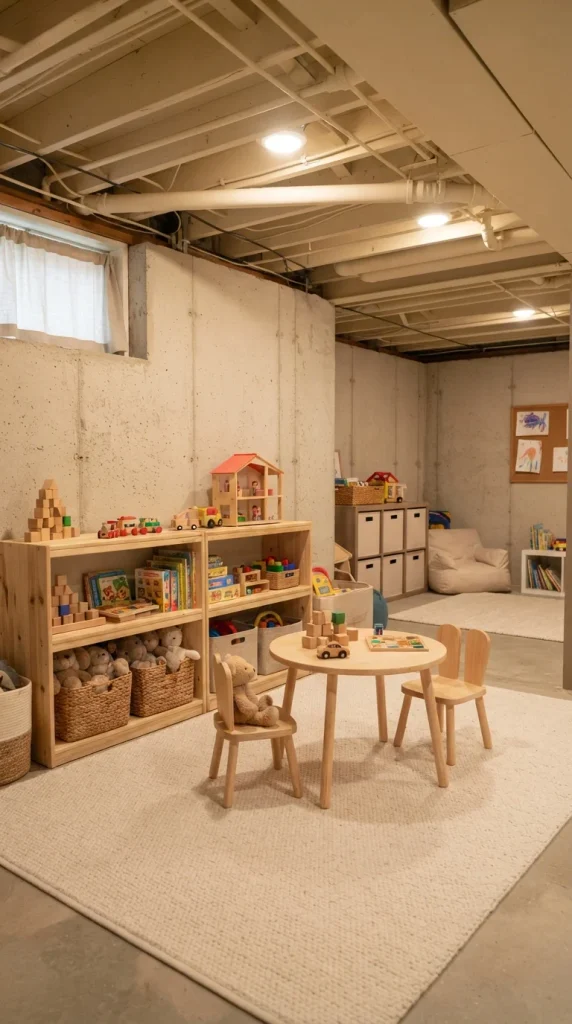
    7. Basement Playroom

    Turn part of the basement into a fun playroom where children can have space to play and create. Use washable rugs, open toy storage, and low shelves so everything is easy to access. A small table can provide a place for drawing, puzzles, or crafts. Keeping the layout open gives children plenty of room for different activities.

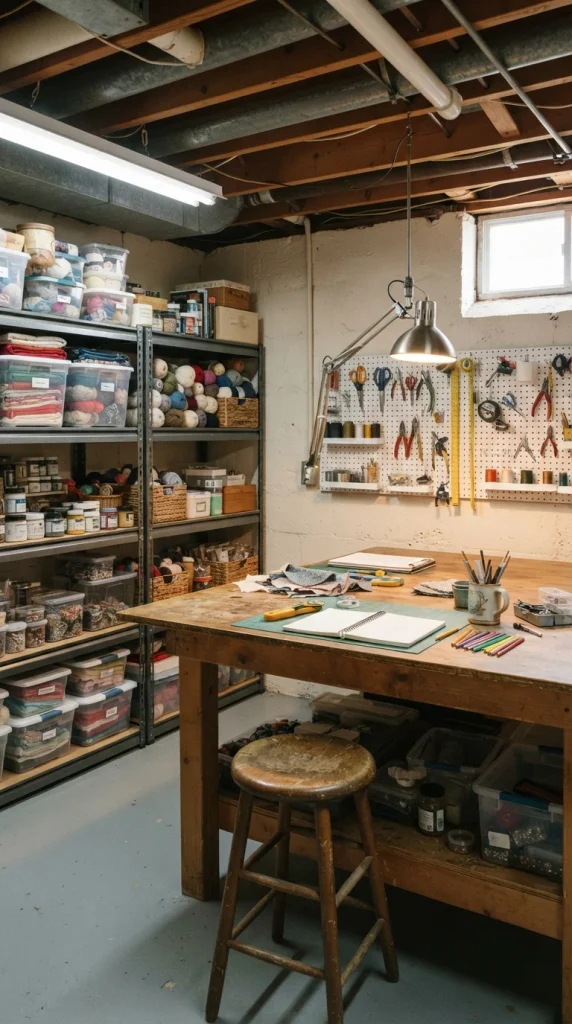
    8. Open Craft and Hobby Space

    An unfinished basement can provide the extra room needed for crafts, painting, sewing, or other hobbies. Set up a sturdy worktable with organized storage for materials and tools. Pegboards and wall-mounted shelves can keep supplies visible without filling the floor. Good task lighting will also make the workspace more comfortable to use.

    9. Budget-Friendly Basement Flooring

    You do not always need expensive flooring to make an unfinished basement feel more comfortable. Affordable options such as durable vinyl, interlocking floor tiles, or large area rugs can help define different zones. Choose materials that suit the basement environment and are easy to maintain. A simple flooring update can make the entire space feel more polished.

    10. Exposed Ceiling Design

    Instead of hiding the ceiling, embrace the unfinished look with a neat exposed ceiling design. Pipes, beams, and ductwork can become part of an industrial-inspired basement style when they are kept clean and organized. Paint or simple finishing touches can help create a more intentional appearance. This approach can also save the cost and effort of installing a traditional ceiling.

    11. Warm Basement Lighting

    Good lighting can make a major difference in an unfinished basement, especially when there is limited natural light. Combine overhead fixtures with floor lamps, table lamps, or wall lights to create a layered effect. Warm-toned bulbs can make the space feel more comfortable and inviting. Place brighter task lighting in areas used for work, crafts, or laundry.

    12. Basement Movie Corner

    Create a simple movie corner with a comfortable sofa, a projector or television, and soft lighting. Arrange the seating so everyone has a clear view of the screen without blocking the main walkway. Add a small media shelf for remotes, games, and movie accessories. Cozy blankets and floor cushions can make the space feel relaxed and family-friendly.

    13. Functional Workshop Area

    An unfinished basement can be a useful workshop for home projects and repairs. Set up a sturdy workbench and organize tools on pegboards, shelves, or wall-mounted racks. Keep sharp tools and heavy equipment stored safely and securely. Leaving enough open space around the workbench will make projects easier and more comfortable.

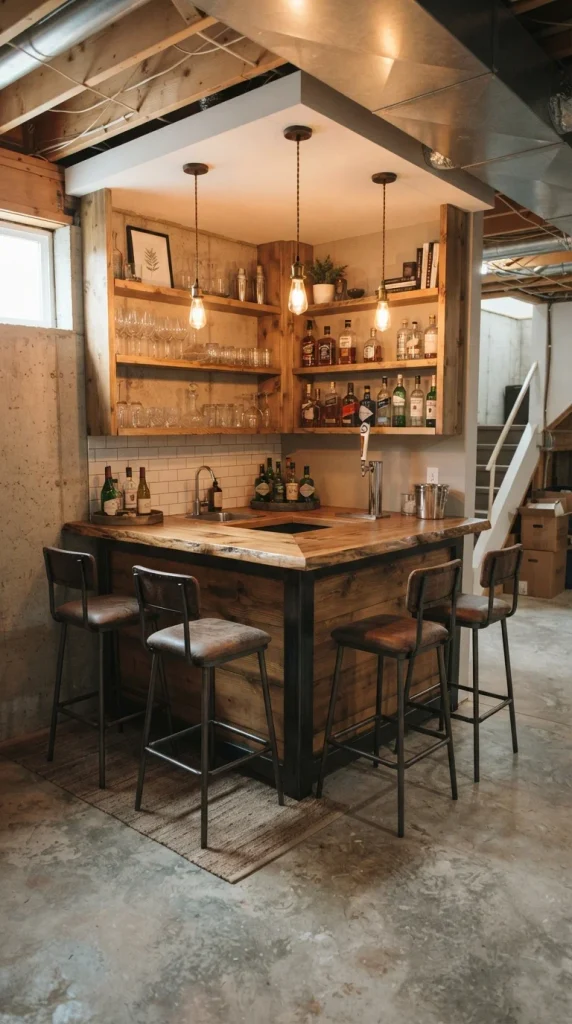
    14. Small Basement Bar

    A small basement bar can turn an unused corner into a stylish gathering spot. You can start with a simple counter, a few stools, and open shelving for glasses and accessories. Wood finishes and warm lighting can create a cozy atmosphere without requiring a full renovation. Keep the design compact so it does not interfere with the rest of the basement.

    15. Multi-Purpose Family Space

    Make the most of a large unfinished basement by combining several functions in one open area. One side can hold comfortable seating, while another can be used for games, hobbies, or storage. Area rugs and furniture placement can visually separate each zone. This flexible layout allows the basement to change as your family’s needs change.

    16. Built-In Storage Shelves

    Built-in or wall-mounted shelving can help turn unused basement walls into valuable storage space. Use the shelves for books, baskets, tools, seasonal decorations, or everyday household items. Matching bins can give open storage a more organized appearance. Keep the lower shelves easy to reach while using higher sections for items you rarely need.

    17. Basement Guest Area

    If you have enough space, an unfinished basement can include a simple guest area for visitors. A comfortable sofa bed or daybed can provide sleeping space without taking over the room. Add a small table, lamp, and storage basket for basic guest essentials. Soft textiles and neutral decor can make the area feel more welcoming.

    18. Minimalist Basement Design

    A minimalist approach can make an unfinished basement feel open and uncluttered. Choose only the furniture and storage pieces you actually need, and keep the color palette simple. Closed cabinets and matching storage containers can hide visual clutter. A few carefully selected decorative pieces can add warmth without overwhelming the space.

    19. Cozy Basement Seating Area

    Create a dedicated seating area where you can relax, read, or spend time with family. A comfortable sectional or a few lounge chairs can define the space without requiring extensive remodeling. Add a soft rug, cushions, and a small table for extra comfort. Warm lighting will help the seating area feel less like an unfinished basement and more like a true living space.

    20. Seasonal Storage Zone

    Use one section of the basement specifically for seasonal storage to keep the rest of your home clutter-free. Stackable bins can hold holiday decorations, winter clothing, camping equipment, and other occasional items. Label each container clearly so you can find things quickly when needed. Keeping storage grouped in one area also makes the basement easier to maintain.

    21. Flexible Basement Activity Room

    A flexible activity room gives your unfinished basement a purpose without limiting how you use it later. Keep the furniture lightweight and movable so the room can support games, crafts, exercise, or family activities. Open storage can hold supplies while leaving plenty of clear floor space. This adaptable setup makes it easier to change the basement as your needs evolve.

    Conclusion

    An unfinished basement has plenty of potential, even without a complete renovation. With smart storage, comfortable furniture, practical lighting, and a few thoughtful decor choices, you can turn unused space into something your family will actually enjoy. Whether you create a cozy lounge, home office, gym, workshop, or flexible activity room, the key is to choose ideas that fit your space and daily needs. Start with simple improvements and build the basement into a useful part of your home over time.

    FAQs

    1. What can I do with an unfinished basement?

    You can use an unfinished basement for storage, a home gym, office, lounge, playroom, workshop, laundry area, or hobby space. The best option depends on the size and layout of your basement.

    2. How can I make an unfinished basement look better?

    Start with better lighting, organized storage, comfortable furniture, rugs, and simple wall decor. Keeping the space clean and creating defined zones can also make a big difference.

    3. What is the cheapest way to finish an unfinished basement?

    Focus on affordable improvements such as area rugs, shelving, storage bins, lamps, and movable furniture. You can gradually improve the space instead of completing a full renovation at once.

    4. How do I make an unfinished basement feel cozy?

    Use warm lighting, soft rugs, comfortable seating, cushions, blankets, and natural textures. A warm neutral color palette can also make the basement feel more inviting.

    5. How can I organize an unfinished basement?

    Use sturdy shelving, labeled storage bins, cabinets, and wall-mounted organizers. Group similar items together and leave clear pathways so the basement remains easy to use.

    6. Can an unfinished basement be used as a living space?

    Yes, it can be used for activities such as lounging, hobbies, exercise, or storage. If you plan to turn it into a formal living or sleeping area, check your local building requirements and address issues such as moisture, insulation, ventilation, electrical work, and emergency egress.

    7. How can I decorate an unfinished basement on a budget?

    Start with the areas that make the biggest visual difference, such as lighting, flooring, seating, and storage. Shop for simple pieces that serve more than one purpose, and add decorative details gradually.

  • 23 Cozy Living Room Ideas That Make You Want to Stay a Little Longer

    23 Cozy Living Room Ideas That Make You Want to Stay a Little Longer

    A cozy living room should feel like the easiest place in the home to slow down, get comfortable, and stay awhile. With the right mix of soft textures, warm lighting, comfortable seating, and thoughtful decor, even a simple space can feel inviting and relaxing. Whether you love neutral colors, layered blankets, natural materials, or a more collected look, small decorating changes can make a big difference. In this article, discover 23 cozy living room ideas that bring warmth, comfort, and personality into your space and make you want to stay a little longer.

    1. Warm Neutral Color Palette

    Warm neutrals can instantly make a living room feel calm and welcoming. Choose shades like cream, beige, warm white, taupe, or soft brown for the main pieces. These colors create a gentle background that feels comfortable without looking boring. Add a few darker accents to give the room depth and character.

    2. Layered Cozy Textures

    Mixing different textures is an easy way to make a living room feel more inviting. Combine soft cushions, knitted throws, woven baskets, plush rugs, and natural fabrics. The contrast between these materials makes the space feel warm and lived-in. Keep the colors connected so the room still feels balanced.

    3. Oversized Comfortable Sofa

    A large, comfortable sofa can become the heart of a cozy living room. Look for deep seating, soft cushions, and a fabric that feels pleasant to touch. Add a few pillows and a throw to make it even more inviting. The goal is to create a sofa that makes you want to sit down and relax.

    4. Soft Throw Blankets

    A simple throw blanket can add both comfort and visual warmth to your living room. Drape one casually over the sofa arm or fold it across the back of a chair. Choose soft materials such as cotton, wool, or chunky knits. Keep one nearby so the room feels ready for relaxing evenings.

    5. Plush Area Rug

    A plush area rug can make a living room feel warmer and more comfortable underfoot. Choose a soft design that works with your furniture and overall color palette. A large rug can also help connect the sofa, coffee table, and chairs into one cozy seating area. Neutral patterns are especially easy to style.

    6. Warm Ambient Lighting

    Good lighting can completely change the mood of a living room. Instead of relying only on bright ceiling lights, use table lamps, floor lamps, and soft accent lighting. Warm-toned bulbs create a gentle glow that feels much more relaxing. Place lights around the room to create a comfortable atmosphere in the evening.

    7. Cozy Fireplace Focal Point

    A fireplace naturally gives a living room a warm and relaxing feeling. Arrange comfortable seating toward it so it becomes part of the room’s social area. Keep the mantel styling simple with a few meaningful decorative pieces. Even a modern electric fireplace can create a cozy focal point without taking up much space.

    8. Natural Wood Accents

    Natural wood brings warmth and character into a living room. You can introduce it through a coffee table, shelves, side tables, picture frames, or decorative objects. The natural grain adds an organic touch that works beautifully with soft fabrics. Pair wood with neutral colors for a relaxed and timeless look.

    9. Earthy Living Room Tones

    Earthy shades can make a living room feel grounded and peaceful. Consider terracotta, olive green, warm brown, sandy beige, or muted rust as accent colors. You do not need to use them everywhere; a few pillows, curtains, or decorative pieces can be enough. These tones work especially well with natural materials.

    10. Plenty of Accent Pillows

    Accent pillows are one of the easiest ways to make a sofa look softer and more inviting. Mix different sizes and subtle patterns while keeping the colors connected. Place larger pillows toward the back and smaller ones toward the front for a layered look. Choose fabrics that feel comfortable rather than overly formal.

    11. Built-In Window Seat

    A window seat can turn an unused area into one of the coziest spots in the living room. Add a comfortable cushion, a few pillows, and a soft throw to create a peaceful place to sit. Natural daylight makes the area feel especially welcoming during the day. It can also become a lovely reading or quiet-time corner.

    12. Cozy Reading Corner

    A small reading corner can give your living room another comfortable place to relax. Use a supportive armchair, a soft floor lamp, and a small side table for books or a drink. Add a cushion or throw to make the chair feel more inviting. Even a tiny unused corner can work with the right arrangement.

    13. Soft Linen Curtains

    Linen curtains add softness without making a living room feel heavy. Their natural texture allows daylight to filter through while giving the windows a relaxed appearance. Choose warm white, cream, beige, or another soft neutral shade. Hang them slightly wider and higher than the window to create a more open and polished look.

    14. Coffee Table Styling

    A thoughtfully styled coffee table can make the entire living room feel more finished. Keep the arrangement simple with a stack of books, a small vase, a candle, or a decorative bowl. Leave enough open space so the table remains practical for everyday use. A relaxed arrangement usually feels more welcoming than an overly crowded one.

    15. Indoor Plants and Greenery

    Indoor plants can bring freshness and life into a cozy living room. Place a larger plant beside the sofa or add smaller plants to shelves and side tables. Natural greenery works beautifully with wood, woven materials, and neutral colors. Choose plants that suit the amount of natural light available in your space.

    16. Gallery Wall with Personal Touches

    A gallery wall can make a living room feel personal instead of overly decorated. Combine artwork, family photographs, simple prints, or meaningful pieces that reflect your style. Use frames in similar tones to keep the arrangement cohesive. A collection with personal meaning can make the room feel more comfortable and lived-in.

    17. Woven Baskets for Storage

    Woven baskets are a practical way to keep a cozy living room organized. Use them to store blankets, pillows, magazines, toys, or other everyday items. Their natural texture also adds warmth to the decor. Place one beside the sofa or underneath a console where it is easy to reach.

    18. Small Floor Lamps and Table Lamps

    Smaller lamps can create cozy pools of light throughout the room. Place a table lamp on a side table and a floor lamp beside a sofa or reading chair. This layered lighting feels softer than using one bright overhead fixture. Choose simple shades and warm bulbs for an inviting evening atmosphere.

    19. Curved and Relaxed Furniture

    Curved furniture can give a living room a softer and more comfortable appearance. Rounded sofas, accent chairs, ottomans, and coffee tables help reduce the sharp feeling of straight lines. Choose pieces with soft upholstery and relaxed shapes for an inviting look. Keep enough space around the furniture so the room does not feel crowded.

    20. Layered Lighting Around the Room

    Using several types of lighting gives you more control over the mood of your living room. Combine ceiling lighting with lamps, wall lights, or subtle accent lighting. Turn on only the lights you need depending on the time of day. This creates a flexible space that can feel bright during the day and cozy at night.

    21. Candlelit Cozy Atmosphere

    Candles can add a gentle glow and a relaxing touch to a living room. Place them on a coffee table, mantel, or decorative tray where they can be enjoyed safely. Choose simple holders that match your decor rather than adding too many different styles. Even a few candles can make an evening at home feel more special.

    22. Warm Modern Farmhouse Style

    Warm modern farmhouse decor combines comfortable materials with clean and simple design. Think neutral upholstery, natural wood, soft textiles, and a few vintage-inspired accents. Avoid filling the room with too many rustic decorations. A balanced mix of modern and traditional elements keeps the space cozy without feeling dated.

    23. Personalized Cozy Living Room Decor

    The coziest living rooms usually have details that feel personal to the people who live there. Display favorite books, meaningful artwork, family photographs, travel finds, or objects you genuinely enjoy. These small details give the room character and make it feel less like a showroom. Comfort comes from creating a space that feels naturally yours.

    Conclusion

    A cozy living room does not need to be complicated or expensive. Warm colors, comfortable furniture, soft textures, gentle lighting, natural materials, and personal touches can make the space feel much more inviting. Focus on the details that help you feel comfortable and relaxed, and your living room can become a place where you naturally want to stay a little longer.

    Frequently Asked Questions

    1. How can I make my living room feel cozy on a budget?

    Start with small changes that make a noticeable difference, such as adding soft throw blankets, accent pillows, warm lighting, and a few decorative pieces. Rearranging your existing furniture can also improve the feeling of comfort without spending anything.

    2. What colors make a living room feel cozy?

    Warm neutrals such as cream, beige, taupe, warm white, and brown are popular choices for a cozy atmosphere. You can also add earthy accents like terracotta, olive green, muted rust, or caramel for more warmth and depth.

    3. How can I make a small living room cozy without making it feel crowded?

    Choose furniture that fits the room, keep pathways clear, and use a few carefully selected soft accessories. Mirrors, light colors, layered lighting, and furniture with a lighter visual profile can also help the space feel comfortable without appearing cramped.

    4. What materials work best for a cozy living room?

    Soft fabrics, linen, cotton, wool, wood, rattan, and woven materials all work well. Combining several textures creates visual warmth while keeping the room interesting and comfortable.

    5. How do I arrange furniture for a cozy living room?

    Start by creating a clear conversation area with the sofa and chairs facing each other or centered around a coffee table. Keep furniture close enough to feel connected but leave comfortable walking space around the seating area.

    6. What type of lighting is best for a cozy living room?

    Warm, soft lighting works especially well. Combine floor lamps, table lamps, wall lights, and other gentle sources instead of depending entirely on a bright overhead fixture. This allows you to create a relaxed atmosphere in the evening.

    7. How can I make my living room feel cozy but still stylish?

    Use a simple color palette and focus on quality-looking textures rather than adding too many decorations. Mix comfortable furniture with natural materials, thoughtful lighting, and a few personal accessories to create a space that feels both beautiful and lived-in.

  • 21 Bloxburg Kitchen Ideas for a Stylish and Cozy Build

    21 Bloxburg Kitchen Ideas for a Stylish and Cozy Build

    Creating the perfect kitchen in Bloxburg can make your home feel more stylish, cozy, and realistic. Whether you love a modern look, warm farmhouse style, or a simple small kitchen, the right layout and details can completely change your build. In this guide, you’ll find 21 Bloxburg kitchen ideas with beautiful colors, practical layouts, islands, cabinets, and decorative touches to help you create a kitchen that feels welcoming and unique.

    1. Modern White Bloxburg Kitchen

    A modern white kitchen gives your Bloxburg home a clean, bright, and spacious feeling. Use white cabinets, light countertops, and simple flooring for a fresh look. Add warm wood details or small plants to keep the space from feeling too plain. A few realistic appliances can make the kitchen feel more complete.

    2. Cozy Farmhouse Kitchen

    Create a welcoming farmhouse kitchen with wood cabinets, soft colors, and rustic details. Cream or beige cabinets work beautifully with wooden floors and simple countertops. Add open shelves with plates, jars, and small decorations for extra charm. This style is perfect for a warm and lived-in Bloxburg home.

    3. Small Bloxburg Kitchen

    A small kitchen can still look stylish when the space is planned carefully. Choose compact cabinets, simple counters, and a small dining area to avoid making the room feel crowded. Light colors can help the kitchen appear larger. Keep decorations minimal while adding a few useful details for a realistic finish.

    4. Warm Wood Kitchen

    Warm wood tones can instantly make a Bloxburg kitchen feel comfortable and inviting. Combine wooden cabinets with cream countertops and soft lighting for a balanced look. Add stools, plants, or simple kitchen items to make the space feel more natural. This style works especially well in cozy family homes.

    5. Luxury Marble Kitchen

    For an elegant Bloxburg build, try a kitchen with marble countertops, sleek cabinets, and modern appliances. White, cream, or gray marble can give the room a high-end appearance. Add a large island with stylish stools as the main feature. Keep the decorations simple so the luxurious materials stand out.

    6. Minimalist Bloxburg Kitchen

    A minimalist kitchen focuses on clean lines, simple colors, and less clutter. Use a small selection of cabinets, appliances, and decorations to keep everything organized. Neutral colors such as white, beige, and gray work well for this style. A few carefully placed items can add personality without making the kitchen busy.

    7. Black and White Kitchen

    Black and white create a stylish contrast that works beautifully in Bloxburg kitchens. Try white cabinets with black countertops or dark lower cabinets with lighter upper cabinets. Add wooden stools or greenery to soften the strong contrast. This combination gives your kitchen a modern and polished appearance.

    8. Neutral Beige Kitchen

    A beige kitchen creates a soft, warm, and relaxing atmosphere. Combine beige cabinets with cream counters, light wood, and warm flooring for a cozy result. Small plants, bowls, and simple decorations can add life to the space. This color palette also works well with many different Bloxburg house styles.

    9. Bloxburg Kitchen With Island

    A kitchen island can become the main feature of your Bloxburg kitchen. Use it for extra counter space, seating, and decoration while keeping enough room around it for movement. Add two or three stools for a casual breakfast area. Pendant-style lighting above the island can also make the space feel more finished.

    10. Open Shelf Kitchen

    Open shelves are a simple way to add personality and realistic details to your kitchen. Place dishes, cups, jars, plants, or small decorations on the shelves. Combine them with closed cabinets so the room does not look too cluttered. Wooden shelves can add warmth to modern or neutral kitchens.

    11. Cozy Cottage Kitchen

    A cottage-style kitchen can make your Bloxburg home feel charming and peaceful. Use soft colors, wooden details, simple cabinets, and small decorative pieces. Add flowers, baskets, and open shelving for a more lived-in appearance. This design works especially well in smaller homes with a relaxed atmosphere.

    12. Modern Farmhouse Kitchen

    Modern farmhouse style combines traditional warmth with clean modern details. Try white or cream cabinets with wood accents and simple countertops. A large island can provide both storage and seating. Add a few rustic decorations while keeping the overall layout clean and practical.

    13. Scandinavian Style Kitchen

    A Scandinavian kitchen uses light colors, natural materials, and simple furniture. White walls, pale wood, and soft beige details can make the room feel bright and peaceful. Avoid too many decorations and focus on a clean layout. A few plants can add a natural touch without taking away from the simple design.

    14. L-Shaped Bloxburg Kitchen

    An L-shaped layout is useful when you want to make good use of a corner. Place cabinets and counters along two connected walls to create an efficient workspace. You can add a small island or dining table if there is enough room. This layout works well for both small and medium-sized Bloxburg homes.

    15. U-Shaped Kitchen Layout

    A U-shaped kitchen provides plenty of counter space and storage for a larger Bloxburg build. Use three connected sides for cabinets, counters, and appliances. Keep the center open enough for comfortable movement. This layout can make a large kitchen feel organized and practical.

    16. Kitchen With Dining Nook

    Adding a small dining nook can make your Bloxburg kitchen feel more functional and family-friendly. Place a compact table and a few chairs near a window or beside the kitchen area. Use matching colors and materials to connect both spaces. A small centerpiece can complete the cozy look.

    17. Dark Wood Bloxburg Kitchen

    Dark wood cabinets can give your kitchen a rich and sophisticated appearance. Balance the darker cabinets with cream countertops, lighter walls, or warm flooring. Add soft lighting so the room does not feel too dark. Simple greenery and metallic details can also create an attractive contrast.

    18. Cream and White Kitchen

    Cream and white are ideal for creating a bright but warm kitchen. Use white walls or cabinets with cream counters and soft wooden accents. The combination feels less stark than an all-white design. Add small decorations such as plants, dishes, or countertop accessories for a realistic finish.

    19. Pastel Aesthetic Kitchen

    A pastel kitchen can bring a cute, cheerful, and playful feeling to your Bloxburg home. Try soft pink, sage green, baby blue, or pale yellow with white cabinets. Keep the colors light so the kitchen stays visually balanced. Small matching decorations can help create a cohesive aesthetic.

    20. Realistic Family Kitchen

    A realistic family kitchen should look comfortable, practical, and lived-in. Include everyday details such as a refrigerator, oven, sink, dining area, and organized countertops. Add a few dishes, appliances, and decorative items without overcrowding the room. A warm neutral color scheme can make the build feel especially inviting.

    21. Rustic Cozy Bloxburg Kitchen

    A rustic cozy kitchen combines natural wood, warm colors, and simple decorative details. Use wooden cabinets, stone-style counters, and warm flooring to create a relaxed atmosphere. Add plants, baskets, jars, or wooden accessories for extra character. This style is perfect for making a Bloxburg home feel welcoming and comfortable.

    Conclusion

    The right Bloxburg kitchen ideas can turn a simple build into a stylish and cozy space. Whether you prefer a modern, farmhouse, minimalist, or rustic design, focus on a practical layout, balanced colors, and a few realistic details. Choose the style that matches your Bloxburg home and make the kitchen feel personal without overcrowding it.

    Frequently Asked Questions

    1. What are the best Bloxburg kitchen ideas for a small house?

    For a small house, use a compact L-shaped layout, light colors, slim counters, and limited decorations. A small island or dining nook can also work if enough space remains for movement.

    2. How can I make my Bloxburg kitchen look more realistic?

    Add realistic details such as small appliances, dishes, cutting boards, plants, stools, and countertop items. Avoid placing too many decorations in one area so the kitchen still looks usable.

    3. What colors work best for a Bloxburg kitchen?

    Popular choices include white, cream, beige, soft gray, wood tones, sage green, and black-and-white combinations. Choose two or three main colors to keep the design cohesive.

    4. How do I make a Bloxburg kitchen look expensive?

    Use marble-style counters, coordinated cabinets, simple lighting, a large island, and clean decorations. A limited color palette can make the kitchen look more polished without adding too many items.

    5. What is the best kitchen layout for Bloxburg?

    The best layout depends on the available space. L-shaped kitchens work well for smaller rooms, while U-shaped layouts and island kitchens are useful for larger homes.

    6. How can I decorate a Bloxburg kitchen without making it cluttered?

    Choose a few useful decorative pieces instead of filling every counter. Use open shelves, plants, bowls, jars, and small appliances to add detail while leaving some empty space.

    7. Can I make a stylish Bloxburg kitchen on a budget?

    Yes. Focus on the layout, color combination, and basic cabinets first. You can create a beautiful kitchen with simple furniture and gradually add decorative details as your budget allows.

  • 21 DIY Craft Desk Ideas for a Creative and Organized Workspace

    A well-planned DIY craft desk can make your creative projects easier and more enjoyable. These 21 DIY Craft Desk Ideas offer simple ways to create a stylish and organized craft workspace. From small craft desks to smart craft room storage and practical craft station ideas, there is something for every space. Use these ideas to build a comfortable workspace that keeps your supplies tidy and your creativity flowing.

    1. Simple Wooden Craft Desk

    A simple wooden desk is a practical choice for a DIY craft workspace. Use a sturdy tabletop with basic legs to create an affordable desk. Add a few small shelves underneath for storing craft supplies. Keep the surface mostly clear so you have enough room to work comfortably.

    2. Wall-Mounted Craft Desk

    A wall-mounted craft desk is perfect when floor space is limited. Attach a strong wooden surface to the wall at a comfortable working height. Add shelves or pegboards above it for easy storage. You can fold the desk away when it is not being used.

    3. Small Corner Craft Desk

    Turn an unused corner into a useful creative workspace with a compact desk. Choose a narrow tabletop that fits neatly between two walls. Use vertical shelves to store paper, tools, paints, and other supplies. This setup works especially well in small rooms.

    4. DIY Craft Desk With Shelves

    Built-in shelves can make a craft desk much more useful. Place open shelves beside or underneath the desk for quick access to supplies. Use baskets and small containers to keep everything organized. This design gives you both a comfortable workspace and practical storage.

    5. Pegboard Craft Desk

    A pegboard above your desk provides flexible storage for everyday craft tools. Hang scissors, rulers, brushes, ribbons, and other small items where you can easily reach them. Paint the pegboard to match your room for a coordinated look. Keep frequently used supplies at eye level.

    6. Foldable Craft Desk

    A foldable craft desk is a smart solution for multipurpose rooms. Use hinges to create a tabletop that can fold against the wall when you finish crafting. Add small shelves nearby for your supplies. This design saves space without giving up a useful work surface.

    7. Craft Desk With Drawer Storage

    Drawers are excellent for keeping small craft supplies out of sight. You can build or reuse a desk with several drawers for scissors, glue, paper, threads, and tools. Label each drawer to make supplies easier to find. Keep the most-used items in the top drawers.

    8. DIY Craft Desk From an Old Table

    An old table can easily become a useful DIY craft desk with a little updating. Sand the surface, repair any damage, and give it a fresh finish or paint color. Add storage baskets underneath for extra organization. This is also a budget-friendly way to create a personalized workspace.

    9. Floating Craft Desk With Storage

    A floating desk creates a clean and modern craft workspace without taking up much floor space. Install a sturdy tabletop directly onto the wall and place storage shelves above it. Use matching boxes or baskets to hide clutter. The open floor underneath can make a small room feel larger.

    10. Craft Desk With Rolling Cart

    Pair your desk with a rolling storage cart for flexible organization. Keep paints, tools, paper, and other frequently used materials inside the cart. You can move it around the room whenever needed. Choose a cart with several levels to make the most of vertical space.

    11. DIY Craft Desk for Small Spaces

    A narrow desk can provide a complete craft station even in a small room. Choose a compact design with drawers, shelves, or wall storage to save space. Keep the tabletop simple and uncluttered. Vertical organization can give you more storage without making the room feel crowded.

    12. L-Shaped Craft Desk

    An L-shaped desk gives you separate areas for different creative tasks. One side can be used for drawing or cutting, while the other can hold your supplies or computer. Add shelves underneath both sections for extra storage. This design works well in a dedicated craft room.

    13. Craft Desk With Cube Storage

    Cube storage units can serve as sturdy supports for a DIY craft desk. Place a tabletop across two cube organizers to create a simple workstation. Use the cubes for baskets, fabric, paper, and craft tools. This setup is easy to customize as your storage needs change.

    14. Minimalist Craft Workspace

    A minimalist craft desk focuses on keeping the workspace clean and useful. Choose a simple tabletop with only essential storage nearby. Use matching containers to reduce visual clutter. A neutral color palette can also create a calm space that helps you concentrate on creative projects.

    15. Colorful DIY Craft Desk

    Add personality to your craft room with a colorful desk setup. Paint the desk in a cheerful shade or use colorful storage boxes and accessories. Keep the main workspace practical so the colors do not become distracting. This is a fun option for a creative and inspiring craft station.

    16. Craft Desk With Overhead Cabinets

    Overhead cabinets provide valuable storage while keeping the floor area open. Install them above the desk to store materials that you do not use every day. Keep frequently used supplies on the desk or in lower storage. Choose cabinet doors if you prefer a clean and uncluttered look.

    17. DIY Craft Desk With Open Bins

    Open bins make it easy to see and reach your craft supplies while working. Place them on shelves under or beside the desk and group similar items together. Use separate bins for paper, fabric, paint, tools, and accessories. This simple system can make craft desk organization much easier.

    18. Narrow Craft Desk for a Hallway

    A narrow hallway or unused wall can become a compact craft station. Choose a slim desk that does not block the walking area. Add wall shelves above it for supplies and decorations. This idea is useful when you want a dedicated workspace without needing an entire room.

    19. Craft Desk With Built-In Lighting

    Good lighting can make crafting more comfortable and help you see small details clearly. Add a desk lamp or install lighting underneath shelves above the workspace. Choose adjustable lighting so you can direct it where you need it most. Keep cords organized to maintain a neat desk.

    20. Rustic DIY Craft Desk

    A rustic craft desk can bring warmth and character to your workspace. Use natural wood, simple hardware, and woven baskets to create a cozy look. Keep the design practical with drawers or shelves for storage. This style works especially well in warm and relaxed craft rooms.

    21. Multi-Purpose DIY Craft Desk

    A multi-purpose desk can support crafting, writing, organizing, and other everyday tasks. Choose a spacious tabletop with flexible storage underneath or nearby. Keep supplies in removable containers so the desk can quickly be cleared. This is a practical option for bedrooms, home offices, and shared spaces.

    Conclusion

    The right DIY Craft Desk Ideas can turn even a small area into a comfortable and organized creative workspace. Focus on a sturdy work surface, useful storage, good lighting, and a layout that fits your room. Whether you choose a simple wooden desk, a wall-mounted design, or a storage-friendly craft station, the goal is to create a space that makes crafting easier and more enjoyable.

    Frequently Asked Questions

    1. What is the best material for a DIY craft desk?

    Wood is a popular choice because it is strong, easy to customize, and works with many decor styles. Plywood and laminated boards can also be practical options for budget-friendly projects.

    2. How can I make a craft desk for a small room?

    Choose a narrow, wall-mounted, or foldable desk to save floor space. Use shelves, pegboards, and vertical organizers to store supplies without taking up more room.

    3. How much does it cost to build a DIY craft desk?

    The cost depends on the materials and design. Using an old table, basic wood, or affordable storage units can help create a useful craft desk without spending a lot.

    4. What should I keep on a craft desk?

    Keep only frequently used tools on the desktop, such as scissors, glue, pencils, brushes, or cutting tools. Store less-used supplies in drawers, bins, shelves, or cabinets.

    5. What colors work well for a craft workspace?

    Soft neutrals, warm wood tones, white, beige, and light pastels can create a calm workspace. Brighter colors can be added through storage boxes, accessories, or wall decor.

    6. Where should I place a DIY craft desk?

    Place the desk near a window when possible so you can benefit from natural light. If that is not practical, choose a well-lit wall and add a good desk lamp for focused work.

    7. How can I keep my craft desk organized?

    Group similar supplies together and use labeled boxes, drawers, baskets, or containers. Keep your most-used tools within easy reach and clear the desktop after each project.

  • 22 Fireplace Design Ideas to Create a Cozy and Stylish Home

    22 Fireplace Design Ideas to Create a Cozy and Stylish Home

    A fireplace can instantly make a room feel warm, cozy, and inviting while also becoming a beautiful focal point. From modern fireplace designs and sleek built-in styles to rustic stone surrounds and classic mantels, there are many ways to create a look that fits your home. These fireplace design ideas will help you explore stylish options for different rooms, layouts, and decorating styles.

    1. Modern Minimalist Fireplace

    A modern minimalist fireplace keeps the room clean, simple, and elegant. Choose smooth surfaces, neutral colors, and simple lines for a timeless look. A plain mantel or no mantel can make the fireplace feel more contemporary. Add only a few decorations to keep the space calm and uncluttered.

    2. Floor-to-Ceiling Fireplace

    A floor-to-ceiling fireplace creates a strong focal point in the room. Use stone, tile, plaster, or wood to cover the entire wall around the fireplace. This design works especially well in rooms with high ceilings. Keep the surrounding furniture simple so the fireplace remains the main feature.

    3. Natural Stone Fireplace

    Natural stone brings warmth and texture to a fireplace design. Materials like limestone, slate, and fieldstone can create a beautiful natural look. Pair the stone with soft furniture and warm lighting for a cozy atmosphere. This style works well in both rustic and modern homes.

    4. White Brick Fireplace

    A white brick fireplace gives the room a bright and welcoming appearance. The soft white finish works well with many decorating styles, from farmhouse to modern. Add a wooden mantel for warmth or keep it simple for a cleaner look. Neutral furniture can help the brick remain the main attraction.

    5. Modern Black Fireplace

    A black fireplace creates a bold and sophisticated focal point. Use matte black finishes, dark tile, or black stone for a stylish effect. Balance the darker fireplace with light walls, soft fabrics, and natural wood. This combination keeps the room dramatic without making it feel too heavy.

    6. Warm Wood Mantel Fireplace

    A wood mantel can make a fireplace feel warm, inviting, and lived-in. Choose natural wood tones that complement the furniture and flooring. Keep the mantel decor simple with a mirror, artwork, or a few decorative objects. This design works beautifully in cozy family rooms and traditional spaces.

    7. Marble Fireplace Design

    Marble gives a fireplace a refined and timeless appearance. Choose soft white, beige, or lightly veined marble for an elegant finish. A simple mantel can keep the design from looking too formal. Pair marble with comfortable furniture to create a space that feels both luxurious and welcoming.

    8. Cozy Corner Fireplace

    A corner fireplace is a smart choice when wall space is limited. It can turn an unused corner into a warm and useful focal point. Arrange seating toward the fireplace to make the room feel more connected. Add a small rug and soft lighting to create an inviting atmosphere.

    9. Built-In Fireplace Wall

    A built-in fireplace wall can combine style and storage in one practical design. Add shelves, cabinets, or niches around the fireplace for books and decor. Choose finishes that match the rest of the room for a balanced appearance. This option works especially well in modern living rooms.

    10. Fireplace with Built-In Shelves

    Built-in shelves beside a fireplace provide useful storage while adding visual interest. Display books, vases, framed artwork, and small decorative pieces without overcrowding the shelves. Keep some areas empty to maintain a clean appearance. Matching the shelves to the fireplace surround creates a cohesive look.

    11. Rustic Farmhouse Fireplace

    A rustic farmhouse fireplace brings a relaxed and comfortable feeling into the home. Combine wood, brick, stone, and warm neutral colors for an authentic look. A chunky wooden mantel can add extra character. Simple baskets, pottery, and soft textiles can complete the cozy farmhouse style.

    12. Electric Fireplace Design

    An electric fireplace can add warmth and style without requiring a traditional chimney. It is a practical option for apartments, bedrooms, and smaller living spaces. Choose a built-in model or a wall-mounted design depending on your room. Surround it with simple materials for a polished appearance.

    13. Fireplace with a Large Mantel

    A large mantel gives you plenty of space for decorating and creating a strong focal point. Place artwork, mirrors, candles, or simple accessories across the mantel. Avoid filling every inch so the display does not feel crowded. Choose decor that connects with the colors already used in the room.

    14. Neutral-Toned Fireplace

    Neutral fireplace designs create a calm and timeless atmosphere. Shades such as cream, beige, taupe, and soft gray can blend easily with different furniture styles. Add natural textures like wood, linen, or woven accents for warmth. This approach is ideal if you want a fireplace that stays stylish for years.

    15. Fireplace with Wood Paneling

    Wood paneling can make a fireplace wall feel warm and visually interesting. Use vertical, horizontal, or slatted panels depending on the style of your room. Light wood creates an airy appearance, while darker wood adds richness. Keep the fireplace surround simple so the textures do not compete.

    16. Modern Fireplace with TV

    A fireplace with a TV creates a practical entertainment wall for the living room. Use a clean built-in design to keep both features visually balanced. Cable management and proper spacing are important for a neat appearance. Add cabinets or shelves below to provide additional storage.

    17. Small Living Room Fireplace

    A small fireplace can make a compact living room feel warmer without taking up too much space. Choose a slim wall-mounted or built-in design for a practical solution. Light colors can help the room feel more open. Keep the furniture simple and avoid placing too many accessories around the fireplace.

    18. Arched Fireplace Design

    An arched fireplace adds softness and architectural character to a room. The curved shape can make the fireplace feel more unique and elegant than a traditional rectangular design. Use plaster, stone, or tile around the opening to suit your decor style. Keep the surrounding colors simple to highlight the arch.

    19. Contemporary Concrete Fireplace

    Concrete creates a clean and modern fireplace with a strong architectural feel. Its smooth gray surface pairs well with wood, leather, and soft textiles. Add warm lighting and comfortable furniture to balance the cool material. This style is especially suitable for contemporary and minimalist interiors.

    20. Luxury Fireplace Design

    A luxury fireplace can become the centerpiece of an elegant living space. Use materials such as marble, polished stone, quality wood, or refined metal accents. Keep the surrounding decor sophisticated but not overly busy. Soft lighting and carefully chosen furniture can enhance the overall feeling of comfort.

    21. Fireplace Accent Wall

    A fireplace accent wall can transform an ordinary room into a stylish focal point. Use textured stone, decorative tile, wood, or a bold paint color around the fireplace. Choose a material that complements the rest of the room rather than competing with it. A simple arrangement of furniture can complete the look.

    22. Cozy Fireplace Mantel Styling

    Thoughtful mantel styling can make even a simple fireplace feel warm and personal. Try adding a mirror, artwork, candles, vases, or natural greenery in a balanced arrangement. Mix different heights and textures for more visual interest. Keep the display uncluttered so the fireplace still feels calm and inviting.

    Conclusion

    The right fireplace design can make a room feel warmer, more comfortable, and more stylish. From modern minimalist surrounds to natural stone and cozy wood mantels, choose a design that fits your space and everyday needs. Simple colors, balanced decor, and comfortable furniture can help your fireplace become a beautiful focal point without overwhelming the room.

    Frequently Asked Questions

    1. What is the best fireplace design for a small room?

    A slim wall-mounted, corner, or built-in fireplace is often practical for a small room. Choose light colors and avoid bulky surrounds to keep the space feeling open.

    2. What materials are popular for fireplace design?

    Popular choices include natural stone, brick, marble, wood, tile, plaster, and concrete. The best material depends on your home’s style, budget, and maintenance needs.

    3. How can I make my fireplace look more modern?

    Use clean lines, simple colors, and minimal decoration. Materials such as smooth plaster, large-format tile, concrete, or dark stone can give the fireplace a contemporary appearance.

    4. What colors work well around a fireplace?

    Neutral shades such as white, cream, beige, gray, and warm brown are versatile choices. Dark colors can also work well when balanced with lighter walls and furniture.

    5. How can I decorate a fireplace mantel?

    Use a few carefully selected pieces such as artwork, a mirror, candles, vases, or greenery. Mix different heights while leaving some open space so the mantel does not look crowded.

    6. Is an electric fireplace a good option for a modern home?

    An electric fireplace can be a practical choice when you want a fireplace-style focal point without a traditional chimney. Always follow the manufacturer’s installation and safety requirements.

    7. How do I choose the right fireplace design for my living room?

    Consider the room size, existing decor, available wall space, materials, and how you plan to use the fireplace. Choose a design that complements your furniture and works naturally with the room’s layout.